Mount Kinabalu in Sabah and Mount Kilimanjaro in Africa Experience Mountain Trekking
By BonVoyage One Trip
Sabah Mount Kinabalu
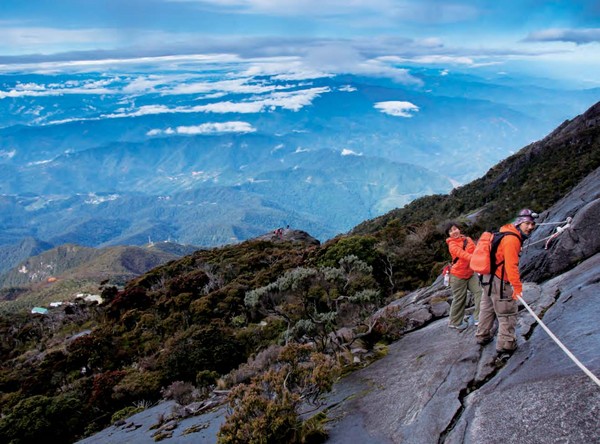
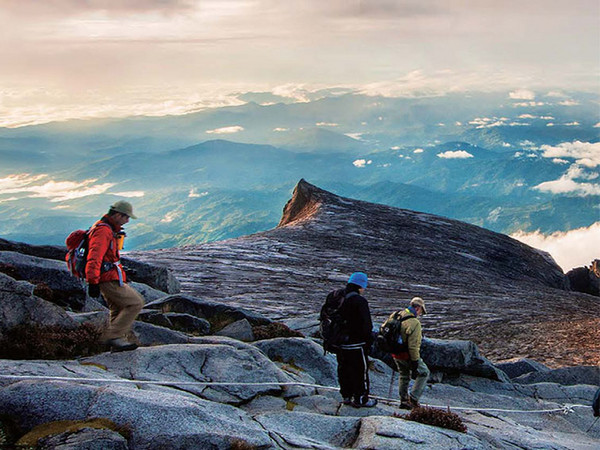
Revered as the "Sacred Mountain," Mount Kinabalu is located in Kinabalu Park, Sabah, Malaysia. It is the highest peak in Southeast Asia and has a history spanning 1.5 million years.
The local indigenous Kadazan people believe that all things have spirits, and the destination of souls after death is the summit of Mount Kinabalu. Hence, they call the sacred mountain “Aki Nabalu,” meaning “mountain of the ancestors.” It holds a revered and inviolable status in the hearts of Malaysians.
Officially designated as Malaysia’s first UNESCO World Heritage Site in 2000, the majestic mountain is home to many rare species.
The highest peak of Mount Kinabalu stands at 4,096 meters above sea level, but interestingly, it continues to grow at a rate of 0.5 centimeters per year.
With its steep slopes and diverse natural ecology, the climb is accompanied by delicate plants such as pitcher plants and slipper orchids, offering endless enjoyment. It's a challenging yet not overly grueling summit goal—perfect for those seeking self-challenge.
As the altitude increases, the temperature drops from 20°C to 13°C, and the forest transitions from tropical rainforest and temperate oak to cold-climate coniferous landscapes.
Mount Kinabalu hosts around 6,000 plant species, including over 800 varieties of wild orchids and 13 types of pitcher plants. It is also home to the world’s largest flower—the Rafflesia. This incredibly diverse forest makes it a paradise for exploring nature.
It takes about two hours by car from Kota Kinabalu city to Kinabalu Park. Although the mountain is open year-round, the rainy seasons from November to January and May to July often lead to park closures during heavy rain, especially for the final ascent segment. To protect the environment, the national park also limits the number of climbers daily. Therefore, besides booking mountain accommodations in advance, you must also apply for entry at the park management center.
The trek is 8.5 kilometers long. Most climbers take about two days and one night to reach the summit. There are two main routes: the Summit Trail and the Mesilau Trail. The Summit Trail is shorter and suitable for general climbers, while the longer and more rugged Mesilau Trail is reserved for experienced adventurers.
Nearby Attractions
Low’s Gully A Deep and Awe-Inspiring Canyon
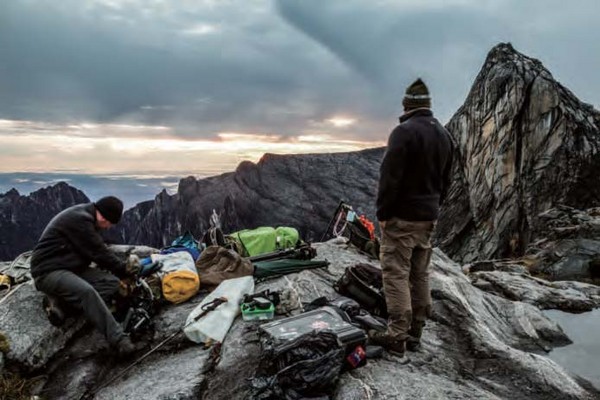
On the eastern side of the mountain range, there is a massive canyon formed by glacial cutting, reaching a depth of 1,600 meters, known as Low’s Gully. Both it and the mountain’s highest peak, Low’s Peak, are named after British colonial officer Hugh Low, who first summited the main peak in 1851. However, the adjacent, awe-inspiring deep gorge was not successfully explored until 1998. It is also home to many rare plant and insect species.
Poring Hot Springs Open-Air Hot Springs in the Forest
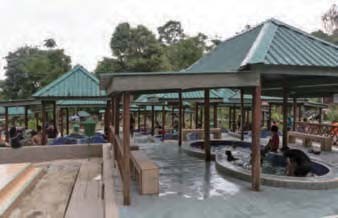
About 40 kilometers east of the Kinabalu Park Headquarters lies a natural sulfur hot spring. Locals have developed it into open-air hot spring pools, complete with bathing facilities and private individual pools where water temperature is regulated through separate hot and cold water pipes. The area also features numerous forest trails, allowing visitors to explore nearby streams and waterfalls.
Kundasang Meeting the Friendly Rungus People
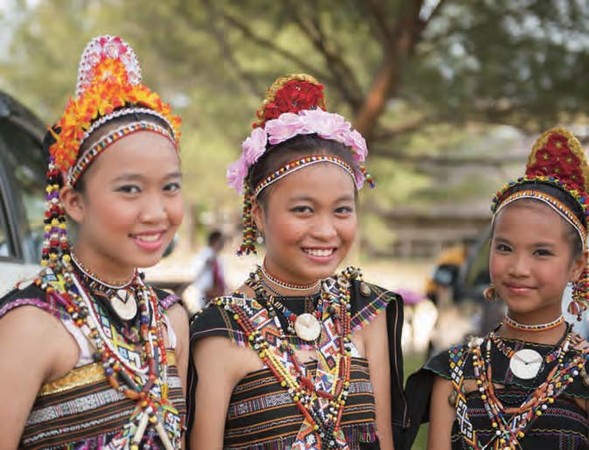
Located 238 kilometers north of Kota Kinabalu, Kundasang was briefly declared the capital of Sabah in 1881. It is home to the Rungus people, a subgroup of the Kadazan ethnic group in Sabah. They still maintain traditional ways of life, residing in longhouses. Women wear brass bracelets, bead necklaces, and knee-length sarongs. The cheerful and hospitable locals gather every Sunday at the Sikuati market, making it a great place to experience local culture.
Information
ENTRY FEE: Park admission is MYR 15 (approx. NTD 115) per person, climbing permit MYR 100 (approx. NTD 766), climbing insurance MYR 7 (approx. NTD 53), and mountain guide MYR 150 (approx. NTD 1,150). You can also book 1–3 day package tours directly on the official website.
ACCESS: It takes about two hours by car from Kota Kinabalu city to Kinabalu Park. You may hire a porter at your own expense, then proceed with a guide to the 1,890-meter protected area entrance to apply for entry and pay the park fee before beginning the climb.
Africa Mount Kilimanjaro
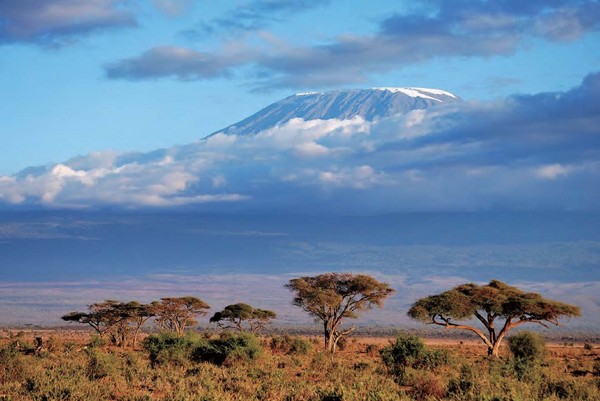
Known as the "Roof of Africa," Mount Kilimanjaro stands at 5,895 meters and is located at the equator border between Tanzania and Kenya. It is not only a UNESCO World Heritage Site but also the world’s tallest freestanding mountain. Its peak is capped with snow year-round, earning it the nickname "Equatorial Snow Peak."
Since the first photos of its summit were sent back over 125 years ago, stunning the European continent, the mountain has attracted around 20,000 climbers annually attempting the summit via six different routes. About 66% of them successfully overcome altitude sickness and reach Uhuru Peak, taking photos at the summit sign.
The best time to climb Mount Kilimanjaro is during the dry season from June to November each year. Climbers from around the world arrive at the base town of Moshi to inquire about guide fees, equipment, and climbing routes.
As one of the Seven Summits that doesn’t require special gear, Mount Kilimanjaro offers six common climbing routes. Among them, the 7-day Machame Route and the 5-day Marangu Route are the most popular among trekkers.
The latter is also known as the "Coca-Cola Route," which is relatively easier in terms of terrain, though the time for altitude acclimatization is slightly insufficient. The climb begins with registration at the 1,800-meter entrance, followed by ascending to the 3,700-meter Horombo Hut and the 4,700-meter Kibo Camp within three days. After a brief period of acclimatization, climbers embark on a dramatic summit push under the cover of night, venturing into endless darkness and a rocky uphill climb. Breathing thin air and battling winds as cold as minus 20 degrees Celsius, they reach the summit at dawn to witness the breathtaking sunrise and sea of clouds atop the roof of the African continent.
Along the way, the change in vegetation is clearly visible, transitioning from lush forests as you ascend to elevations of 3,000 meters, where the towering companions gradually give way to the shorter shrubs and dry flowers commonly found across Africa.
Once above 4,000 meters, the scenery becomes even more desolate, dominated mostly by deserts and snowscapes—as if greenery never existed in this grayish, tranquil world. Here, only the sound of the wind narrates the divine perspective of creation, reminding climbers of both the majesty and the dread of the mountain.
And there’s more to explore here too!
Serengeti National Park
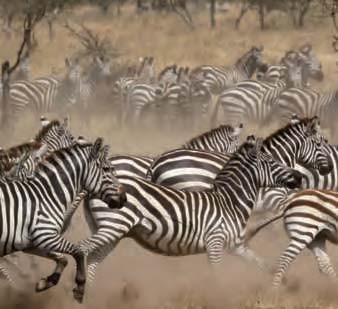
A renowned national park locally, famous for the annual Great Migration, where over 1.5 million white-bearded wildebeest, zebras, and Thomson’s gazelles traverse the plains.
Selous Game Reserve
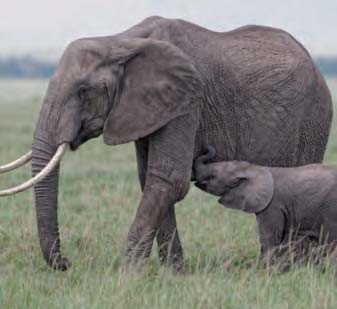
One of the largest animal sanctuaries in the world, it has no permanent buildings or human settlements but is home to many typical savannah animals such as elephants, hippos, and African buffalo.
Mount Meru
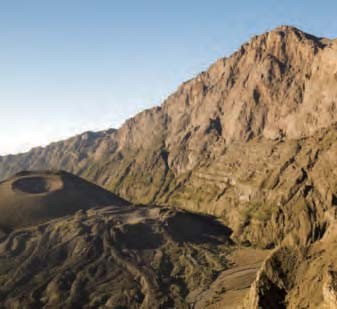
This active volcano, standing at 4,566 meters and ranking as the tenth highest peak in Africa, features fertile soil and serves as a habitat for a variety of wildlife. Its last eruption occurred about 100 years ago.
Zanzibar

A tropical island in East Africa known for its stunning coastal scenery. The old city district is the famous Stone Town, listed as a UNESCO World Heritage Site due to its unique historical and cultural value.
Lake Victoria
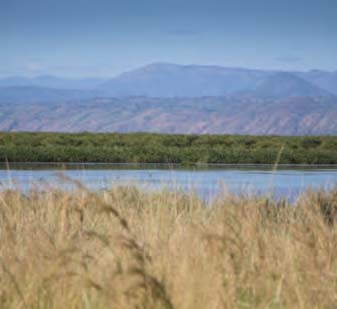
Africa’s largest freshwater lake and the world’s second-largest, located within the East African Rift, it boasts beautiful lakeside vistas and is a popular tourist destination in the region.
Lake Natron
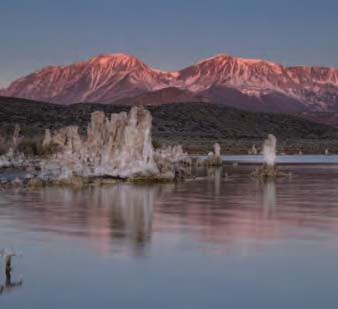
A saline lake bordering Kenya, where the high salinity fosters red-pigmented cyanobacteria, giving the lake an apocalyptic reddish hue—yet it is also a famous breeding ground for flamingos.
Information
Mount Kilimanjaro
ENTRY FEE: Starting from USD 1,000 per person (approximately NTD 33,500), with additional tips for guides.
ACCESS: Fly into Nairobi, Kenya, then take a roughly one-hour drive to the climbing town of Moshi.
INFO: Climbers must first join a summit expedition at the base of the mountain, following guides and porters throughout the journey and registering with the national park before entering.
WEB: www.tanzaniaparks.com/kili.html

Share
This article is published by HowToTrip. Sharing and reposting are welcome — please credit the source.
Article URL: https://www.howtotrip.net/views-9854
Related Articles
- Shaoxing's "Grandpa Gourd" hangs the gourds back up: "If there are too many people, we'll interact less — just take a quick look from afar"
- Chinese authorities announce "reciprocal adjustment" to Japan visa fees — single-entry visa jumps from 2,250 to 16,750 yen!
- The "health stones" carried by a traveler were found to have radiation levels exceeding safety limits by a thousand times, potentially endangering fellow passengers on the same flight. Customs issues warning!
- Shenzhen Airport Issues Late-Night Notice: Unidentified Aerial Object Detected, Causing Widespread Flight Delays!
- “They only said it cost money after I opened the box and washed it!” 200g of grapes sold for 60 yuan on a high-speed train—12306 responds!
- Can't buy an airline ticket? Denied exit? Blocked from boarding? A large number of Chinese tourists have mysteriously become "discredited individuals"
- Adverse weather and economic fluctuations impact Colombia's coffee market
- Beach bathing area responds to 2 yuan/30 seconds fee for freshwater foot rinsing: Clearly priced!
- Taking off with an improperly closed cabin door? Wing malfunction? Multiple flights made emergency returns mid-journey!
- Experience the gifts of nature! A countdown of the world’s ten most stunning coastlines