Xi'an Lintong Cultural Tour: Soak in the "Imperial Concubine's Hot Spring" at Huaqing Pool and Visit the Terracotta Army
Text by az Travel Lifestyle
In the past, "Lintong" was just a small place that visitors to Xi'an had to wake up early to travel from the city center. The reason for the early start? The Terracotta Army here is so popular that going late might mean dealing with crowds.
However, compared to the increasingly modernized urban area of Xi'an, Lintong has preserved much of the ambiance of ancient Chang'an. This is where the imperial tombs of the Qin Dynasty are located, the starting point of the Silk Road during the Han Dynasty, and the setting of the Tang Dynasty’s "Song of Everlasting Regret." Countless chapters of Chinese history converge here, making it not only a great starting point for travel but also a destination in itself—arguably the best place to stay for an east Xi'an tour.
Taking advantage of this prime location and scenic beauty, Angsana, a sub-brand of Banyan Tree, chose to establish itself here. Nestled against the Lishan Mountain and beside hot springs, it exudes the charm of the Qin and Tang dynasties, offering a fresh interpretation of travel in the land of emperors.
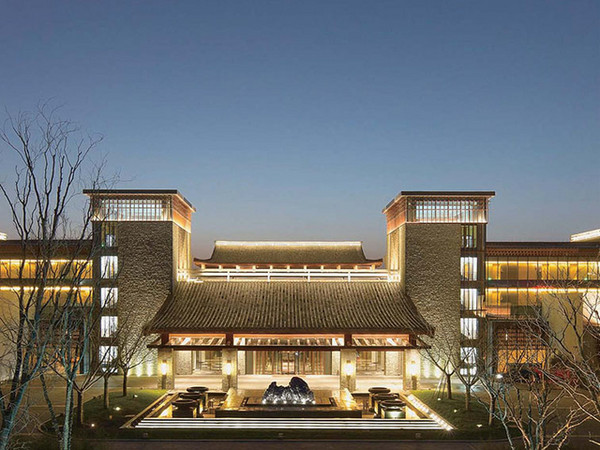
To echo the classical ambiance of Lintong, Xi’an Angsana Hot Spring Resort has been specially designed in the style of the Han and Tang dynasties. Its grand architectural complex looks like a celestial palace from afar, especially beautiful when the sunset bathes the mountains and the resort in golden hues.
Stepping into this palace-like resort, you’ll see a dignified color scheme of gray paired with auspicious red, complemented by flowing sheer drapes and calligraphy and paintings everywhere. Even with Western-style rooms and layouts, the design still adheres to traditional Chinese aesthetics. The inner courtyard gardens and hot spring views only add to the serene and uplifting atmosphere.
Imperial Concubine’s Hot Spring: A Tang-Style Palace Built with Water
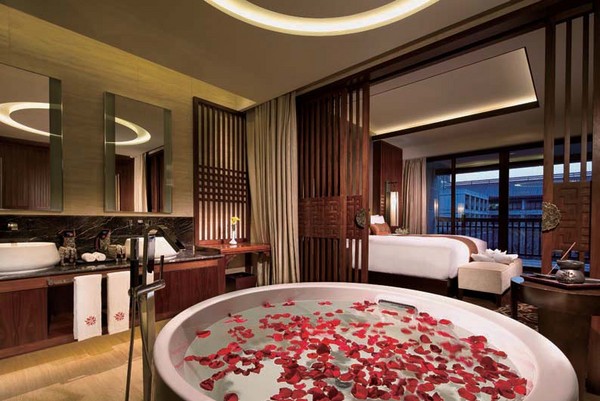
▲ Rooms at Xi’an Angsana Hot Spring Resort all feature large bathtubs, and can be arranged in open layouts, giving a particularly spacious feel.
“In the spring chill, she was granted a bath at Huaqing Pool; the smooth, warm spring water washed her snowy-white skin.” These two lines of poetry are often used to describe many famous hot spring resorts, but few have actually had the chance to experience the very spring where Yang Guifei once bathed.
Xi’an Lintong Angsana Hot Spring Resort is not only the first international luxury resort in Lintong District, but also the only one here officially certified asthe “Imperial Concubine’s Hot Spring,”drawing directly from the nearby Huaqing Pool springhead, allowing you to experience the classic luxury of the Tang Dynasty.
The resort has gone to great lengths to build an extensive hot spring area, featuring large indoor pools with excellent lighting and views, secluded nude soaking areas, or 25 open-air pools where you can enjoy natural breezes and sunlight. Such well-developed hot spring facilities are still quite rare in China.
Even more exceptional is the fact that while the hot spring area is also open to non-guests, Angsana has implemented visitor limits to ensure quality, preventing overcrowding that could detract from the relaxing soak.
Besides soaking in the public hot spring areas, Angsana also offers private hot spring rooms and spa services. The resort even researched and recreated an “Imperial Concubine Formula,” using ancient herbs in treatments that have been very well received. But arguably the most special water in the resort is the one right in your guest room.

▲ The Angsana Spa uses many local spices and plants, and the fragrance alone is quite unique.
The bathroom in each guest room is only separated from the living area by curtains. Once drawn back, a spacious circular bathtub sits at the center of the room, allowing you to soak while watching the big TV. The hotel also offers a wide selection of films and shows—just lounging here is a treat in itself, perfect for couples or lovers seeking a relaxing, stress-free holiday.
Xi’an Culture and Heritage: Song and Dance Performances at Huaqing Pool
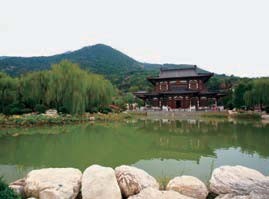
▲ Huaqing Pool is nestled against mountains and water, offering a refreshing view.
The Terracotta Army and Huaqing Pool—what better symbols of Xi’an’s culture and heritage are there? Both are just a 5 to 10-minute drive from Xi’an Lintong Angsana Hot Spring Resort.
The ruins of the Tang Dynasty Huaqing Palace have now become the “Tang Dynasty Huaqing Palace Imperial Bath Museum.” Among the most representative ruins are the Starry Spring used by Emperor Taizong, the Lotus Spring, and the Crabapple Spring used by Yang Guifei. Even eunuchs and attendants had their own dedicated pools, showing just how widespread the bathing culture was, proving that the descriptions in Tang poetry were no exaggeration.
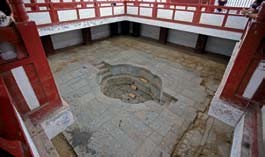
▲ The ruins of Huaqing Pool are still well-preserved, allowing you to see the appearance of the Tang Dynasty baths.
Aside from its historical sites, Huaqing Pool is also popular for its scenic landscapes and the statue of Yang Guifei. But the biggest draw is the large-scale live-action historical dance drama “Song of Everlasting Regret,” performed twice nightly. Set against the real mountains and waters of Jiulong Lake and enhanced with high-tech lighting and stage effects, hundreds of dancers perform scenes of the love story between Emperor Xuanzong and Yang Yuhuan—from their courtship and favor to the An Lushan Rebellion and the tragedy at Mawei.
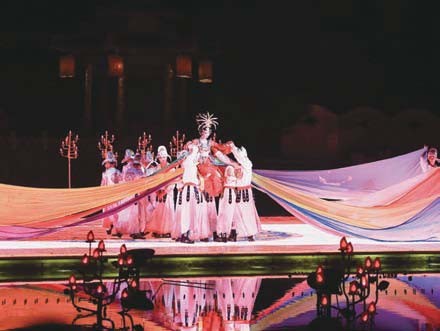
▲ The large-scale live-action historical dance drama “Song of Everlasting Regret” at Huaqing Pool is one of Xi’an’s most popular tourist attractions.
In addition to the captivating dance performances, the show includes many carefully researched details—for instance, when depicting Yang Guifei’s bath, scented water dances are used along with fragrances released to reach the audience’s noses. Battle scenes feature sudden bursts of flames from the water, creating astonishing visuals and intensity. It’s no wonder that despite minimal advertising, the show has become wildly popular through word of mouth, with sold-out shows every time.
Terracotta Army: Witness to the Eighth Wonder of the World
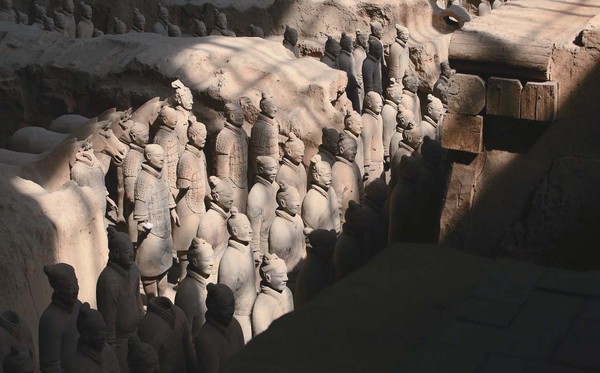
The Terracotta Army was hailed as the Eighth Wonder of the World by former French President Jacques Chirac, and is an iconic symbol of Xi’an. Though it has only been world-famous for about 40 years, locals had actually been digging up fragments of the relics for years before that. At the time, no one knew what they were. It wasn’t until archaeologists began large-scale restoration efforts, and the Qin Shi Huang Terracotta Warriors and Horses Museum was officially established in 1979, that the world could see these terracotta figures in their more complete form.
The Qin Shi Huang Terracotta Warriors and Horses Museum is built directly on the original pits, hence the different halls are named Pit 1, Pit 2, and Pit 3.
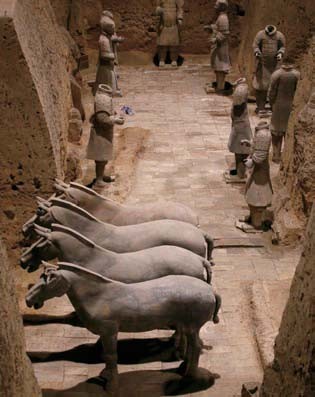
▲ Each pit of the Terracotta Army has its own unique features, where you can see the war horses and military system of the Qin Dynasty.
Although the terracotta warriors we usually see are intact, due to their great age and the collapse of earthen walls, to date, only one excavated warrior is entirely complete. All others have been painstakingly reconstructed by experts from fragments.
For this reason, in addition to displaying complete terracotta figures, another highlight of the museum is the process of repairing and reconstructing the clay statues. The museum has also preserved many unearthed relics in their original excavated state, giving visitors a sense of the massive, century-long project that continues to yield new discoveries and breakthroughs to this day—not to mention the nearby Mausoleum of the First Qin Emperor.
For us, the Terracotta Army should not be seen merely as an established historical site; it also tests the technology and perseverance of people today, making it worthy of careful observation and reflection.
DATA
Flight information: China Airlines operates flights every Monday, Wednesday, Friday, and Saturday, direct from Taoyuan Airport to Xi'an Xianyang International Airport.
Xi'an Lintong Angsana Hot Spring Hotel
Address: No. 8 Yueshun East Road, Lintong District, Xi'an City, Shaanxi Province
Phone: +86-29-8387-8888
Website: www.angsana.com

Share
This article is published by HowToTrip. Sharing and reposting are welcome — please credit the source.
Article URL: https://www.howtotrip.net/views-9777
Related Articles
- Shaoxing's "Grandpa Gourd" hangs the gourds back up: "If there are too many people, we'll interact less — just take a quick look from afar"
- Chinese authorities announce "reciprocal adjustment" to Japan visa fees — single-entry visa jumps from 2,250 to 16,750 yen!
- The "health stones" carried by a traveler were found to have radiation levels exceeding safety limits by a thousand times, potentially endangering fellow passengers on the same flight. Customs issues warning!
- Shenzhen Airport Issues Late-Night Notice: Unidentified Aerial Object Detected, Causing Widespread Flight Delays!
- “They only said it cost money after I opened the box and washed it!” 200g of grapes sold for 60 yuan on a high-speed train—12306 responds!
- Can't buy an airline ticket? Denied exit? Blocked from boarding? A large number of Chinese tourists have mysteriously become "discredited individuals"
- Adverse weather and economic fluctuations impact Colombia's coffee market
- Beach bathing area responds to 2 yuan/30 seconds fee for freshwater foot rinsing: Clearly priced!
- Taking off with an improperly closed cabin door? Wing malfunction? Multiple flights made emergency returns mid-journey!
- Experience the gifts of nature! A countdown of the world’s ten most stunning coastlines