Be careful not to make silly mistakes! 15 essential things to know before traveling to Singapore
Text and photos /By Buji
Every time you visit a country, you’re bound to notice some unique local systems that operate in their own way. Some are important for first-time visitors to be aware of, while others are simply cultural quirks to appreciate quietly. So, what should you watch out for when traveling in Singapore? I’ll share what I’ve experienced and learned—best to know these before you go, or you might find yourself confused on the ground.
1. To hail a taxi, look for taxi stands
To hail a taxi, you’ll need to do so at designated taxi stands—only then will taxis stop, especially in the city center. Based on my observations,taxi stands are usually located near bus stops in Singapore, so they’re not hard to find in urban areas.
However, the night I had no-signboard seafood in Geylang and needed a taxi back to my hotel, I couldn’t spot a taxi stand. I just waved from the roadside, and a taxi did stop. So, it’s best to use a taxi stand if you can, but if you can’t find one, you can try your luck hailing one on the street.
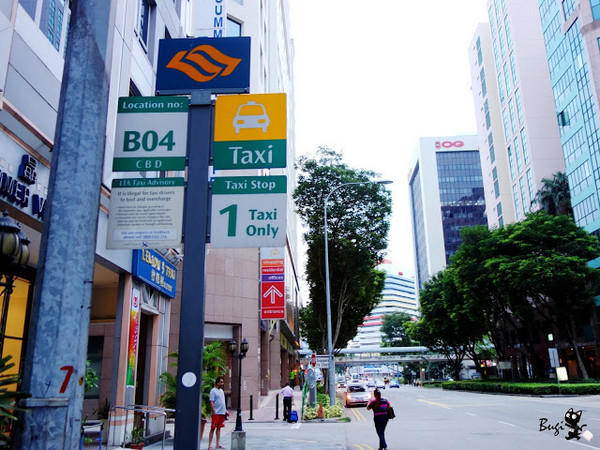
▲ Taxis are quite common in Singapore, and taxi stands are also easy to spot.
2. Different taxi models and brands have different starting fares
Taxis in Singapore, much like those in Thailand, come in a variety of bright colors. Aside from the common yellow seen in Taiwan, there are also silver, blue, red, black, purple, and more.Different taxi models and brands also have different starting prices, and this has nothing to do with color,with fares ranging from SGD 3 to SGD 5 (approximately TWD 69 to TWD 115). Starting fares as low as SGD 3 are quite rare nowadays—the common starting fare is around SGD 3.2 (about TWD 74).If you’re unsure, you can check thefare chart posted on the outside of the taxi windowbefore getting in.
Atcertain times and locations, additional surcharges may apply. For instance: midnight to 6 AM counts as late-night hours, with a 50% surcharge; peak hours incur a 25% surcharge; and airports or popular destinations (like Marina Bay Sands and Resorts World Sentosa) often add an extra SGD 3 or SGD 5.
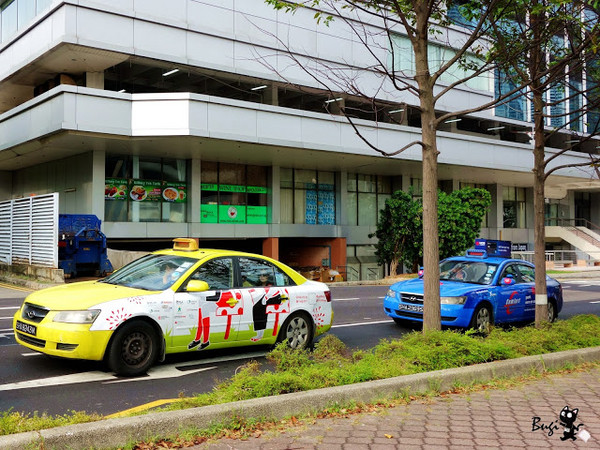
▲ Taxis in Singapore have varying starting prices depending on the model, and color is not a factor.
3. Most restaurants don’t offer free water—you have to buy your own
In general, everything in Singapore operates on a user-pays basis. Since the small nation imports nearly all its resources and prices are generally high, freebies are almost non-existent. In Taiwan, restaurants typically offer free water that you can drink as much as you want, but that’s not the case in Singapore—you’ll have to pay for water if you want it with your meal.
4. Many shops charge for wet wipes
When many establishments serve you the menu and utensils, they may also include side dishes and wet wipes. At this point, be alertand ask the staff whether these come at an extra cost. If they do and you don’t want them, ask the staff to take them back.
During my meals at some restaurants in Singapore, I naturally assumed the wet wipes were free, as they are in Taiwan—but only realized after checkout that they came with an extra charge. Sometimes the staff will remind you, but other times they might be too busy and forget to mention it.The wet wipes I encountered were charged at SGD 0.2 (approximately TWD 5) each.
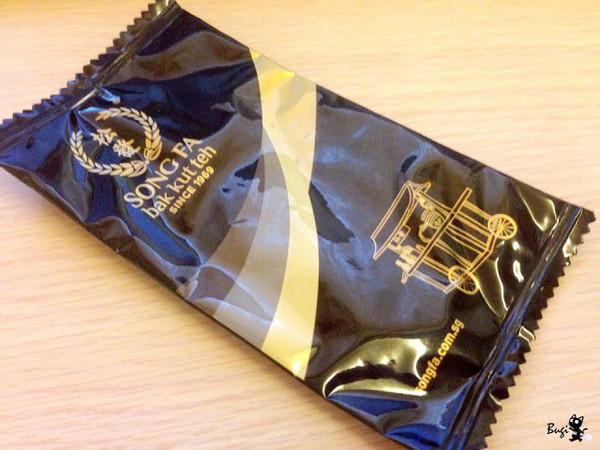
▲ The wet wipes at Song Fa Bak Kut Teh are not free—one costs SGD 0.2.
5. Prices are very high
Actually, points 3 and 4 are the results of point 5, but I just wanted to emphasize them so I listed them separately.This Lion City was ranked the “world’s most expensive city” for two consecutive years in 2014 and 2015 according to the Economist Intelligence Unit survey.It’s even more expensive than cities notorious for high living costs like Tokyo, Paris, and Hong Kong.
The city’s high prices can be seen even in the basics,like drinking water.If you want to buy a 600ml bottle of water,it might cost around 20 NT dollars in Taiwan, but the same amount of water in a Singapore 7-11 can go for more than 1.8 Singapore dollars (around 42 NT dollars).Many hotels also don’t provide bottled water. For example, the Big Hotel where I stayed only had a water dispenser, and you had to bring your own bottle.
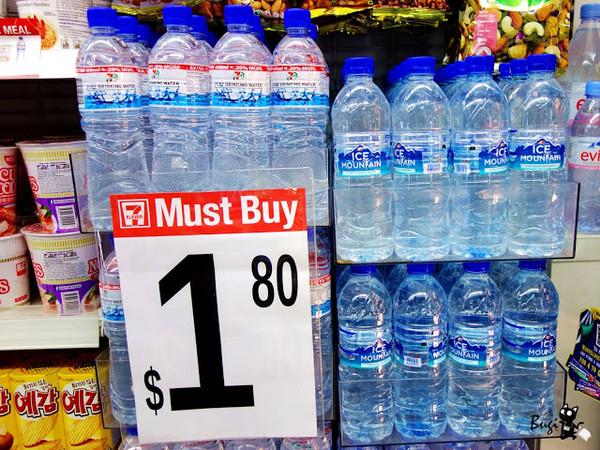
▲I bought water at a Singapore 7-11 — the cheapest option was still 1.8 Singapore dollars (around 42 NT dollars).
6. The water is drinkable straight from the tap
Singapore is a tropical country with year-round summer temperatures, and when walking outside during the day, it’s important to stay hydrated, otherwise it’s easy to get heatstroke. However, if you think buying water is really too expensive, and you’re feeling brave enough, you can actually drink the tap water directly.The Singapore government assures residents that the local tap water is safe to drink straight.
7. Tea means milk tea
English is the main language in Singapore, but due to the country’s ethnic diversity, it has incorporated elements from various languages, creating a unique form of “Singlish.” Some English phrases sound like Hokkien, Cantonese, or Malay, and they have their own unique grammar that can be quite hard to understand when you first hear it from locals.
When a shop assistant asks you“Do you want tea (Teh/Tea)?”, they’re actually asking “Do you want milk tea?”; when they ask “Do you want Kopi/Coffee?”, they mean “Do you want coffee?”Here,Teh (tea) and Kopi mean tea and coffee with sweetened condensed milk and sugar.So what if you don’t want sweetened condensed milk and sugar? It took me a while to figure out how to say it (but it’s still hard to actually say it...).
Teh = black tea + sweetened condensed milk + sugar
Kopi = coffee + sweetened condensed milk + sugar
O = with sugar (this is the Hokkien word for “black”)
C = with fresh milk and sugar
Kosong = no milk, no sugar (in Malaysia, it also means “empty”)
By mixing and matching Teh, Kopi with O, C, and Kosong, you can create many customized drink options.
Milk tea is simply called Teh;
Black tea with sugar is called Teh-O;
Milk tea with fresh milk is called Teh-C;
Black tea without sugar is called Teh-Kosong.
Regular coffee is called Kopi;
Just coffee with sugar is called Kopi-O;
Coffee with fresh milk and sugar is Kopi-C;
Black coffee is Kopi-Kosong.
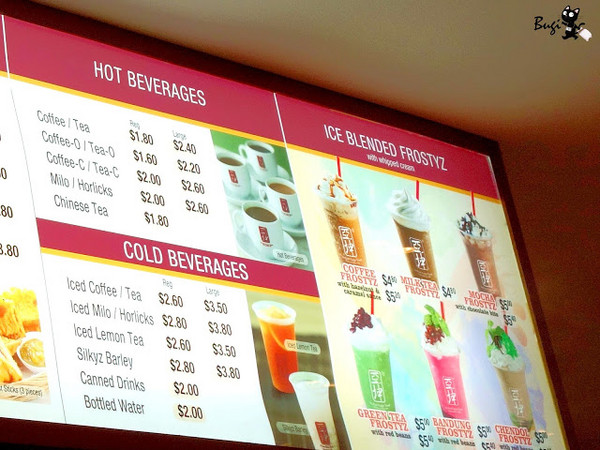
▲On the Ya Kun chain’s menu, coffee and tea are labeled as Coffee-O/Tea-O and Coffee-C/Tea-C.
8. The MRT ticket vending machine charges a S$0.10 (about NT$2.30) deposit for a single journey ticket.
The first time you buy a regular single journey ticket, an additional S$0.10 (about NT$2.30) is collected as a deposit, valid for use on the same day. Within 30 days of purchase, the ticket can be topped up and used up to 6 times — the S$0.10 deposit will be refunded upon the third use, and a S$0.10 discount is given on the sixth use.
Actually, you can explore Singapore entirely by MRT. I’d recommend getting an EZ-Link card, similar to Taipei’s YouBike card—otherwise, queuing for tickets every time you ride the MRT can be a hassle. For detailed MRT info, see -->With an EZ-Link card, riding the MRT to explore Singapore is super easy.
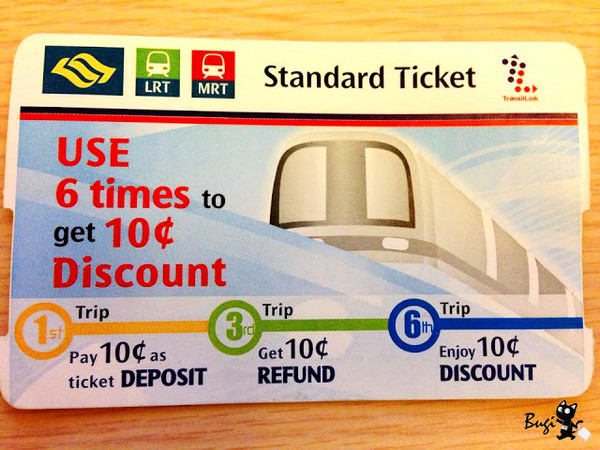
▲This is what the single journey regular ticket from the MRT vending machine looks like.
9. Bak Kut Teh and Hainanese Chicken Rice are often closed on Mondays.
While not super crucial information, it’s something food lovers like me should definitely keep in mind. Imagine going out of your way to a certain bak kut teh or Hainanese chicken rice spot just to have a big meal, only to find it’s closed—that would be so frustrating, XD.
Famous spots like Chinatown’s Tian Tian Hainanese Chicken Rice, Song Fa Bak Kut Teh, and Wong Ah Wah Bak Kut Teh are all closed on Mondays. But not every bak kut teh or chicken rice place is closed on Mondays—for example, the also well-known Swee Kang Bak Kut Teh is closed on Tuesdays. Just a heads-up to check the operating hours of wherever you plan to go.
10. Sugarcane lemonade is delicious.
Same as the last point—this is super important for foodies too. Sugarcane lemonade is cool, sweet, and perfect for drinking in a blazingly hot country like Singapore. It feels super refreshing when you drink it (just my personal take), and I really want to recommend it to everyone—you’ve got to try it.
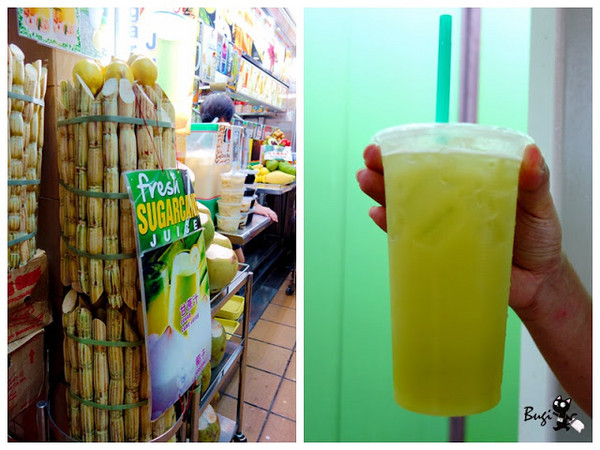
▲Refreshing and thirst-quenching sugarcane lemonade.
11. Walking, driving, and taking escalators: keep to the left. It's a right-hand drive country.
This is probably a common trait among former British colonies, so you’ll need to do the opposite of what you’re used to in Taiwan when crossing streets and walking.
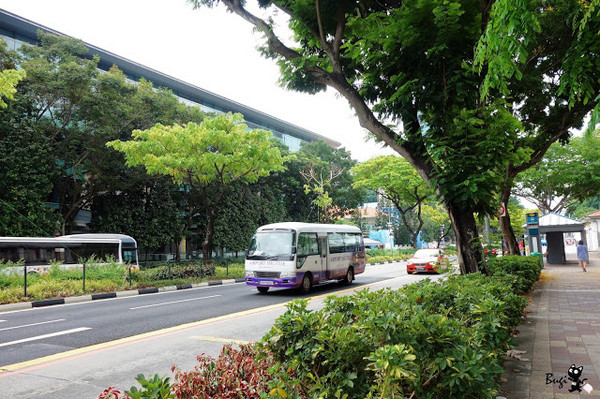
▲Both walking and driving are on the left.
12. When transferring between different MRT lines, you sometimes have to walk quite a long distance.
Just like the MRT in Hong Kong, where you sometimes have to walk for ages, Singapore’s MRT is the same—especially when changing between different lines, you might have to walk a long way. Unlike Taipei, where you just take an escalator and you’re there.
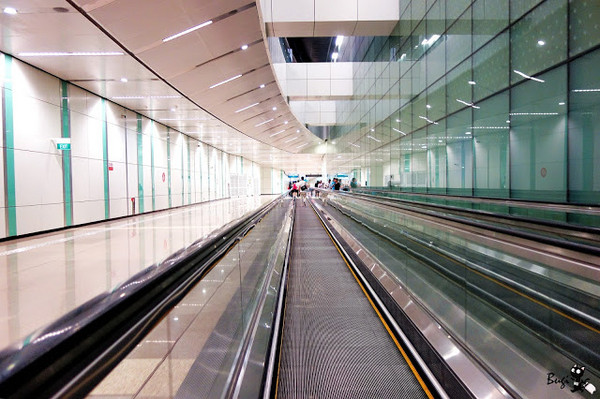
▲When transferring between MRT lines, you sometimes have to walk a long distance, and some stations even have flat escalators, almost like in airports.
13. You can get a tax refund if you spend S$100 (about NT$2,300) or more at one store.
As long as it’s at a shop with a tax free sign.Spend S$100, with no more than three receipts, and you can apply for a tax refund.Just show your passport to the staff, and they’ll staple the tax refund form and your receipt together—it’s very convenient.
Later, before check-in for your flight, pick up the tax refund application form at the airport’s GST Refund counter (where you process tax refunds), and collect your cash refund after clearing immigration.
14. Take off your shoes before entering an Indian temple (Hindu temple).
This is probably a rule at all Hindu temples—you must remove your shoes before entering. Some Hindu temples have shoe racks outside for worshippers to use, while others don’t. Also, many Hindu temples don’t allow photography inside, and some require a small donation if you want to take photos—but the Hindu temples I visited in Little India didn’t prohibit visitors from taking pictures.
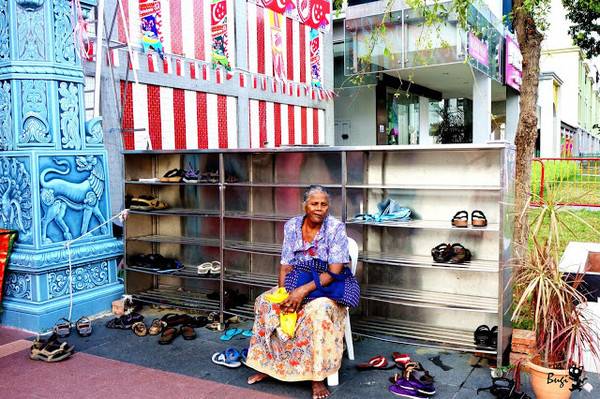
▲You must take off your shoes before entering a Hindu temple.
15. Take off your shoes before entering a mosque, avoid wearing shorts or skirts, and non-Muslims cannot step onto the prayer carpet area.
Like in Hindu temples, you need to remove your shoes before entering a mosque. Additionally, due to the conservative nature of Islam, visitorsare not allowed to enter mosques wearing revealing clothing such as shorts or short skirts.Usually, mosques in Singapore provide free robes to those who are not dressed appropriately.Also,visitors should avoid stepping on the prayer mats used for worship.
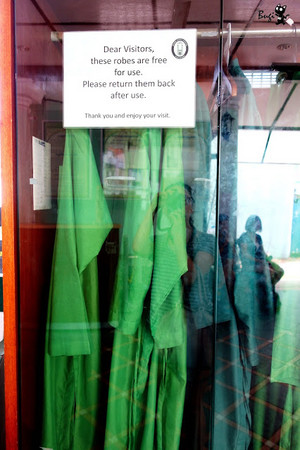
▲Free robes provided at Jamae Mosque.
These are all based on my own experiences and preparations while traveling there—any feedback is welcome.
Want to see moreof my solo travel experiences?
Feel free to joinmy fan pageandmy travel blog.
Share
This article is published by HowToTrip. Sharing and reposting are welcome — please credit the source.
Article URL: https://www.howtotrip.net/views-9727
Related Articles
- Shaoxing's "Grandpa Gourd" hangs the gourds back up: "If there are too many people, we'll interact less — just take a quick look from afar"
- Chinese authorities announce "reciprocal adjustment" to Japan visa fees — single-entry visa jumps from 2,250 to 16,750 yen!
- The "health stones" carried by a traveler were found to have radiation levels exceeding safety limits by a thousand times, potentially endangering fellow passengers on the same flight. Customs issues warning!
- Shenzhen Airport Issues Late-Night Notice: Unidentified Aerial Object Detected, Causing Widespread Flight Delays!
- “They only said it cost money after I opened the box and washed it!” 200g of grapes sold for 60 yuan on a high-speed train—12306 responds!
- Can't buy an airline ticket? Denied exit? Blocked from boarding? A large number of Chinese tourists have mysteriously become "discredited individuals"
- Adverse weather and economic fluctuations impact Colombia's coffee market
- Beach bathing area responds to 2 yuan/30 seconds fee for freshwater foot rinsing: Clearly priced!
- Taking off with an improperly closed cabin door? Wing malfunction? Multiple flights made emergency returns mid-journey!
- Experience the gifts of nature! A countdown of the world’s ten most stunning coastlines