The ancient hot spring closest to the airport — 4 must-visit spots at Japan’s "Yamanaka Onsen"
Photos and text by Kiya
As autumn and winter approach, bringing cooler weather, it's hard not to crave soaking in a hot spring to enjoy the warmth of the mineral waters. With autumn in full swing, I visited Yamanaka Onsen in the Kaga Onsen region, known as the "backyard of Kansai" in Japan, to soak in the baths, admire the maple leaves, and take a stroll through the hot spring town to experience the unique charm of Ishikawa Prefecture.
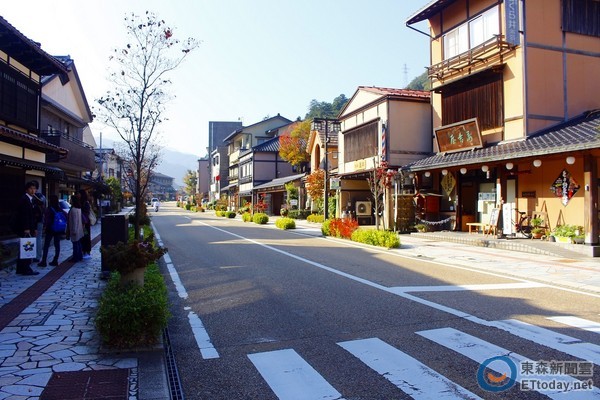
▲ The Yamanaka Onsen town, one of the Kaga Onsen resorts.
The "Kaga Onsen" area is located in the southern part of Ishikawa Prefecture in Japan’s Hokuriku region, consisting ofYamanaka Onsen, Yamashiro Onsen, Kaga Onsen, and Awazu Onsen. Although collectively called the Kaga Onsen region, the famous "Kagaya" is not located here. Though also from Ishikawa Prefecture, Kagaya belongs to Wakura Onsen, so be sure not to go to the wrong place.
The Yamanaka Onsen I visited this time is beautiful in all seasons, but autumn is the most recommended time to come. The vast red leaves dye the entire hot spring town and the surrounding mountains, making it one of Ishikawa Prefecture’s popular maple-viewing spots. If you arrive via Komatsu Airport, it’s just a 30-minute bus ride away, which is very convenient.
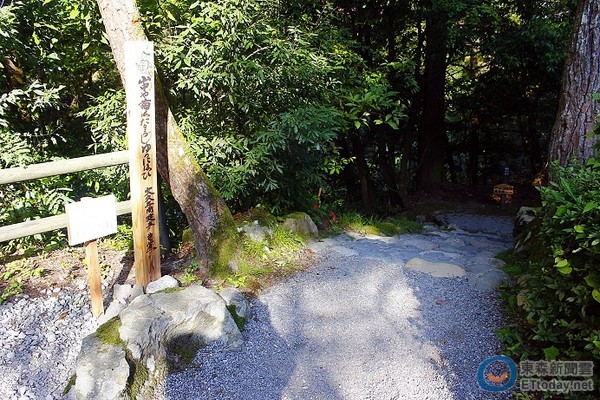
▲ Yamanaka Onsen shares a deep connection with Japan’s haiku master Matsuo Bashō. A wooden plaque engraved with his famous verse “In Yamanaka, no one plucks chrysanthemums; the hot spring water carries fragrance.” stands in a corner of the Tsurusenkei Promenade.
Surrounded by forests, Yamanaka Onsen is said to have a history of 1,300 years and was already a well-known hot spring resort in ancient times. Even Matsuo Bashō was enthralled by its stunning views, penning the famous line: “In Yamanaka, no one plucks chrysanthemums; the hot spring water carries fragrance,” and ranked Yamanaka Onsen among Japan’s top three hot springs alongside Arima Onsen and Dogo Onsen.Thanks to Matsuo Bashō, Yamanaka Onsen has become even more famous, and statues or memorials related to him can be seen in many spots around town.
Yamanaka Onsen has three must-cross bridges: Kuroya Bridge, Ayatori Bridge, and Kirigirisu Bridge, which are located at the beginning, middle, and end of the Tsurusenkei Promenade respectively. The hotel I stayed at, Kawanari Royal Hotel, is just a one-minute walk from Ayatori Bridge, so we started our day’s stroll from there.

▲ One of the must-visit spots in Yamanaka Onsen, Ayatori Bridge.
With its striking purple-red design,Ayatori Bridge (あやとりはし)resembles a dragon coiled amidst the forested mountains. Designed by the renowned ikebana artist Hiroshi Kawara of the Sogetsu school, the bridge’s shape resembles a traditional Japanese kusudama (flower ball), earning it the nicknames “Knot Rope Bridge” or “Flower Ball Bridge.”
Looking down from the bridge, you can see the Tsurusenkei Stream flowing gently beneath. Unfortunately, my visit was a bit early, and only parts of the surrounding red leaves had begun to turn. If you visit around November, you can admire the fiery red maple leaves lining both sides of the stream. Along the Tsurusenkei Stream, there is also a Tsurusenkei Kawayuka (riverbed terrace) that serves matcha cake and tea—extremely popular during the autumn leaf and cherry blossom seasons.

▲ The Tsurusenkei Kawayuka by the Tsurusenkei Stream. As I visited early, an elderly lady was arranging the seating in preparation for incoming guests.
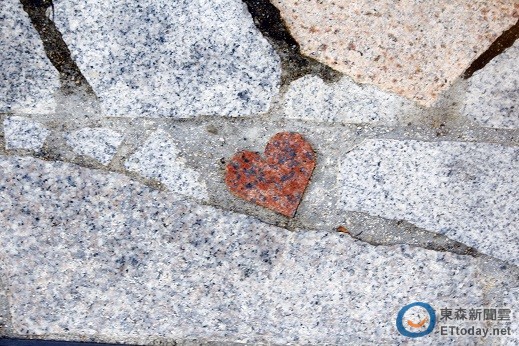
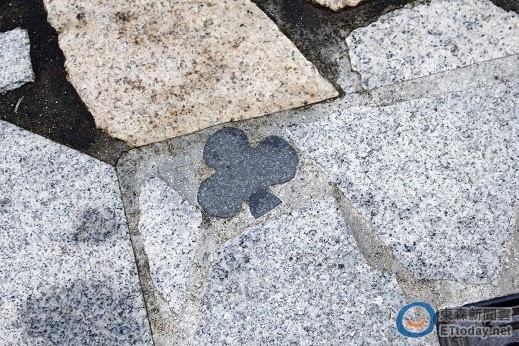
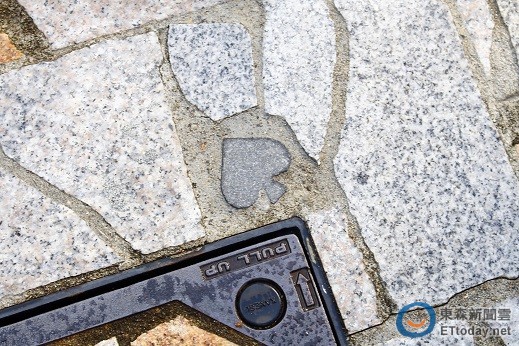
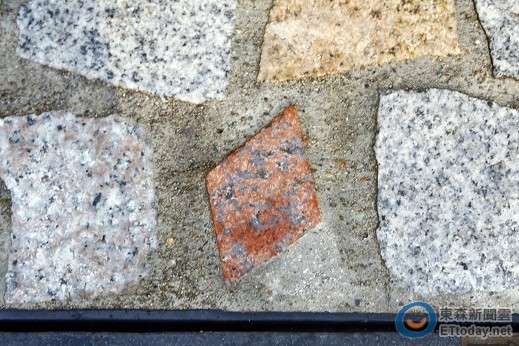
Back in the Yamanaka Onsen hot spring town, wandering among the historic traditional wooden buildings, the fresh air carries a subtle, soothing woody scent. Aside from the shops selling a variety of local souvenirs and traditional dishes, our guide also reminded us to look down at the stone-paved path—thanks to someone’s clever idea, hidden among the stones are patterns like hearts, spades, clubs, and four-leaf clovers, adding another layer of fun to the trip.
▲ The Yamanaka Onsen streets are filled with charming details like these hidden symbols in the stonework.

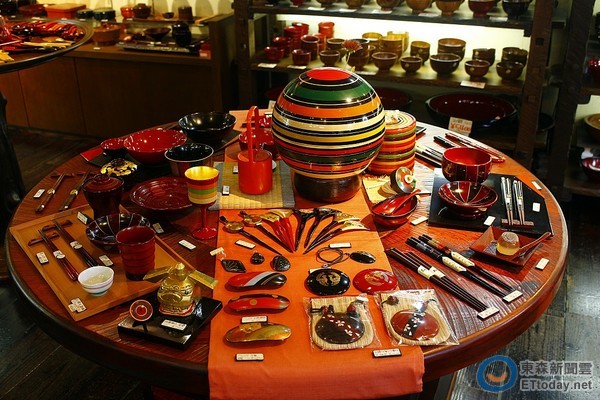
Yamanaka lacquerware is also one of the famous specialties of Yamanaka Onsen. On the way to Kirigirisu Bridge, we passed a shop selling exquisite lacquer products, “Gallery Ryoan,” where you can find everything from chopsticks to various bowls and plates made of Yamanaka lacquer. The prices are reasonable, which made my wallet a little lighter—but it’s a must-visit and must-buy shop for those who love refined dining lacquerware.▲ Gallery Ryoan, a shop selling affordable yet exquisitely crafted Yamanaka lacquerware items.
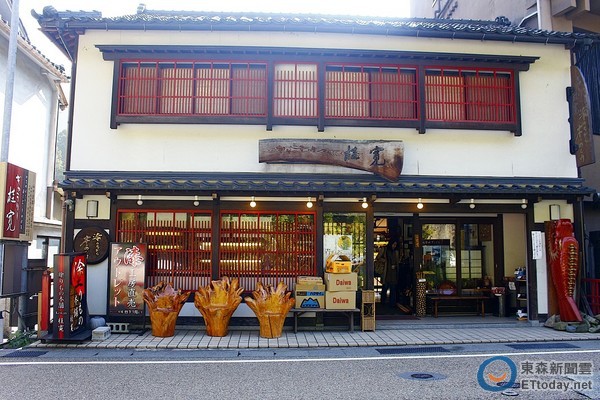
▲ The lacquerware shop (Gallery Ryoan) along the way to Kirigirisu Bridge offers reasonably priced, finely made products that are definitely worth checking out.
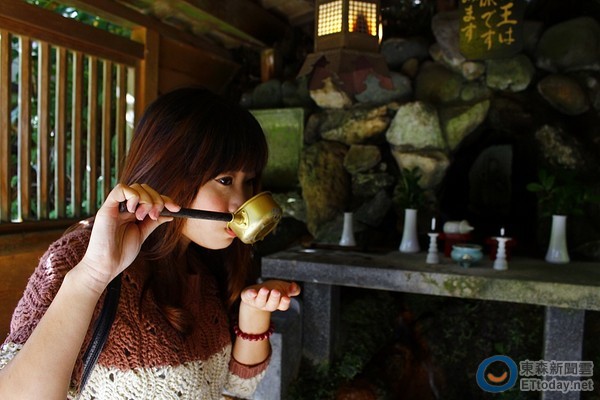
On the way to Kirigirisu Bridge, we passed a small shrine adorned with eye-catching purple curtains, called “Iwa Fudō.”Iwa FudōWhen I asked an elderly lady who had just finished praying, she explained that this shrine enshrines the deity Acala (Iwa Fudō Myōō). It is said that drinking the holy water beneath the deity’s statue has therapeutic effects for the eyes. Since she had undergone eye surgery, she often comes here to pray.
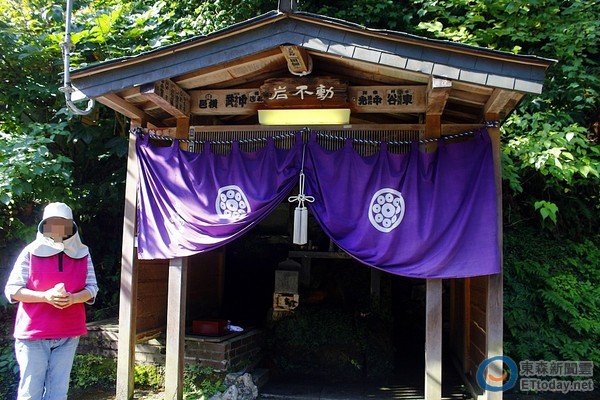
▲ The Iwa Fudō Shrine. The elderly worshipper shared that the holy water beneath the deity’s statue is believed to benefit eye health.
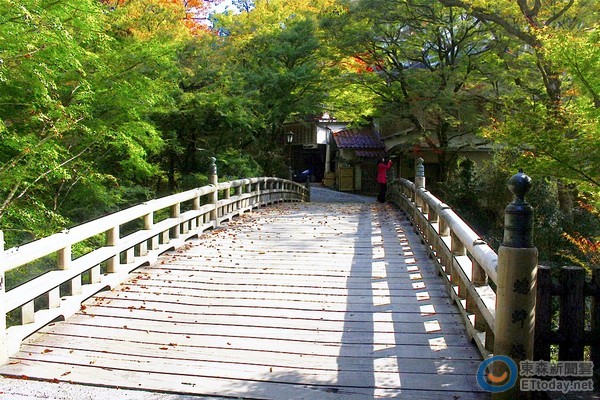
The endpoint of the Tsurusenkei Promenade“Kirigirisu Bridge” (こおろぎ橋)A representative attraction among the mountain hot springs, it is also one of the Eight Scenic Spots of Yamanaka. Cricket Bridge has a history of over 300 years and can be considered synonymous with Yamanaka Onsen. The origin of the name Cricket Bridge is quite interesting — in the past, the bridge was small and slippery, so a warning sign reading “行路危” (meaning “dangerous to walk”) was posted. The Japanese pronunciation of 行路危 is the same as that of cricket, hence the name Cricket Bridge.
%忌街邪司爸?坏捏?扒拧</strong>
Kaga Onsen Region - Yamanaka Onsen
Access: Take the CANBUS Circular Bus of the Kaga Onsen Region sightseeing route, get off at Yamanaka 1 or Yamanaka 2 stop
Fare: One-day pass 1,000 yen, two-day pass 2,000 yen
Share
This article is published by HowToTrip. Sharing and reposting are welcome — please credit the source.
Article URL: https://www.howtotrip.net/views-9581
Related Articles
- Shaoxing's "Grandpa Gourd" hangs the gourds back up: "If there are too many people, we'll interact less — just take a quick look from afar"
- Chinese authorities announce "reciprocal adjustment" to Japan visa fees — single-entry visa jumps from 2,250 to 16,750 yen!
- The "health stones" carried by a traveler were found to have radiation levels exceeding safety limits by a thousand times, potentially endangering fellow passengers on the same flight. Customs issues warning!
- Shenzhen Airport Issues Late-Night Notice: Unidentified Aerial Object Detected, Causing Widespread Flight Delays!
- “They only said it cost money after I opened the box and washed it!” 200g of grapes sold for 60 yuan on a high-speed train—12306 responds!
- Can't buy an airline ticket? Denied exit? Blocked from boarding? A large number of Chinese tourists have mysteriously become "discredited individuals"
- Adverse weather and economic fluctuations impact Colombia's coffee market
- Beach bathing area responds to 2 yuan/30 seconds fee for freshwater foot rinsing: Clearly priced!
- Taking off with an improperly closed cabin door? Wing malfunction? Multiple flights made emergency returns mid-journey!
- Experience the gifts of nature! A countdown of the world’s ten most stunning coastlines