Chicago Architecture Biennial: 3D-Printed Rubble Installation Art
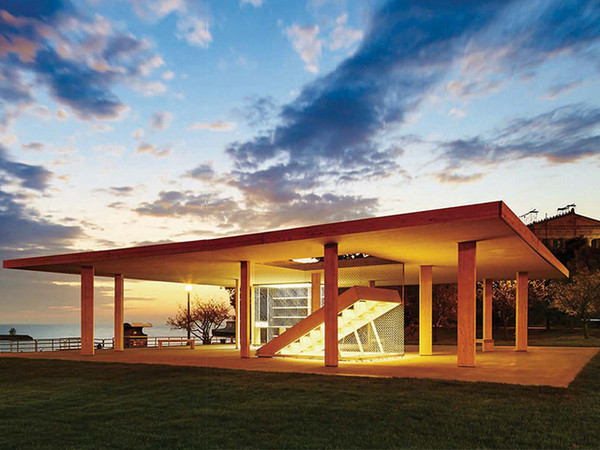
Text and photos / LIVING&DESIGN – Residential Aesthetics
The Chicago Architecture Biennial (CAB - Chicago Architecture Biennial) is a biennial architectural art exhibition. This edition runs from October 3 this year to January 3, 2016, with venues spread across eight locations in the city, including the Illinois Institute of Technology campus, the century-old Chicago Cultural Center, the Water Tower Gallery, and popular attractions such as Millennium Park.
Participating architecture teams combine the latest technologies and delve into the profound philosophical concepts to rethink the intimate relationship between land and human activity.
Chicago: The Birthplace of Skyscrapers
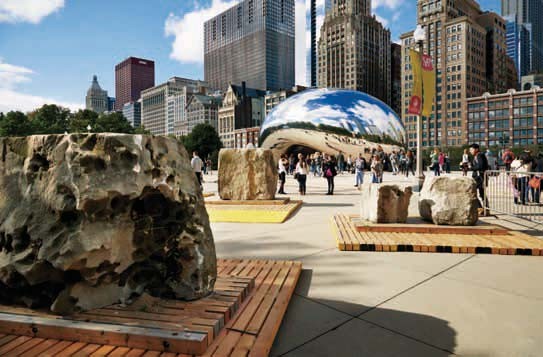
▲ The installation "ROCK" at Millennium Park.
Chicago is a city of architecture. The world’s first widely recognized skyscraper, the Home Insurance Building, was built here. Designed by American architect William Le Baron Jenney and completed in 1884, it was the tallest building in the world at that time and the first high-rise structure to be built with a steel frame.
Although the Home Insurance Building was demolished and rebuilt in 1931, the project paved the way for the widespread use of elevators in tall buildings, profoundly influencing the skyline of Chicago for the next century. It marked the beginning of human architecture's shift toward vertical development and is hailed as an important milestone in changing structural engineering for high-rises and urban skylines.
Interestingly, the world’s current tallest building, the Burj Khalifa in Dubai, was designed by the Chicago-based architecture firm SOM.
Entering the 20th century, “Chicago” became almost synonymous with modern skyscrapers; however, the city’s architecture biennial presents a deeper dialogue: beyond the towering structures, it explores how Chicago must confront and transform its future land use.
The organizers hope to encourage the public to reconsider the balance between architecture, green space, housing, and urban development through diverse applications of temporary architecture, installation art, and indoor spaces. Their goal is to prompt citizens to examine urban development issues and sustainability with higher standards, thereby influencing societal discussions and policymaking.
The Biennial Previews the Many Possibilities of Architecture
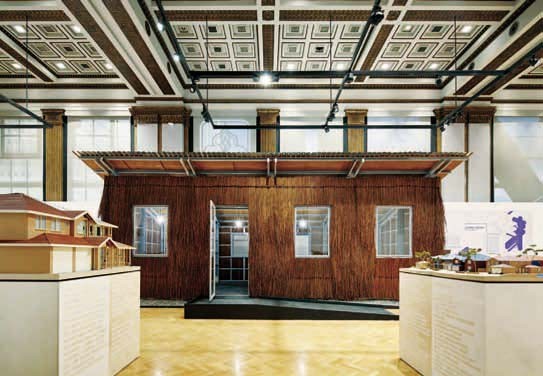
▲ Last year’s award-winning Vietnamese firm VTN Architects also participated in the U.S. event with their project, the "S House."
The term “Biennial,” when used, generally refers to international art exhibitions held every two years. But as contemporary architectural culture has grown richer and more diverse, many cultural capitals have begun hosting architecture biennials, such as the famous Venice Architecture Biennale and the Rotterdam Architecture Biennale IABR.
This year’s Chicago Architecture Biennial also features many international participants, including Denmark’s BIG, Vietnam’s VTN Architects, the Netherlands’ RAAAF, South Korea’s Moon Hoon, and Japan’s Sou Fujimoto Architects, bringing together a star-studded lineup of mid-career architects. The convergence of various nationalities and design styles adds a rich and varied exhibition character to the Chicago event.
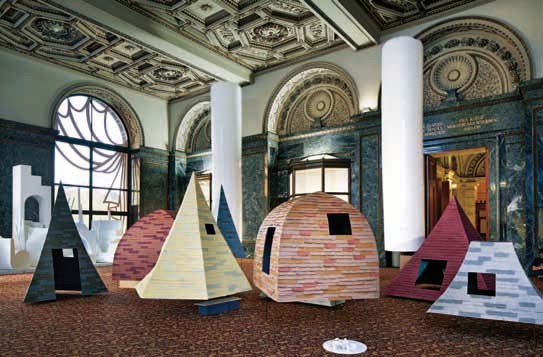
▲ "Children's Town" by ON Design Partners (Daikoku Maki + Yuki Hata).
Additionally, the 2015 exhibition, themed “The State of the Art of Architecture,” featured a series of cutting-edge temporary indoor architectures at the main venue, the Chicago Cultural Center. Many of the works were avant-garde and mysteriously surreal, straddling the line between installation art and spatial imagery, and incorporating many experimental techniques.
For instance, ETH Zurich (Swiss Federal Institute of Technology), MIT (Massachusetts Institute of Technology), and the architectural team Gramazio Kohler Research collaborated on the 4-meter-high installation "Rock Print." The piece consists of “rubble” bound together by countless strands of thread. The mechanical structure of the threads and their winding paths were meticulously calculated by the design team, and then 3D-printed using robotic arms to create a low-cost, reusable construction material.
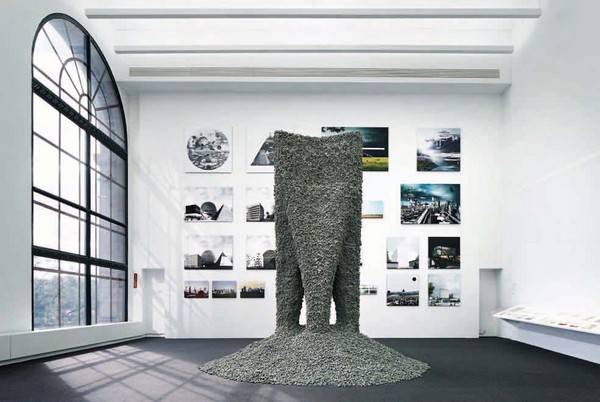
▲ The installation "Rock Print" is made by binding rubble with numerous fine threads.
“Although it looks somewhat fragile on the outside, it’s actually very sturdy structurally,” said Matthias Kohler, who led the project. With current technology, 3D-printed structures can still collapse under external pressure, “but I firmly believe that future landscape art or spatial installations will require this kind of technology and concept—low-cost 3D-printed structures paired with sustainable materials.”
At the Chicago Architecture Biennial, you can glimpse the future world envisioned by architects, engineers, designers, and artists. With imaginative and whimsical creativity, they present the problems humanity is about to face and potential solutions. They also subtly question whether societal progress should not only be measured by novel construction techniques and visual stimulation, but also by how we confront both the sweetness and destruction brought by development.

Share
This article is published by HowToTrip. Sharing and reposting are welcome — please credit the source.
Article URL: https://www.howtotrip.net/views-9511
Related Articles
- Shaoxing's "Grandpa Gourd" hangs the gourds back up: "If there are too many people, we'll interact less — just take a quick look from afar"
- Chinese authorities announce "reciprocal adjustment" to Japan visa fees — single-entry visa jumps from 2,250 to 16,750 yen!
- The "health stones" carried by a traveler were found to have radiation levels exceeding safety limits by a thousand times, potentially endangering fellow passengers on the same flight. Customs issues warning!
- Shenzhen Airport Issues Late-Night Notice: Unidentified Aerial Object Detected, Causing Widespread Flight Delays!
- “They only said it cost money after I opened the box and washed it!” 200g of grapes sold for 60 yuan on a high-speed train—12306 responds!
- Can't buy an airline ticket? Denied exit? Blocked from boarding? A large number of Chinese tourists have mysteriously become "discredited individuals"
- Adverse weather and economic fluctuations impact Colombia's coffee market
- Beach bathing area responds to 2 yuan/30 seconds fee for freshwater foot rinsing: Clearly priced!
- Taking off with an improperly closed cabin door? Wing malfunction? Multiple flights made emergency returns mid-journey!
- Experience the gifts of nature! A countdown of the world’s ten most stunning coastlines