The udon noodles are stretched into fine hair-like strands! Mitsuboshi Noodles Travel Museum also offers limited-time fun making "somen" noodles.
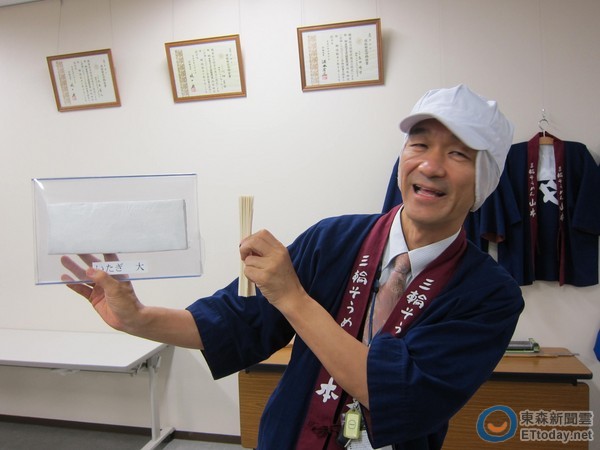
▲ Mitsuboshi Noodles Travel Museum’s Somen Operations Planning Manager Yoshimoto Masatsugu showcases the dough ingredients required for noodles of different thicknesses.
Reported and photographed by Yan Yuncen / Nara
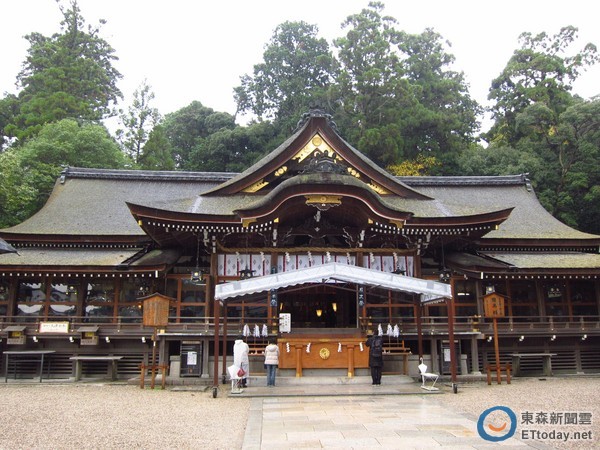
Mitsuboshi Myojin Grand Shrine, located in Sakurai City, Nara Prefecture, is Japan’s oldest shrine. Legend has it that the main deity is the incarnation of a snake, so many worshippers bring eggs and sake as offerings for the deity to enjoy. Just a 3-minute walk from the second torii gate at the shrine entrance, there is a well-known"Morimasa Somen-ya", where visitors can enjoy hot, delicious noodles. From there, they can also take a short ride to"Mitsuboshi Somen Noodles Travel Museum"to experience the joy of making chewy somen noodles firsthand.
▲%The parasol-like shape in the photo is actually a bamboo basket used for drying "ghost somen" or "devil somen." Also known as "ghost noodles" or "devil noodles."
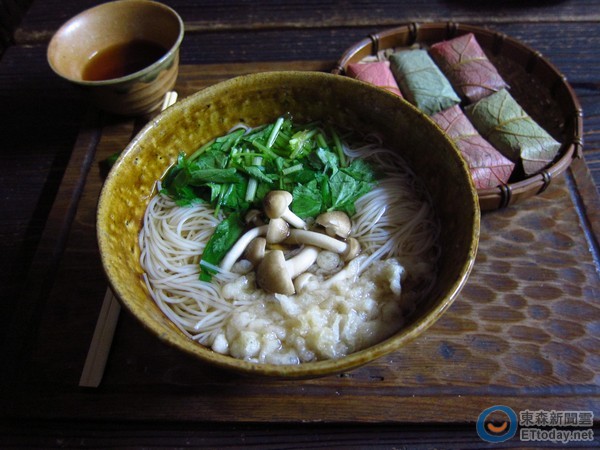
Somen is a unique type of noodle found in the Kansai region of Japan. The noodles are white, tender, and long, very similar to Taiwan’s wheat vermicelli, but the texture is quite different—the former is softer, while the latter is chewier.Yoshimoto Masatsugu, Somen Operations Planning Manager at Mitsuboshi Somen Noodles Travel Museum, explained that somen ingredients are simple, consisting of only four components: flour, salt, water, and oil. The production process involves 18 steps, from kneading the dough to stretching and air-drying the noodles, taking a total of 36 hours.。
%The technique showcases how Kansai-style somen noodles are made in Japan.
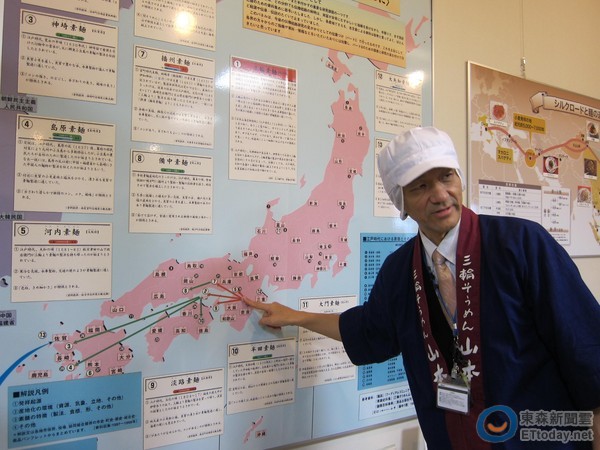
During the somen-making process, to enhance the chewiness, "wheat gluten" used in tempura is also added. This ingredient reacts chemically as the noodles are stretched—the more gluten added, the greater the elasticity. Once handmade somen is completed, if no preservatives are added, it can be stored for up to three and a half years. Contrary to the common preference for freshly handmade noodles, the value of somen increases with age, sometimes nearly doubling in price.
Mitsuboshi Somen has three of the most famous handmade somen varieties: Yamamoto, Hakuryu, and Hakuhatsu. Among these, Yamamoto noodles are the widest, with a diameter of 1 cm; Hakuryu noodles are 0.6 cm; and Hakuhatsu are the thinnest at just 0.3 cm. From afar, they look similar to regular noodles, but if you gently flick them, you can smell a faint scent of wheat. Though the dried noodles are firm, they retain slight elasticity—if not deliberately bent, they won’t break easily.

Somen-making workshops are “limited-time only,” open for registration only from September each year to June the following year. The individual experience costs 1,000 yen, with a daily limit of 50 people. Workshops run from 10:00 AM to 3:00 PM, and reservations open one week in advance. Upon entering the workshop, participants first listen to a 15-minute explanation about noodle rolling, then make their own noodles under the guidance of an instructor. The entire process takes a maximum of 60 minutes through five key steps, transforming noodles as thick as udon into somen with a diameter of 1.7 cm.
%The instructor demonstrates the initial noodle-pulling technique at the start of the workshop.
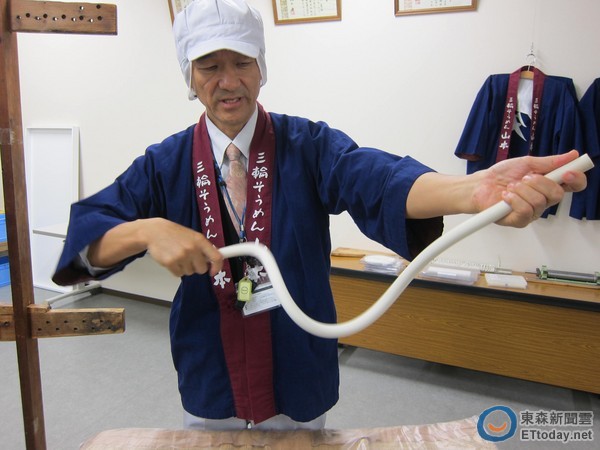
%After making the noodles, the dough is shaped into thin strips.
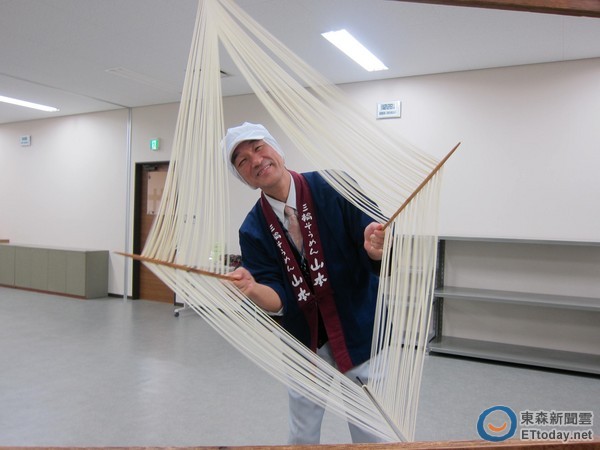
%Then the length of the finished noodles is compared.
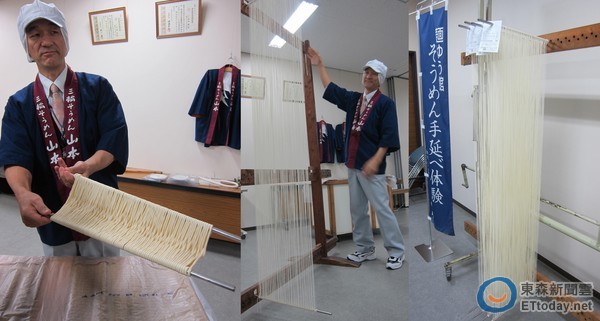
Once visitors complete their noodles, the instructor hangs them on rods labeled with their names and places them on racks to air-dry. If they return the next day, they can take the finished product home to cook. Alternatively, for an extra 700 yen, the Noodles Travel Museum can assist in arranging for the noodles to be cooked at the nearby Mitsuboshi Chaya tea house.
Mitsuboshi Somen Noodles Travel Museum
Address: 880 Hashinaka, Sakurai City, Nara Prefecture
Phone: 0774-43-6661
Transportation: Take the Kintetsu Osaka Line or JR Sakurai Line to Sakurai Station. Then take a Nara Kotsu bus bound for “Totsukawa direction,” get off at Hashinaka Station, and walk 2 minutes to reach the museum.
Share
This article is published by HowToTrip. Sharing and reposting are welcome — please credit the source.
Article URL: https://www.howtotrip.net/views-9388
Related Articles
- Shaoxing's "Grandpa Gourd" hangs the gourds back up: "If there are too many people, we'll interact less — just take a quick look from afar"
- Chinese authorities announce "reciprocal adjustment" to Japan visa fees — single-entry visa jumps from 2,250 to 16,750 yen!
- The "health stones" carried by a traveler were found to have radiation levels exceeding safety limits by a thousand times, potentially endangering fellow passengers on the same flight. Customs issues warning!
- Shenzhen Airport Issues Late-Night Notice: Unidentified Aerial Object Detected, Causing Widespread Flight Delays!
- “They only said it cost money after I opened the box and washed it!” 200g of grapes sold for 60 yuan on a high-speed train—12306 responds!
- Can't buy an airline ticket? Denied exit? Blocked from boarding? A large number of Chinese tourists have mysteriously become "discredited individuals"
- Adverse weather and economic fluctuations impact Colombia's coffee market
- Beach bathing area responds to 2 yuan/30 seconds fee for freshwater foot rinsing: Clearly priced!
- Taking off with an improperly closed cabin door? Wing malfunction? Multiple flights made emergency returns mid-journey!
- Experience the gifts of nature! A countdown of the world’s ten most stunning coastlines