Experience the traditional Japanese New Year atmosphere!Top 10 Popular Shrines to Visit for Hatsumode in 2016
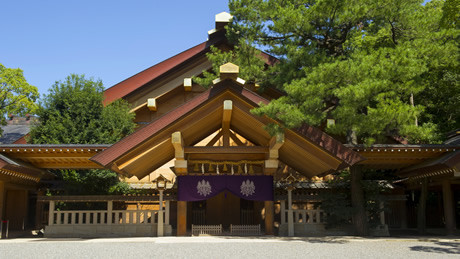
▲ Atsuta Shrine. (Photo / fromRakuten Travel, the same below)
Travel Center / Comprehensive Report
For the Japanese, the first thing to do in the New Year is definitely to visit a shrine or temple for hatsumode, or the first shrine visit of the year. Visiting a shrine or temple on New Year’s Day is one of the long-standing New Year traditions that continues to this day. On this day, people go to shrines or temples to pray for the health and safety of their families in the coming year.Rakuten Travelhas released the “2016 New Year Shrine Visit Rankings”, showing you where the most popular hatsumode spots are!
1. Atsuta Shrine
Coming in first place is Atsuta Shrine, which attracts a huge number of worshippers from all over Japan every year and is considered one of Japan’s premier shrines. Due to the “Hatsuebisu” blessing ceremony held at midnight on January 5th each year, even after the three-day New Year holiday, the shrine remains bustling with visitors coming to pray, creating a lively and energetic atmosphere.
Friendly reminder: There will be traffic control from New Year’s Eve to January 3rd. Please check relevant information before traveling.
2. Dazaifu Tenmangu Shrine
Ranking second is Dazaifu Tenmangu Shrine. This shrine enshrines Sugawara no Michizane, known as the “God of Learning” in Japan, and is a representative tourist spot in Fukuoka Prefecture as well as the head shrine of the 12,000 Tenmangu shrines across Japan. Every year, over 2 million people from all over Japan come here to pray for the New Year. From early January, various types of plum blossoms such as the flying plum, white plum, and red plum begin to bloom in the shrine grounds, becoming one of its highlights.
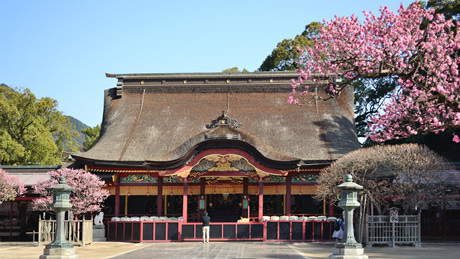
▲ Dazaifu Tenmangu Shrine.
3. Sumiyoshi Taisha Shrine
Ranking third is Sumiyoshi Taisha Shrine, which is the head shrine of more than 2,000 Sumiyoshi shrines across Japan. During the three-day New Year holiday, the number of worshippers reached as many as 2.5 million, making it one of Japan’s top New Year prayer destinations. The shrine’s approach is lined with numerous street stalls, attracting large crowds and creating a very lively atmosphere.
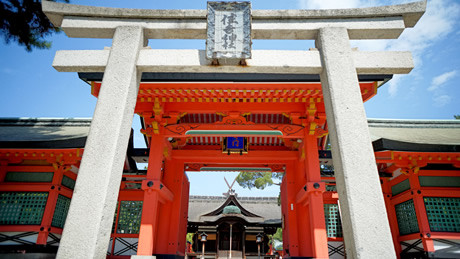
▲ Sumiyoshi Taisha Shrine.
4. Fushimi Inari Taisha Shrine
Fushimi Inari Taisha is the head shrine of approximately 30,000 Inari shrines throughout Japan, enshrining the god of agriculture—Inari. Countless vermilion torii gates are densely arranged, forming the stunning “Senbon Torii” (Thousand Torii Gates). Visiting this shrine for hatsumode in the New Year is sure to be a feast for the eyes.
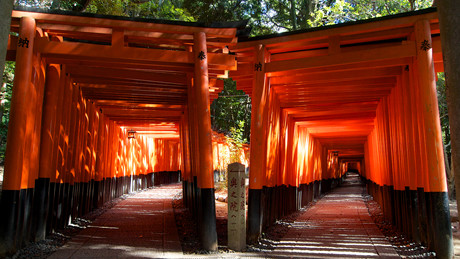
▲ Fushimi Inari Taisha Shrine.
5. Tokyo Suitengu Shrine
Suitengu Shrine is famous for being highly efficacious for safe childbirth and praying for children. Many pregnant women, couples wishing to have children, or those praying for safe and smooth childbirth visit the shrine for hatsumode. Its proximity to Ginza and Nihonbashi also contributes to its popularity due to convenient access.
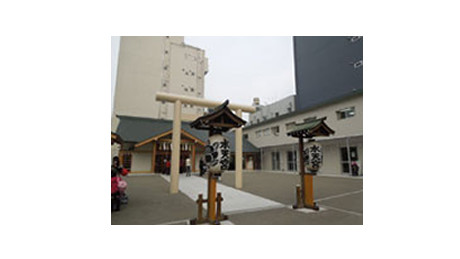
▲ Tokyo Suitengu Shrine.
6. Izu Shrine
Quietly overlooking the Izu Sea, Izu Shrine ranks sixth on the list. Since ancient times, it has also been known as Izu Daigongen (a manifestation of a bodhisattva) or Yumoto Daigongen. It is an ancient shrine linked to the legendary love story between Minamoto no Yoritomo, the first shogun of the Kamakura shogunate, and his wife Hōjō Masako, and is famous as a shrine of love and romance, enshrining the deity of relationships.
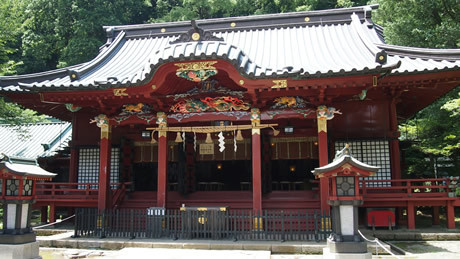
▲ Izu Shrine.
7. Ise Grand Shrine – Inner Shrine
Ise Grand Shrine is one of the most important shrines in Japan, along with Heian Jingu in Kyoto and Meiji Jingu in Tokyo, and is ranked as one of Japan’s three great shrines. It has attracted worshippers throughout history, with an estimated 6 million visitors coming to pray and tour each year. The Inner Shrine enshrines Amaterasu Omikami, the supreme guardian deity of the Japanese people. Moreover, it is open for worship all day from December 31st to January 5th.
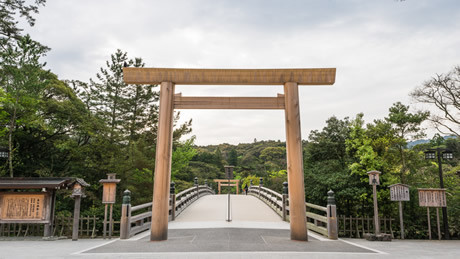
▲Ise Grand Shrine – Inner Shrine.
8. Naritasan Shinshoji Temple
Famed nationwide, Naritasan Shinshoji Temple is not only Japan’s second-largest temple after Meiji Jingu but also a renowned historical site in Chiba. With a vast grounds covering 220,000 square meters, it is one of Japan’s few large-scale temples. At midnight on New Year's Eve, the “Goma Offering for New Year’s Peace” ceremony is held to pray for safety in the coming year.
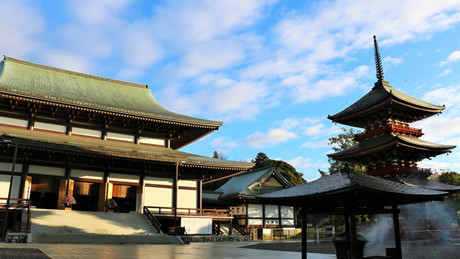
▲Naritasan Shinshoji Temple.
9. Sensoji Temple
In ninth place is Tokyo’s oldest temple — Sensoji Temple. The “Sensoji Kannon,” believed to bring worldly benefits, is worshipped by many devotees, attracting around 30 million visitors from both Japan and abroad each year. The giant lantern hanging in front of Kaminarimon is famous across the country. At exactly midnight on New Year’s Eve, the bell tower at Benzaiten Mountain rings out the first chime of the “Joya no Kane,” signaling the start of the “New Year Special Prayer” before the main hall’s inner shrine.
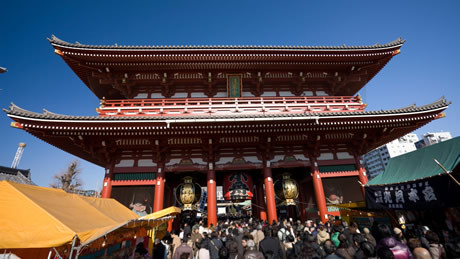
▲Sensoji Temple.
10. Itsukushima Shrine
Tenth on the list is Itsukushima Shrine, a UNESCO World Heritage Site. Its shrine buildings were constructed over the sea on reclaimed land, making it a unique seaside shrine famed for its distinctive architectural style. During the late night of December 31st through the early morning of January 1st, additional transportation services are operated.

▲Itsukushima Shrine.
Work and school are so dull — I really want to go traveling.
Download the “ETtoday News Cloud APP” and take a virtual trip with us →
iOS:https://goo.gl/rmIDdx
Android:https://goo.gl/XPe8Uj
Share
This article is published by HowToTrip. Sharing and reposting are welcome — please credit the source.
Article URL: https://www.howtotrip.net/views-9255
Related Articles
- Shaoxing's "Grandpa Gourd" hangs the gourds back up: "If there are too many people, we'll interact less — just take a quick look from afar"
- Chinese authorities announce "reciprocal adjustment" to Japan visa fees — single-entry visa jumps from 2,250 to 16,750 yen!
- The "health stones" carried by a traveler were found to have radiation levels exceeding safety limits by a thousand times, potentially endangering fellow passengers on the same flight. Customs issues warning!
- Shenzhen Airport Issues Late-Night Notice: Unidentified Aerial Object Detected, Causing Widespread Flight Delays!
- “They only said it cost money after I opened the box and washed it!” 200g of grapes sold for 60 yuan on a high-speed train—12306 responds!
- Can't buy an airline ticket? Denied exit? Blocked from boarding? A large number of Chinese tourists have mysteriously become "discredited individuals"
- Adverse weather and economic fluctuations impact Colombia's coffee market
- Beach bathing area responds to 2 yuan/30 seconds fee for freshwater foot rinsing: Clearly priced!
- Taking off with an improperly closed cabin door? Wing malfunction? Multiple flights made emergency returns mid-journey!
- Experience the gifts of nature! A countdown of the world’s ten most stunning coastlines