A Strong Japanese Flavor – 4 Historic Restaurants That Make You Feel Like You’re in Japan
Travel Center / Comprehensive Report
Due to historical reasons, Taiwan has many buildings in the Japanese architectural style. However, many of them have deteriorated due to lack of maintenance. In recent years, though, numerous historic sites have been revitalized by being turned into restaurants. Although some scholars have questioned why most revitalization efforts focus on opening restaurants and cafés, allowing the public closer access to these heritage sites through dining establishments—and generating funds for their upkeep—might be a relatively effective solution for now. Love that rich vintage vibe? Take some time to visit these restaurants and cafés when you can.
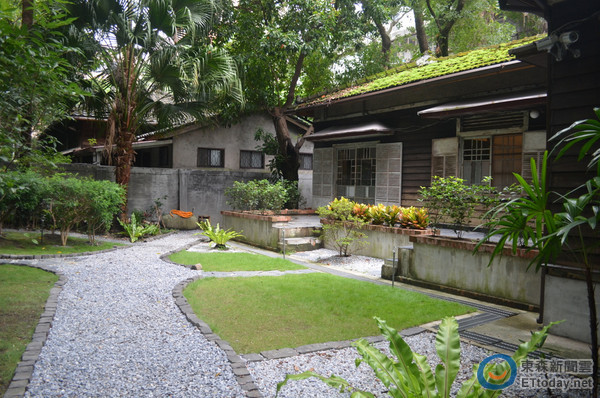
▲ The courtyard at “Qingtian Qiliu” is lush with greenery, set in a classic Japanese-style old house. (Photo / Provided materials)
Qingtian Qiliu
Qingtian Qiliu was originally part of a group of university residences collectively developed by Japanese professors. Covering an area of 206 pyeong (approximately 683 square meters), it was built by Professor Adachi Hitoshi and completed in 1931. In 1945, it was taken over by Ma Tingying, a renowned geology professor at National Taiwan University. In 2006, it was officially designated as a municipal-level historic site, named “National Taiwan University Japanese-Style Dormitory – Former Residence of Ma Tingying.”
Golden Seed took over the revitalization of the historic site, offering free guided tours and geological science outreach activities. Later, they decided to incorporate dining facilities in hopes of further enlivening Qingtian Qiliu. Visitors no longer just come to see the historic building—they can also enjoy delicious food. Qingtian Qiliu serves Japanese-style set meals and afternoon tea. Each item on the menu’s Qingtian Appreciation Afternoon Tea set comes with a unique story from the past.
Address: No. 6, Lane 7, Qingtian Street, Da’an District, Taipei City
Phone: 02-2391-6676
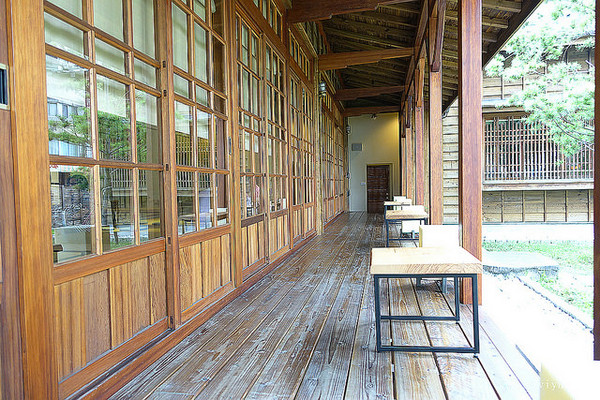
▲ The veranda of Bashiba Tea Rotation Station. (Photo / Provided by viviyu)
Bashiba Tea Rotation Station
Originally serving as the “Rotation Station” lodging for rotating personnel at a Buddhist temple—a structure with authentic Japanese-style architecture, such as a traditional Japanese wooden frame system and walls made of woven bamboo plaster—Bashiba Tea Rotation Station has been restored to its original appearance. In addition to being a hub for cultural history exhibitions and research promotion, it also offers visitors a chance to experience authentic Japanese-style architecture up close. It is now operated as a teahouse, Bashiba Tea Rotation Station, featuring both general seating and traditional tatami rooms. Here, you can enjoy single-origin teas served either by the pot or by the cup, as well as milk teas, caffeine-free beverages, and desserts.
Address: No. 174, Section 1, Zhonghua Road, Wanhua District, Taipei City
Phone: 02-2312-0845
Zi Teng Lu
Zi Teng Lu was originally an official residence during the Japanese colonial period, designated for high-ranking officials of the Taiwan Governor-General’s Office. After the 1950s, it became the government residence of Professor Zhou Dewei, then Director of the Customs Administration under the Ministry of Finance. It was also a gathering place for many liberal scholars of that era. After 1981, it was converted into a humanities-focused teahouse, named Zi Teng Lu after the three old wisteria trees in its courtyard.
Address: No. 1, Lane 16, Section 3, Xinsheng South Road, Taipei City, Taiwan
Phone: 02-23637375; 02-23639459
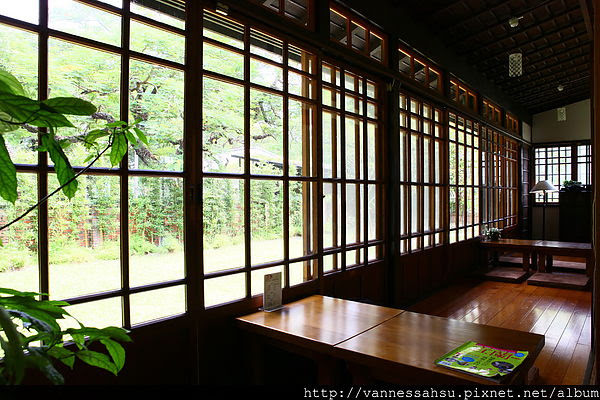
▲ Yilan Literature Museum. (Photo / Provided by Mi’er)
Yilan Literature Museum
Built in 1926 as the residence of the principal of what was then the “Yilan Agriculture and Forestry School” (now National Ilan University), the Yilan Literature Museum was officially listed as a historical site in 2001 and opened to the public for free in 2011. Both inside and out, it has preserved the wooden structure of an old Japanese-style bungalow intact. A cobblestone path, paved with rectangular stones, extends from the entrance into the garden of the bungalow. Inside, the tatami-floored Japanese room is enveloped by a rich aroma of books and coffee. Visitors can enjoy coffee here while reading literature related to Yilan, or quietly appreciate the art exhibits displayed inside. It is an important local venue where one can experience both literary ambiance and historical charm.
Address: No. 19, County Government Second Lane, Jiucheng South Road, Yilan City
Phone: 03-932-4349
Delicious options all day long
Download the “ETtoday News Cloud” app for quick updates on the latest food info →
iOS:https://goo.gl/rmIDdx
Android:https://goo.gl/XPe8Uj
Share
This article is published by HowToTrip. Sharing and reposting are welcome — please credit the source.
Article URL: https://www.howtotrip.net/views-8942
Related Articles
- Shaoxing's "Grandpa Gourd" hangs the gourds back up: "If there are too many people, we'll interact less — just take a quick look from afar"
- Chinese authorities announce "reciprocal adjustment" to Japan visa fees — single-entry visa jumps from 2,250 to 16,750 yen!
- The "health stones" carried by a traveler were found to have radiation levels exceeding safety limits by a thousand times, potentially endangering fellow passengers on the same flight. Customs issues warning!
- Shenzhen Airport Issues Late-Night Notice: Unidentified Aerial Object Detected, Causing Widespread Flight Delays!
- “They only said it cost money after I opened the box and washed it!” 200g of grapes sold for 60 yuan on a high-speed train—12306 responds!
- Can't buy an airline ticket? Denied exit? Blocked from boarding? A large number of Chinese tourists have mysteriously become "discredited individuals"
- Adverse weather and economic fluctuations impact Colombia's coffee market
- Beach bathing area responds to 2 yuan/30 seconds fee for freshwater foot rinsing: Clearly priced!
- Taking off with an improperly closed cabin door? Wing malfunction? Multiple flights made emergency returns mid-journey!
- Experience the gifts of nature! A countdown of the world’s ten most stunning coastlines