Stroll along Tokyo’s bohemian old street & sample mysterious desserts at an Insta-worthy patisserie
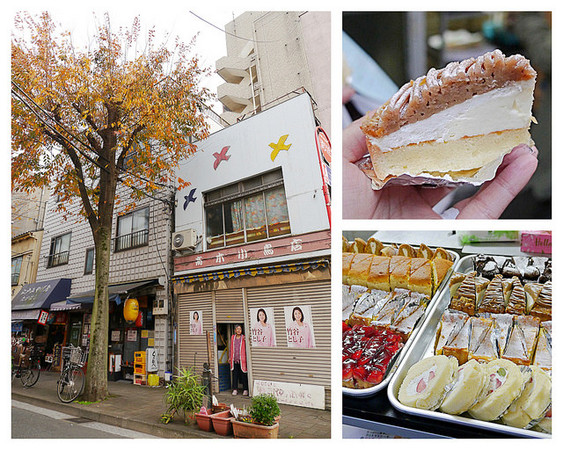
Text & photos byGirl at a 45-degree angle in the upper right
The "Chuozanbashi" station in Tokyo was a spot I discovered in the EVA Air in-flight magazine during my trip to Japan. If, like me, you're not too keen on bustling metropolises but prefer quaint old streets, hipster shops, and mysterious dessert delights, grab your backpack and join me for a half-day stroll featuring secret sweets and pour-over coffee.
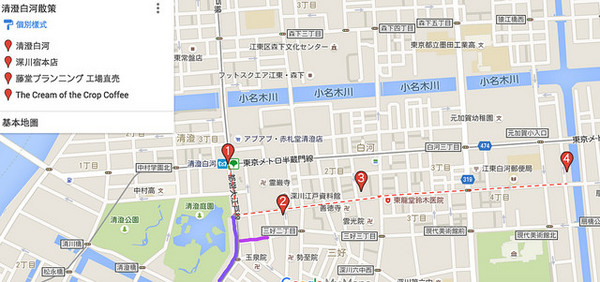
First, let me show you the route we’ll take today. The dashed red line marks the path through Chuozanbashi’s bohemian old district, with key landmarks marked along the way. The thick purple line highlights some particularly interesting historic houses.
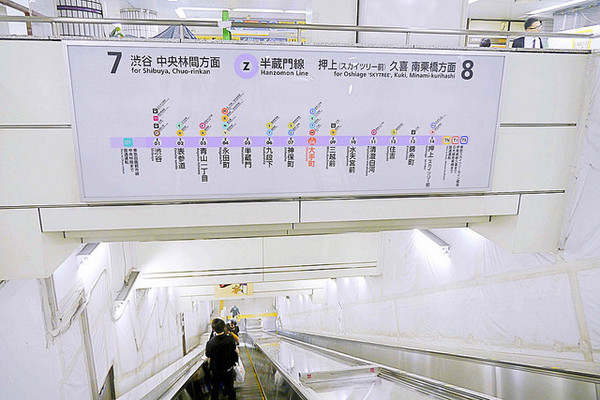
I planned a Tokyo trip with my longtime friend “Koizumi” (admin of the Japanese snack fan page お?子!)—I took the JR from Lake Tazawa in Akita and arrived in Tokyo in about three hours. After wandering the underground mall from Tokyo Station to “Otemachi,” I transferred to the “Hanzomon Line” and reached “Chuozanbashi” after two stops.
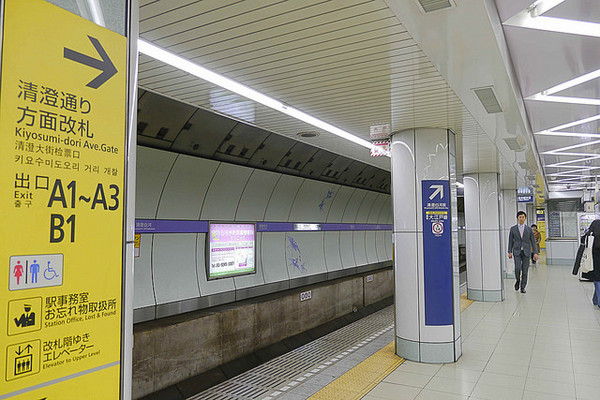
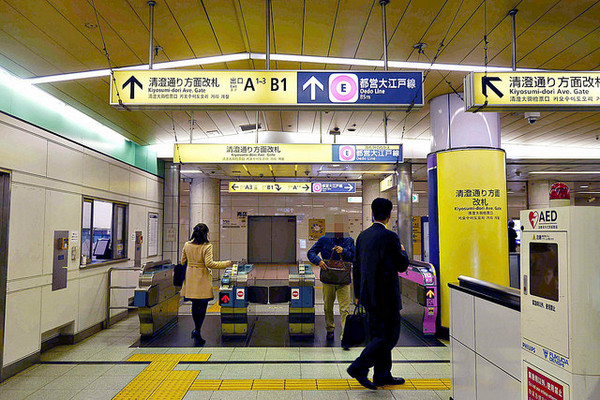
For my stroll through the Chuozanbashi old street, I chose to exit at “B1.”

Once out of B1, you can follow the street signs heading toward the “Shinagawa Edo Museum.”

This place, shaded by ginkgo trees, is the “Chuzenji Garden.” It was built in 1880 by the founder of the Mitsubishi conglomerate as a private guesthouse. I had no idea Mitsubishi had such a long history until I read that plaque.
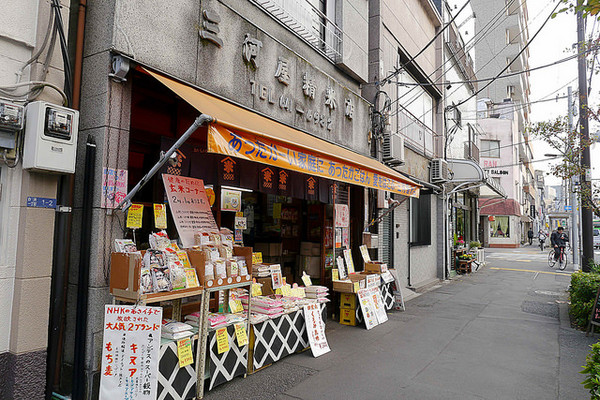
Walking along the lane opposite Chuzenji Garden, old shops start popping up one after another. I was suddenly tempted to buy rice again—luckily I didn’t stop to look, or this trip might’ve gotten heavy real fast (laughs).
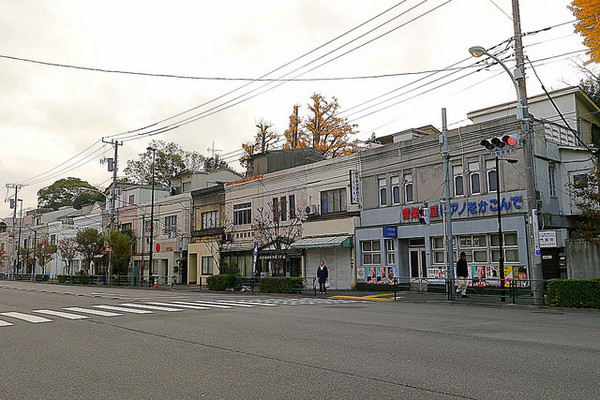
The row of Meiji-era houses next to Chuzenji Garden is ancient yet neatly arranged, each painted in different colors—it reminded me of the charming Portuguese-style buildings in Macau. These kinds of structures are rare in Tokyo, and who knows, they might all be demolished in some future urban renewal project. When in Chuozanbashi, it’s a must to snap a few photos—old houses are only getting fewer, not more.
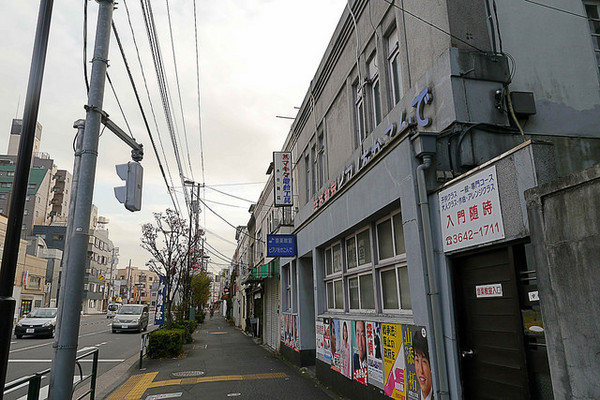
Not only are the buildings old, even the signs have vintage charm. These advertising fonts are so full of character.

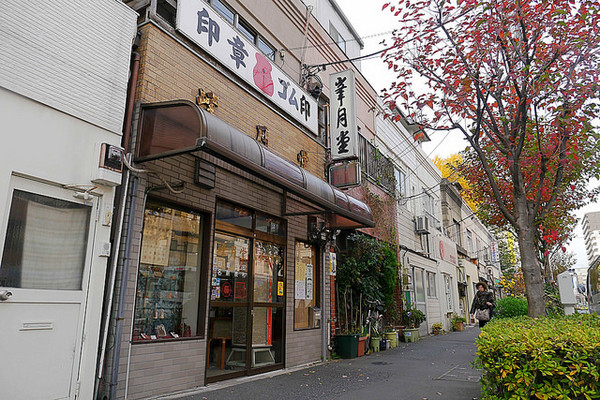
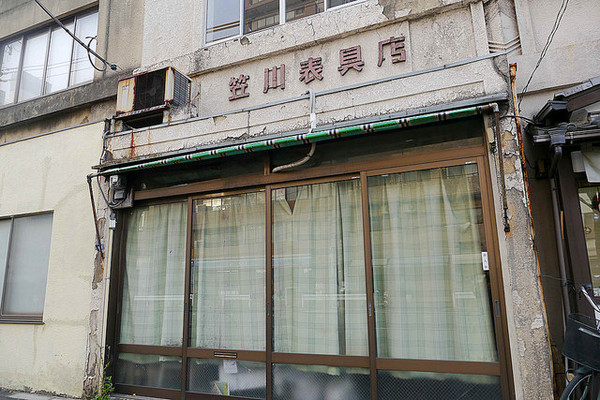
I’m a little skeptical if these shops are even still open. But the signs haven’t been taken down yet, and the weathered walls make it hard to believe this area is just a few stations away from central Tokyo.
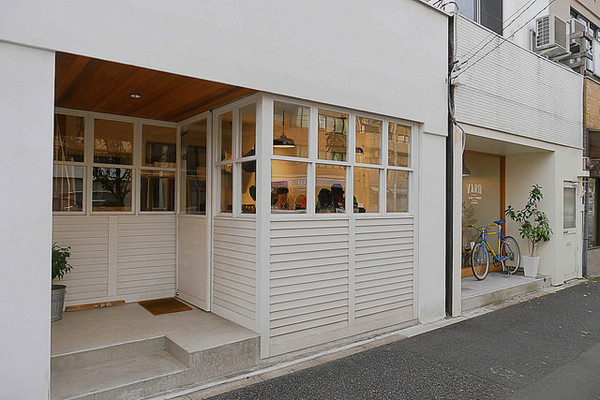
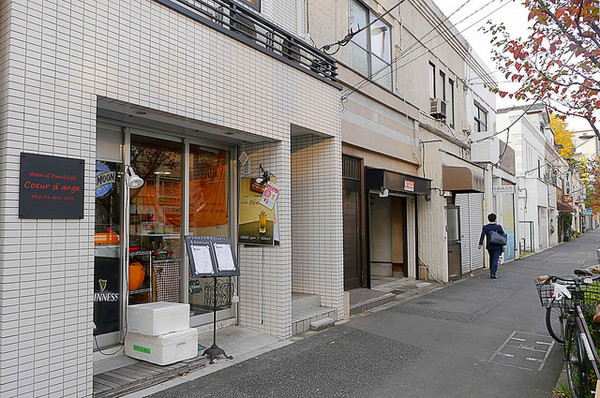
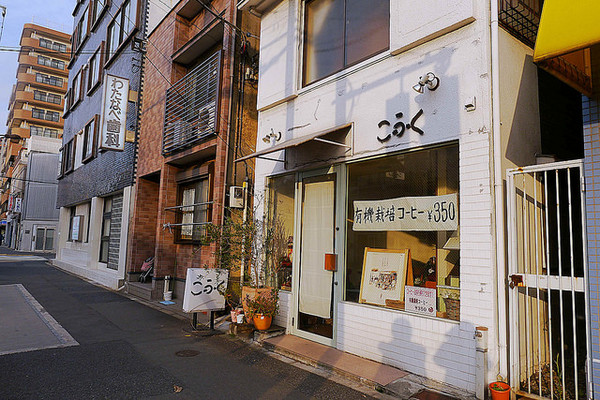
Among the old houses, you’ll occasionally spot newly opened hipster spots—usually cafes, restaurants, or boutiques. It reminded me of Taipei’s Chifeng Street. If everything were just trendy, it’d lose its soul—but it’s this mix of old and new that makes it feel fresh and fun to explore.
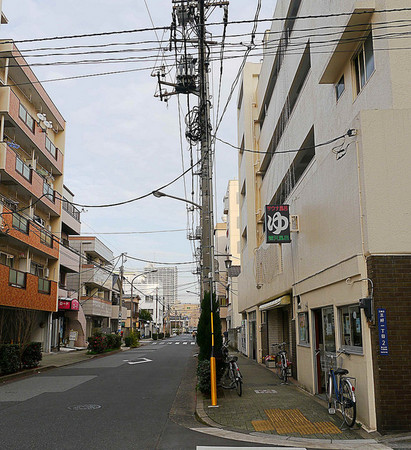
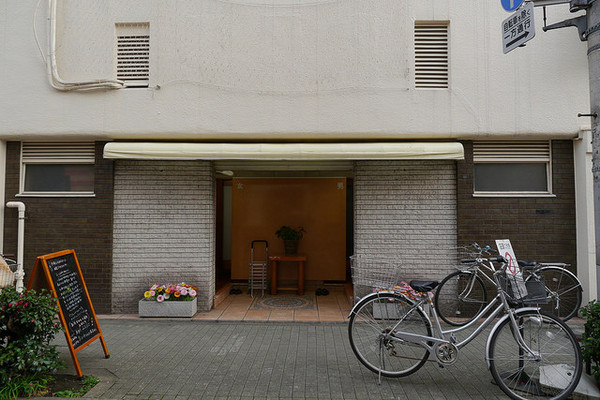
Japanese dramas often feature scenes of people visiting public baths, and this place, “Tatsumi-yu,” is one of them—the kind with Mt. Fuji plastered on the walls. It’s a very famous bathhouse in Tokyo, with large tubs, saunas, and even a rare open-air bath. I think I’ve seen it used as a filming location in many Japanese shows and movies without realizing it. For adults, a single bath costs 460 yen. If you want to experience a typical local’s daily routine, come check it out.
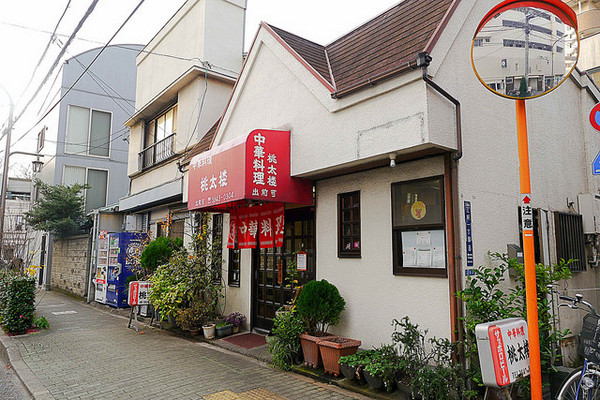
This “Momotaro” place is apparently a well-known Chinese restaurant nearby, but according to Tabelog reviews, it only has a 3.06 rating—not particularly impressive.
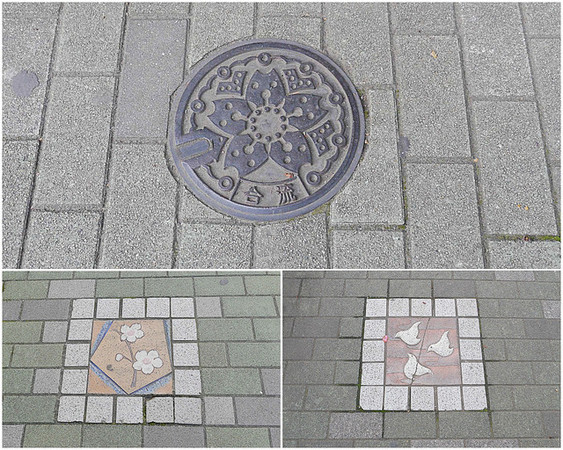
The small street scenes here have a lovely small-town vibe.
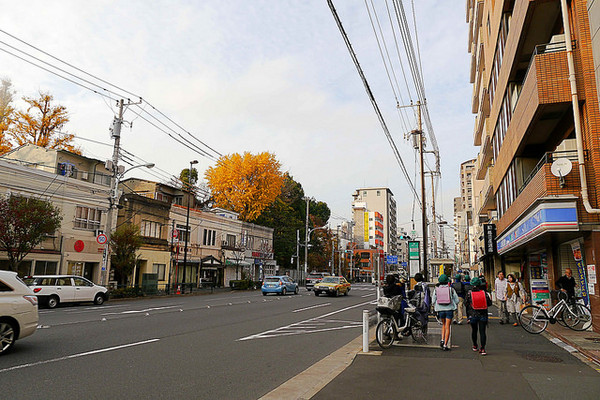
Up to this point was along the purple route shown earlier. Now we’ll head back to the dashed red line through the old district, making our way toward our second destination: Shinagawa N...<前进。
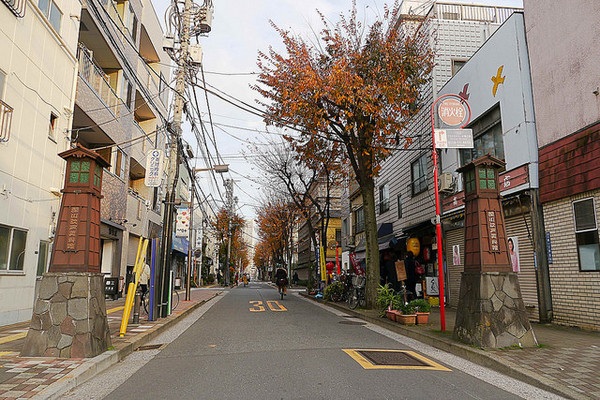
The entrance to Chuozanbashi’s old street features two ancient lanterns, as if illuminating this once-bustling old road.
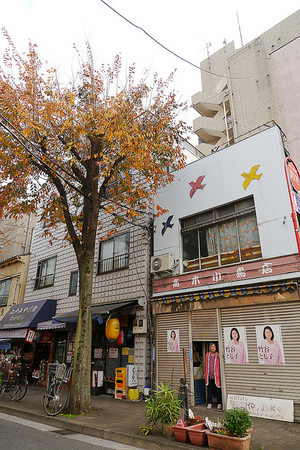
Right at the first shop at the entrance, “Takagi Kotori-ten,” an elderly lady stands in the doorway. My friend Koizumi struck up a conversation with her and asked why there were paintings of birds on the wall. Turns out the lady’s father used to run a bird shop here to support the family, but it closed after he passed away. She said, “So many people on this street have passed away,” which felt eerily quiet—not what you'd expect in Tokyo...
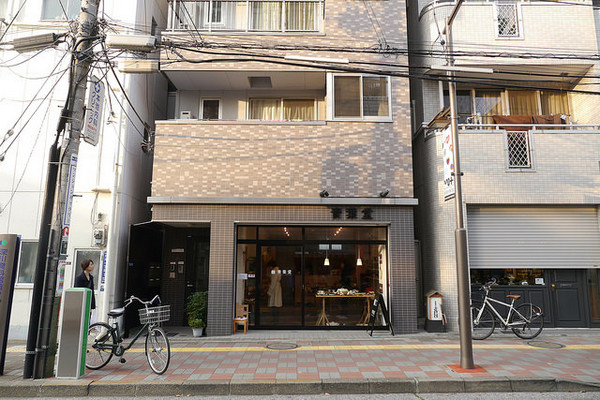
A few steps ahead, new shops occasionally pop up among the old community stores.
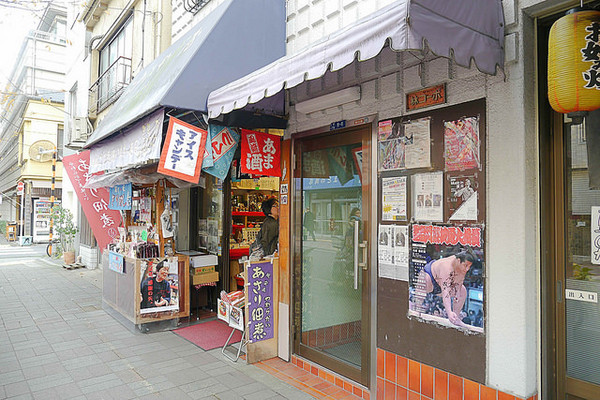
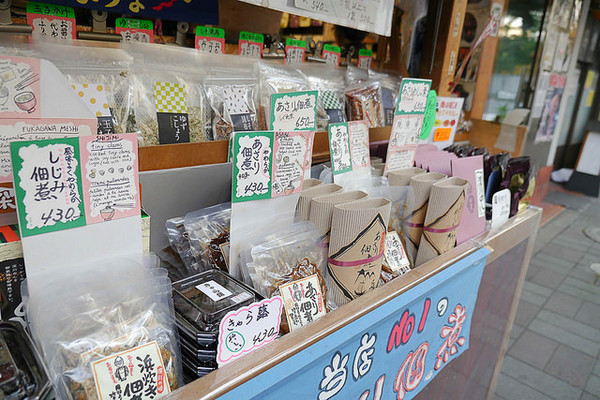
This is a famous general store selling all sorts of snacks and small toys, with the owner wearing an old-style samurai-style headpiece to attract customers. It’s the only shop I felt was really geared toward tourists.


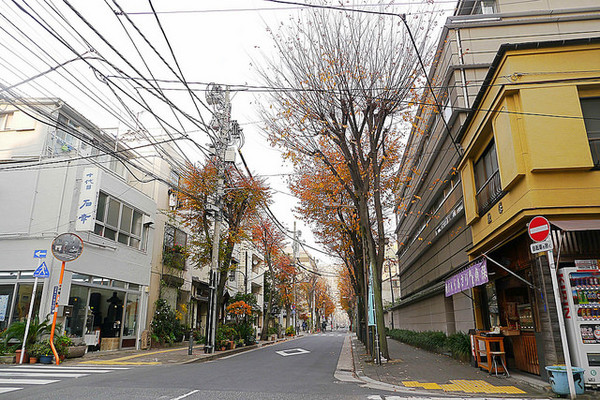
I don’t know what these trees are called, but they look absolutely gorgeous in early winter.
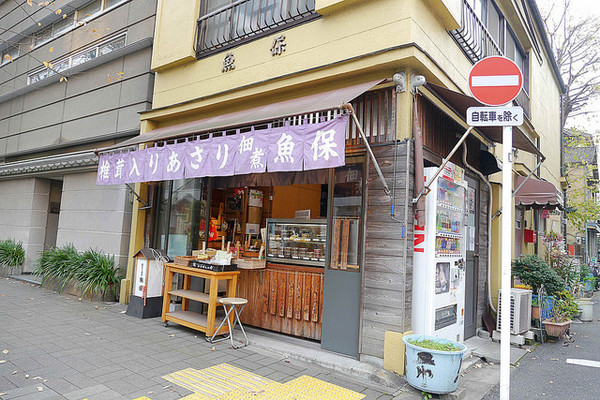

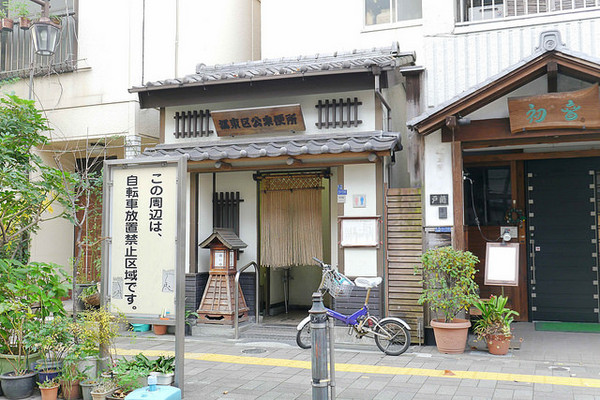
I didn’t expect to find a public restroom here—and one so classically Japanese too. It’s the first time I’ve seen such a toilet on a Tokyo street.

After a series of old buildings and shops, the sudden appearance of this modern structure reminded me I was still in Tokyo.
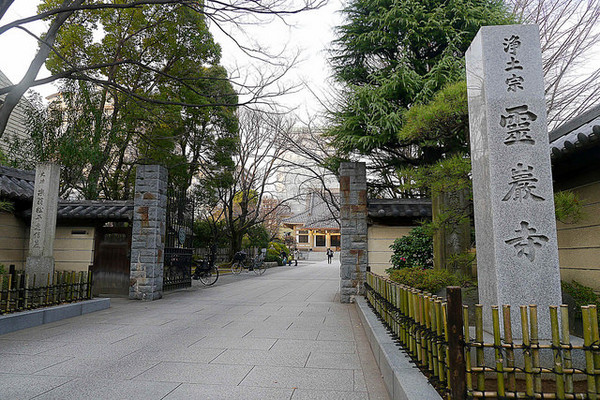
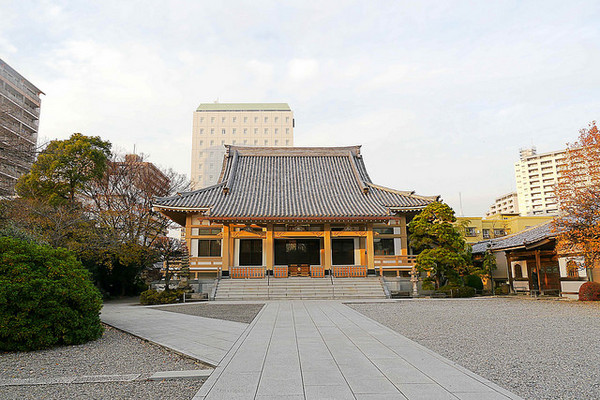
“Reiganji Temple” is the burial site of “Matsudaira Sadanobu,” a political figure from the late Edo Shogunate period. He once held power, and although mixed-gender bathing has been common in Japan since ancient times, by the late Shogunate era, issues like prostitution and gambling arose. To uphold public morals, a “ban on mixed bathing” was issued—but the practice didn’t stop. It wasn’t until recent decades that most bathhouses began separating male and female sections. Mixed bathing can still occasionally be found in Tohoku and Kyushu, like the hidden hot spring “Tsurunoyu” that I experienced on the second day of this trip.Crane’s Hot SpringHowever, when I went for a soak, not a single woman entered the mixed bath.
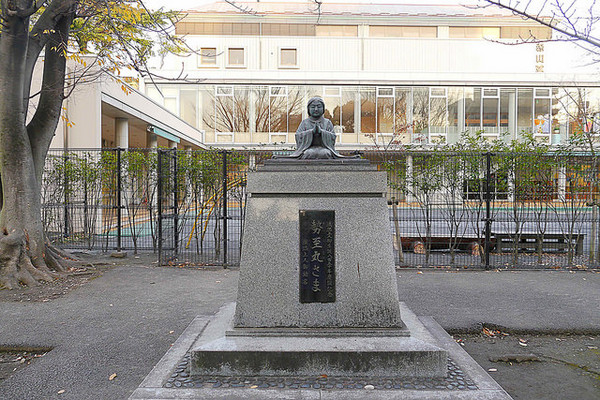
This is a statue of the childhood version of “Honen,” the founding master of the Pure Land sect. Most Pure Land temples erect such statues, with the most famous one located at Kyoto’s Chion-in Temple.
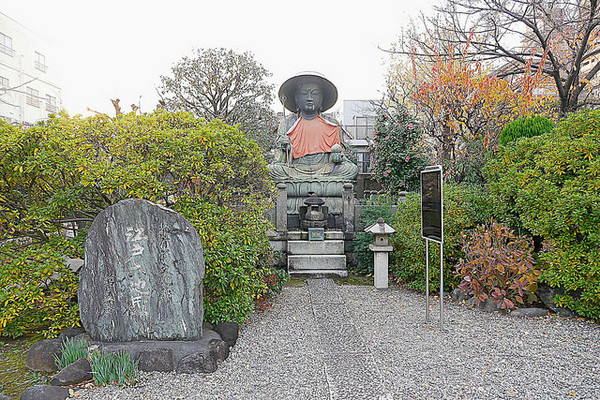
This is Kṣitigarbha Bodhisattva, and the inscription reads "Edo Roku Jizō" (Six Jizō of Edo). Legend has it that these were modeled after Kyoto’s "Roku Jizō" and erected at the six entrances of Edo (now Tokyo). This one is one of the original six. It shows how important this old neighborhood of Chūō Kōenji was during the Edo period.

This temple has stood here since 1657. Truly, just about any shrine or temple in Japan boasts an incredibly long history.
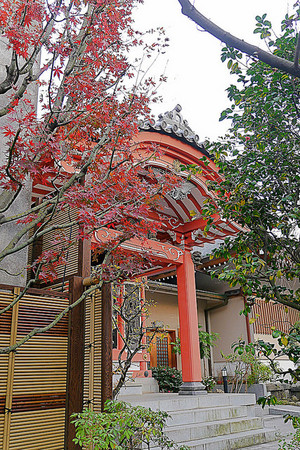

This small temple is called "Chōsen-in Fudō-dō," established in 1658. The "Shusse Fudō Myōō" enshrined inside is also very well known.
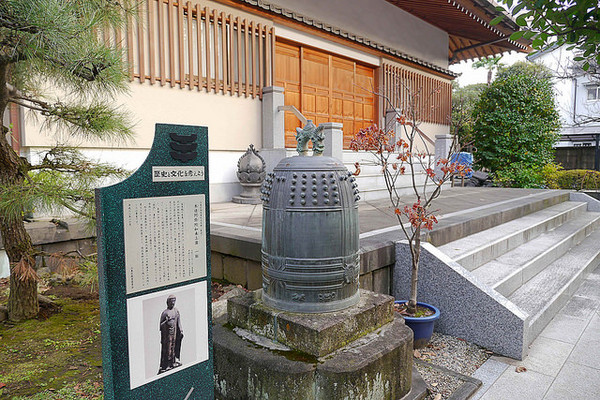
This bell is a tangible cultural property of Kōtō Ward.
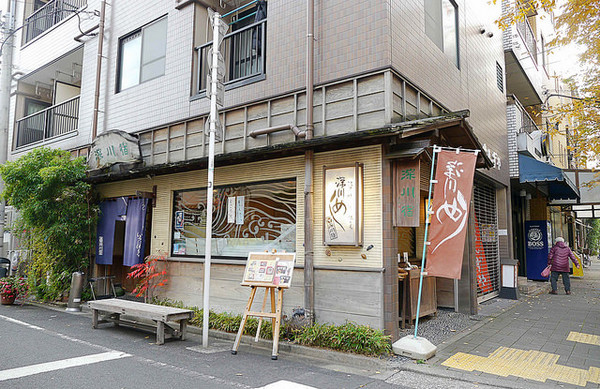
After leaving the temple, return to the red dashed route and continue forward. This place, "Shinagawa-yado," is the second red landmark on the map above. It's part of "Shinagawa N...<”的起源店家。深川N<是一种渔家料理,把贝类和蔬菜用酱油和味噌煮熟之后盖在饭上,就变成这道美食。这种料理在东京只有这儿和“门前仲町”吃得到唷。
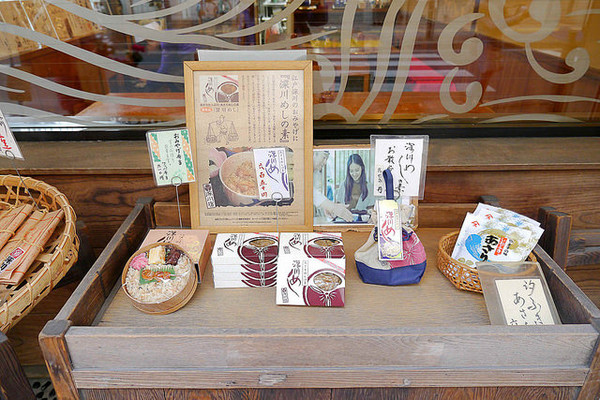
A famous shop is a famous shop—even top actresses like "Takeshi T... [incomplete name]" come here. I thought about getting something here too, but ended up finding it later in the evening. There were plenty of seats, and you can have a nice chat while eating. The prices aren’t bad either...


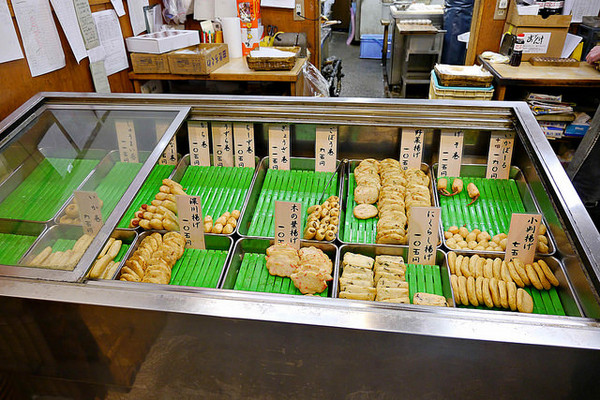
This is a specialty store for taiyaki (fish-shaped cakes) that locals love. I arrived in the afternoon around four, and they were still deep-frying fresh ones—clearly, business is good. When customers buy, the very elderly owner scoops the taiyaki into a small bamboo basket and then packs them in plastic containers at checkout. The most unique part? The old owner still calculates bills using an abacus—super rare these days.
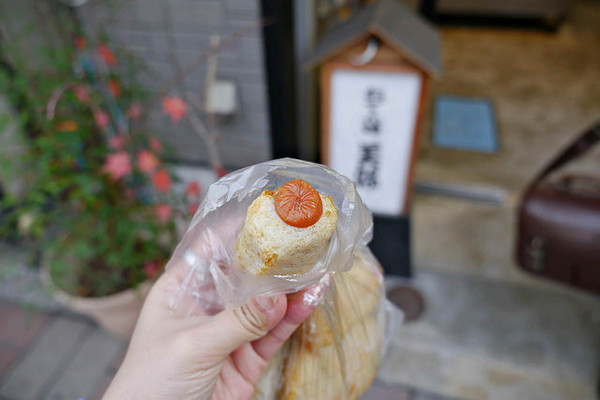
Most taiyaki are served cold, and while you can eat them right away, they might not suit Taiwanese tastes as much. I picked the flavor the owner recommended—said to be good even when cold—and it had a hot dog inside. It did have a nice sweetness from the fish paste, but it felt a bit oily when cold.
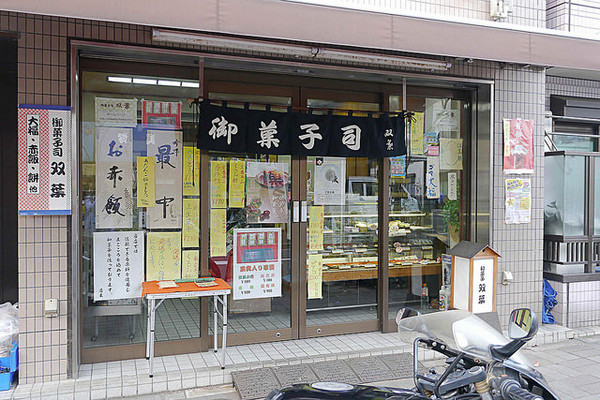


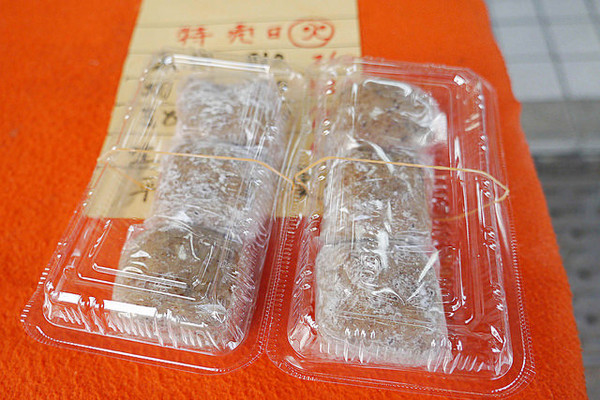
This mochi shop, "Futaba," has been around for over 30 years. Their most famous product is sesame mochi, which the owner says was created by his father. Even someone like me, who's tried mochi all over Japan, says I've only seen sesame mochi sold on this street.

This quirky old bookstore—no idea why they put a mannequin outside to scare people... Maybe to draw attention to the two boxes at their feet where books are just 300 yen each.
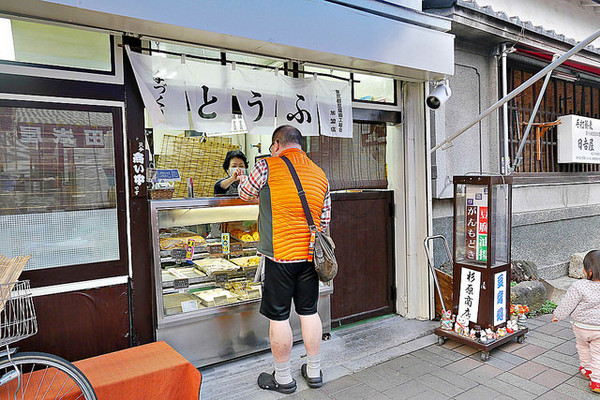
This "Sugihara Shop" sells handmade tofu and is also a well-known spot nearby.
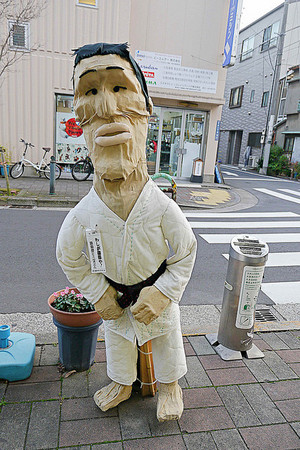
There are lots of other curious sights on this street too. For example, this sumo wrestler statue—apparently because a famous sumo wrestler is from Chūō Kōenji, so they made this statue in his honor.
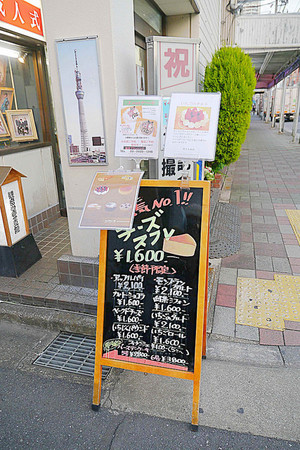
Walk a few more steps, and you’ll reach today’s third coordinate: the mysterious dessert shop "Tōdō Planning." With a rating of 3.54, it’s a super popular dessert spot in the area.

Just how mysterious is this dessert shop? It doesn’t have a storefront—the only sign is a small indicator at the corner of the alleyway you enter. And here’s what it looks like.
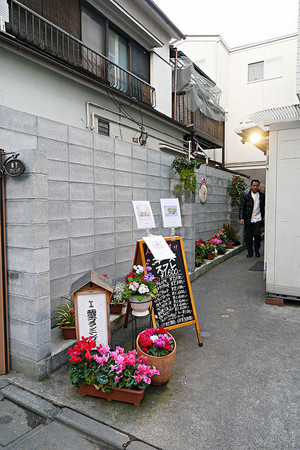
A tiny sign stands to the side, with the aroma of baked cake wafting out. You’re bound to smell it and stop to search for the source as you pass by this alley. The person I accidentally captured in the photo here is the cake-selling boss, Up. Walk down this alley, and that’s where you buy the cakes.
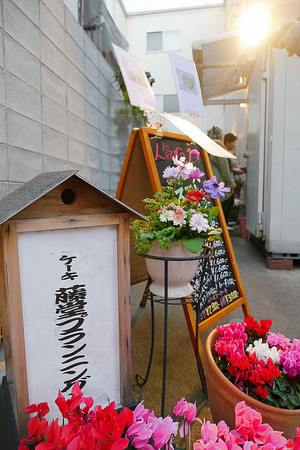
Taking this angle should help you understand what I mean... That’s where the customers stand.
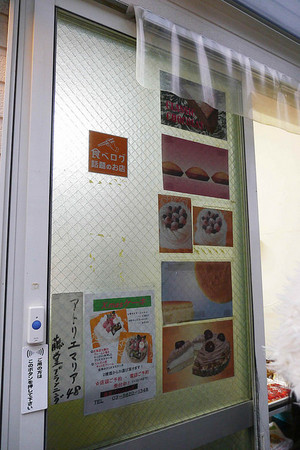
It’s literally a factory, except they’ve opened a door to sell desserts.
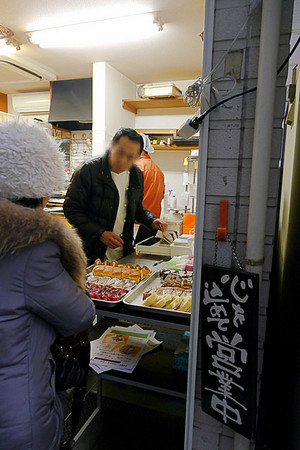
This factory-direct shop, of course, doesn’t have seating—you can only take things away.

All flavors offer sliced samples. Once you decide which one you want, they’ll sell you a whole cake to take home and enjoy slowly. The most famous is the light cheesecake, the one in the second row on the top left. Seriously, don’t doubt it—all eight flavors are available for sampling, and the owner will keep giving you more. They even supply unlimited napkins~
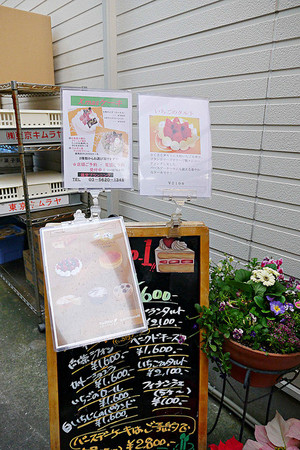
This is the price for a whole cake. Cakes around size 6 sell for 1600–2100 yen. Compared to nearby shops, it’s not expensive, and it’s not a factory-made generic brand either.
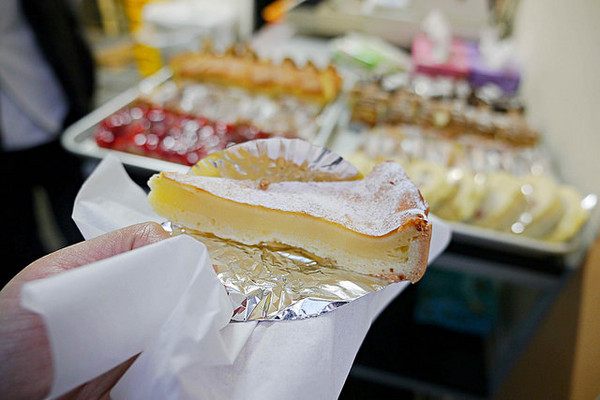
I tried a bunch of non-signature items too, and they were all delicious. Like this cheese tart—the cheese flavor is super rich. Honestly, for the size of the slice, you’d pay at least 300 yen elsewhere.
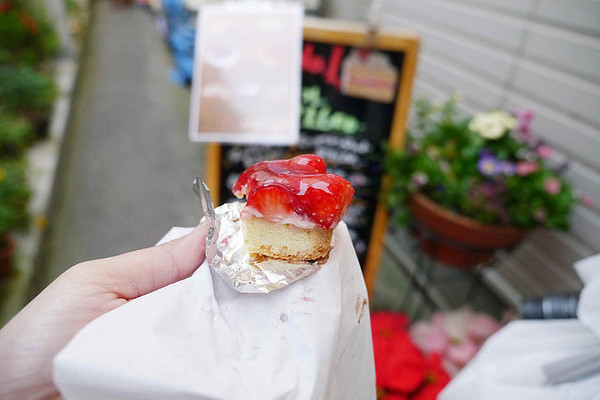
This strawberry tart, which was only half left, was also great. Although the strawberries weren’t as big as those from fancy famous cake shops, their aroma and firmness were still excellent. Plus, I love the sweet-and-sour combo—it’s super satisfying.
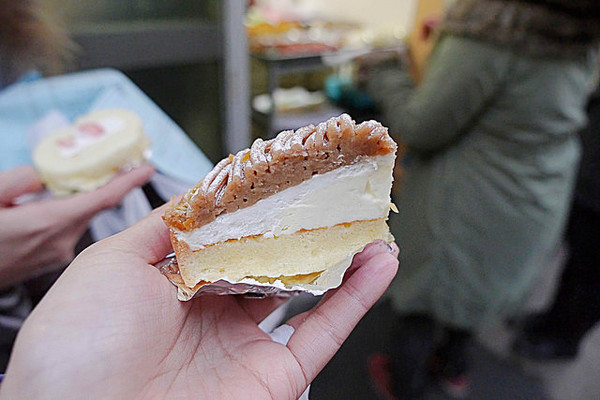
I found that among the sample items, the chestnut pie was my favorite—the thick whipped cream paired perfectly with the super rich chestnut paste. If I were to buy one, I’d get this one.
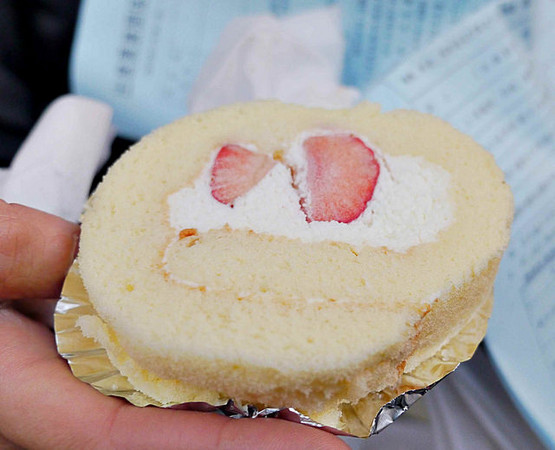
The strawberry cake roll was also really tasty, though it’s pretty much what you’d expect. I truly think Japanese whipped cream is just too delicious—I’ve almost never been disappointed.
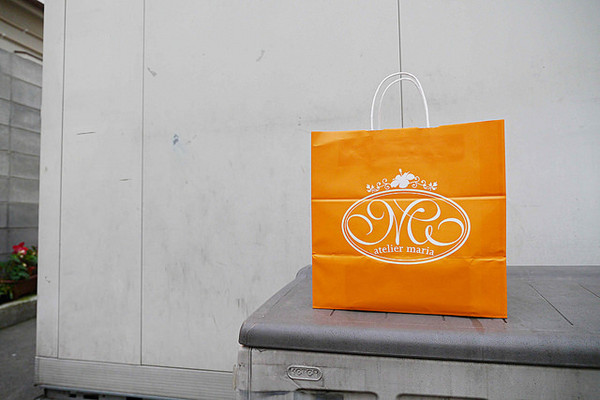
After sampling four slices, I was full. The owner was super enthusiastic, insisting we try everything—so generous—but alas, my stomach has its limits~ After buying a whole cake, they pack it in this orange paper bag, which looks nice even if you’re giving it as a gift.
Let me remind you again where this super generous mystery dessert shop is located:
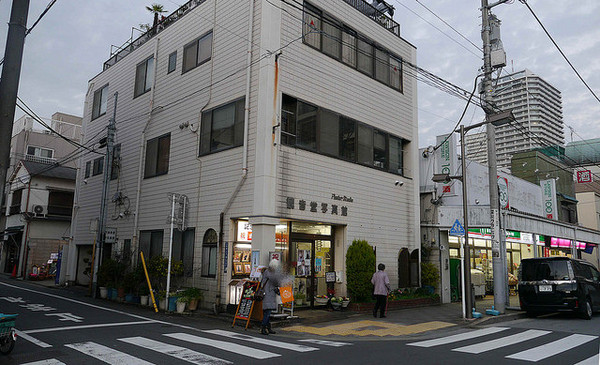
It’s the first shop inside the alley that branches off from "Kannon-dō Shashinkan." The small blackboard at the corner lists the dessert shop’s offerings.
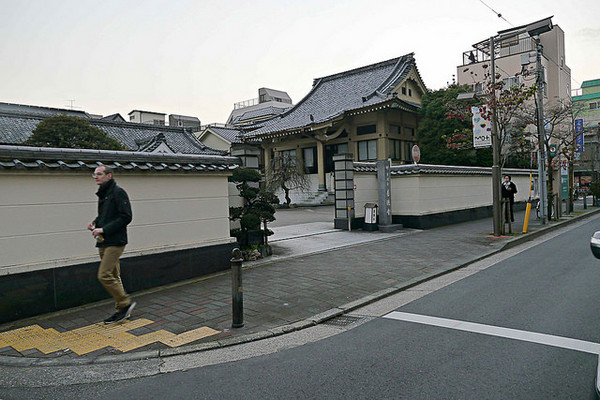
Alternatively, you can use "Zenkoku-ji Temple" as a landmark—the dessert shop is in the alleyway right across from it.
【Chūō Kōenji Ryokan】
Address: 1-6-7 Mihama, Kōtō City, Tokyo
Phone: 03-3642-7878
TABELOG rating: 3.14 (A score over 3.5 is considered high; refer to 【Useful Japanese Travel Websites】Tabelog (食べログ): Your essential guide to finding great food)http://serene1102.pixnet.net/blog/post/30705268)
Business hours: 11:30–17:00, closed on Mondays
【Beautiful】
Address: 2-12-7 Miyoshi, Koto, Tokyo
Phone: 03-3641-2929
TABELOG rating: 3.05
Business hours: 10:00–18:00, closed on Sundays
【Mikko Shuzo Futaba】
TABELOG rating: 3.05
【Douto Planning Direct Factory (Doutou Planning factory direct store)]
Address: 2-5-2 Shirakawa, Koto, Tokyo
Phone: 03-5620-1348
TABELOG rating: 3.54
Business hours: 10:00–19:00, no holidays
Right 45-degree angle girls' Japanese flavor food travel diary
Work and school are so boring, want to go traveling?
Download the “ETtoday News Cloud APP” and take a virtual trip with us →
iOS:https://goo.gl/rmIDdx
Android:https://goo.gl/XPe8Uj
Share
This article is published by HowToTrip. Sharing and reposting are welcome — please credit the source.
Article URL: https://www.howtotrip.net/views-8652
Related Articles
- Shaoxing's "Grandpa Gourd" hangs the gourds back up: "If there are too many people, we'll interact less — just take a quick look from afar"
- Chinese authorities announce "reciprocal adjustment" to Japan visa fees — single-entry visa jumps from 2,250 to 16,750 yen!
- The "health stones" carried by a traveler were found to have radiation levels exceeding safety limits by a thousand times, potentially endangering fellow passengers on the same flight. Customs issues warning!
- Shenzhen Airport Issues Late-Night Notice: Unidentified Aerial Object Detected, Causing Widespread Flight Delays!
- “They only said it cost money after I opened the box and washed it!” 200g of grapes sold for 60 yuan on a high-speed train—12306 responds!
- Can't buy an airline ticket? Denied exit? Blocked from boarding? A large number of Chinese tourists have mysteriously become "discredited individuals"
- Adverse weather and economic fluctuations impact Colombia's coffee market
- Beach bathing area responds to 2 yuan/30 seconds fee for freshwater foot rinsing: Clearly priced!
- Taking off with an improperly closed cabin door? Wing malfunction? Multiple flights made emergency returns mid-journey!
- Experience the gifts of nature! A countdown of the world’s ten most stunning coastlines