Sticking to a 72-hour pure pork bone broth — Sweet and mellow Japanese ramen makes its way to New Taipei
Text & Photos /BearMeow Rudy
The Japanese pork bone ramen champion, Hakata Nagahama Ramen Tanaka Shop, has opened a store at Mitsui OUTLET. A rich broth simmered from pork bones for three days, paired with grilled char siu, is truly delicious. Though Bear and Meow can’t claim to have fully explored Japan, they’ve certainly visited plenty of ramen shops and felt the dedication of many ramen artisans. They remember one Japanese chef saying that the simpler the flavor, the harder it is to maintain, and the fewer the ingredients, the more challenging it is to stay consistent. At the time, they didn’t feel much upon hearing it, but the more ramen they ate, the more they understood the chef’s sentiment. This time, when Bear and Meow were invited to visit Linkou Mitsui OUTLET and taste this ramen from Tokyo’s Hakata Nagahama Ramen Tanaka Shop, it reawakened Bear’s past memories…
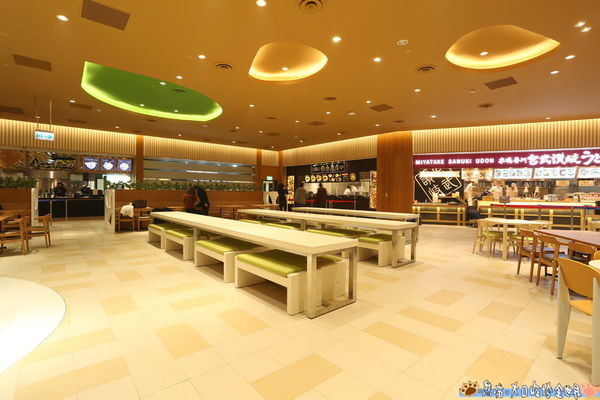
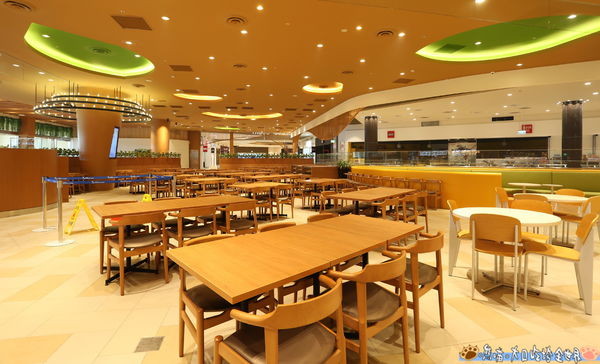
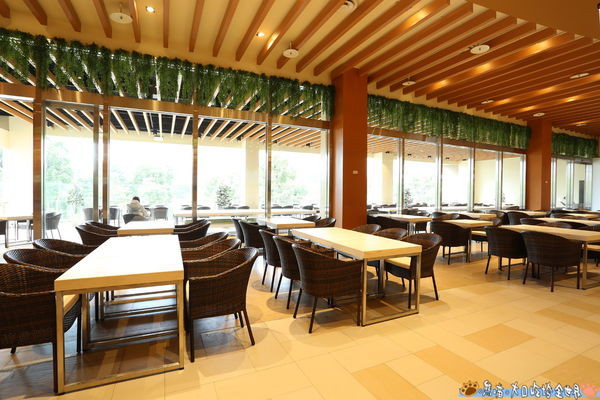
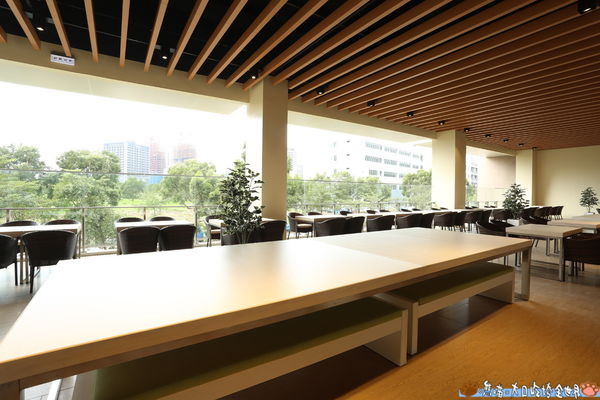
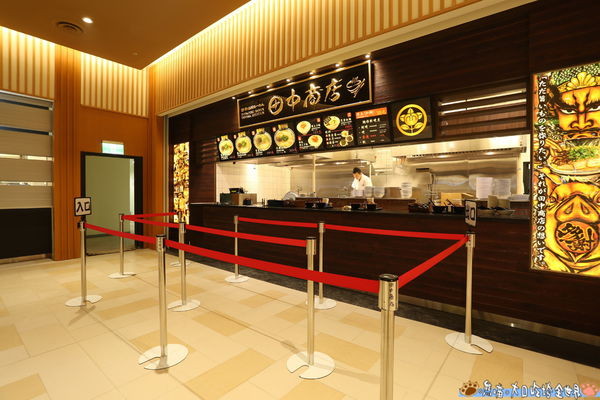
Alright, where exactly is this Hakata Nagahama Ramen Tanaka Shop? It’s actually located on the second floor of the food court area in the indoor section of Mitsui OUTLET. This food court has a few standout features. Usually, the food courts in general malls are mostly small vendors, or even just purely operated as food courts. But the stores that have moved into Mitsui’s food court are almost all well-known, high-end specialty restaurants with multiple physical locations in Taiwan or Japan. Furthermore, the environment of the food court is very, very spacious. There are plenty of seats, and they’re not all crammed face-to-face or back-to-back — instead, there’s a sense of ease. Dining here doesn’t feel strenuous at all, but rather offers a comfortable, open feeling.
Moreover, Mitsui OUTLET even has an outdoor dining area — not just a single restaurant’s outdoor section, but a spacious overall outdoor space. Even if you don’t sit outdoors, choosing an indoor area with floor-to-ceiling glass also provides an excellent resting experience.
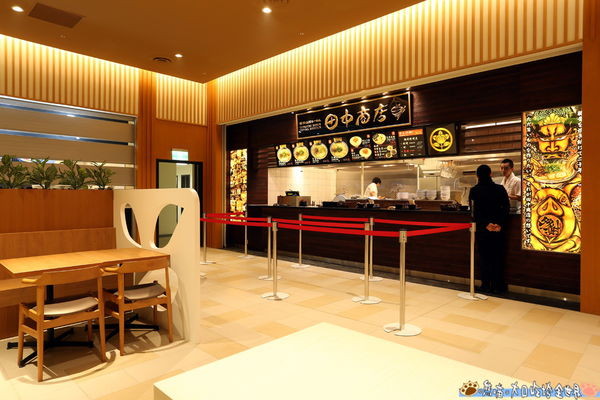
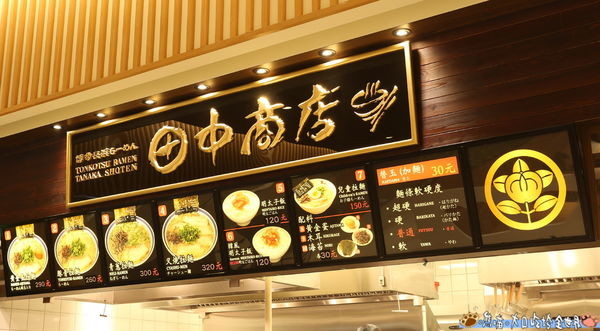
But getting back to the focus of this article — no matter how great the environment, the food has to be delicious to matter. So, taking advantage of this invitation, Bear and Meow are here to experience what makes Hakata Nagahama Ramen Tanaka Shop so special. First, Bear will introduce this Tanaka Shop to everyone (it’s not a grocery store, it’s ramen… ramen!).
Actually, this Hakata Nagahama Ramen Tanaka Shop officially opened on December 20, 2000, in Adachi Ward, Tokyo, Japan. Seven years later, it moved to its current location in Adachi Ward. Over these 15 years, it’s won countless pork bone ramen awards. Whether it was once awarded the highest score for Tokyo pork bone ramen in a single year on a major food website, or won the pork bone ramen category championship three times in a row from 2008 to 2010 on Gurunavi, in terms of taste, Hakata Nagahama Ramen Tanaka Shop absolutely adheres to the pure pork bone style, using only pork bones and water to simmer the broth.
Since they hadn’t tried it in Japan beforehand, this was also Bear and Meow’s first experience with Tanaka Shop. To understand the taste, Bear discussed with several friends who had visited the Tokyo flagship store and summarized a few standout aspects.
First, because Tanaka Shop’s broth is pure pork bone, the ingredients are almost only pork bones and water. In the kitchen, you can see four pots in total. The largest pot is for the first day’s broth, then every day it moves to the next pot. It must go through three pots — that is, three days — before the broth in the fourth-day pot is used for actual service. For many people, the broth of authentic Japanese ramen may seem a bit too salty for Taiwanese palates, but those who’ve eaten at Tanaka Shop feel it’s still within an acceptable range, so it’s no problem to drink it all.
Next, to make a bowl of ramen, besides the most important broth, there are also the uniquely varied noodles. Hakata Nagahama Ramen Tanaka Shop, which has been in business for 15 years, has always used thin noodles made by Kyushu Hakata’s Trio Seimen. But this time, it’s their first venture into Taiwan, so Trio Seimen actually came to Taiwan to set up a noodle factory — now that’s dedication. Plus, the char siu is grilled in a kiln, offering a traditional yet never-tiring delicious flavor~ (Actually, Tanaka Shop’s golden egg is also amazing, but Bear and Meow didn’t get to try it in two consecutive visits; they’ll have to challenge it again next time). Because of this, Bear and Meow went two days in a row, and both times saw long lines during the trial operation period.
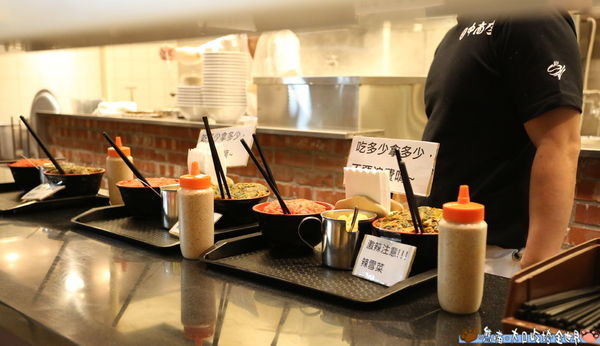
Also, Tanaka Shop has two other features: they’re happy to mix and match and allow extra noodles (30 NTD per portion). They even offer free extra broth. For the owner of Tanaka Shop, he hopes everyone can eat their fill without it being too rigid. So whether you want to eat rice while having ramen, have rice with broth after ramen, or just pair it with spicy pickled mustard greens and red ginger, you can also mix all the mustard greens, ginger, and mentaiko rice into the broth. So for Bear and Meow, although Tanaka Shop shows an extremely traditional pork bone ramen style, at its core, it’s quite thoughtful and lively~
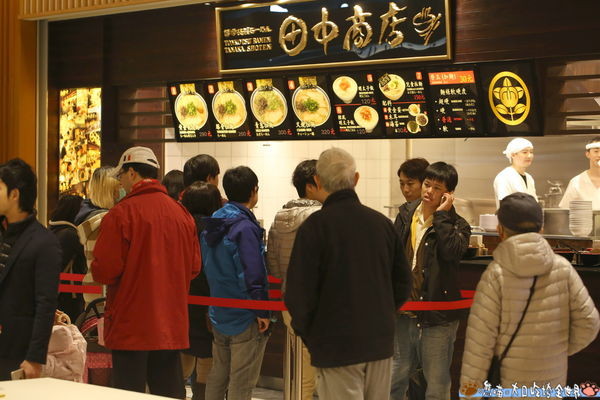
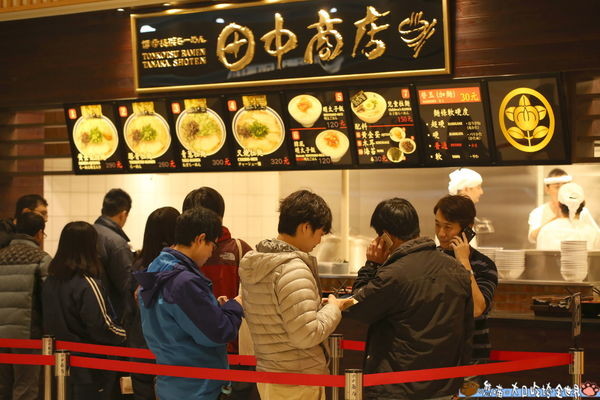
Because business is so good, Bear and Meow really had to line up properly (even though they were invited, it’s only fair!). When ordering, besides choosing the flavor, you can also select the firmness of the noodles. Since Tanaka Shop’s noodles are thin and relatively soft, if you love a firmer texture, you can boldly go for “extra hard.” If you have no special preference, just choose regular.
At Tanaka Shop, there are four types of ramen and two types of rice dishes to choose from, including Golden Egg Ramen (290 NTD, bowl), the basic Pork Bone Ramen (260 NTD, bowl), the upgraded Char Siu Ramen (320 NTD, bowl), and the more refreshing Green Onion Ramen (300 NTD, bowl).
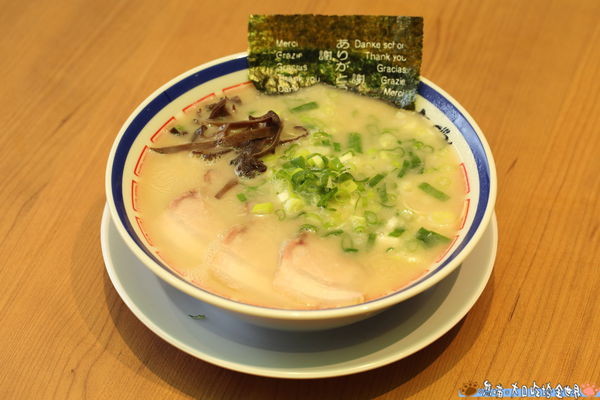
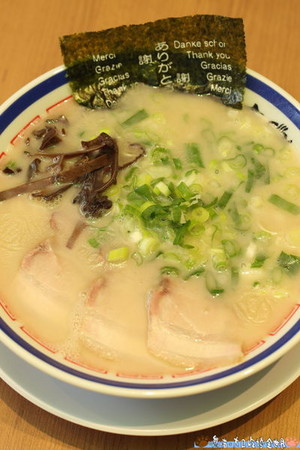
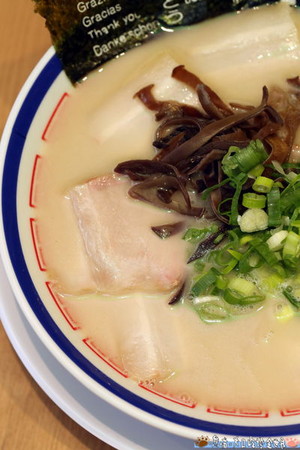
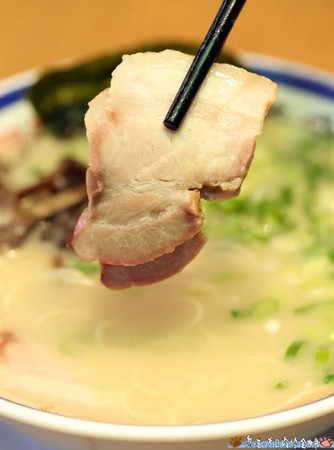
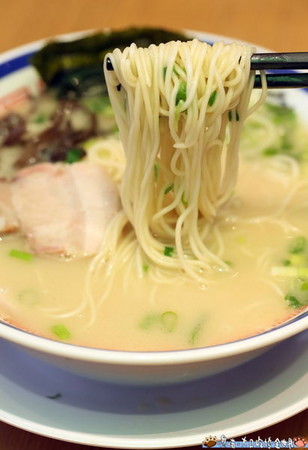
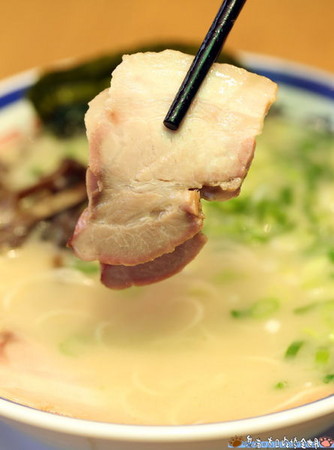
Alright, the first bowl of ramen is finally here… This is the basic Pork Bone Ramen (260 NTD, bowl), also the ramen Tanaka Shop is most proud of. The most unique part is that the nori on the bowl is printed with the word “thank you” in various languages — this is Tanaka Shop’s polite touch. At first glance, the rich broth made Bear and Meow extremely happy. The aroma and richness of the pork bone flavor were so enticing that Bear couldn’t even focus on taking photos properly. Besides the nori, there are green onions and wood ear mushrooms, plus three slices of short, thick char siu, with a well-balanced ratio of fat and lean meat.
Took a sip of the broth — mmm. Rich but not overly salty. Actually, Bear and Meow were a bit worried at first, since such pure pork bone broth can easily become too oily. But the clever filtering and presentation of a rich yet sweet broth make this pork bone ramen very approachable. The flavor is pure, traditional, and not clichéd. Then, the char siu, grilled in a special kiln, isn’t overly sauced, so it still showcases the elegant, pure sweetness of pork. Each slice of char siu has texture, making Bear and Meow smile with delight.
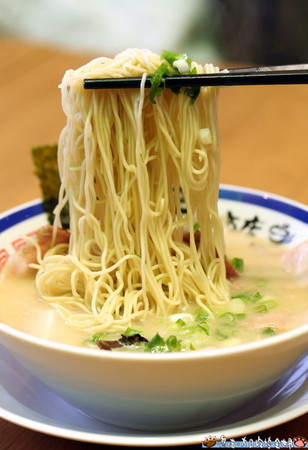
Finally, the first feeling of tasting the thin noodles is that they slide down your throat with just a light chew, with zero burden. Don’t let its very standard thinness fool you — its ability to absorb broth is better than expected. In terms of firmness, this bowl is of regular hardness, slightly on the softer side, quite suitable for elders and kids.
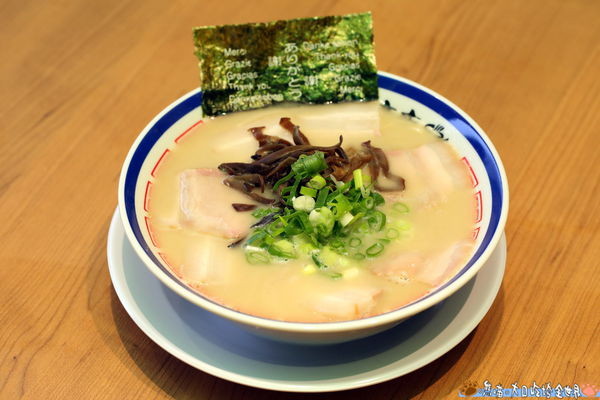
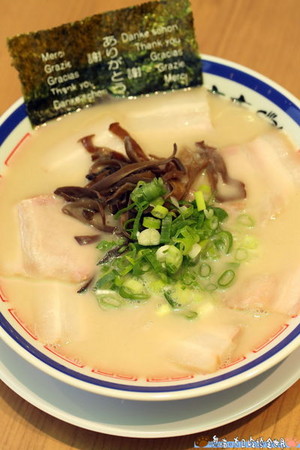
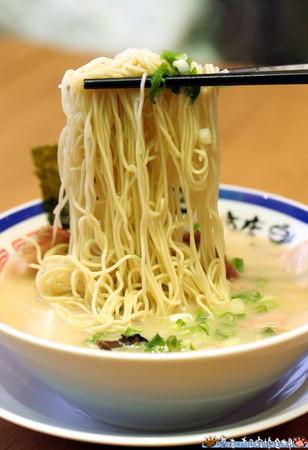
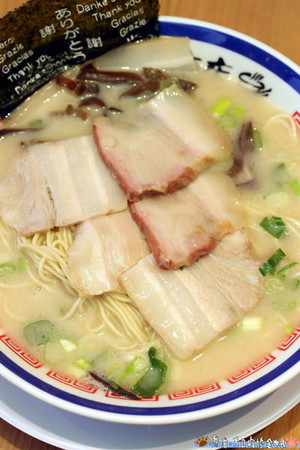
Next, this bowl is the enhanced version of pork bone ramen, called Char Siu Ramen (320 NTD, bowl). The only difference from the previous pork bone ramen is the amount of char siu. Basically, the pork bone ramen has three slices, while the char siu ramen is covered with them. By Bear and Meow’s count, there are about six or seven slices (but they also asked the staff, and the total number depends on covering the surface of the soup and noodles, so each bowl may vary depending on the size of the char siu). Even for the second bowl, Bear and Meow were still very excited. To be honest, the portion isn’t huge, so going for two bowls in a row isn’t strange.
Dig in boldly. With every bite, you can feel the freshness of the green onions, the crispness of the black wood ear mushrooms, and the sweet, mellow pork bone broth. For the firmness of this bowl, Bear and Meow chose “extra hard,” and it wasn’t overly extreme — it had both chewiness and great broth absorption. The bold, generous portions of char siu make this bowl perfect for filling up big guys.
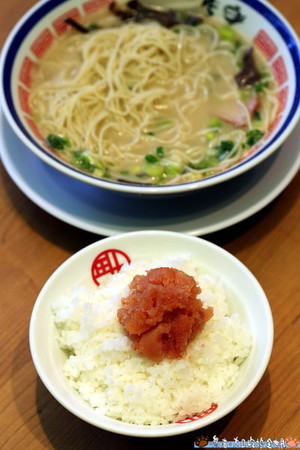
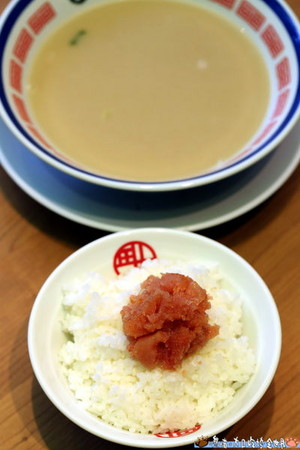
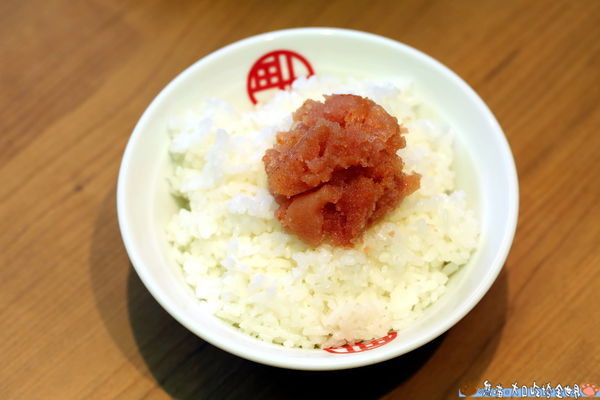
Finally, if you’re still not full, you can get a bowl of mentaiko rice or Korean-style mentaiko rice (120 NTD, bowl). Eating noodles with rice or having mentaiko rice after the noodles is also a great option.
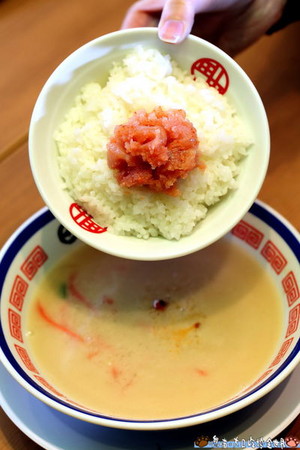
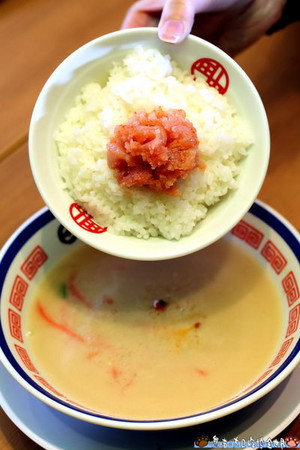
This is Bear and Meow’s mentaiko rice (120 NTD, bowl). It has a very simple style and is also very traditional. Actually, for Japanese people, eating ramen with white rice is a very normal and common pairing. The salty-savory mentaiko paired with super chewy white rice is truly something you can’t stop eating.
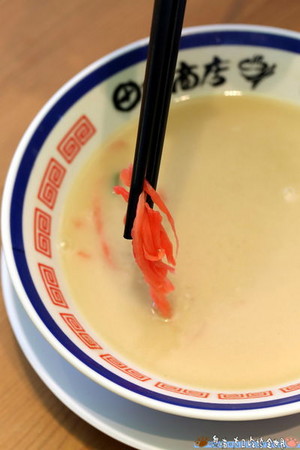
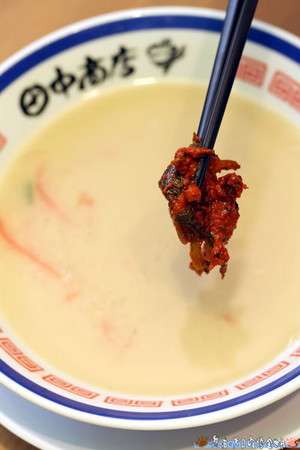
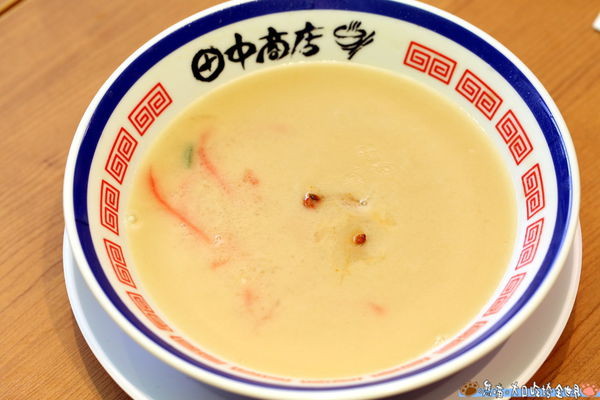
Finally, adding spicy pickled mustard greens and red ginger to the pork bone broth gives you a completely different flavor. You can not only drink the broth but also enjoy varied ways of eating.
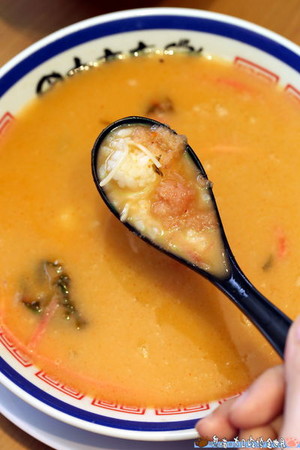
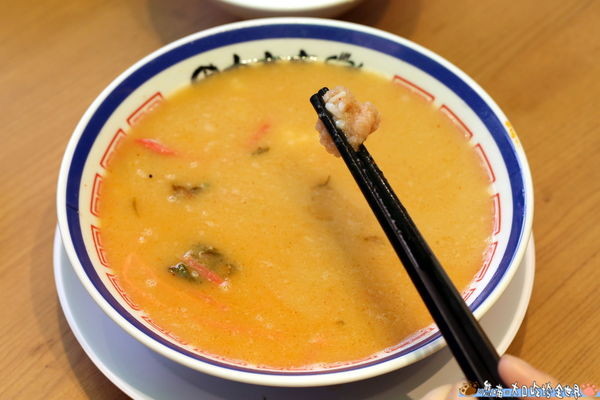
Pour the whole bowl of rice into the pork bone broth, and instantly it becomes pork bone congee!! (So creative, really never would’ve thought of it). Paired with the rich broth, the mentaiko tastes even more flavorful, and the white rice, soaked in the broth, is incredibly delicious. Eating rice while drinking the soup gives you 100% fullness.
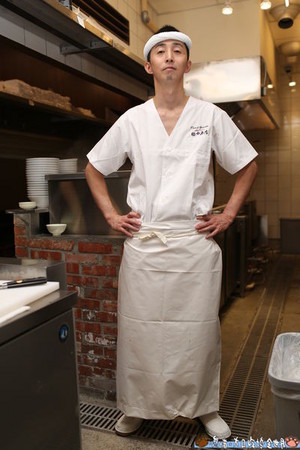
Finally, Bear also went to the kitchen to take a photo of the Japanese head chef and once again thanked Tanaka Shop for the invitation. In terms of taste, the broth full of traditional flair, along with the soft thin noodles and chewy short-piece char siu, makes the pork bone ramen and char siu ramen not flashy in appearance, but still a delicious flavor worth enjoying every day.
Hakata Nagahama Ramen Tanaka Shop
Address: No. 20461, Stall 356, 1F, Food Court, 2F, No. 356, Section 1, Wenhua 3rd Rd., Linkou District, New Taipei City
Business Hours: 12:00 PM – 10:00 PM (Open daily)
Official Website:http://www.tanaka-shoten.net/
Author: BearMeow Rudy — A couple passionate about food, occasionally going wild spending money on eating, drinking, and playing, but generally guided by the principle of “limited money, endless appetite.” Same-name blog."Panda Eats the World"Updated simultaneously; fan page.Panda. Food sharing.
Share
This article is published by HowToTrip. Sharing and reposting are welcome — please credit the source.
Article URL: https://www.howtotrip.net/views-7967
Related Articles
- Shaoxing's "Grandpa Gourd" hangs the gourds back up: "If there are too many people, we'll interact less — just take a quick look from afar"
- Chinese authorities announce "reciprocal adjustment" to Japan visa fees — single-entry visa jumps from 2,250 to 16,750 yen!
- The "health stones" carried by a traveler were found to have radiation levels exceeding safety limits by a thousand times, potentially endangering fellow passengers on the same flight. Customs issues warning!
- Shenzhen Airport Issues Late-Night Notice: Unidentified Aerial Object Detected, Causing Widespread Flight Delays!
- “They only said it cost money after I opened the box and washed it!” 200g of grapes sold for 60 yuan on a high-speed train—12306 responds!
- Can't buy an airline ticket? Denied exit? Blocked from boarding? A large number of Chinese tourists have mysteriously become "discredited individuals"
- Adverse weather and economic fluctuations impact Colombia's coffee market
- Beach bathing area responds to 2 yuan/30 seconds fee for freshwater foot rinsing: Clearly priced!
- Taking off with an improperly closed cabin door? Wing malfunction? Multiple flights made emergency returns mid-journey!
- Experience the gifts of nature! A countdown of the world’s ten most stunning coastlines