“I may be ugly, but I’m delicious.” Taipei Sishi revives black cuisine lost for 70 years
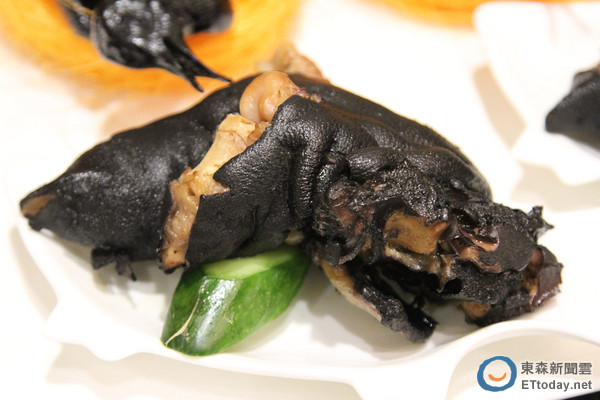
▲ Bear Paw Imitation. (Photo / Taipei Sishi)
Reported by Huang Shiyuan, Taipei
“Can these pitch-black pig’s trotters and pigeons really taste good?” That’s probably the first thought many people have when they see black imperial cuisine. These two dishes, named “Bear Paw Imitation” and “Blueberry Juice Black-Skinned Pigeon,” are black imperial cuisines from Nanjing that had been lost for nearly 70 years. They use leaves from the black rice tree as a natural dye to color the food, turning them into “black dishes.” Both of these black imperial dishes were among Soong Mei-ling’s favorite foods.
In the 1920s and 1930s, black imperial cuisine was very popular among the elite in Nanjing. In addition to using black rice tree leaves as a natural dye to color the food and turn them into “black dishes,” the cooking methods were also known for being exquisite—no artificial seasonings were used, relying instead on the techniques of braising, stewing, and boiling. However, black rice tree leaves were only available in Nanjing, so every time black imperial cuisine was to be made, Huang Qingbiao, the godfather of Singapore’s culinary scene, would ask his protégé You Hai to bring the leaves from Nanjing. This time, he also asked You Hai to bring the black rice tree leaves to Taiwan.
The “Bear Paw Imitation” black imperial dish resembles Taiwan’s braised pig’s trotters, rich in collagen. The chef selects the front trotters of the pig, soaks them in black rice tree juice for 15 hours, then steams them for 15 minutes. The process involves washing, scorching the hair, scraping the skin, and then steaming for another 5 minutes to set the color. It is then braised in a special brine for 4 hours. Because the black pig’s trotters resemble bear paws, it is named “Bear Paw Imitation.”
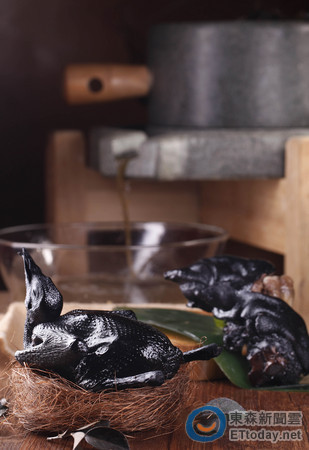
▲ Blueberry Juice Black-Skinned Pigeon. (Photo / Taipei Sishi)
The Blueberry Juice Black-Skinned Pigeon uses 17–18-day-old young squabs. They are first scorched to remove hair and fishy smell, then soaked in black tree juice for 10 hours, steamed for 5 minutes to set the color, braised in a brine for 5 minutes, then dried and fried to finish.
For this event, Taipei Sishi’s culinary consultant, “Godfather of Singapore’s Culinary Scene” Huang Qingbiao, specially planned and led his protégé Chef You Hai—who is known as the “Supreme Kitchen King” in Nanjing—to come to Taiwan. Starting May 10, they are launching a 22-day “Republic of China Celebrity Banquet” food event. In addition to the black imperial dishes, there are also Republic-era celebrity dishes such as Soong Mei-ling’s favorite steamed pork with rice flour, Zhang Daqian’s beloved dried tangerine peel-braised oxtail, and Zhang Xueliang’s cherished braised black pork. There are over 50 dishes in total, including appetizers, soups, hot dishes, noodles, and desserts, with prices starting at NT$120.
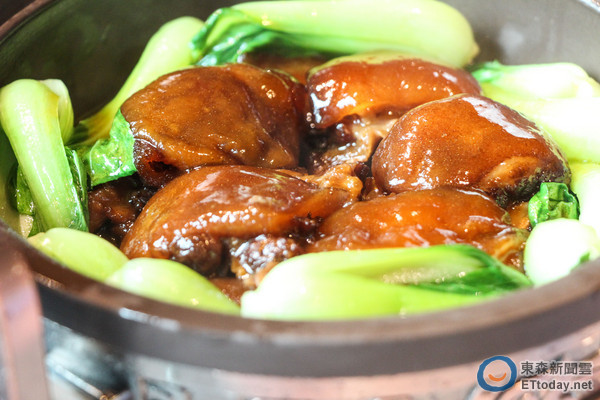
▲ Zhang Daqian’s Dried Tangerine Peel-Braised Oxtail. (Photo / Huang Shiyuan)
Share
This article is published by HowToTrip. Sharing and reposting are welcome — please credit the source.
Article URL: https://www.howtotrip.net/views-7428
Related Articles
- Shaoxing's "Grandpa Gourd" hangs the gourds back up: "If there are too many people, we'll interact less — just take a quick look from afar"
- Chinese authorities announce "reciprocal adjustment" to Japan visa fees — single-entry visa jumps from 2,250 to 16,750 yen!
- The "health stones" carried by a traveler were found to have radiation levels exceeding safety limits by a thousand times, potentially endangering fellow passengers on the same flight. Customs issues warning!
- Shenzhen Airport Issues Late-Night Notice: Unidentified Aerial Object Detected, Causing Widespread Flight Delays!
- “They only said it cost money after I opened the box and washed it!” 200g of grapes sold for 60 yuan on a high-speed train—12306 responds!
- Can't buy an airline ticket? Denied exit? Blocked from boarding? A large number of Chinese tourists have mysteriously become "discredited individuals"
- Adverse weather and economic fluctuations impact Colombia's coffee market
- Beach bathing area responds to 2 yuan/30 seconds fee for freshwater foot rinsing: Clearly priced!
- Taking off with an improperly closed cabin door? Wing malfunction? Multiple flights made emergency returns mid-journey!
- Experience the gifts of nature! A countdown of the world’s ten most stunning coastlines