Artistic Angkor Wat: A Mythical and Architectural Fantasy World & Light Show Revives History
Text provided by Qidou Travel Network | Photos provided by Chengwang Travel
World Heritage Angkor Wat: Legendary History and Artistic Architecture
Ranked alongside global wonders such as China’s Great Wall, Egypt’s Pyramids, and India’s Taj Mahal,
it became the adventure site of Lara in the movie Tomb Raider.
Between sunrise and sunset at Angkor Wat’s main temple, time seems to stand still.
The temple stands resolute on Cambodia’s natural land, becoming an eternal memory in travelers’ hearts.
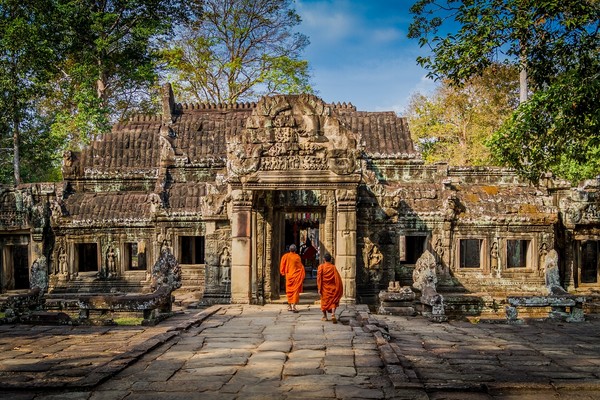
The Mysterious Seal of an Ancient Civilization—Angkor Wat was long submerged in tropical jungles until it was rediscovered in 1860 by a French explorer who ventured into northern Siem Reap, Cambodia, based on records in the ancient Chinese text The Customs of Chenla. Spanning nearly 200 square kilometers, this immortal heritage site from the golden age of the Khmer Empire’s Angkor Dynasty is hailed in archaeological circles as the “Heaven Carved in Stone”!
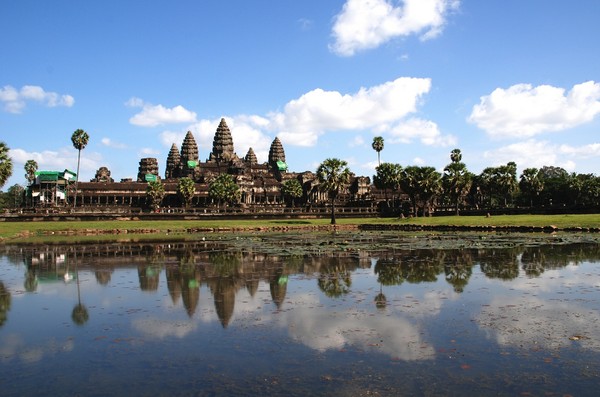
The world-famous Angkor Wat, the grandest capital city in Khmer history, is surrounded by a 200-meter-wide moat. After entering the tower gate and crossing the stone-paved causeway over the moat, you’ll see a stone sculpture of a seven-headed serpent spanning the water. Then, a nearly 500-meter-long walkway leads to the central sanctuary. Tomb Raider’s Lara filmed many scenes here, including one shot using the pool in front of Angkor Wat as a set.

At the heart of Angkor Wat lies a sacred mountain with a temple built atop it, dedicated to Vishnu, the guardian deity of the Angkor Dynasty—also regarded as the Sun King. The central tower rises 65 meters high, equivalent to a 20-story building, marking the peak of the mountain-temple structure. Every brick and tile in the city is exquisitely carved, each telling a story or myth. Visiting here without understanding the legendary tales depicted in the bas-reliefs would be a great pity.
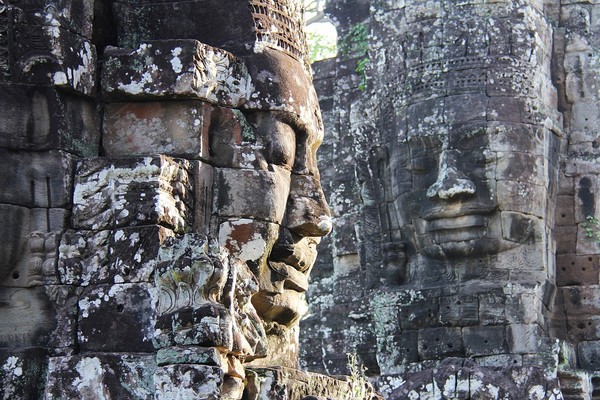
Before entering Angkor Thom, you’ll spot from afar the 7-meter-tall stone city gate adorned on all four sides with the face of King Jayavarman VII during the empire’s golden age, symbolizing the all-seeing, all-hearing face of the Buddha.
At the heart of Angkor Thom lies Bayon Temple, a favorite photography spot for enthusiasts. Comprising 54 large and small towers, its most distinctive feature is the 3-meter-tall smiling faces of King Jayavarman VII carved on all four sides of each tower’s top. Over 200 smiles emerge amid lush green forests, captured beautifully under shifting light from various angles.
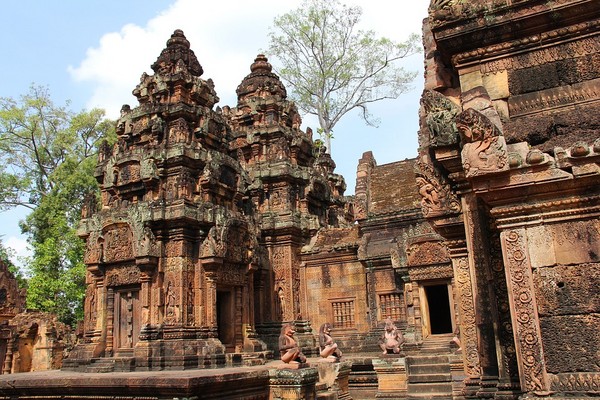
Located about 21 kilometers northeast of Angkor Thom, Banteay Srei Temple is built from beautiful pink sandstone, featuring the most exquisitely detailed murals and carvings among all Angkor ruins, hence also known as the Pink Temple or Women’s Palace.

Dubbed the “Diamond of Khmer Art,” Banteay Srei is most admired for how artisans carved hard stone as delicately as wood, creating finely layered and gracefully lined artworks. Whether on door lintels, stone walls, or window frames, the craftsmanship is so exquisite it rivals nature’s artistry—not only the finest stone carving among all Angkor temples but also the pinnacle of Cambodian art.

Another must-visit hotspot is Ta Prohm Temple, built in the late 12th century, where centuries-old trees and massive stones are inseparably intertwined. Tree roots sprawl in all directions, coiling tightly around stupas and temple walls like giant pythons—an awe-inspiring spectacle.

At night, Angkor Wat offers spectacular light and sound performances that vividly recount countless myths against the backdrop of Khmer history and culture. From the creation to the rise and eventual decline of Khmer civilization, these grand stage shows bring the glorious culture of this architectural wonder to life with luxurious sets, dazzling costumes, modern lighting and laser effects, and massive LED screens.
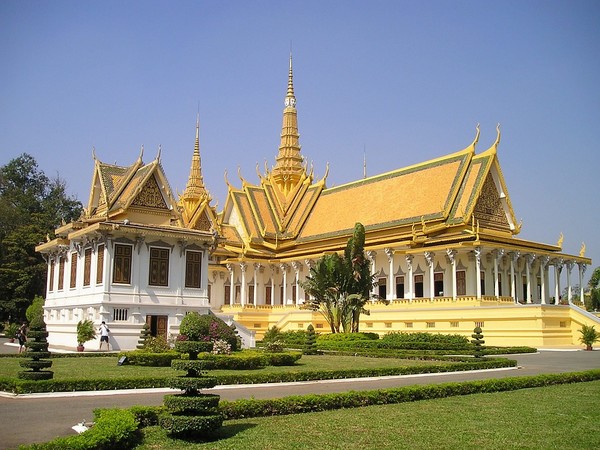
In Cambodia’s capital, Phnom Penh, visiting the Royal Palace offers a glimpse into the nation’s and monarchy’s culture and lifestyle.
Situated east of Phnom Penh, the Royal Palace faces the Four Rivers Delta formed by the confluence of the Mekong, Tonlé Sap, and Bassac Rivers. The rich architectural complex includes the Throne Hall for coronation ceremonies and royal events, the Silver Pagoda Buddhist temple for royal ceremonies, and the palace residences of Cambodian monarchs.
More Related Information
Recommended Itineraries:
★【5-Day In-Depth Angkor Art Tour】5-star accommodation, no shopping, perfect for a mid-autumn break with just one day off. Stay at the selected Angkor Miracle Hotel and Sokha Angkor Hotel. Book before June 15 to enjoy early-bird discounts and receive a complimentary NT$1,000 for tour leader + guide tips. Plus, sign up now to get a free ticket to the grand Angkor Light Show.
★【5-Day Phnom Penh + Angkor Art Beauty Tour】Visit both Phnom Penh and Angkor Wat on a shopping-free premium journey. Stay at the selected Angkor Miracle Hotel and Sokha Angkor Hotel. Book now to receive a free ticket to the grand Angkor Light Show.
Chengwang Travel Agency (02)2515-2828
Websitewww.loyaltytour.com.tw
Share
This article is published by HowToTrip. Sharing and reposting are welcome — please credit the source.
Article URL: https://www.howtotrip.net/views-7414
Related Articles
- Shaoxing's "Grandpa Gourd" hangs the gourds back up: "If there are too many people, we'll interact less — just take a quick look from afar"
- Chinese authorities announce "reciprocal adjustment" to Japan visa fees — single-entry visa jumps from 2,250 to 16,750 yen!
- The "health stones" carried by a traveler were found to have radiation levels exceeding safety limits by a thousand times, potentially endangering fellow passengers on the same flight. Customs issues warning!
- Shenzhen Airport Issues Late-Night Notice: Unidentified Aerial Object Detected, Causing Widespread Flight Delays!
- “They only said it cost money after I opened the box and washed it!” 200g of grapes sold for 60 yuan on a high-speed train—12306 responds!
- Can't buy an airline ticket? Denied exit? Blocked from boarding? A large number of Chinese tourists have mysteriously become "discredited individuals"
- Adverse weather and economic fluctuations impact Colombia's coffee market
- Beach bathing area responds to 2 yuan/30 seconds fee for freshwater foot rinsing: Clearly priced!
- Taking off with an improperly closed cabin door? Wing malfunction? Multiple flights made emergency returns mid-journey!
- Experience the gifts of nature! A countdown of the world’s ten most stunning coastlines