Riding the Wave of "The Legend of Mi Yue": The Palace Cuisine of Six Fu Imperial Palace's Yi Garden Revives the Banquets of the Qin, Chu, and Warring States Periods
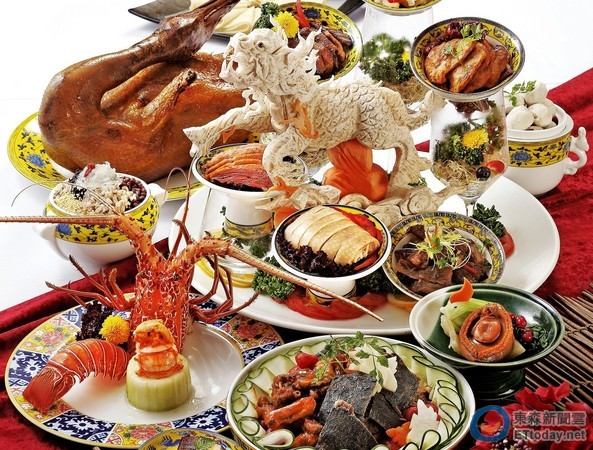
▲ "The Qin, Chu, and Warring States Banquet" set menu. (Photo / Provided by Six Fu Imperial Palace)
Travel Center / Comprehensive Report
Yi Garden, known for its refined palace cuisine at Six Fu Imperial Palace in Beijing, follows up on the success of dramas like "Empresses in the Palace" and "The Empress of China" by tapping into the popularity of the period drama "The Legend of Mi Yue." It has launched a new imperial cuisine set menu titled "The Qin, Chu, and Warring States Banquet," priced at NT$8,888 for four people. This menu draws inspiration from the luxurious scenes of the Chu palace depicted in Qu Yuan’s "Songs of Chu," particularly highlighting a wealth of royal dishes—an exceptionally rare historical record. As a result, many dishes are specifically recreated to reflect the culinary style of the Chu Kingdom during the Warring States period.
After extensive research, Chef Li Xianghua of Six Fu Imperial Palace’s Beijing cuisine Yi Garden drew from Qu Yuan’s "Songs of Chu" and the secret histories of the Qin court to create dishes such as "White Snow in Spring," "Pearl Fish Balls," and "Jade Tablet with Emerald," pairing them with the signature "Imperial Peking Duck in Yellow Robe." Chef Li explained that in history, Emperor Qin Shi Huang sought immortality in his later years, prompting many alchemists to offer advice. Legend has it that one alchemist claimed, "The elixir must be served with an emerald ring to be effective," leading the imperial chefs to slice bottle gourds into rings, hollow them out, and stuff them with river shrimp—dishes referred to as "Emerald Rings." At Yi Garden, lobster is used instead of river shrimp.
The dishes in the Qin, Chu, and Warring States Banquet include the "Dragon and Phoenix Gilded Box Dragon Coiled Around Six-Tiered Plate," "Pearl Fish Ball Soup of King Ping," "Emerald Ring with Lobster," "Imperial Peking Duck," "Qin Emperor’s Abalone with Scallops," "The Overlord of Western Chu Bids Farewell to Lady Yu," "Phoenix Resting on Snow—Concubines’ Favorite," and "Lady Xi’s Crimson Lips Opening Like a Crescent Moon." However, Peking duck isn’t believed to have been a dish from the Qin, Chu, or Warring States periods. Jin Wenyu, marketing director of Six Fu Imperial Palace, explained that Peking duck is a must-order dish when dining at Yi Garden, so it was included in the banquet to ensure guests leave both satisfied and well-fed.
Share
This article is published by HowToTrip. Sharing and reposting are welcome — please credit the source.
Article URL: https://www.howtotrip.net/views-7389
Related Articles
- Shaoxing's "Grandpa Gourd" hangs the gourds back up: "If there are too many people, we'll interact less — just take a quick look from afar"
- Chinese authorities announce "reciprocal adjustment" to Japan visa fees — single-entry visa jumps from 2,250 to 16,750 yen!
- The "health stones" carried by a traveler were found to have radiation levels exceeding safety limits by a thousand times, potentially endangering fellow passengers on the same flight. Customs issues warning!
- Shenzhen Airport Issues Late-Night Notice: Unidentified Aerial Object Detected, Causing Widespread Flight Delays!
- “They only said it cost money after I opened the box and washed it!” 200g of grapes sold for 60 yuan on a high-speed train—12306 responds!
- Can't buy an airline ticket? Denied exit? Blocked from boarding? A large number of Chinese tourists have mysteriously become "discredited individuals"
- Adverse weather and economic fluctuations impact Colombia's coffee market
- Beach bathing area responds to 2 yuan/30 seconds fee for freshwater foot rinsing: Clearly priced!
- Taking off with an improperly closed cabin door? Wing malfunction? Multiple flights made emergency returns mid-journey!
- Experience the gifts of nature! A countdown of the world’s ten most stunning coastlines