In fairy tales, the story always ends with the princess and prince living happily ever after in a castle... No wonder castles have long been seen as symbols of romance.
When it comes to fortress travel destinations, Germany is the top choice. With over 20,000 fortresses – the highest number in the world – many of which have stood for hundreds of years, Germany retains the traditional charm of the Middle Ages, earning it the nickname the "Land of Castles." Today, we introduce five must-visit castles in Germany that let you experience this timeless and dreamy grandeur, even from afar.
Sanssouci Palace (Schloss Sanssouci)
Photo by gogoflywo
The architectural scale of Sanssouci is magnificent, with its arches, domes, and cupolas exuding a strong 18th-century flair. It was officially designated a UNESCO World Heritage Site in 1990.
In ancient times, before air conditioning was invented, royalty often built summer palaces to escape the heat. The most iconic imperial summer retreat in Germany is Sanssouci Palace in Potsdam. Built in the 18th century, its name “sans souci” comes from the French for “without (sans)” and “care (souci),” reflecting Frederick the Great’s wish to use this palace to distance himself from military and political affairs and immerse himself in his personal interests, such as music and philosophy.
Charlottenburg Palace (Schloss Charlottenburg)
Photo by GNTB / Kiedrowski, Rainer
Charlottenburg Palace has now been transformed into a Museum of Prehistory and Early History, open to visitors.
Germany’s capital, Berlin, is home to numerous palaces and fortresses, bearing witness to the rise and fall of various dynasties throughout German history. Among them, the largest palace in Berlin is Charlottenburg Palace, which vividly showcases the culture and lifestyle of the prosperous “Prussian Dynasty.” Built in the late 17th century, it was commissioned by Sophie Charlotte, wife of Frederick I, Elector of Brandenburg, and designed by architect Arnold Nering. The architecture is primarily inspired by Italian Baroque style. The palace’s most famous feature is the Amber Room, known as the “Eighth Wonder of the World,” with walls entirely adorned in amber, displaying immense luxury.
Hohenzollern Castle (Burg Hohenzollern)
 Photo by GNTB / Schwäbische Alb Tourismusverband
Hohenzollern Castle, along with Neuschwanstein Castle, is one of the two major castles in southern Germany. Perched on a steep hill, it has a solemn and majestic presence.
Built in the 11th century, Hohenzollern Castle is the birthplace of the Hohenzollern family, the ruling dynasty of the German Empire. Due to its strategic location, it was regarded as a military stronghold by both the French and Austrians over the centuries, making it a frequent target of war and ultimately suffering severe damage. However, between 1850 and 1867, Prince William (Friedrich Wilhelm) decided to rebuild the ancestral castle, resulting in the imposing Hohenzollern Castle we see today. The rebuilt castle has a more robust and masculine feel, with massive statues of famous kings and emperors of the Hohenzollern family standing along its edges, epitomizing Prussian grandeur.
Neuschwanstein Castle (New Swanstone Castle)
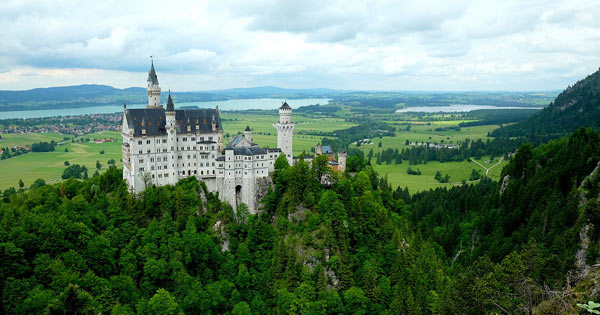 Photo by hc_wongjason
Neuschwanstein Castle is built atop a mountain peak nearly 1,000 meters high in the Alps, and is known as the "Fairytale Castle."
Located about 4 kilometers from Füssen and near the Austrian border, Neuschwanstein Castle was constructed in the late 19th century. Its builder, King Ludwig II, was fascinated by legends and the fantastical worlds of fairy tales. Thus, he incorporated design elements from Wartburg Castle and the Grail Castle (Gralsburg) from Wagner’s opera *Parsifal* into its structure, giving the fortress an even more romantic medieval character. The castle features two luxurious halls, each with 15-meter-high ceilings and long arcades, all decorated in gold and blue trimmings, extremely opulent. The entire structure embodies Gothic architectural style, and even the finer details subtly reflect the essence of Wagner’s operas, captivating all who visit.
Eltz Castle (Burg Eltz)
Photo by GNTB / Scherf, Dietmar
Eltz Castle may not boast lavish decorations, but its enduring beauty lies in having never been damaged by war, thus preserving its elegant medieval charm.
Although not as famous as Hohenzollern Castle or Neuschwanstein Castle, Eltz Castle remains unscathed due to its hidden location, surviving 800 years – including attacks by 17th-century French troops and both World Wars – without ever being captured or changing ownership. This 11th-century castle retains its original materials and design intact, making it the perfect destination for those wishing to explore traditional German fortresses. The castle is now open to the public, where visitors can see weapons, hunting trophies (such as animal skins and ornaments), and various kitchenware dating from the 14th to 17th centuries. Exhibition rooms also feature detailed English signage, helping visitors easily understand life in the Middle Ages.
Beyond its fortresses, Germany also boasts stunning natural scenery and is famous for its Christmas markets. In our next post, we’ll take you to visit 5 traditional German Christmas markets.
Want to learn more about traveling in Germany? Fever Travel has also handpicked 65 must-visit attractions in Germany
http://www.dcfever.com/travel/world.php?id=2029