By: Little Travel Kid
Airlines frequently go on sale, making it common for office workers to travel ten or eight times a year. Airlines like UO, CX, and KA, which often offer cheap promotions, only need to release their code and everyone knows to get their F5 key ready. But for T... some might not even be familiar with airfare deals. Sorry, but you might not even know why the X in CX (Cathay Pacific) is there!
1. Airline Two-Letter Code (Airline Designator)
In fact, every airline has a two-letter code, composed of the 26 English letters and Arabic numerals 0–9. As for what each letter means for that airline, to be honest, it doesn’t mean anything. Because they are all assigned by IATA (International Air Transport Association), just like license plates or stock codes for listed companies, they exist purely for easy recording and identification. As for the X in Cathay Pacific’s CX, it is said to stand for “Cross-Pacific.” As for codes that combine numbers and letters, there's 7C for Jeju Air!
2. City Code (City Code)
Have you ever looked at the destination printed on your boarding pass and had no idea what it means? In fact, internationally, any city with scheduled flights has a three-letter uppercase city code. Common ones like Tokyo / TYO or Taipei / TPE are not hard to grasp. But codes like Los Angeles / LAX or Beijing / BJS are completely different. These are all assigned by IATA (International Air Transport Association), though some take the first three letters of the English place name—if that’s already taken, they’re forced to change, such as Dubai, which becomes DXB (the X doesn’t mean anything).
3. Airport Code (Airport Code)
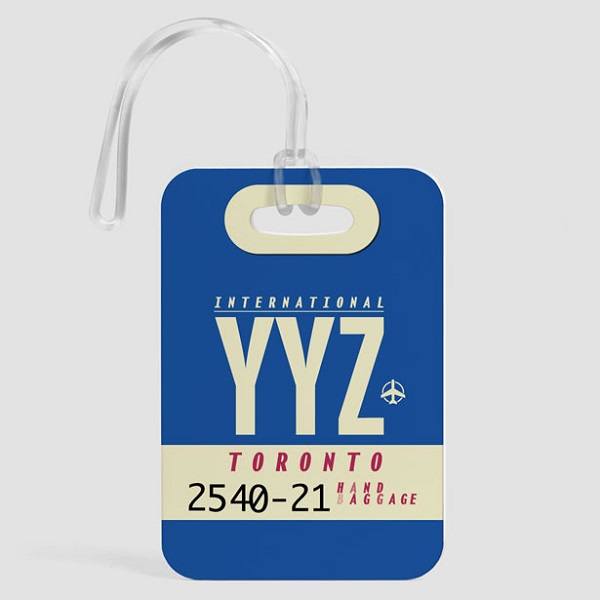
Following each city, each airport also has a three-letter uppercase airport code. Most city codes are the same as the airport codes, like Beijing Capital International Airport’s code is PEK. But if there is more than one airport in the same city, the codes will differ. For example, Tokyo’s city code is TYO, but Narita Airport’s code is NRT, and Haneda Airport’s code is HND. Taichung Qingquan Airport’s code RCMQ has developed into a four-digit code in recent years due to increased flights. The first digit is a regional code—R stands for the Asia-Pacific region—the second is the country, and the third and fourth digits are the airport name. Canadian airports start with the letter “Y,” such as Vancouver / YVR. If a regional common code is already in use, it needs to be changed—for example, Toronto Pearson Airport is not YTO but YYZ.
Other Fun Travel Facts
Global Wonders | Check out 10 of the most unexpected toilets on Earth | KLOOK
Coral reefs too ordinary? These diving sights you’ve definitely never seen before!