The journey after Ryoanji was the final stop, Ninnaji Temple. Thanks to my JR Pass, I often chose to move to the next destination in the afternoon or evening, as most attractions close around 4 PM. Then I’d travel, and for longer distances, I’d just have a bento on the train. I’d usually arrive at my accommodation around 8 or 9 PM, sleep well, and set off early to the next spot the next day. My itinerary generally skipped shopping, but for a nationwide trip, having some shopping at the final stop is nice—dragging luggage around is quite inconvenient.
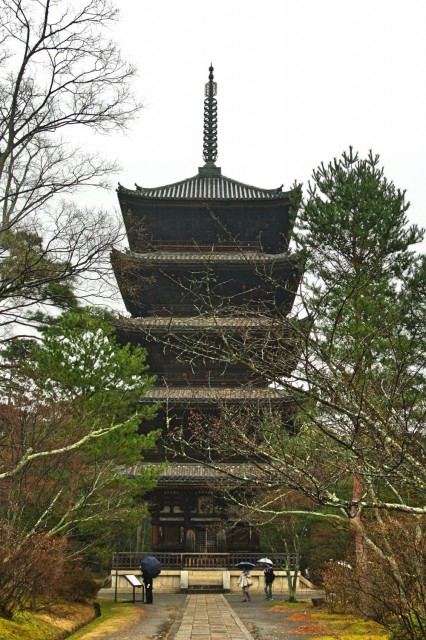
Speaking of which, the Kinukake no Michi mentioned in the previous post—if you finish the route in half a day, you can also take the Keifuku Electric Railway (streetcar) to Arashiyama. As for the final stop, Ninnaji Temple, the highlights here are the Five-Story Pagoda and the Omuro Cherry Blossoms. Unfortunately, it was mid-March at the time, and the Omuro Cherry Blossoms hadn’t bloomed yet.
I entered Ninnaji Temple through the East Gate. The entrance fee was 500 yen.
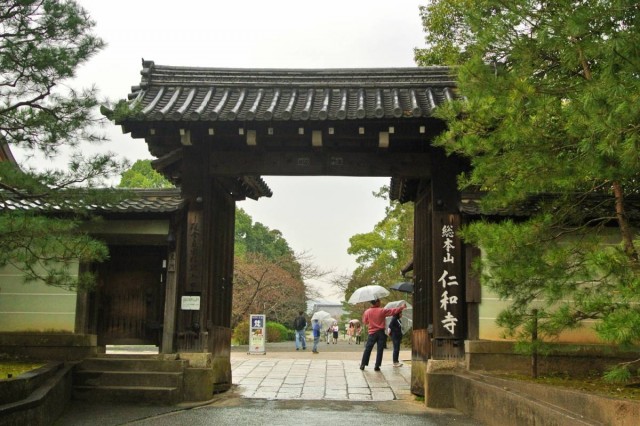
I said this route really represents Kyoto because the Omuro Kaikan here offers accommodations (actually, many temples do, but for a one- or two-day itinerary wanting to see the essence of Kyoto, this route is highly recommended). There’s also the chance to enjoy meals made with local ingredients, though not Kyoto-style cuisine.
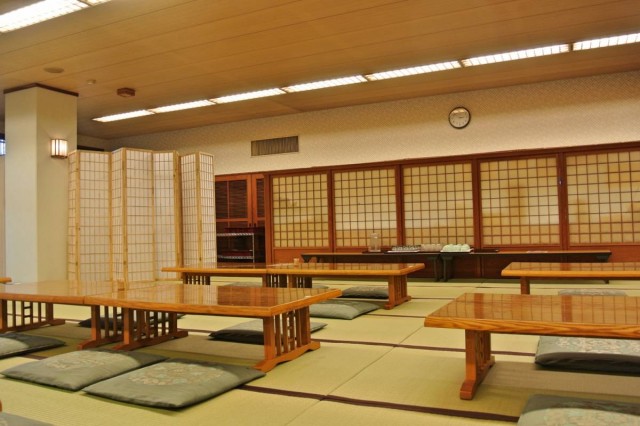
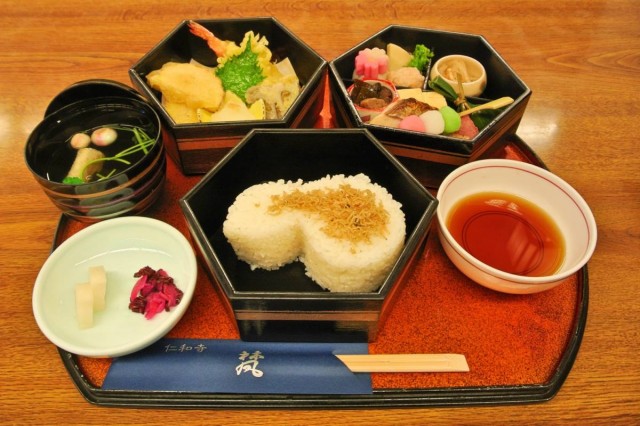
(Very broke) me luxuriously ordered the Omuro Imperial Cuisine, priced at 1500 yen. Fellow travelers on a tight budget might find it steep, but if you’re okay spending a bit more, it’s totally worth it. The meal came with a lot of side dishes.
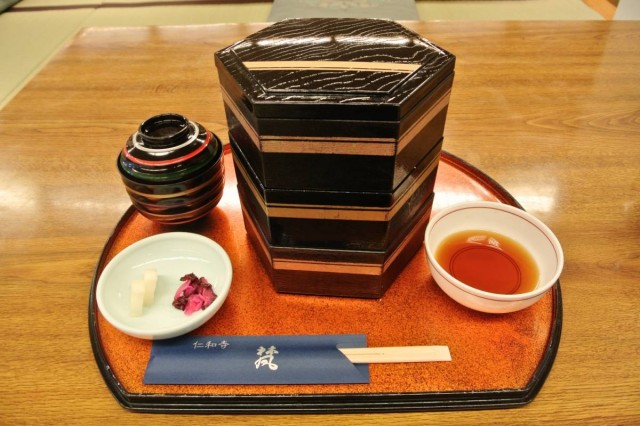
When I opened the lid, I went “wow.” DouDou, a first-time visitor to Japan, was such a newbie—but after visiting a few more times, it started to feel pretty ordinary. Except for the soup, which was warm, none of the other ingredients were hot. But at the time, I found it strangely delicious. Actually, most of these ingredients are quite dry, so if there were sauce, it would taste bad when cold. That’s why Japanese cuisine is really ingenious.
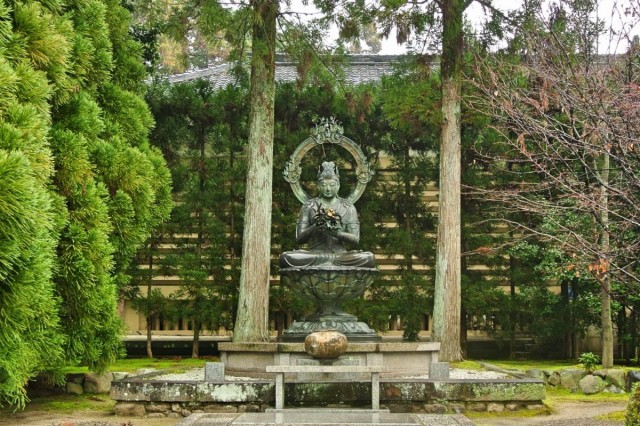
After eating, I wandered around. The Vajra Dhara Bodhisattva statue is a modern installation.
The Five-Story Pagoda—if you visit in autumn, the leaves on both sides turn red and are incredibly beautiful.
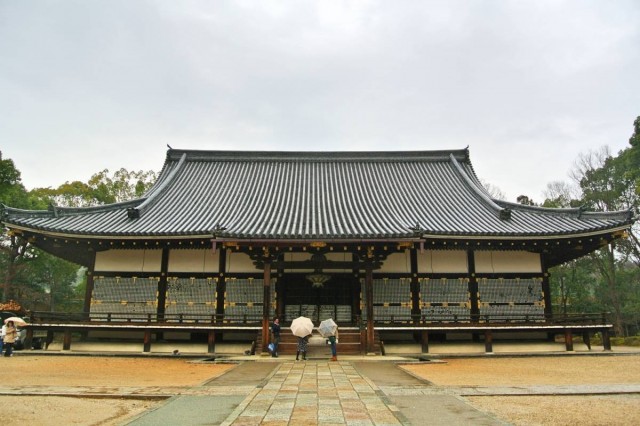
The National Treasure Golden Hall houses Japan’s oldest surviving Shishinden (Hall for State Ceremonies), the main hall where important ceremonies such as the Crown Prince’s inauguration and seasonal festivals are held. Ninnaji Temple’s principal image, the Amida Triad, is enshrined here.
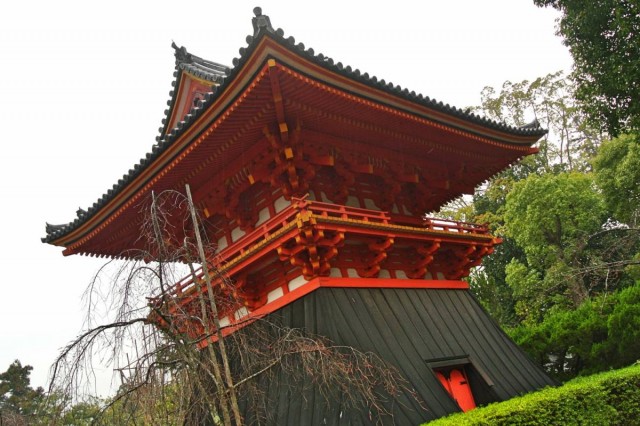
This is the bell tower. Normally, you’d see the bell, but here it’s enclosed by black wooden boards.
The Kyozo (Sutra Repository)—also known as the scripture storage hall. According to the explanation, it has an eight-faced rotating bookshelf, but the doors are closed, so you can’t see it.
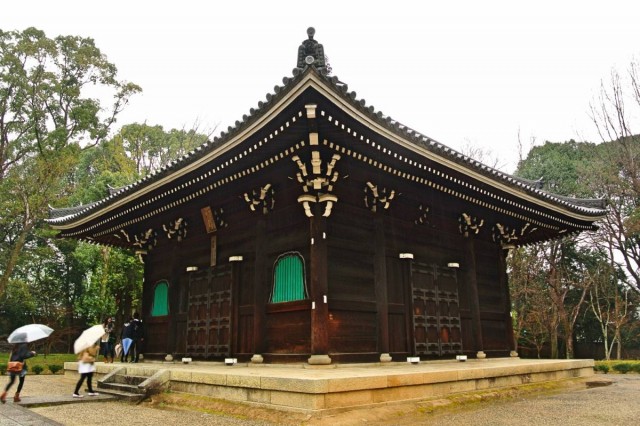
Then I visited the palace building and took shelter from the heavy rain—haha.
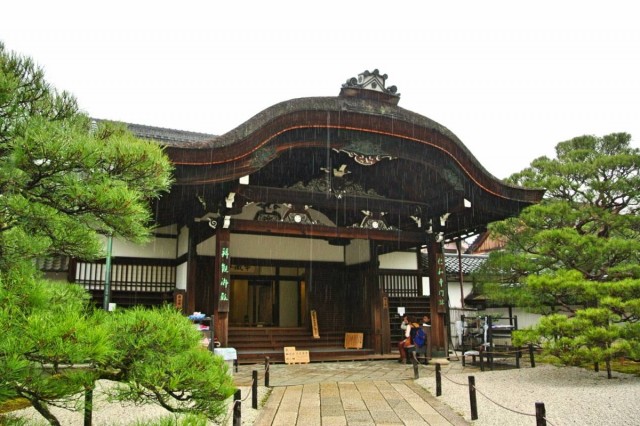
The Shiroshoin (White Study), with its fusuma (sliding doors) painted with decorative pictures (aogami), are modern works.
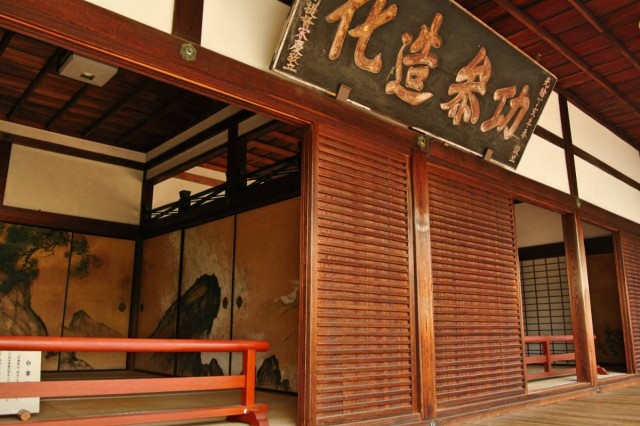
A peek inside the Shiroshoin.
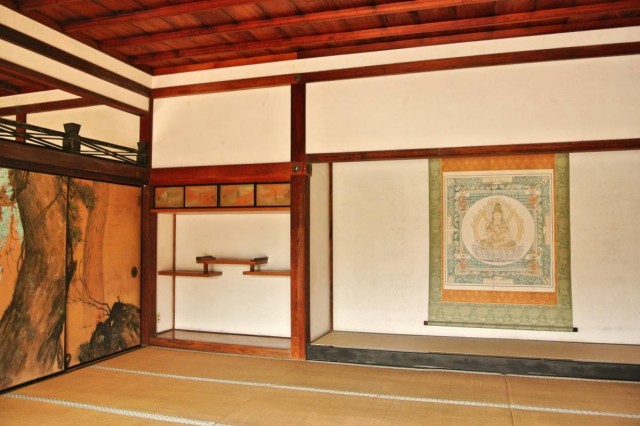
The South Garden, named so because it’s located south of the Shinden (Main Hall), is a simple and modest garden.
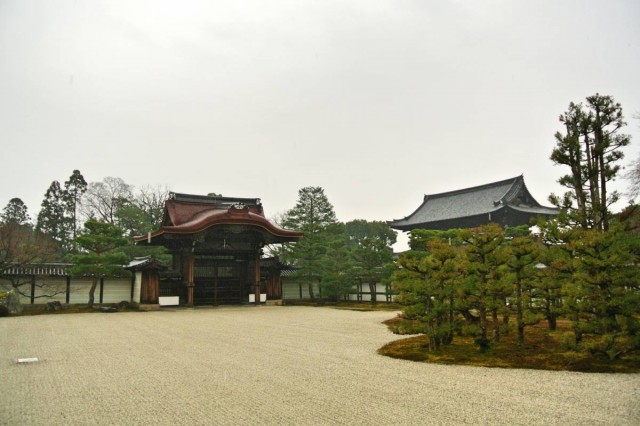
Walking through the corridor, straight ahead is the Kuroshoin (Black Study), with the right leading to the Shinden, the central building where ceremonies are held.
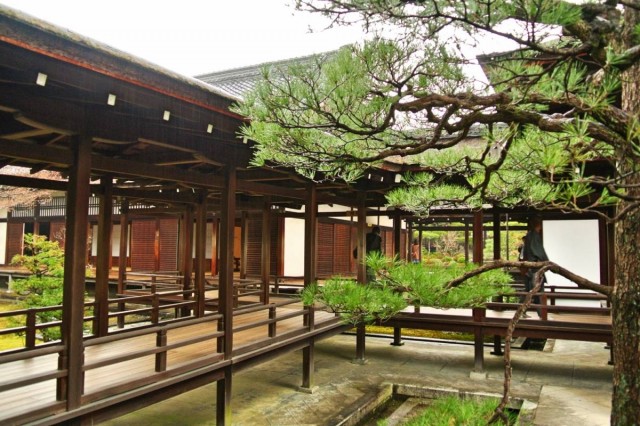
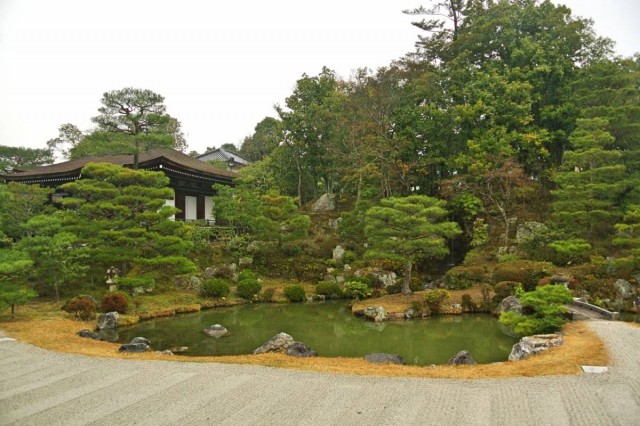
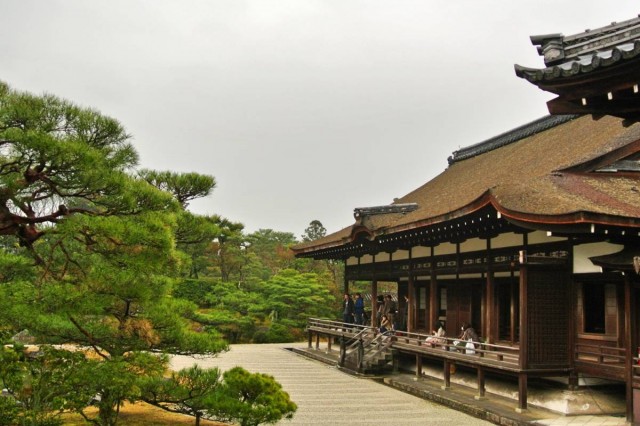
Right in front of the Shinden, facing north, is the North Garden.
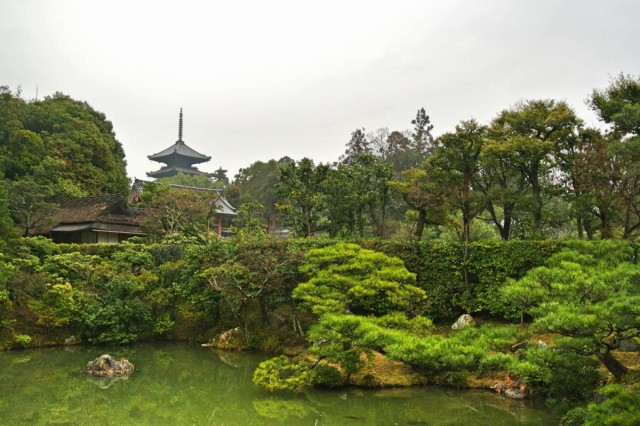
Autumn turns this into a colorful garden.
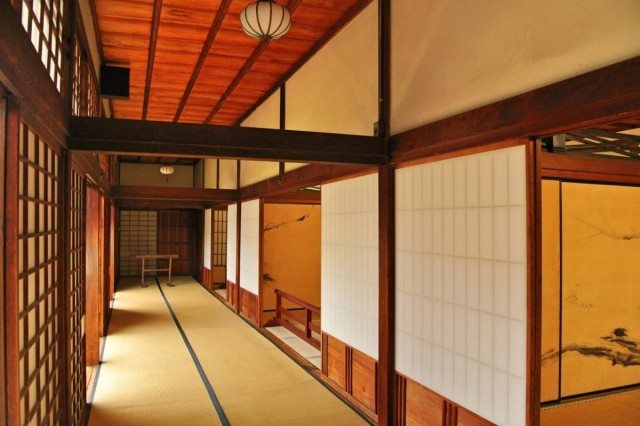
The corridor of the Kuroshoin.
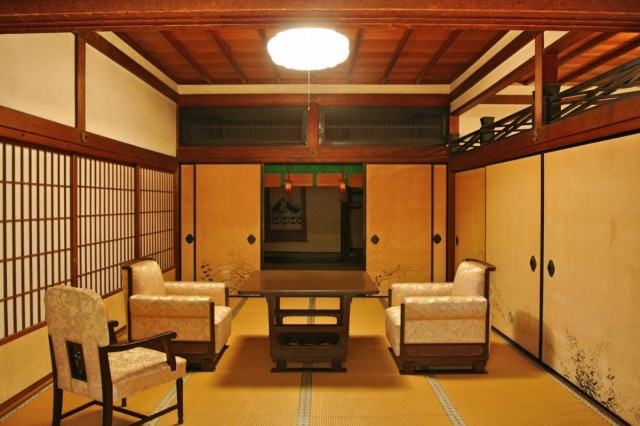
One of the rooms in the Kuroshoin. I found the Western-style furniture placed here quite interesting—it didn’t feel out of place at all.
View of the Shinden and North Garden from the Kuroshoin.
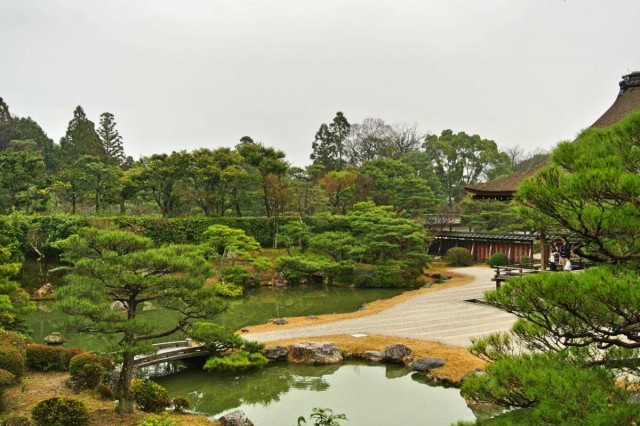
The North Garden is a lush garden filled with plants, providing a lovely contrast to the simplicity of the South Garden.
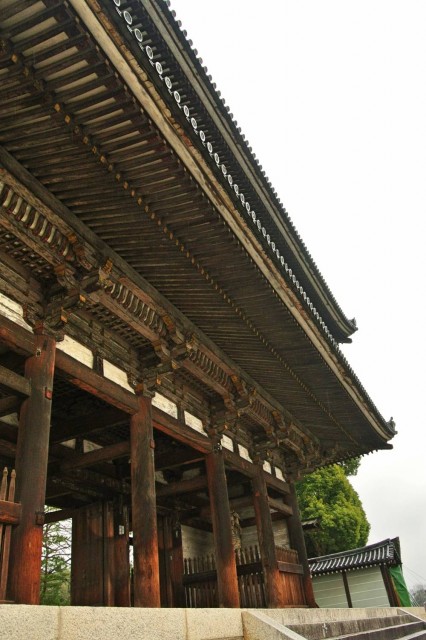
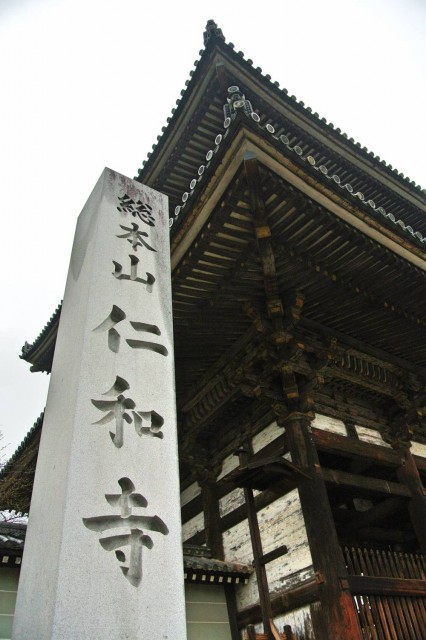
Leaving the palace buildings, on the other side of Ninnaji Temple is the Nio Gate (Niomon), which is super imposing. Buildings constructed around the same time as this Nio Gate include Chion-in and Nanzen-ji, collectively known as the “Three Great Gates.”
Ninnaji Temple official website (Japanese/English/Chinese/Korean): http://www.ninnaji.or.jp/
Having traveled to over 30 countries/regions, lived in Taiwan for a year and a half, traveled and stayed in Japan for several months, and spent two months in Canada on a work-exchange program to see the Northern Lights. Travelogues have been published on U blog, DC fever, likeJapan, and now.com. Recently started writing a personal travelogue, "DouDou’s Travel Home Diaries." Open to discussing various forms of collaboration.
Facebook: https://www.facebook.com/k.doudou/
Instagram: http://www.instagram.com/k.doudou/
Youtube: https://www.youtube.com/channel/UCFM9xSqL_HYem9q9FppDYGg