A Resting Pavilion in the Apple Orchard of Kominokuni — A Warm Family-Style Restaurant
Text & Photos / Joel Fukuzawa
About fifty years ago, an elderly woman named Sato, who lived in Kominokuni, Kumamoto, owned a large apple orchard in the town. She grew many fragrant and sweet apples, but during peak harvest season, there were always too many apples stored in the warehouse. So every day, the elderly woman would push a cart and sell the apples at the corner near the town office.
After all, the industrial road near the town office was one of the main arteries running through Kumamoto, so naturally, the elderly woman’s apples sold quite well. Seeing that more people were buying her apples, she started boiling tea and making some light snacks before heading out each morning.
That way, customers who had time could sit down, enjoy a cup of tea and some snacks, and chat a bit. Unexpectedly, this thoughtful service attracted even more people to buy apples from her. By the time she retired, not only did she have enough money to ensure her children could study and find jobs smoothly, but she also renovated her old house into a small tearoom. What had once been a pushcart apple stand became “Ringo no Ki,” a place where people could enjoy tea, take a break, and have a meal.
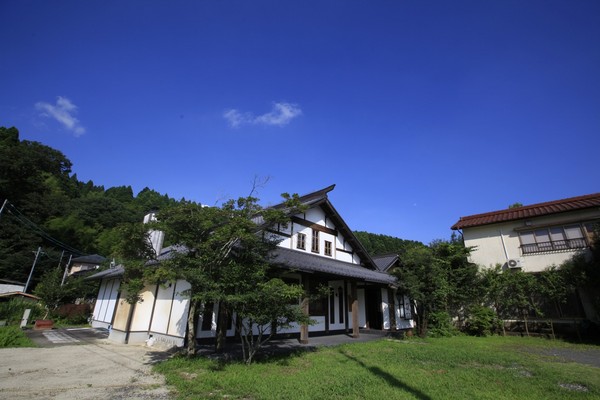
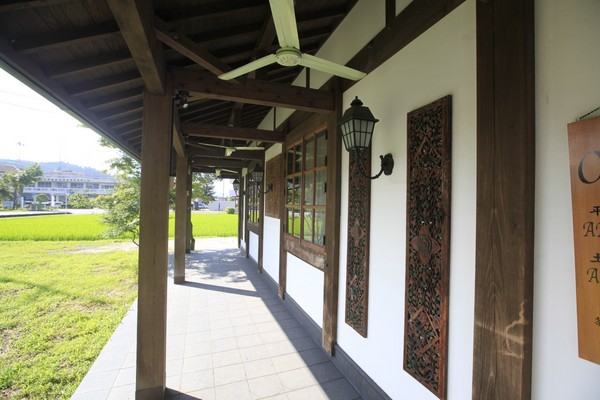
But the story doesn’t end there. After the elderly woman retired, her son, Katsuya Sato, took over the “Ringo no Ki” shop. Mr. Sato had a great interest in art and architecture, and he planned to transform “Ringo no Ki” into a full-fledged café infused with literary charm. Under his supervision, the café retained the “Datsu-A Ron” (Escape from Asia, Catch Up with Europe) style dating back to the Meiji period. The Japanese-style exterior is filled with elements reflecting the Japanese fascination with European cafés.
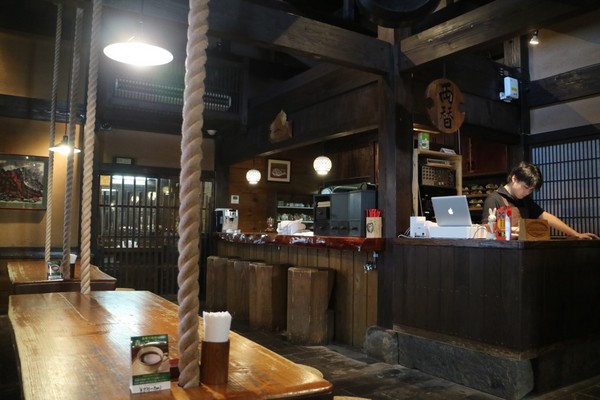
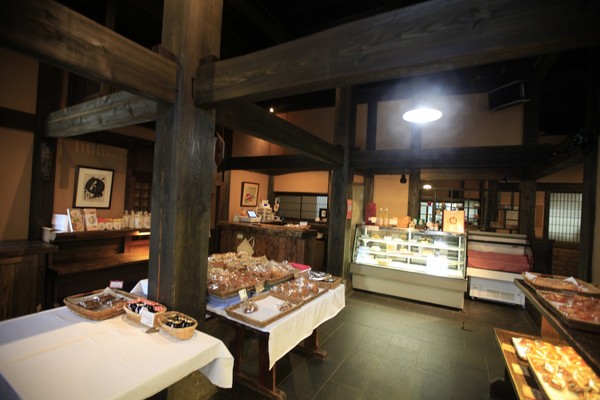
Before even stepping into the café, you’ll see European-style tables and chairs in the garden, accompanied by lush apple trees. Upon entering the shop, the first thing that greets you is the rich aroma of freshly baked bread — all of which is made single-handedly by Mr. Sato’s daughter, Kiyomi Sato. Walking further inside, through a passageway, your attention is drawn to the bookshelves and the rows upon rows of thread-bound books lining the walls behind the dining tables. At that moment, I thought to myself, this owner is really something — buying a bunch of books and then dismantling them into individual thread-bound volumes. If it was just for decoration, that would be a bit too contrived. But there’s no denying that these thread-bound books blend perfectly with the overall ambiance of the café.
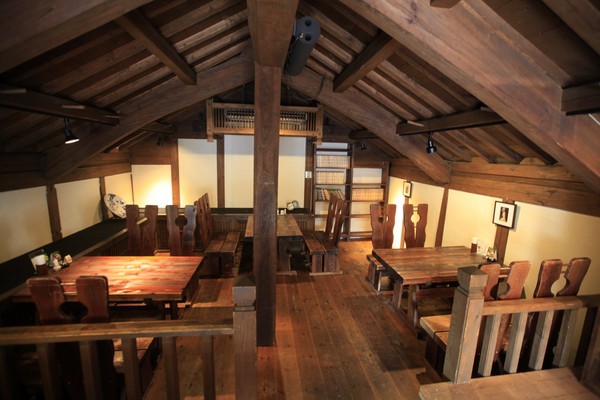
Entering the inner dining area, you’ll find several tables and chairs made from the native cedar of Kominokuni, along with high ceilings — truly a refreshing and pleasant space. When I explained my purpose to the staff and was introduced to Mrs. Sato, I realized I had underestimated those “thread-bound books.” With a smile, Mrs. Sato asked me to take down one of the “books,” only to discover they were actually guest message books. Ever since opening the shop over twenty years ago, Mr. Sato has carefully preserved each and every one of them. “The starting point of our shop is gratitude toward our customers, so these messages are what support this entire restaurant, and indeed, what matter most to our family across two generations,” Mrs. Sato said. Hearing her words, I felt a tremor run through me — expressing gratitude to customers over the course of twenty-two years is such a sincere gesture.
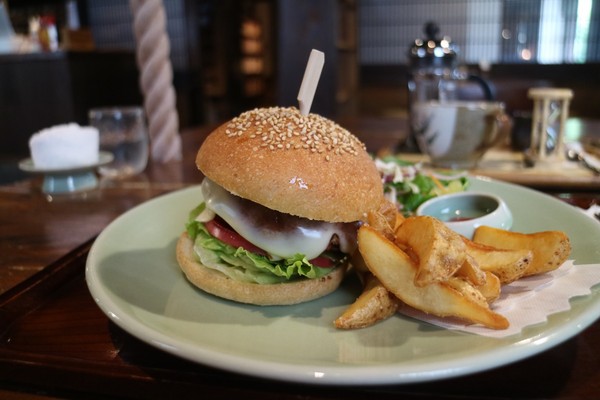
By now, the word “moved” can hardly capture the depth of respect I felt — it was respect for a craft, for people. “We often have regular customers who come back again and again. Their greatest joy is finding their own message books on the shelves. Some kids who used to just doodle here have now grown up, and when they see what they drew back then, they can’t help but smile with each other,” Mrs. Sato said cheerfully. Nowadays, the “Ringo no Ki” is managed by Mr. Sato as the president, Mrs. Sato takes care of the food, and their daughter Kiyomi Sato handles the breads and desserts. The whole family lives a blissful life together in the small village of Kominokuni.
Share
This article is published by HowToTrip. Sharing and reposting are welcome — please credit the source.
Article URL: https://www.howtotrip.net/views-6199
Related Articles
- Shaoxing's "Grandpa Gourd" hangs the gourds back up: "If there are too many people, we'll interact less — just take a quick look from afar"
- Chinese authorities announce "reciprocal adjustment" to Japan visa fees — single-entry visa jumps from 2,250 to 16,750 yen!
- The "health stones" carried by a traveler were found to have radiation levels exceeding safety limits by a thousand times, potentially endangering fellow passengers on the same flight. Customs issues warning!
- Shenzhen Airport Issues Late-Night Notice: Unidentified Aerial Object Detected, Causing Widespread Flight Delays!
- “They only said it cost money after I opened the box and washed it!” 200g of grapes sold for 60 yuan on a high-speed train—12306 responds!
- Can't buy an airline ticket? Denied exit? Blocked from boarding? A large number of Chinese tourists have mysteriously become "discredited individuals"
- Adverse weather and economic fluctuations impact Colombia's coffee market
- Beach bathing area responds to 2 yuan/30 seconds fee for freshwater foot rinsing: Clearly priced!
- Taking off with an improperly closed cabin door? Wing malfunction? Multiple flights made emergency returns mid-journey!
- Experience the gifts of nature! A countdown of the world’s ten most stunning coastlines