Japan’s Small Countries: A Unique Forestry Industry — "Tree Fellers" Who Work with Chainsaws
Text & Photos / Joel Fukuzawa
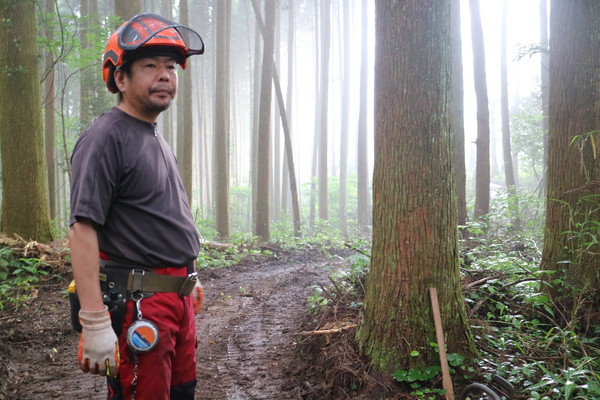
In the forest-rich town of Oguni, there is an industry mostly made up of one-person companies, known as the "Forestry One-Man Boss Association." Kazuo Kawazu is the president of the "Oguni Forestry One-Man Boss Association."
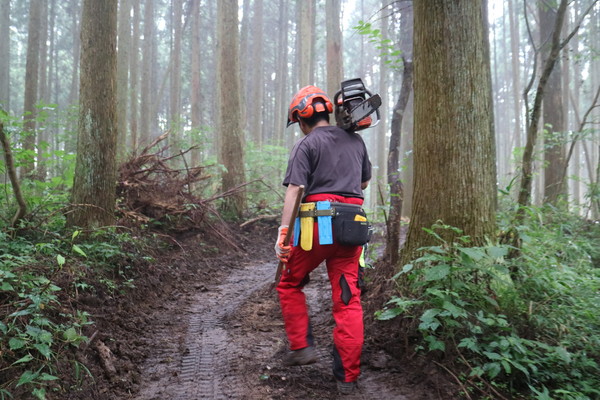
This line of work is full of a lonely, masculine atmosphere. Following behind Kawazu, you see him pick up a chainsaw, put on a safety helmet, and his red work pants contrast with the lush green of the forest. He slowly disappears down a forest path, often reminding one of a hunter walking alone into the jungle with a rifle.

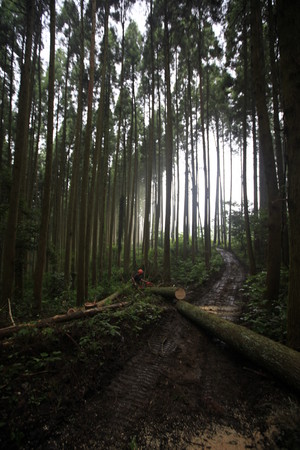
Except their “prey” isn’t animals, but individual cedar trees in the forest. Japan has a long-established SOP for the management and utilization of forestry. First, when planting trees, they calculate the distance between each sapling, as this affects their growth.
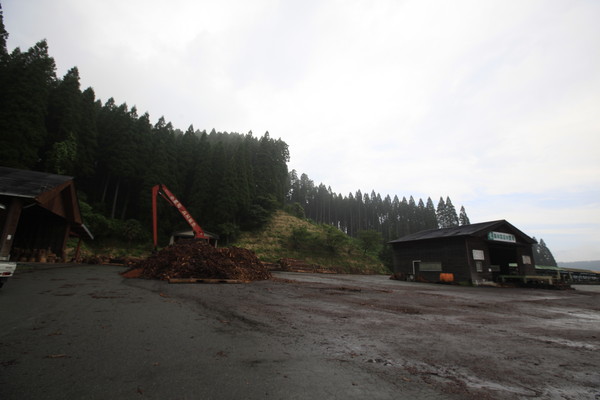

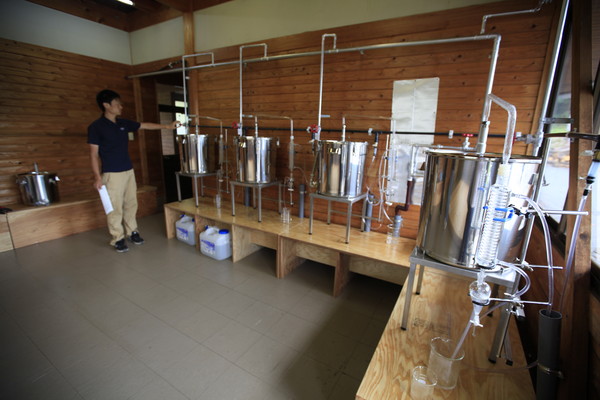
Since many forests in Japan are privately owned, and many of the owners are quite elderly, it’s not uncommon for them to entrust local forest cooperatives to manage the land on their behalf.
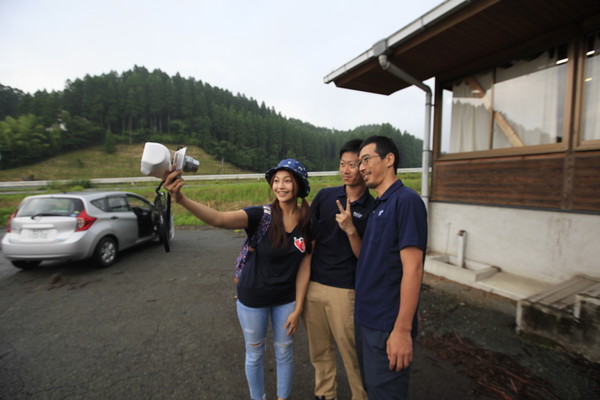
"Forest cooperatives" are similar to "forest chambers of commerce," encompassing everything from individual tree fellers to downstream processing industries. For those who make a living off the mountains — relying on them to support their families — the first link in the chain is naturally the tree feller.
Although only 48 years old, Kazuo Kawazu already has a granddaughter, though you wouldn’t guess it. He says, “I’ve been doing this tree-felling work since I was 20. That’s 28 years now — it feels like it happened in the blink of an eye.”
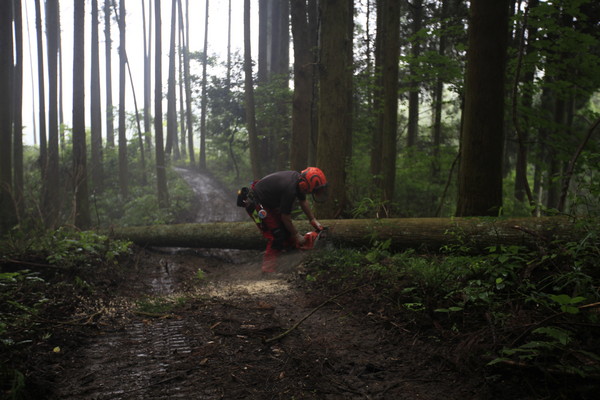
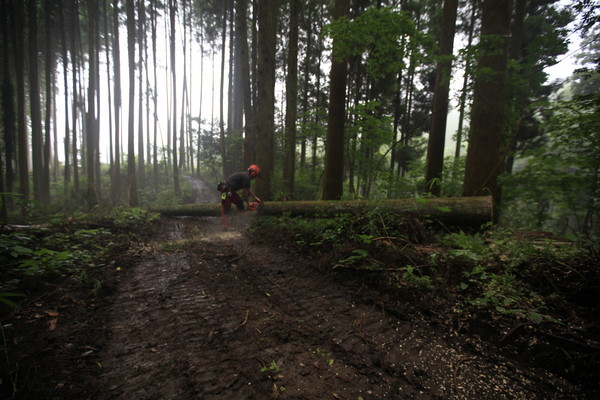
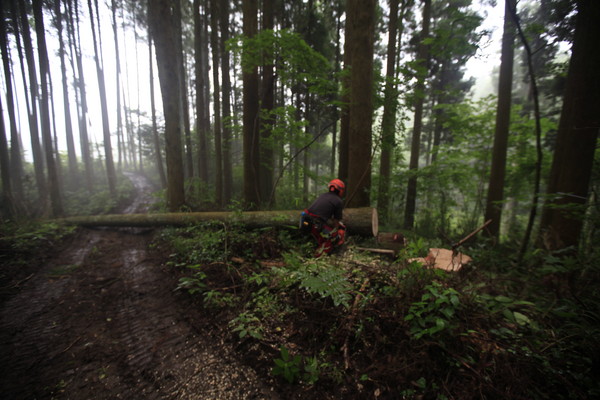
Over those 28 years, Kawazu has had more than one accident. Because chainsaws spin at high speeds and are hard to control, and because you need to manage not just the angle of the cut but also the depth and direction, there’s always a risk of being hit by a tree you’ve just felled.
“Two years ago, I once made a mistake and the tree fell the wrong way. In a panic, I accidentally sliced my own thigh with the chainsaw.” Though that accident didn’t lead to an amputation, he spent two months in the hospital and received over twenty stitches, which caused no small amount of inconvenience in daily life.
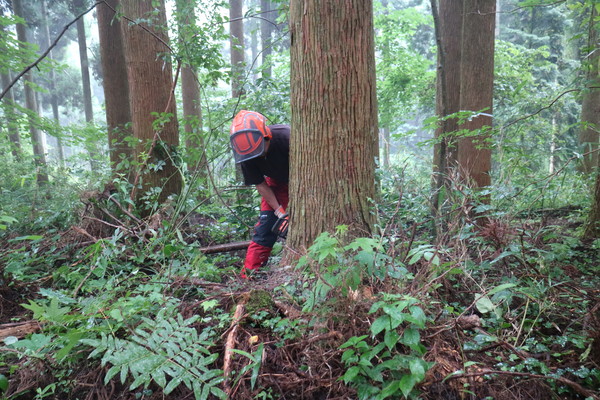

On sunny days, Kawazu takes his tools and drives into the mountains to cut trees. A good Oguni cedar takes about six to seven years from planting to maturity before it can be harvested. These tree-felling bosses search the mountains for suitable trees to cut, then process them into logs about four meters long (“maruta”) before loading them for auction.
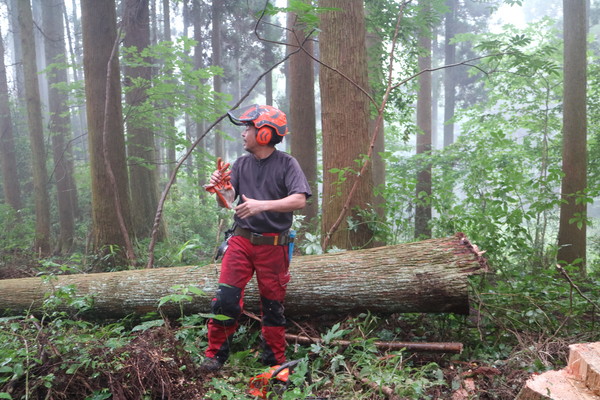
In a day, an experienced tree feller can cut down around 20–30 trees. The average annual income is about five million yen (roughly NT$1.5 million), which is considered a high income for living in a small rural town like Oguni.
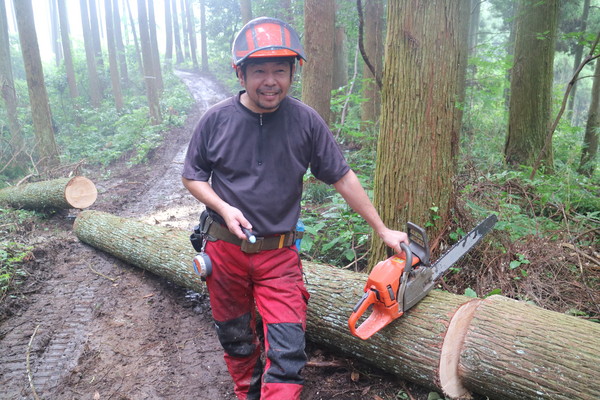
But even with such earnings, there are fewer than fifty tree fellers in all of Oguni. With over 10,000 hectares of forestland managed by these fifty fellers, productivity is relatively low. I asked Kazuo Kawazu, “Does your son plan to take over your work?” “I don’t want him to do this — it’s too dangerous and too lonely. Every day he’d be out in the mountains alone, cutting trees, clearing branches, and loading them. No one to talk to, no one to help, everything done alone. And if something goes wrong, he’d have to try to save himself. As a father, I don’t want my kids to do this kind of job.”
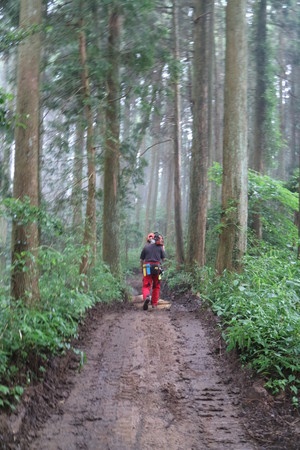
It’s the mindset of any parent — knowing best the hardships of their own work, and always considering their children’s safety first. But Kawazu remains optimistic: “Personally, I really enjoy this job. I get to have a forest bath every day — how great is that!” Perhaps this is the most appealing trait of people from Aso — they’re naturally optimistic.
Share
This article is published by HowToTrip. Sharing and reposting are welcome — please credit the source.
Article URL: https://www.howtotrip.net/views-6119
Related Articles
- Shaoxing's "Grandpa Gourd" hangs the gourds back up: "If there are too many people, we'll interact less — just take a quick look from afar"
- Chinese authorities announce "reciprocal adjustment" to Japan visa fees — single-entry visa jumps from 2,250 to 16,750 yen!
- The "health stones" carried by a traveler were found to have radiation levels exceeding safety limits by a thousand times, potentially endangering fellow passengers on the same flight. Customs issues warning!
- Shenzhen Airport Issues Late-Night Notice: Unidentified Aerial Object Detected, Causing Widespread Flight Delays!
- “They only said it cost money after I opened the box and washed it!” 200g of grapes sold for 60 yuan on a high-speed train—12306 responds!
- Can't buy an airline ticket? Denied exit? Blocked from boarding? A large number of Chinese tourists have mysteriously become "discredited individuals"
- Adverse weather and economic fluctuations impact Colombia's coffee market
- Beach bathing area responds to 2 yuan/30 seconds fee for freshwater foot rinsing: Clearly priced!
- Taking off with an improperly closed cabin door? Wing malfunction? Multiple flights made emergency returns mid-journey!
- Experience the gifts of nature! A countdown of the world’s ten most stunning coastlines