Wudalianchi
The Wudalianchi Scenic Area is located in the northern part of Heilongjiang Province. Among the 14 towering volcanic cones of Wudalianchi, there winds a serpentine river, like a blue silk ribbon connecting five large and smallbarrier lakes,flowing through the gaps between the volcanic cones. In addition, the Wudalianchi Scenic Area is home to other lakes such as Yaoquan Lake, North and South Crescent Pools, Bagua Lake, and Wenbo. The gentle, shimmering waters reflect the majestic green mountains, creating a beautiful traditional Chinese landscape painting.
 Longmen Stone Fortress
Located within the Wudalianchi Scenic Area. The shield volcano of Longmen Mountain, which erupted 280,000 to 340,000 years ago, sent massive lava flows cascading down the slope. After the upper part solidified, the lower lava flow cracked into blocks, which were later shaped by subsequent eruptions and earthquakes into numerous stones and pillars. The two main stone fortresses are about a kilometer apart, covering a total area of nearly 50 square kilometers.
Gelaqiu Mountain Heavenly Lake
Gelaqiu Mountain Heavenly Lake is located within the southern crater of Gelaqiu Volcano in the western volcanic range. Gelaqiu Mountain erupted 2.03 million years ago, with the northern and southern peaks just 150 meters apart. The southern Gelaqiu Mountain stands at an elevation of 596.9 meters and is one of the 14 volcanoes with a truncated cone-shaped shield form. This volcanic formation is intact with no breaches, and its crater is shaped like a round basin that once held over two million years’ worth of accumulated lake water.
Huoshao Mountain
Huoshao MountainErupted around the same time as Heilong Mountain, the entire volcanic cone is made up of black, brown, and purple pumice and basalt. It stands 392.6 meters above sea level with a relative height of 73 meters. The base has a diameter of 800 meters, the crater has an inner diameter of 450 meters, and is 63 meters deep. The southern slope of the cone is steep, while the northern slope is more gradual. The crater rim is uneven, with a gap in the northwest serving as a channel for lava overflow. The surrounding area of the cone is relatively flat, with large areas of exposed volcanic lava.
Heilong Mountain
Heilong Mountainisa young volcano formed after two eruptions in 1719 and 1720. The scenic area covers a total of 50 square kilometers, with the geological formations of Laohei Mountain (Old Black Mountain) and Huoshao Mountain dating back over 280 years. Major attractions include Heilong Mountain (Laohei Mountain), the summit crater, the Sea of Stones, Fairy Palace, Huoshao Mountain, fumarolic cones and discs. Other sites include the Bonsai Garden, Mossy Stone Dragon Garden, Colorful Sandy Beach, remnants of the Sea of Fire, Pines Garden, volcanic bombs, crater forest, Panorama Peak, Soaring Dragon Valley, Volcanic Chasm, magma outflow vents, Water Curtain Cave, secondary volcanoes, Holly Garden, Tranquil Birch Forest, Molten Rock Dragon, Creatures of the Stone Sea, Stone Flower Garden, Bagua Lake, Huoshao Mountain Grand Canyon, Mysterious Pool, Carved Gorge, Huoshao Castle, Stone Ape, Stone Bear, Boiling Springs in Birch Forest, and a total of 59 sites.
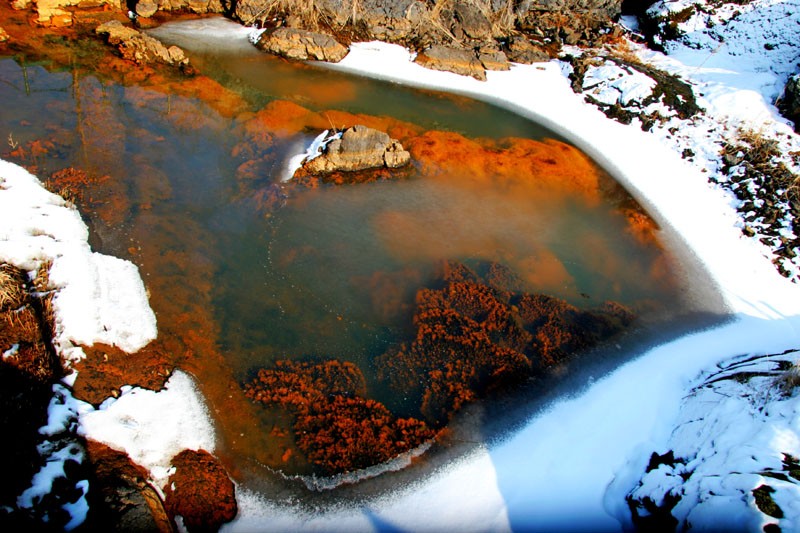
Visiting Wudalianchi in winter not only offers a unique landscape but also fewer crowds, allowing you to better enjoy the natural scenery. Consider taking a weekend trip here.