The "Life of Pi" Island Scene in Kenting’s Banyan Tree Garden — Spot the Giant "Tree Python"
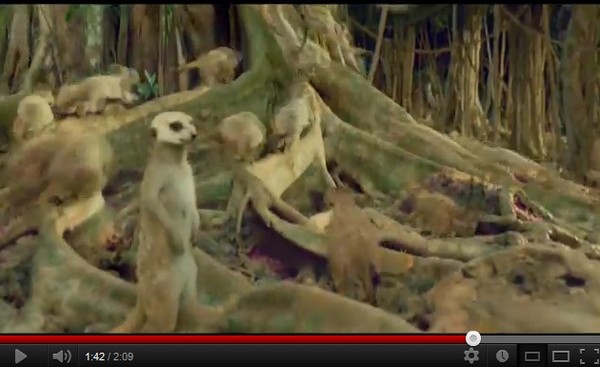
▲The mysterious island full of meerkats was filmed at Kenting’s Banyan Tree Garden. (Photo / from YouTube)
Reported and photographed by You T-Ru / Kenting
Have you seen director Ang Lee’s first 3D adventure epic, *Life of Pi*? Much of the film was shot in Taiwan. The scene where Pi drifts to a mysterious island teeming with meerkats, where all creatures are devoured by acid water, was filmed at Kenting’s “Banyan Tree Garden.” But beyond the pristine banyan forest featured in the movie, the hidden gem of Banyan Tree Garden—and its most famous sight—is what’s hailed as Taiwan’s most astonishing “tree python.”
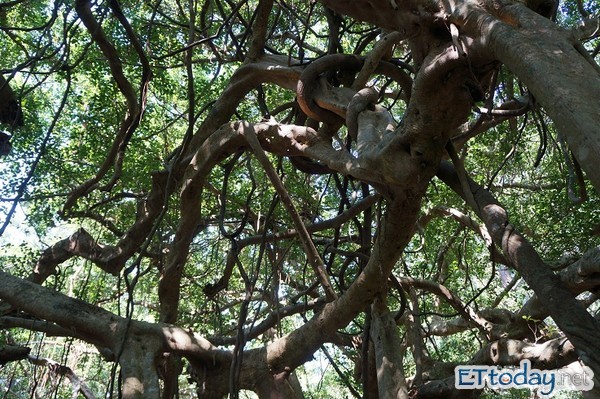
▲What?! There’s actually a giant python on the movie set?
What?! Isn’t it dangerous to shoot in a garden with a giant python? The guide who took me through Banyan Tree Garden, Gu Qingfang, is a seasoned ecologist who accompanied Ang Lee during location scouting. He led me into the 107-year-old Banyan Tree Garden to find that “giant python.” Spanning 800 pyeong, the garden features towering trees that make you feel like you’ve entered a primeval jungle. Just 5 to 10 minutes’ walk from the entrance, you’ll reach the filming location featured in the movie.
The woodland area, reminiscent of a South American tropical rainforest, boasts intertwined aerial roots and a dense, untouched landscape that’s truly awe-inspiring. Walking through the garden feels like stepping into a jungle on the other side of the world. Observing the endlessly entwined trees also makes you marvel—Taiwan still preserves such natural beauty.
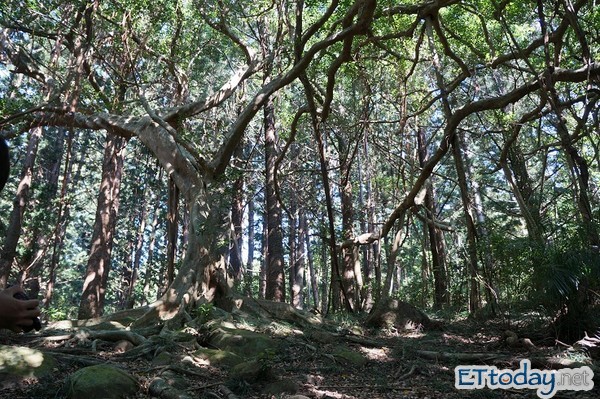
▲The woodland area, reminiscent of a South American tropical rainforest, with trees' aerial roots twisted together.
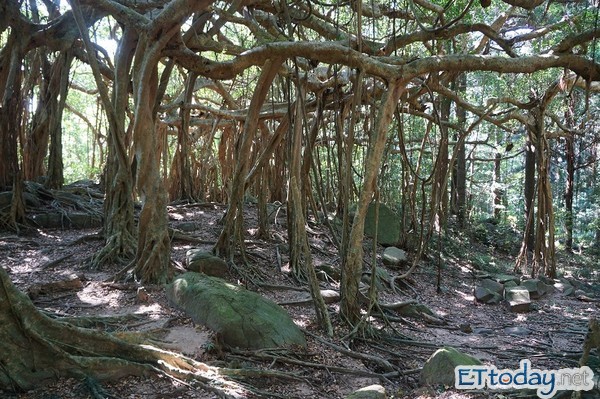
▲During filming, the crew had to sweep away every single fallen leaf on the ground—there couldn’t be a single one—in order to recreate the look of an isolated island.
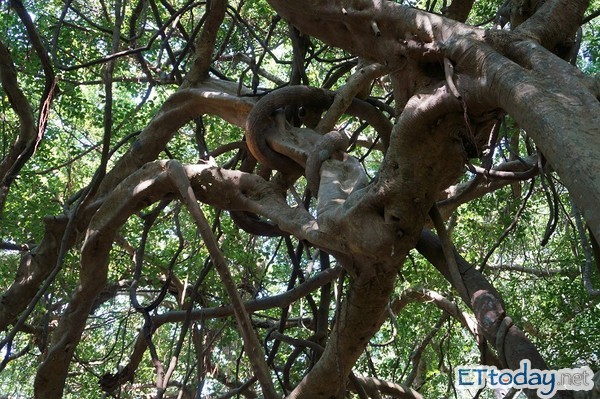
▲The “tree python” is actually a rare plant strangulation phenomenon in Banyan Tree Garden, having grown for over a century.
In the distance, we spot the intertwined “tree python” at the top of the tree. Gu Qingfang pulls me closer. “Take a close look at this giant python—it won’t bite you. It’s actually the entangled part of the banyan and the fish poison vine!” These two plants, both over a hundred years old, are tightly wrapped around each other in a strange embrace. “It’s extremely rare for trees to intertwine like this and still survive—that’s why it’s called a wonder of Banyan Tree Garden.”
“During filming, the crew had to sweep away every single fallen leaf on the ground—there couldn’t be a single one—in order to recreate the look of an isolated island.” The set was covered with a lot of plastic seaweed to mimic the appearance of a deserted island in the sea. “To avoid damaging the tree branches, the team spent a lot of time building supports so the lead actor could climb up the trees using them.” Over the nearly month-long filming period, the actor playing Pi moved through the supports between the trees, getting used to the layout of the entire “isolated island” set. The animated meerkats also climbed along these tree trunks onto Pi’s “bed” in the tree, hiding together from the acid water.
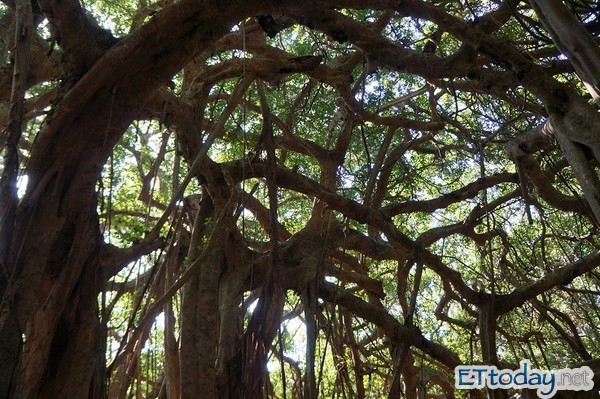
▲Over the nearly month-long filming period, the actor playing Pi moved through the supports between the trees, getting used to the layout of the entire “isolated island” set.
“The filming process was very time-consuming, but it was also a lot of fun. Most importantly, this international team was very conscious about ecology and environmental protection,” Gu Qingfang explained. The large amount of plastic seaweed that was spread across the ground during filming was carefully cleaned up and all altered areas were completely restored to their original state before the crew left. “Their care deeply moved the locals.”
Share
This article is published by HowToTrip. Sharing and reposting are welcome — please credit the source.
Article URL: https://www.howtotrip.net/views-29502
Related Articles
- Shaoxing's "Grandpa Gourd" hangs the gourds back up: "If there are too many people, we'll interact less — just take a quick look from afar"
- Chinese authorities announce "reciprocal adjustment" to Japan visa fees — single-entry visa jumps from 2,250 to 16,750 yen!
- The "health stones" carried by a traveler were found to have radiation levels exceeding safety limits by a thousand times, potentially endangering fellow passengers on the same flight. Customs issues warning!
- Shenzhen Airport Issues Late-Night Notice: Unidentified Aerial Object Detected, Causing Widespread Flight Delays!
- “They only said it cost money after I opened the box and washed it!” 200g of grapes sold for 60 yuan on a high-speed train—12306 responds!
- Can't buy an airline ticket? Denied exit? Blocked from boarding? A large number of Chinese tourists have mysteriously become "discredited individuals"
- Adverse weather and economic fluctuations impact Colombia's coffee market
- Beach bathing area responds to 2 yuan/30 seconds fee for freshwater foot rinsing: Clearly priced!
- Taking off with an improperly closed cabin door? Wing malfunction? Multiple flights made emergency returns mid-journey!
- Experience the gifts of nature! A countdown of the world’s ten most stunning coastlines