Traveling in a hotel room / "Mobile Lodging" — The Eastern & Oriental Express from Bangkok to Singapore
Text & Photos / Ding Yi, Excerpted from / HowToTrip Publishing’s *Traveling in a Hotel Room*
About Ding Yi
Passionate about design, writing, music, architecture, photography, and travel, he loves backpacking and has been on in-depth journeys around the world for years, with footprints in over fifty countries. Through the perspectives of different creators — musicians, writers, architects, painters, designers, poets, composers, photographers — he discovers the subtle glow in hotel corners and catches unique flavors.
Dubbed by *Cheers* magazine as a “dazzlingly versatile creative genius,” he is a columnist for *PLAY Playful* and has written articles on advertising and design for *Brainstorm*. Currently the Executive Creative Director at Publicis Bangkok, his ten-year body of advertising work has garnered over two hundred international and local creative awards, with his pieces featured in major international creative award yearbooks and design magazines worldwide.
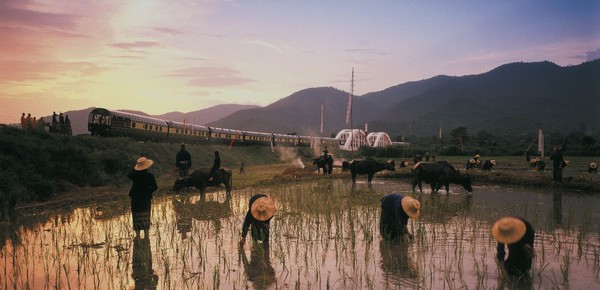
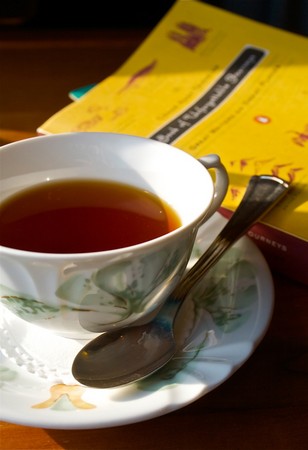
As the train pulled out of Bangkok’s Hualamphong Station, built in 1912, it was already 5:50 PM. The setting sun filtered through the glass archways, spilling golden light onto the floor and casting a dance of light and shadow upon the oil portrait of King Rama V Chulalongkorn. The faint scent of tea lingering on my palate came from the French Mariage Frères green tea served in the Authors Lounge of the Eastern Hotel. This early 20th-century salon-tea house, once a gathering place for literati, exudes an atmosphere steeped in ink and pages — the perfect starting point for reminiscing about overseas writers.
In 1920, Nobel Prize-winning author Ernest Hemingway, then living in Paris, wrote: “If you are lucky enough to have lived in Paris as a young man, then wherever you go for the rest of your life, it stays with you, for Paris is a moveable feast.” Using his words to describe the journey of the Eastern & Oriental Express across Singapore, Malaysia, and Thailand — replacing Paris with the Express — not only isn’t an exaggeration, but actually enhances the imagery.
The Viewer Is Also the Viewed
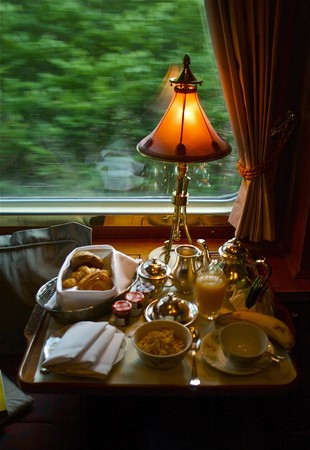
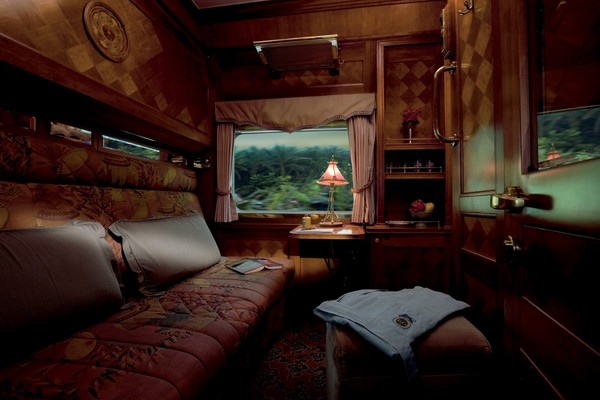
The Eastern & Oriental Express, consisting of twenty-four carriages, combines colonial style with refined design. Its walls are inlaid with precious walnut wood. Dark green velvet chairs, pale green lace curtains, intricately patterned carpets, along with classical wood carvings and luxurious furnishings everywhere, all carefully create an air of noble grandeur.
Gazing out from the train’s windows, the scenery outside shifts like an ever-changing painting. One moment it’s Impressionist, the next Cubist, forming a contrast with the strong classical interiors within. There are paintings outside the window, and paintings inside the carriage as well — the viewer becomes the viewed. American realist painter Edward Hopper created eleven train-themed works between 1925 and 1965, one of which, the famous *Compartment C, Car No. 293*, closely mirrors my own state of mind at the moment.
My gaze drifts between books and the window view, thoughts flickering intermittently, with mundane notions surfacing only to vanish without a trace. Outside, the rumble of the train contrasts with an eerie stillness within — not silence, but a profound solitude that arises when travelers let go of everything. The black upright piano in the dining and bar carriages casts a noble silhouette under golden light. Attendants delicately arrange vibrant orchids on the tables, while crystal goblets await the evening feast, elegantly greeting guests from various nations.
The Art of Travel Beneath Wu Mountain
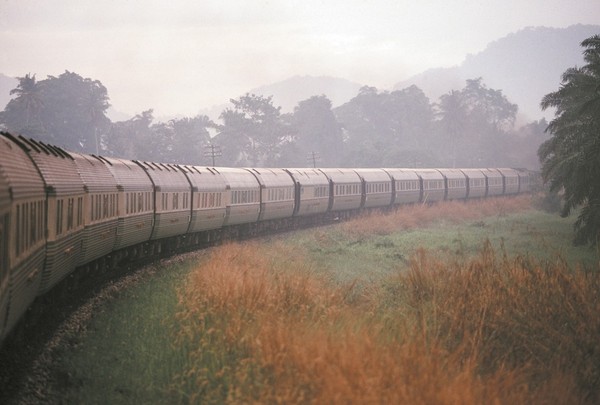

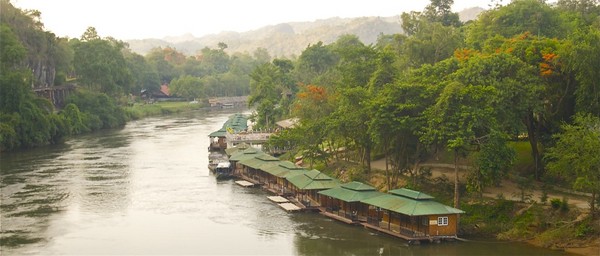
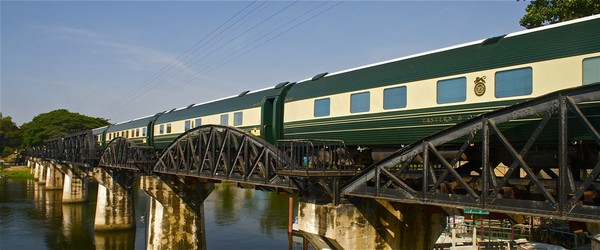
The most beautiful music must be played on a Steinway grand piano to reveal its charm; and the most spectacular view of the River Kwai Bridge must be seen aboard the Eastern & Oriental Express at sunrise to feel its awe. Looking out from the carriage, the vast white waters stretch below, with a few bamboo rafts drifting by, accompanied by the chirping of cicadas and birds. Shafts of golden light pierce through the layered clouds, as if escaping from a postcard. Such breathtaking beauty might be too vivid even for a Leica camera to replicate accurately.
With thousands of emerald peaks and flowing rivers, and misty valleys surrounded by dense forests, distant mountains offer color while nearby waters sing; the background sets off the foreground, movement hides within stillness, interweaving into a serene and peaceful scroll. It’s as if Li Bai’s verse is painted here: “Last night beneath Wu Mountain, the ape’s cries lingered in my dreams; peach blossoms flew over the clear waters, descending to Qutang in March.” Overwhelmed with emotion, lost in thought, it’s no wonder British writer Alain de Botton admitted in *The Art of Travel* that no mode of transport lulls travelers into reflection more effortlessly than a moving train.
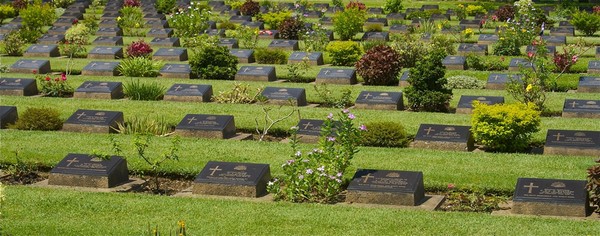
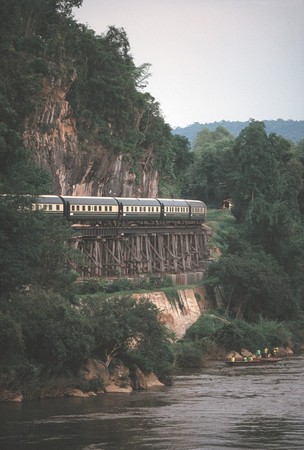
The train runs along a wooden viaduct hugging the cliffside, looking up at the towering, lush mountains of Kanchanaburi, and down at the crisscrossing fields below. The riverside houses beneath the River Kwai Bridge, covered with thatched roofs and surrounded by bamboo fences, vegetable gardens, and herb plots, exude a simple, tranquil charm — perfect for evoking nostalgia and enjoying serene, pleasing views. After visiting the Death Railway Museum, I learned that this three-hundred-meter WWII-era death railway claimed countless lives.

Listening to the Pulse of the Old Streets
After crossing the southern Thai border, the train officially enters Malaysia’s rice-rich Kedah state and stops at Butterworth Station by the sea. Taking a ferry across the strait, I arrive quietly at George Town on Penang Island.

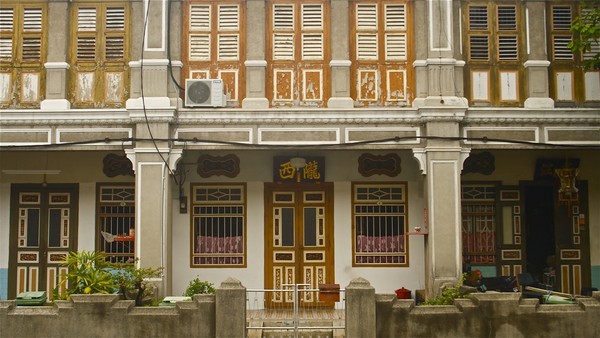
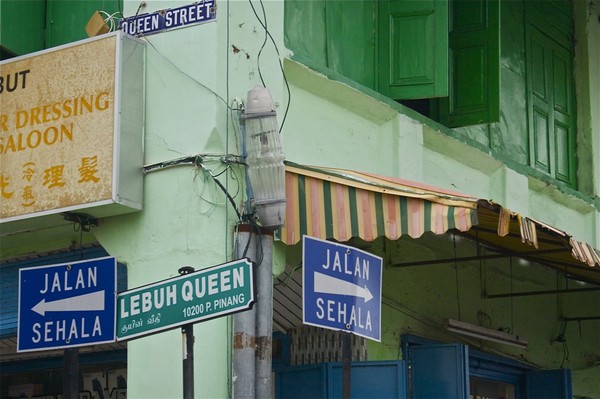
This island city, newly designated as a UNESCO World Heritage Site in 2008, resembles a turtle emerging from the water. It is the ideal place to witness the splendor of British colonial history. The space where lush old houses and streets coexist is filled with moving stories. Riding a trishaw through George Town’s old streets, one explores over a century of Chinese struggle and heritage. Passing through Train Road, Harbour Street, Suspension Bridge Road, Bull Ring Road, Society Tail, Second Lane, Love Lane, one encounters the vibrancy of three major ethnic groups: the Guanyin Ancient Pavilion, Malay cemeteries, Hindu temples, Catholic churches, Leong San Tong Khoo Kongsi, old shophouses, traditional stalls, authentic eateries, and craft workshops — all in abundance.
These old streets are like clearly mapped circuit diagrams deeply imprinted on the ground. Pressing your fingers against the pavement, you can almost feel the pulse of history.
Before leaving, stop by Asia’s oldest colonial-style hotel for afternoon tea. The Eastern & Oriental Hotel, built in 1885, still thrives in its former glory, crowned as the “Pearl of the Orient” by the sea. It has hosted countless European writers. Director Ang Lee stayed here while filming *Lust, Caution* in Penang.
By the time I arrived at Kuala Lumpur’s central railway station, it was deep into the night. This white Moorish-style building, designed by architect A. B. Hubbock, has endured a century of history, blending the octagonal domes of North Indian mosques with horseshoe arches. What moved me was that Hubbock, though British, did not impose imperial style on the building, fully respecting the Islamic culture and the Malay Sultanate system.
Enjoying the Same Breakfast in Two Countries
During those three nights and four days, traveling southward over two thousand kilometers by rail from Bangkok, the City of Smiles, to Penang, the Pearl of the Orient, and then to Singapore, the Garden City, I felt like the protagonist in a movie or novel. More than once, while sharing drinks with fellow passengers on the train, I felt the urge to pour out my heart — all thanks to the romantic ambiance and classic, cinematic surroundings.
Sleeping in a moving suite, the body and mind race against space and time; and enjoying the same breakfast in two different countries — this timeless pleasure conquers even the pickiest palates. Renowned Japanese fashion designer Kenzo Takada and musical theater mogul Andrew Lloyd Webber were both enchanted by the Eastern & Oriental Express’s ethereal atmosphere.
Everything that happens on the train feels somewhat surreal, perhaps due to the ever-shifting backdrop. In an unfixed location, the focus of thought also becomes ambiguous, increasing the chances of ideas colliding and sparking creativity. Train travel has become a favorite among creative professionals.
Agatha Christie, the British mystery novelist, was equally captivated by the romantic elegance and otherworldly atmosphere of the Orient Express during her 1931 trip to Eastern Europe, using it as the setting for her famous novel *Murder on the Orient Express*.
She once publicly stated: “Taking the train is the best way to be close to nature and witness the diversity of human life.”
[Eastern & Oriental Express]
Address: E&O Service (Thailand) Co, Ltd, 37th Floor, Gems Tower Building, 1249 Charoen Krung Road, Bangkok 10500, THAILAND
Phone: +65-63950678
Email: jenny.wong@orient-express.com
Website: http://www.orient-express.com/web/eoe/eastern_and_oriental_express.jsp
Visit Date: May 2010
Room Number: Room 6 J
Share
This article is published by HowToTrip. Sharing and reposting are welcome — please credit the source.
Article URL: https://www.howtotrip.net/views-29436
Related Articles
- Shaoxing's "Grandpa Gourd" hangs the gourds back up: "If there are too many people, we'll interact less — just take a quick look from afar"
- Chinese authorities announce "reciprocal adjustment" to Japan visa fees — single-entry visa jumps from 2,250 to 16,750 yen!
- The "health stones" carried by a traveler were found to have radiation levels exceeding safety limits by a thousand times, potentially endangering fellow passengers on the same flight. Customs issues warning!
- Shenzhen Airport Issues Late-Night Notice: Unidentified Aerial Object Detected, Causing Widespread Flight Delays!
- “They only said it cost money after I opened the box and washed it!” 200g of grapes sold for 60 yuan on a high-speed train—12306 responds!
- Can't buy an airline ticket? Denied exit? Blocked from boarding? A large number of Chinese tourists have mysteriously become "discredited individuals"
- Adverse weather and economic fluctuations impact Colombia's coffee market
- Beach bathing area responds to 2 yuan/30 seconds fee for freshwater foot rinsing: Clearly priced!
- Taking off with an improperly closed cabin door? Wing malfunction? Multiple flights made emergency returns mid-journey!
- Experience the gifts of nature! A countdown of the world’s ten most stunning coastlines