Stay overnight at a shrine / Experience ascetic practice in the Togakushi Mountains & enjoy delicious soba noodles
Text & photos by uQ Nakashiro Hiroshi / Excerpted from Owl Publishing’s "Stay Overnight at a Shrine"
Togakushi Shrine · Yukisuke Ryokan · Nagano Prefecture
“Togakushi Shrine” is located at the foot of Mount Togakushi and consists of five shrines: “Okusha,” “Chusha,” “Houkousha,” “Kuzuryusha,” and “Hinomikosha.” Legend has it that Mount Togakushi was formed when the “Heavenly Rock Door” suddenly descended from the heavens during mythological times, creating the rugged landscape seen today. The deities enshrined at Togakushi Shrine are those credited with the merit of “opening the Heavenly Rock Door.”
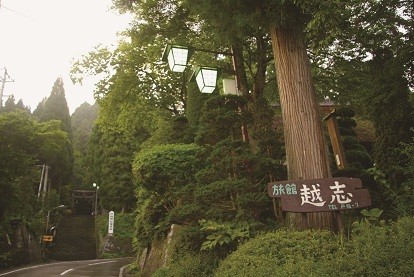
Taking a bus from JR “Nagano Station” bound for “Togakushi Plateau” for about an hour will bring you to Houkousha, the lowest of the five shrines. From there, you can take a bus directly to the higher Chusha and Okusha, but visiting the main shrine of Togakushi, “Okusha,” first is considered the most appropriate route for understanding this sacred site.
After spotting the torii gate of Chusha on your right, continue toward Okusha, and you’ll notice the surroundings gradually transforming into a highland. Before long, the jagged, steep peaks of Mount Togakushi come into view on the left front. Mount Togakushi is one of the peaks in the Togakushi Mountain Range, standing at 1,904 meters above sea level, and is believed to be composed of igneous rocks from submarine volcanoes formed approximately 400 million to 2.7 million years ago.
After getting off at the “Okusha Entrance” bus stop, a straight, approximately two-kilometer-long approach stretches out before you. From the vivid red “Zuishinmon Gate” onward, the sides are lined with majestic cedar forests—natural monuments planted during the Edo period. The deity enshrined at “Okusha” is “Ame-no-Tajikarao-no-Kami,” who, in Japanese mythology, is the god who pushed open the rock when Amaterasu Omikami hid inside the “Heavenly Rock Door.” The “Heavenly Rock Door” thrown by Ame-no-Tajikarao is said to have formed Mount Togakushi.
After walking along the approach for about forty minutes, the view suddenly opens up, and Mount Togakushi once again reveals its rugged peak across from the “Okusha Honden.”
In the late Heian period, Togakushi was praised as one of the “Four Sacred Efficacious Sites” in the “Ryōjin Hishō” compiled by Emperor Go-Shirakawa, and it became known as a sacred site for mountain esoteric Buddhism. Later, it merged with Tendai Esoteric Buddhism and Shingon Esoteric Buddhism, combining with Shinto to become the syncretic “Togakushi Shinkō-ji.” At that time known as the “Togakushi Thirteen Valleys and Three Thousand Temples,” it rivaled the famous “Three Mountains of Kumano” for having many yamabushi monks and mountain practitioners. Additionally, there is a close connection with the Zenkō-ji Temple nearby, so many of the famous naginata (pole weapons) and war fans originating from Togakushi are also said to have been brought from Zenkō-ji.
Enjoy soba noodles served on a hanging tray near the beautiful yet rugged sacred mountain
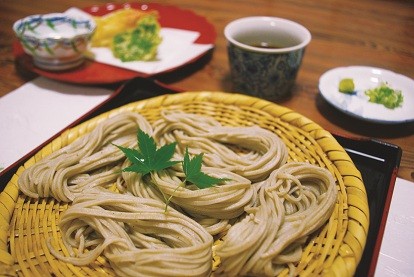
Mention Togakushi, and people instantly think of the nationally renowned “Togakushi Soba.” Visitors to Togakushi often head to soba specialty shops, temple lodgings, or minshuku (family-run inns) to eat hand-made soba noodles.
Togakushi soba is said to have been brought to villages by yamabushi monks during the Heian period when Togakushi flourished as a training ground. Initially, it was merely soba powder dissolved in water, but it gradually evolved into dough made by kneading soba flour with hot water or even roasting soba dough into “soba senbei” (soba crackers). The soba noodles we commonly eat today didn’t reach Togakushi until the Edo period, reportedly introduced from the closely connected Kanei-ji Temple in Ueno. From then on, various temple lodgings served soba noodles to pilgrims visiting the “Togakushi Ko” gatherings from across the country.
Ordering Togakushi soba by the “hanging tray” reveals that they are served as bundles equivalent to a single bite, with five to six bundles neatly arranged on a woven bamboo “hanging tray.” The origin of the hanging tray is said to date back to when only unbroken, uniformly sized, and high-quality soba noodles were selected to offer to the deities of Togakushi and to entertain high-ranking guests. Additionally, the number of noodle rolls on the hanging tray is usually five, believed to be associated with the five deities of the Togakushi Five Shrines.
Even day-trippers can enjoy Togakushi soba, but those fortunate enough to stay overnight at a historically rich lodging should take their time to savor its flavors.
Mount Togakushi currently has nearly forty operating temple lodgings. These lodgings, which serve as the “monasteries” of yamabushi monks, take care of accommodating and feeding worshippers participating in the “Togakushi Ko” gatherings on behalf of the shrine. Such lodgings are also called “Jūchō-ke.”
With the changing seasons, the meals here feature exquisitely prepared local Togakushi vegetables and mountain greens that surpass typical regional cuisine. During my summer stay, dinner included pickled or chilled dishes made with vegetables such as bottle gourd, round eggplant, mustard greens, and sponge gourd, serving as elegant garnishes. The meal would conclude with specially made hand-kneaded soba noodles. Dining in the tranquil garden-facing, high-ceilinged building made me almost forget the modern era.
Stay overnight at a lodging and tour the Togakushi Five Shrines
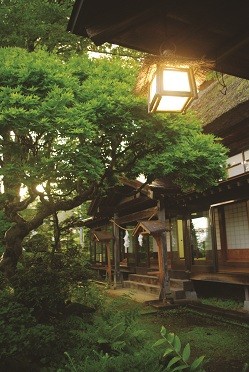
Stay at Yukisuke Ryokan, which recommends its guests the “Togakushi Five Shrines Pilgrimage” itinerary. The five shrines are located not far from each other on Mount Togakushi, and circling to visit all of them allows you to stamp your shikishi paper with the vermilion seals of each shrine in turn.
As mentioned earlier, “Okusha” is the main shrine of Togakushi, with the deity “Ame-no-Tajikarao-no-Kami.” Directly below Okusha lies “Kuzuryusha,” established earlier than Okusha, with its deity “Kuzuryu-no-Kami” worshipped as the local guardian deity of Togakushi. Walking down the mountain path from Okusha, you can reach the grounds of Chusha in about forty minutes.
“Chusha” enshrines “Ame-no-Iwatowake-no-Kami,” who, when Amaterasu Omikami hid in the “Heavenly Rock Door,” created the “Iwato Kagura” (great kami dance) to help open the cave. The shrine office of Togakushi Shrine is also located here.
Walking from Chusha along the ancient pilgrimage route known as the “Shinto Path,” and then taking a side trail, you’ll come across “Hinomikosha.” The deity enshrined at “Hinomikosha” is “Ame-no-Uzume-no-Kami,” the leading deity among three, who danced in front of the “Heavenly Rock Door” to lure out Amaterasu Omikami. While the other four shrines changed forms during the Shinto-Buddhist syncretic period, Hinomikosha has retained its original shrine appearance. Following the Shinto Path from Chusha leads to “Houkousha.” The deity enshrined at “Houkousha” is “Ame-no-Hohi-no-Kami,” the child deity of Chusha’s Ame-no-Iwatowake-no-Kami. Its shrine building is both solemn and magnificent, still retaining strong elements of the Shinto-Buddhist fusion era.
[Yukisuke Ryokan]
Address: 2323 Houkousha, Togakushi, Nagano City, Nagano Prefecture
Phone: 026-254-2007
Directions: Take the bus bound for “Togakushi Plateau” from JR Shinkansen “Nagano Station,” get off at “Houkousha Miya-mae,” and walk for two minutes.
Accommodation fees:
Togakushi Full Enjoyment Plan: Adults ¥10,500, Children ¥6,300
Togakushi Ultimate Enjoyment Plan: ¥12,600
All-You-Can-Eat Handmade Soba Plan: ¥11,550
(All of the above include one night with two meals, taxes included)
Share
This article is published by HowToTrip. Sharing and reposting are welcome — please credit the source.
Article URL: https://www.howtotrip.net/views-29388
Related Articles
- Shaoxing's "Grandpa Gourd" hangs the gourds back up: "If there are too many people, we'll interact less — just take a quick look from afar"
- Chinese authorities announce "reciprocal adjustment" to Japan visa fees — single-entry visa jumps from 2,250 to 16,750 yen!
- The "health stones" carried by a traveler were found to have radiation levels exceeding safety limits by a thousand times, potentially endangering fellow passengers on the same flight. Customs issues warning!
- Shenzhen Airport Issues Late-Night Notice: Unidentified Aerial Object Detected, Causing Widespread Flight Delays!
- “They only said it cost money after I opened the box and washed it!” 200g of grapes sold for 60 yuan on a high-speed train—12306 responds!
- Can't buy an airline ticket? Denied exit? Blocked from boarding? A large number of Chinese tourists have mysteriously become "discredited individuals"
- Adverse weather and economic fluctuations impact Colombia's coffee market
- Beach bathing area responds to 2 yuan/30 seconds fee for freshwater foot rinsing: Clearly priced!
- Taking off with an improperly closed cabin door? Wing malfunction? Multiple flights made emergency returns mid-journey!
- Experience the gifts of nature! A countdown of the world’s ten most stunning coastlines