Only by "holding hands" with a geisha can you go upstairs: lifting the veil on the mystery inside Kanazawa's tea houses
Reported and photographed by You T in Kanazawa
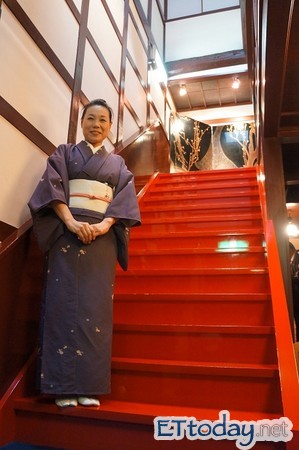
▲The vermilion staircase is where guests and geisha hold hands while ascending.
"When a geisha and a guest hold hands and walk up these stairs, it marks the beginning of a glamorous evening." On a rainy day, I took off my boots and clattered up the red staircase. A waitress from "Kan’inrō" quietly explained as she followed behind. This is an Edo-period tea house that’s been around for 192 years. The waitress meant for me to tread lightly—because behind this vermilion staircase, which I had just "sprinted" up, lies what used to be an exclusive private playground accessible only to samurai and merchants.
Back in the Edo period when that distant "exclusive private playground" flourished, Kanazawa had over 100 tea houses and as many as 200 geisha. Nowadays, there are only three remaining geisha districts in Kanazawa—Higashi Chaya, Nishi Chaya, and Kazue-machi Chaya—with a total of just 50 geisha left. Higashi Chaya, where "Kan’inrō" is located, now has 15 geisha, the oldest of whom is already 85 years old.
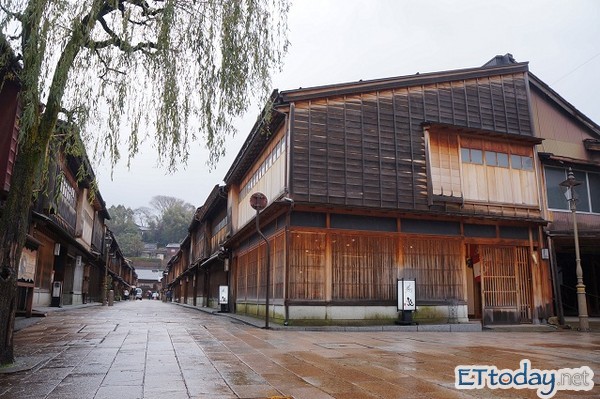
▲%The area preserves Japan’s rare surviving geisha culture.
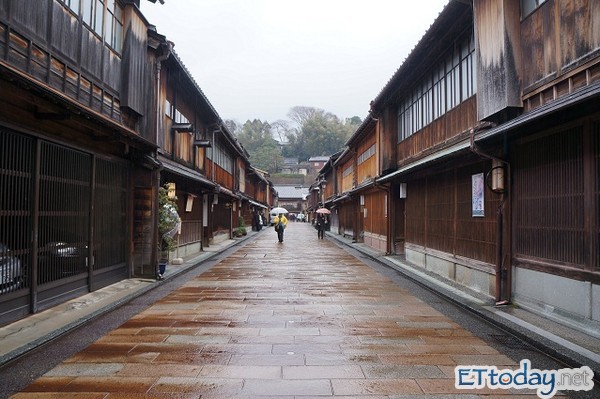
The 85-year-old geisha once, on rainy nights just like this, also held hands with guests and clattered up this wide red staircase specially made for "hand-holding," stepping into a night of pleasure. After going up the stairs and turning right, the red "Shujima" (vermilion room) on the outer side was reserved for merchants; the blue "Gunjō-no-ma" (ultramarine room) a bit further in was for samurai. Facing the stage inside the room, a 90-minute performance began, just as it did in the Edo period.
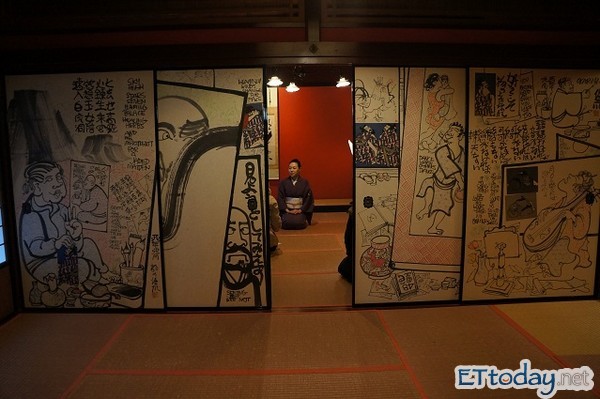
▲%On the right: the room once used by merchants.
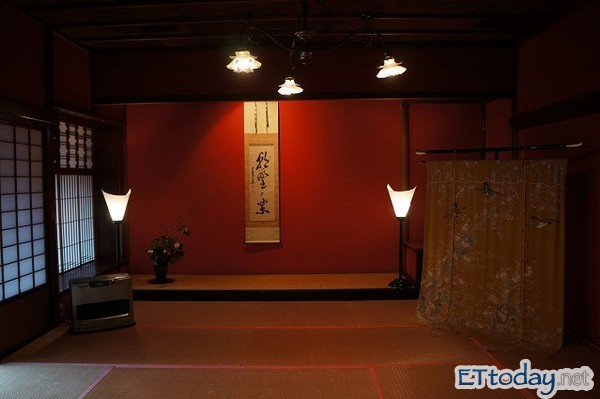
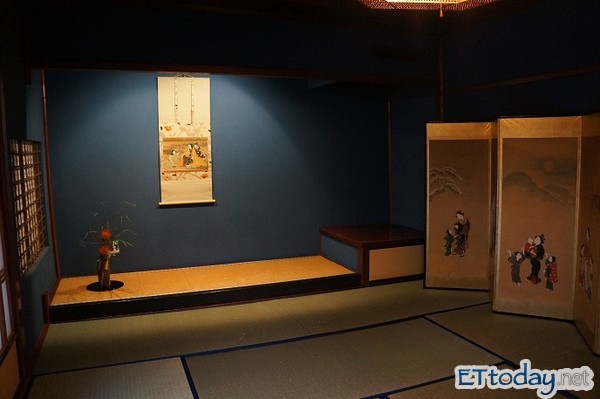
▲%On the left: the room once used by samurai.
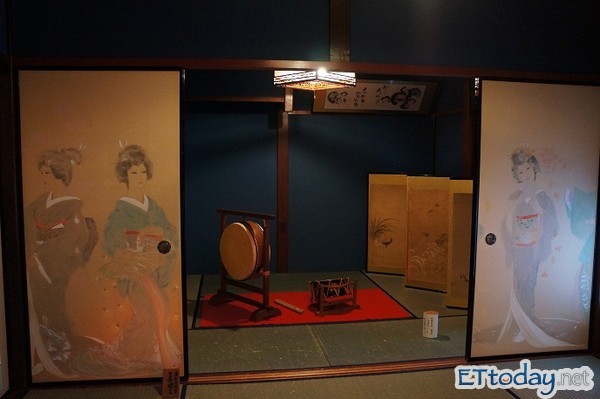
"Ninety minutes is just the right length of time to keep the gentlemen in a 'not-too-rowdy' state." The waitress, kneeling in the "Shujima," explained. In the Edo period, there were no clocks, so the geisha’s performances were timed with incense sticks. Guests would drink and dine while enjoying the graceful performances of the geisha. This tea house, once accessible only to nobility, also served as a discreet venue for private business discussions.
"Kan’inrō" in Kanazawa’s Higashi Chaya district is like a half-sealed historical warehouse, preserving the full charm of traditional tea house architecture. "The wooden floorboards outside the Shujima are specially designed so that their seams are not fully aligned, and they make a sound when stepped on." In ancient times, merchants loved holding private talks in tea houses. To prevent eavesdroppers from lurking outside and overhearing secrets, the floorboards would emit a faint "creak" whenever someone walked on them. This also helped the waitresses accurately determine when a guest had left. "When guests leave, since no one is holding their hand, they use the small back staircase instead." When I went around to check out the back "inner staircase," it indeed turned out to be only wide enough for one person.
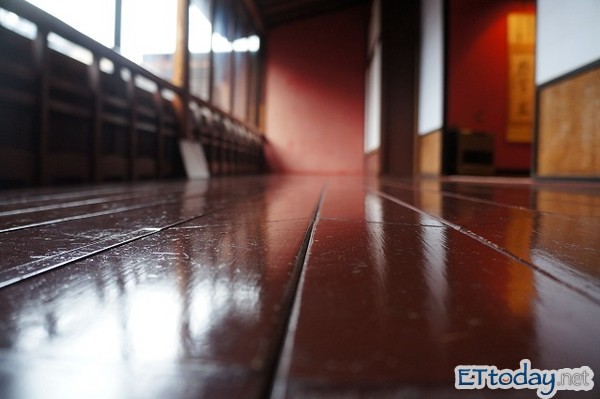
▲The creaky floorboards, designed to prevent merchants’ conversations from being overheard, are located next to the "Shujima."
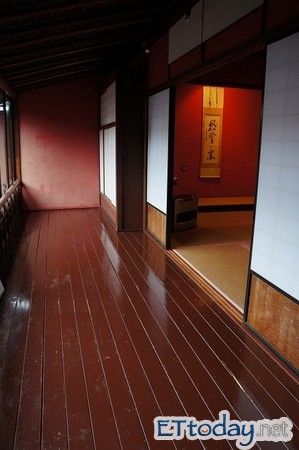
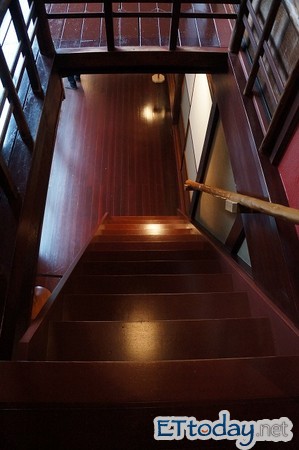
▲Left: The hallway outside the Shujima creaks when walked on. Right: The inner staircase used by guests when leaving.
Next to the inner staircase, there is a well called the "Yukimi-no-ma" (Snow-Watching Room), designed for Kanazawa’s heavy winter snowfall. To prevent the roof from collapsing under the weight of accumulated snow, the roof is sloped so the snow can fall directly into the "Yukimi-no-ma" and melt. At the same time, to maintain the tea house’s aesthetic harmony, the Yukimi-no-ma was traditionally decorated with a dry landscape garden, but is now interpreted with modern glass art.
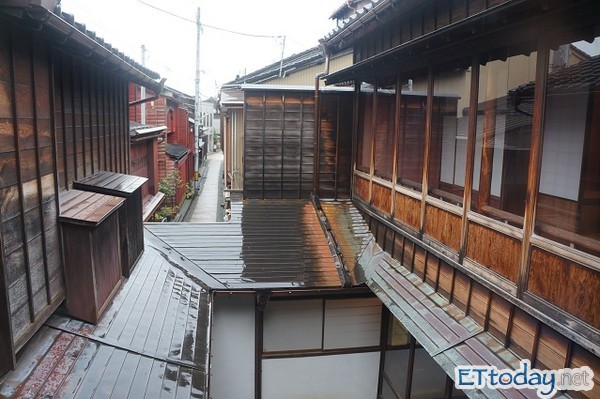
▲%The structure is designed to handle heavy snowfall, leading to the "Snow-Watching Room."
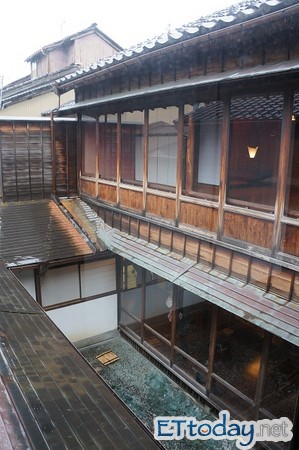
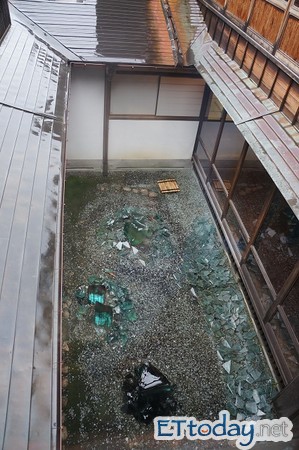
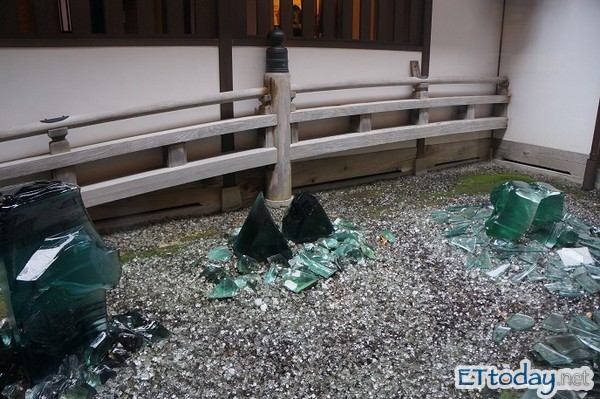
▲Glass artworks are used as installations, with bridge planks from Kenroku-en "married" into Kan’inrō behind them.
The secrets of Kan’inrō are also hidden in the tatami mats inside. In the "Shujima" and "Gunjō-no-ma," there is a "Ichimatsuma-no-ma" (City-Pine Mat Room), where the seams of the tatami are designed with a special technique to form uniquely dense patterns. Legend says stepping on them can bring promotion. There is also a gold-leaf tatami made using the traditional "mizuhiki fine craft" technique, and taking a photo on it is said to bring a year of wealth. Moreover, the house contains four hidden entrances, installed so that guests of differing status wouldn’t awkwardly run into each other—but these are not corners that regular visitors can see.
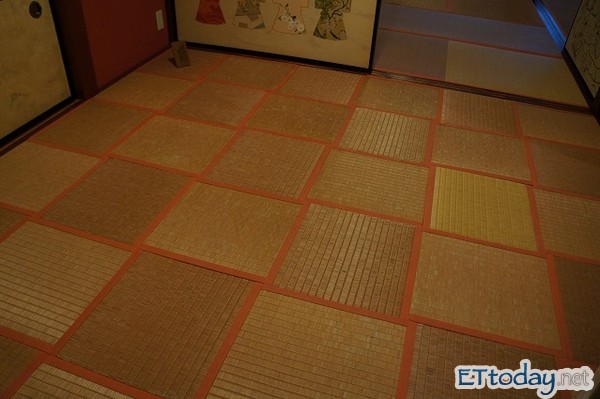
▲%The unique "City-Pine Mat" with tightly spaced seams.
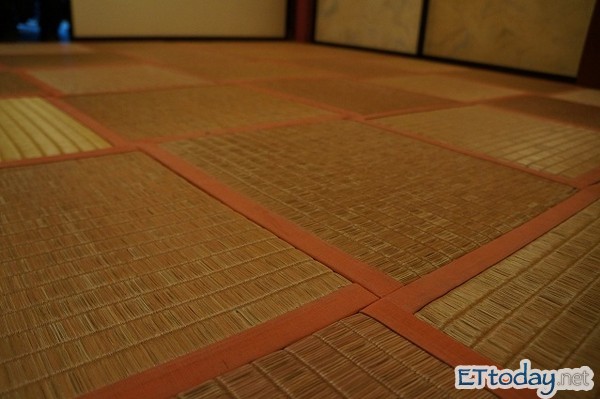
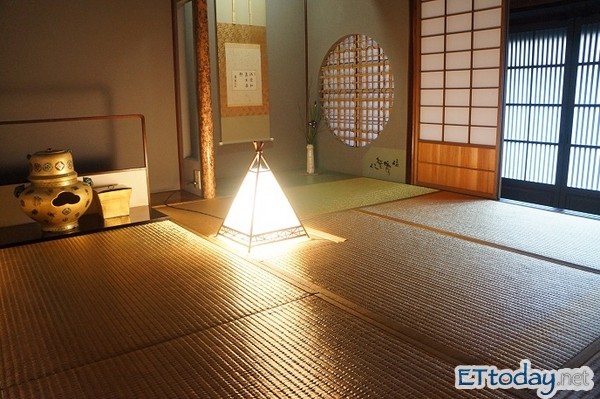
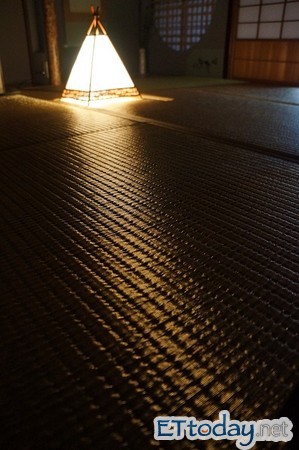
▲Gold-leaf tatami crafted with traditional techniques.
"If the general public wants to see a geisha performance, they must have an introduction." Tea houses that only receive "regular customers" will refuse any walk-in guests. "This is to ensure that guests are of appropriate status and to maintain discretion." In the Edo period, tea houses only sent out bills twice a year, but in response to changing times, they now issue bills monthly. As for how much it costs to see a performance? "It’s hard to estimate—it depends on the number of guests, the number of geisha requested, the food, and the content of the performance." The waitress smiled gently, skillfully dodging the sensitive question about price.
"When you leave Kan’inrō, you may use the back staircase." The waitress smiled and directed me to take the "inner staircase." Leaving via the "inner staircase" also marked the end of the reception at Kan’inrō. I walked down the staircase that only allowed one person through at a time. From the cracks in the walls of the old building came a faint winter chill, as if it really had sealed away memories of the past. Visiting here means stepping through the door to pleasure together with the waitress—but when leaving, all that splendor must be left behind, and one must bid farewell with flair.
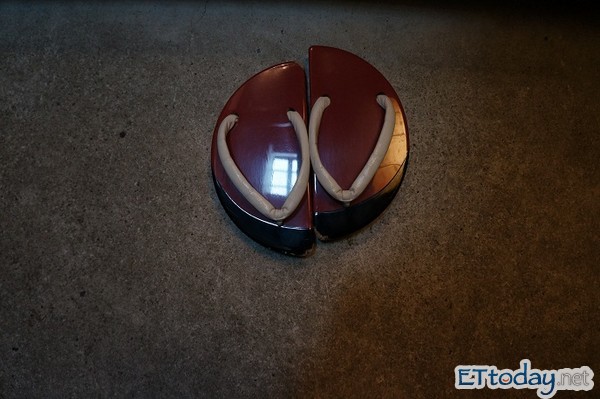
▲Visiting here means stepping through the door to pleasure together with the waitress—but when leaving, all that splendor must be left behind, and one must bid farewell with flair.
[Kan’inrō]
Address: 14-8 Higashiyama-machi, Kanazawa, Ishikawa, Japan
Phone: +81 76-253-0591
Business Hours: 9:00–17:00
Share
This article is published by HowToTrip. Sharing and reposting are welcome — please credit the source.
Article URL: https://www.howtotrip.net/views-29374
Related Articles
- Shaoxing's "Grandpa Gourd" hangs the gourds back up: "If there are too many people, we'll interact less — just take a quick look from afar"
- Chinese authorities announce "reciprocal adjustment" to Japan visa fees — single-entry visa jumps from 2,250 to 16,750 yen!
- The "health stones" carried by a traveler were found to have radiation levels exceeding safety limits by a thousand times, potentially endangering fellow passengers on the same flight. Customs issues warning!
- Shenzhen Airport Issues Late-Night Notice: Unidentified Aerial Object Detected, Causing Widespread Flight Delays!
- “They only said it cost money after I opened the box and washed it!” 200g of grapes sold for 60 yuan on a high-speed train—12306 responds!
- Can't buy an airline ticket? Denied exit? Blocked from boarding? A large number of Chinese tourists have mysteriously become "discredited individuals"
- Adverse weather and economic fluctuations impact Colombia's coffee market
- Beach bathing area responds to 2 yuan/30 seconds fee for freshwater foot rinsing: Clearly priced!
- Taking off with an improperly closed cabin door? Wing malfunction? Multiple flights made emergency returns mid-journey!
- Experience the gifts of nature! A countdown of the world’s ten most stunning coastlines