Shaanxi’s Eight Eccentricities March into Taiwan: Noodles as Wide as “Belt”

▲ One noodle equals one bowl of rice, as wide as a “belt.”
Reported and photographed by You T-Ru / Taipei
Have you ever heard of a type of Shaanxi noodle that’s as wide as a “belt,” about a meter long, and one single strand is enough for a full meal? Now, you can enjoy this kind of noodle in Taiwan too. At “BiangBiang Noodles” in the Sichuan cuisine restaurant on the 12th floor of Taipei’s Ambassador Hotel, each noodle can be two to three inches wide. When thick, it’s about the size of a coin; when thin, it can be as delicate as a cicada’s wing—just one noodle is enough for a whole meal.
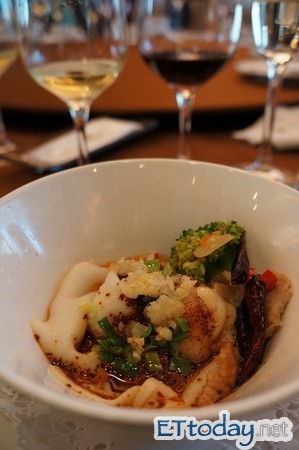
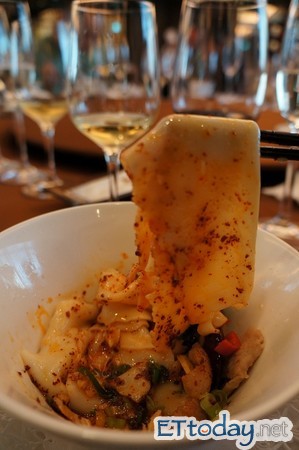
▲ A single noodle can be two to three inches wide, about the size of a coin when thick, or as delicate as a cicada’s wing when thin—one noodle is enough for a full meal.
BiangBiang noodles are smooth, soft, and chewy, delicious and filling. After boiling the wide noodles, they’re scooped out and placed in a bowl, then seasoned with salt, chili, Sichuan peppercorn, minced ginger, scallions, and garlic. Chewy and spicy, they are known as the first of the “Eight Eccentricities of Shaanxi”: “Noodles so wide they resemble a belt.”
The Sichuan cuisine restaurant on the 12th floor of Taipei’s Ambassador Hotel has just completed its first renovation in 50 years at the end of October (2012), designed by renowned American space designer Peter Niemitz. It recreates the splendor of Shanghai by blending the ancient and modern, East and West. New additions include a wine cabinet and a bird’s nest display case, while classic Sichuan flavors have been reinterpreted.
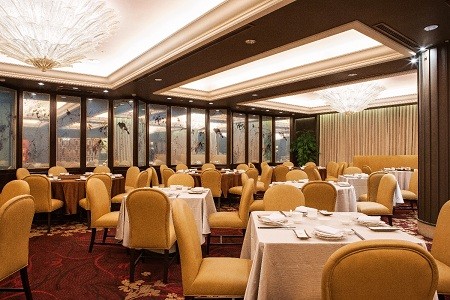
▲ Sichuan Cuisine Restaurant – Main Hall. (Photo / Provided by Ambassador Hotel)

▲ Sichuan Cuisine Restaurant – Corridor. (Photo / Provided by Ambassador Hotel)
The snack area and private dining rooms of Taipei’s Ambassador Sichuan Cuisine Restaurant—including the Hundred Horses Hall, Peacock Hall, and Tao Ran Hall—which have left a delicious impression on many gourmets, have also undergone their first renovation in 50 years at the end of October. Designed by famed American space designer Peter Niemitz, the space features red-and-black floral carpets paired with champagne-gold leather banquettes in a Shanghai style. The moment you step in, the visual impact brings out the spiciness of Sichuan cuisine. A mirrored screen composed of paintings by master flower-and-bird artist Zhang Shuqi is another highlight of the space, along with the newly added wine cabinet and luxurious bird’s nest display case. The redesigned Sichuan Cuisine Restaurant showcases a captivating blend of old and new, East and West, while Sichuan cuisine embodies the versatile characteristics of “three fragrances, three peppers, three seasonings, seven tastes, eight flavors, and nine mixtures.”
To satisfy guests’ pursuit of ultimate flavor, Taipei’s Ambassador Hotel regularly sends chefs to the mainland to study and exchange authentic Sichuan flavors, while also incorporating the diverse characteristics of Shaanxi cuisine. In different periods, diners can experience the ever-changing charm of Sichuan cuisine. This time, Chef Chen Ximan has compiled authentic dishes learned during previous visits to Beijing’s Mei Zhou Dong Po Restaurant, Xi’an in Shaanxi, and exchanges in Chengdu, Sichuan this year, reinterpreting classic dishes.
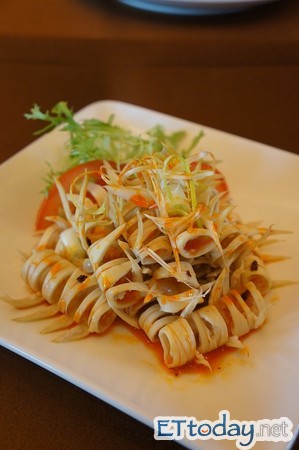
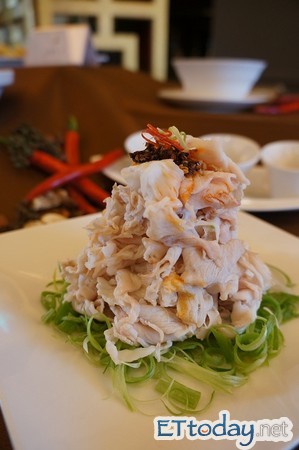
▲ Left: Spicy Beef Tripe; Right: Pepper-Braised Pork Belly

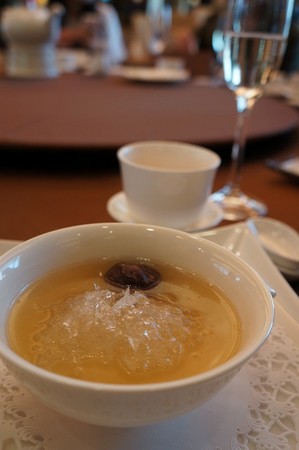
▲ Left: Mapo Abalone Delight; Right: Chicken Broth Bird’s Nest
In addition to the BiangBiang Noodles, the first of Shaanxi’s Eight Eccentricities, “Noodles as Wide as a Belt,” there’s also “Mapo Abalone Delight,” which combines Sichuan’s mapo tofu with fresh South African abalone—festive in name, spicy, fresh, and delicious in taste. Shaanxi home-style dish “Scallion-Crusted Cucumber” not only changes the cutting technique to a more visually refined “raincoat knife” style but also adds layers of flavor with a honey-sweet and sour sauce. “Pepper-Braised Pork Belly,” skillfully blended with aromatic vinegar, aged vinegar, and green and red chili peppers, offers a deeper fragrance than traditional garlic pork belly.
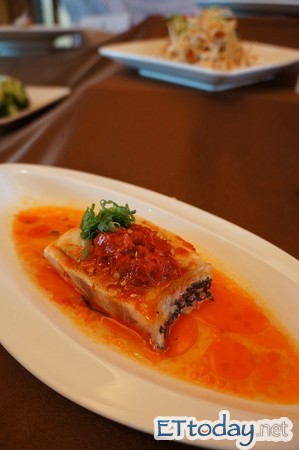
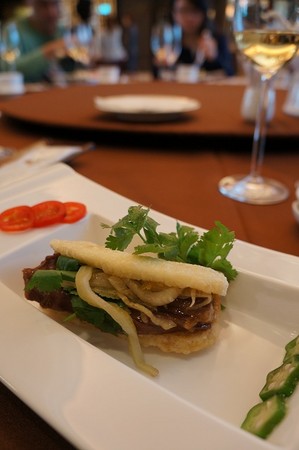
▲ Left: Bashu Diced Chili Steamed Dragon Grouper; Right: Prosperous Beef Cube
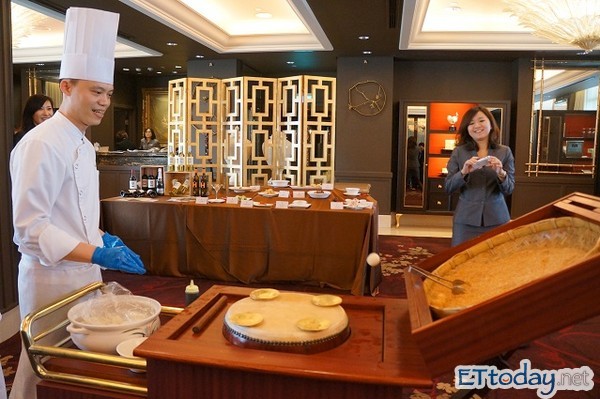
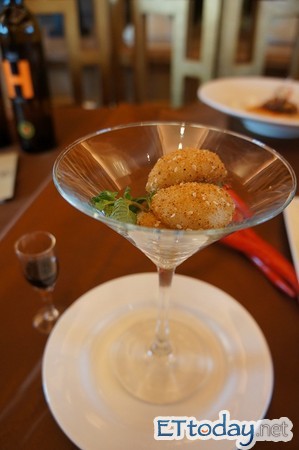
▲ Sticky rice soaked overnight is steamed until soft. Two pairs of double-layered bronze cups are placed on either side of the rice. As the rice balls hit the drum, they make a popping sound. When they bounce onto a bamboo sieve, they roll and coat themselves with peanut powder and sesame seeds, then are drizzled with rich brown sugar syrup before serving.
“Dry Pot Broccoli,” which may look harmless but delivers a rich medley of spices and flavors, is a vegetarian dish developed from the dry pot baby bok choy learned at Beijing’s Mei Zhou Dong Po Restaurant. The crisp texture of broccoli enhances its mild yet spicy taste. The traditional, bold, and spicy Sichuan dish “Diced Chili Fish Head” is transformed using the gelatin-rich, firm-fleshed dragon grouper into the Q-textured, sweet, fresh, and spicy “Bashu Diced Chili Steamed Dragon Grouper.” In addition, the iconic Sichuan snack “Three Cannons” is presented in a refined way, offering a feast for the eyes, ears, and taste buds.
Share
This article is published by HowToTrip. Sharing and reposting are welcome — please credit the source.
Article URL: https://www.howtotrip.net/views-29372
Related Articles
- Shaoxing's "Grandpa Gourd" hangs the gourds back up: "If there are too many people, we'll interact less — just take a quick look from afar"
- Chinese authorities announce "reciprocal adjustment" to Japan visa fees — single-entry visa jumps from 2,250 to 16,750 yen!
- The "health stones" carried by a traveler were found to have radiation levels exceeding safety limits by a thousand times, potentially endangering fellow passengers on the same flight. Customs issues warning!
- Shenzhen Airport Issues Late-Night Notice: Unidentified Aerial Object Detected, Causing Widespread Flight Delays!
- “They only said it cost money after I opened the box and washed it!” 200g of grapes sold for 60 yuan on a high-speed train—12306 responds!
- Can't buy an airline ticket? Denied exit? Blocked from boarding? A large number of Chinese tourists have mysteriously become "discredited individuals"
- Adverse weather and economic fluctuations impact Colombia's coffee market
- Beach bathing area responds to 2 yuan/30 seconds fee for freshwater foot rinsing: Clearly priced!
- Taking off with an improperly closed cabin door? Wing malfunction? Multiple flights made emergency returns mid-journey!
- Experience the gifts of nature! A countdown of the world’s ten most stunning coastlines