Traveling in a hotel room / Memories begin with breastfeeding A culinary journey at your fingertips
Text and photos by Ding Yi Excerpted from HowToTrip’s "Traveling in a Hotel Room" published by Times Publishing
About Ding Yi
Passionate about design, writing, music, architecture, photography, and travel, he loves backpacking and has been on deep journeys around the world for years, with footsteps in over fifty countries. Through the perspectives of different creators—musicians, writers, architects, painters, designers, poets, composers, photographers—he discovers the subtle glow of hotel corners and sniffs out distinctive flavors.
Dubbed by Cheers magazine as a "dizzyingly versatile creative genius," he is a columnist for PLAY and also writes advertising and design articles for Brain Magazine. Currently the Executive Creative Director at Publicis Bangkok, his ten-year advertising portfolio has won over two hundred international and local creative awards, with his works featured in major international award yearbooks and design magazines.
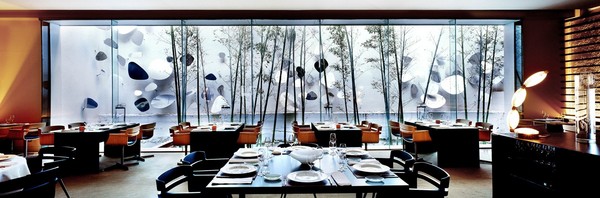
French wine critic André Simon once said: "British food is a Gregorian chant; American food is jazz; French food is classical music." He forgot to mention Spanish food, but I’d say it’s definitely guitar music.
In 2009, renowned musician Bruno Mantovani used a recipe from a famous chef as sheet music to compose a thirty-five-part piece. The recipe came from the world’s top restaurant, El Bulli, whose owner was hailed by food critics worldwide as the "Salvador Dalí of the kitchen"—none other than the internationally acclaimed creative chef Ferran Adrià.
He spends no less than eight hours a day in the kitchen—not doing anything else, just slowly and meticulously savoring with his tongue to select the freshest and most unique ingredient flavors. For him, there’s no more practical way than putting food directly into his mouth to taste it; the tongue is Adrià’s exclusive weapon.
His El Bulli is open only six months a year and only serves dinner. With about eighty guests per night, the 180 operating nights can only accommodate nine thousand six hundred people, all carefully selected from nearly two million annual reservations.

Teaching cooking physics at Harvard University, Adrià believes that a chef can never fully understand the philosophy of food contained in a single tomato in their lifetime. This aligns perfectly with the thinking of Chef Felip Llufriu of the Moo Restaurant at Hotel Omm.
Felip was once Adrià’s star disciple, with equally exceptional culinary skills. His precision and subtlety in using ingredients have almost reached the pinnacle of culinary artistry. Classic dishes like black pepper avocado beef tenderloin combine the freshness of avocado with the richness of meat; biting into it, it’s tender, crispy, and incredibly satisfying. Cooking, like life, requires attention to detail—the small things hold great wisdom, and that’s where true skill shines. Hotel Omm has thus been praised by food critics as a "hotel on the tip of the tongue," where travelers’ most beautiful memories are often food-related.
The earliest human memory is of taste
Taste might be one of humanity’s very earliest sensory memories.
From the moment we suckle breast milk, our taste buds begin a lifetime of complex flavors. Memories of a place are often tied to food. Sometimes the best care isn’t words, but a kind of taste-based attention. Ferran Adrià put it most aptly: "When one is ill, the best comfort is food." If you catch a cold in a foreign land, nothing compares to a cup of ginger tea or a bowl of warm congee; tasting a familiar flavor in an unfamiliar place feels as heartwarming as meeting an old friend abroad.
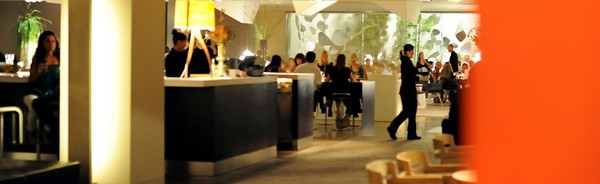
In Barcelona, Spain, food is a big deal. Dinner here doesn’t start until ten, and Spaniards often enjoy a few drinks at tapas bars before meals. Hotel Omm’s Modern Bar is a great spot for Spaniards to have pre-dinner drinks, and they’re in no rush to go home afterward either—they head to Mon Key Club to burn off some calories.
Whether before, during, or after meals, soaking in Hotel Omm makes its creative cuisine and wines the best draw for both travelers and local gourmets, earning it the 2008 Tatler award for Best Gastronomic Hotel. Moo Restaurant, meanwhile, has won Michelin stars, a spot among Spain’s top five restaurants, and the Meilleur Sucre-fêlé title.
Open the window and face Gaudí day and night
The bedrooms at Hotel Omm are also quite remarkable, once praised by Travel and Leisure, Conde Nast Johansens, and Geo Saison as having the best hotel design. The dark, eerie corridors add a touch of mystery, but once you step into the room, it’s a whole new world.

For a comfortable and enjoyable stay, the most important thing is the window, followed by the bed, and then the bathroom. If a bedroom window faces an elegant building or a vibrant, rhythmic street, it becomes a moving mural in the room, facing you from morning till night. A poor view can greatly diminish the quality of your stay.
Staying at the boutique Hotel Omm, just take a peek from the little balcony in your room, and you’re guaranteed a delightful surprise—Gaudí’s Casa Milà is right there. On a quiet night, open the window, bathed in moonlight and starlight, and admire this abstract architectural artwork on your own. The intricately carved chimneys on Casa Milà’s rooftop look like several heads nestled together from afar, as if singing a welcoming ode in rhythm. The biggest draw of staying at Hotel Omm is undoubtedly the chance to face Casa Milà day and night.
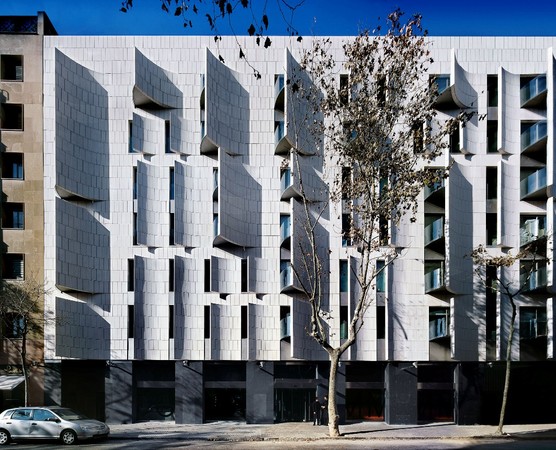
When constructing Casa Milà, Gaudí had a dispute with the homeowner over the rooftop design that even went to court. For the sake of detail and overall harmony, Gaudí refused to back down. Hotel Omm’s design details are also ingeniously crafted, arguably even surpassing that.
At first glance, Hotel Omm resembles a folded recipe book page, but upon closer inspection, it looks like a finger peeled by a knife. The curved design is not only elegant but also serves a practical purpose: blocking the backlight reflected from surrounding buildings in the afternoon. All thanks to architect Judi Capella’s keen eye—truly a stroke of genius.

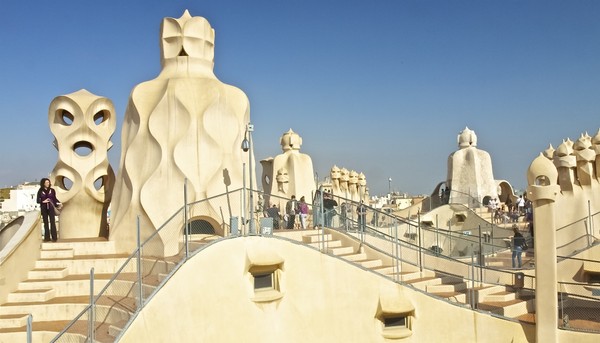

The window is the room’s eye
Step into the reception hall, and you’ll find another small yet beautiful artistic space. Natural light peacefully coexists with artificial lighting. The understated light gray carpet, sturdy black leather seating, and relaxed velvet sofas make the fatigue of travel melt away here.
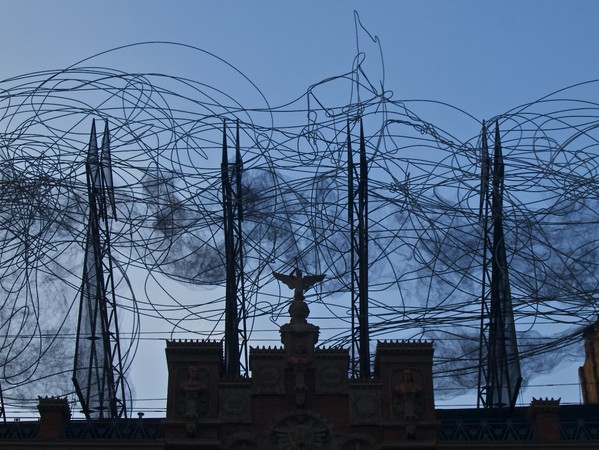
The rooftop balcony pool, adorned with natural wood, breaks away from the usual dull hotel pool style. Soaking in the water while overlooking Barcelona’s skyline, you’ll marvel at how the streetlights along Passeig de Gràcia are actually extensions of Casa Milà’s artistic essence. This isn’t Tim Burton’s Alice in Wonderland, but Spain’s second-largest city with a population of 1.67 million.
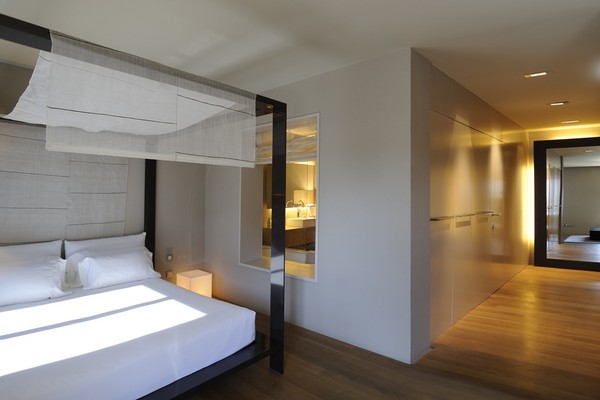
Back in the bedroom, take a warm shower first. The quality of the bath products is excellent, and the placement of the showerhead and bathtub is no small matter; the right angle ensures everything feels just right. The entire bathroom is tucked away in a corner of the room, offering a sense of breathing room that helps ease tense nerves.
After freshening up, curl up on the wide fabric chair by the floor-to-ceiling window, sip a glass of Cava, and do absolutely nothing—just stare out the window. The window is like the room’s eye, and everything outside inevitably barges in. Guests can of course draw the curtains, but a room with closed eyes is no different from a dark basement.

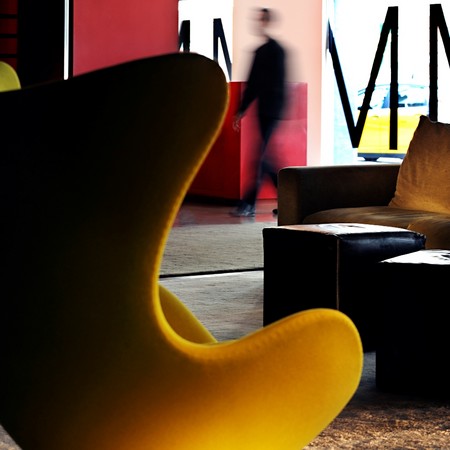
A refined window view deserves a great bed to match. The already comfortable parquet floor is covered with a hand-stitched blanket, giving an organic, direct sensation. Before arriving at the hotel, this blanket might have already been used by a worker’s granddaughter as a nap mat.
Elevating cuisine to the realm of art
The art of balancing the five flavors is what defines beauty in cuisine. A chef’s duty is not merely to cook food for people to eat, but to be a creator of beauty. That’s why in ancient times, those who worked with color were called painters, those who worked with sound were called musicians, and those who worked with flavor were called chefs. It’s clear that chefs have long held a highly respected position. And if one became an imperial chef, a single command would command everyone’s obedience. At four in the afternoon, passing by Moo restaurant, I happened upon a dozen kitchen staff huddled with Philippe, as if they were scrutinizing a dinner menu. Whether they were chopping vegetables, grilling, or preparing soups, Philippe treated them all equally, listening intently to each report.
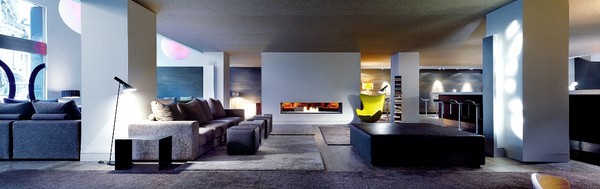
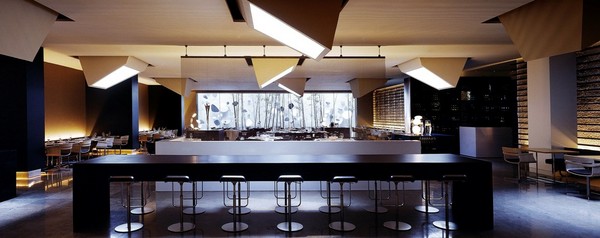
A symphony orchestra requires the dedicated effort of every member to deliver a stirring performance; the failure of just one person can ruin the entire show. The same holds true in the kitchen. On July 9, 1962, American artist Andy Warhol held a solo exhibition in Los Angeles, turning 32 cans of Campbell’s soup into pop art that shook the entire art world. Fifty years later, Philippe uses his tongue as a brush to present many beloved creations; his plate designs have long become exemplary works of culinary art in Barcelona.
Guests at Hotel Omm are guaranteed to leave with full stomachs.
【奥姆旅馆Hotel Omm】
Address: Rosselló 265, 08008 Barcelona, SPAIN
Phone: +34-93-4454000
Email: reservas@hotelomm.es
Website: http://www.hotelomm.es/
Visit Date: April 2011
Room: Room 417
Share
This article is published by HowToTrip. Sharing and reposting are welcome — please credit the source.
Article URL: https://www.howtotrip.net/views-29328
Related Articles
- Shaoxing's "Grandpa Gourd" hangs the gourds back up: "If there are too many people, we'll interact less — just take a quick look from afar"
- Chinese authorities announce "reciprocal adjustment" to Japan visa fees — single-entry visa jumps from 2,250 to 16,750 yen!
- The "health stones" carried by a traveler were found to have radiation levels exceeding safety limits by a thousand times, potentially endangering fellow passengers on the same flight. Customs issues warning!
- Shenzhen Airport Issues Late-Night Notice: Unidentified Aerial Object Detected, Causing Widespread Flight Delays!
- “They only said it cost money after I opened the box and washed it!” 200g of grapes sold for 60 yuan on a high-speed train—12306 responds!
- Can't buy an airline ticket? Denied exit? Blocked from boarding? A large number of Chinese tourists have mysteriously become "discredited individuals"
- Adverse weather and economic fluctuations impact Colombia's coffee market
- Beach bathing area responds to 2 yuan/30 seconds fee for freshwater foot rinsing: Clearly priced!
- Taking off with an improperly closed cabin door? Wing malfunction? Multiple flights made emergency returns mid-journey!
- Experience the gifts of nature! A countdown of the world’s ten most stunning coastlines