Even “farting” can make fans scream—Kumamoto’s super-popular mascot comes to Taiwan
Reported and photographed by You T-Ru / Taipei

▲Adorable KUMAMON farts while pretending to be shy—a truly eye-catching moment.
Super-cute big bear comes to Taiwan, performing a “farting” act on stage to make female fans scream. With its back to the audience and one hand half-covering its face, its mischievous yet shy expression makes people shout “kawaii.” This is Japan’s most popular mascot, KUMAMON (くまもん) from Kumamoto Prefecture in Kyushu. In 2011, it even won the top prize in Japan’s Mascot Grand Prix and became an honorary mascot in 2012.
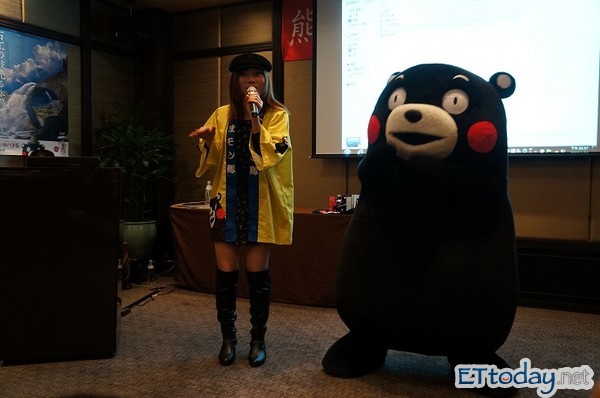
▲A mascot “born” because of the Kyushu Shinkansen, it became hugely popular as soon as it appeared.
KUMAMON (くまもん), currently serving as the executive director of Kumamoto Prefecture, was born in 2010 as a mascot created due to the opening of the Kyushu Shinkansen. With the responsibilities of a public servant, it promotes tourism and local specialties of Kumamoto Prefecture. Ever since its debut, it has been immensely popular. It now has its own dedicated department within the prefectural government, and its merchandise generated an economic value of 11.8 billion yen in just six months.
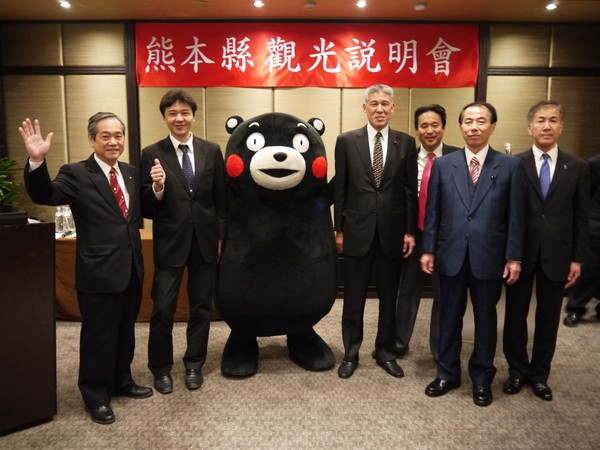
▲(From left) Kumamoto Vice Governor Murata Shinichi, Director of Tourism at the Interchange Association, Taipei Office Yamada Takuya, Vice Speaker of the Kumamoto Prefectural Assembly Yoshinaga Kazuyo, Kumamoto Prefectural Assembly Member Araki Akihiro, Himuro Yuichiro, and Chairman of the Kumamoto Tourism Federation Yada Motoshi. (Photo provided by Travel Strange Advertising)
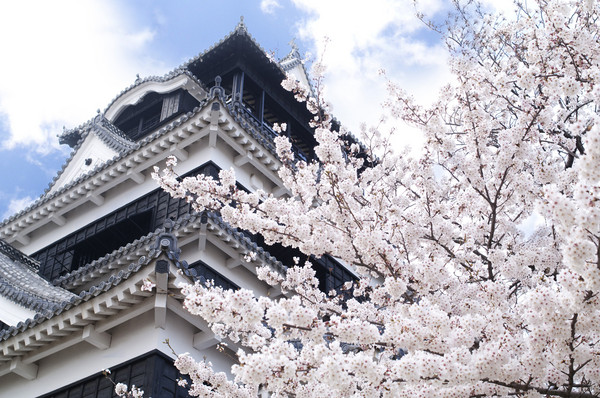
▲ The cherry blossoms of Kumamoto Castle are among Japan’s top 100 cherry blossom spots. (Photo provided by Travel Strange Advertising)
Located in the center of Kyushu, Kumamoto Prefecture enjoys excellent accessibility to various destinations, which improved even more after the opening of the Kyushu Shinkansen in spring 2011. Aside from its most famous attractions—the Aso Volcano and Kumamoto Castle—the prefecture also boasts mineral-rich waters ideal for brewing fine sake, the black river hot springs that fully capture the atmosphere of a traditional Japanese onsen town, and highly satisfying local cuisine including Japanese Black beef, sweet and juicy strawberries (hi no tama), and fragrant, tangy convex citrus fruits.
Share
This article is published by HowToTrip. Sharing and reposting are welcome — please credit the source.
Article URL: https://www.howtotrip.net/views-29241
Related Articles
- Shaoxing's "Grandpa Gourd" hangs the gourds back up: "If there are too many people, we'll interact less — just take a quick look from afar"
- Chinese authorities announce "reciprocal adjustment" to Japan visa fees — single-entry visa jumps from 2,250 to 16,750 yen!
- 旅客携带的“保健石”核辐射超标千倍,同机人员或遭殃!海关提醒!
- 深圳机场深夜通报!出现不明升空物,航班大面积延误!
- “拆盒洗了才说要钱!”高铁200克葡萄卖60元,12306回应!
- 买不了机票?出境被拒?登机被拦?一大波中国游客莫名成了“失信人”
- 不利天气和经济波动影响哥伦比亚咖啡市场
- 海边浴场回应冲脚淡水收费2元/30秒:明码标价!
- 舱门没关好就起飞?机翼出现问题?多个航班途中紧急折返!
- 感受大自然的馈赠!盘点世界十大唯美海岸线