Will your phone stop working upon entry and long lenses be banned? Is traveling to North Korea really “that safe”?
Reported by You Ru, Taipei
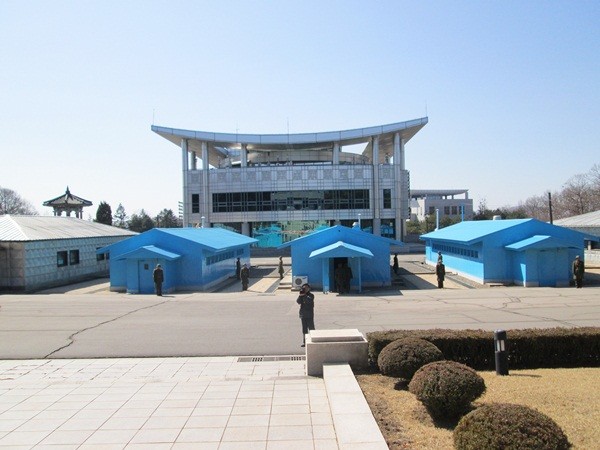
▲ The 38th parallel, the border between North and South Korea. The shorter blue buildings are in North Korea, while the taller structures in the image are within South Korea. (Photo provided by Zheng Shuqin)
As tensions in Northeast Asia continue to rise and group tours to South Korea have dropped by nearly 50%, travel agencies specializing in North Korea tourism appear calm and collected. Not only are they continuing to promote trips to North Korea, but industry insiders also claim, “Traveling to North Korea is actually safer than going to many other places, and there’s absolutely no need to worry about safety.”
Long regarded as a “mysterious country” by travelers, North Korea receives few visitors due to its international seclusion. According to Zheng Shuqin, Vice President of China Strait Travel Agency — a company that specializes in North Korea tourism — Taiwanese travelers can only fly to Pyongyang from Beijing or Shenyang. Flights are scheduled as a five-day, four-night tour departing on Saturdays and returning on Wednesdays. Including transfer time within mainland China, the whole trip lasts around eight days, priced at about NT$50,000, which is the standard offering for North Korea travel.
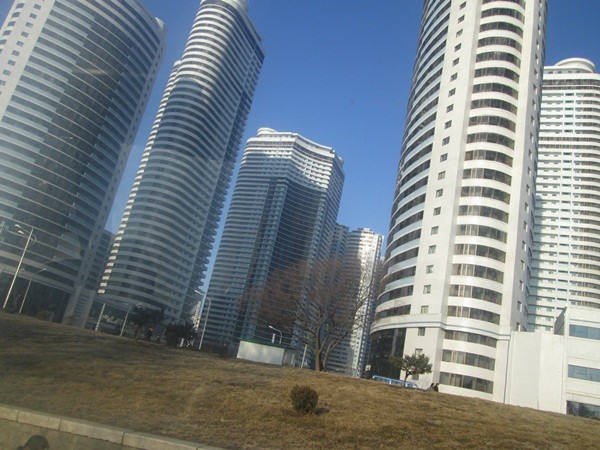
▲ A view of downtown Pyongyang. (Photo provided by Zheng Shuqin)
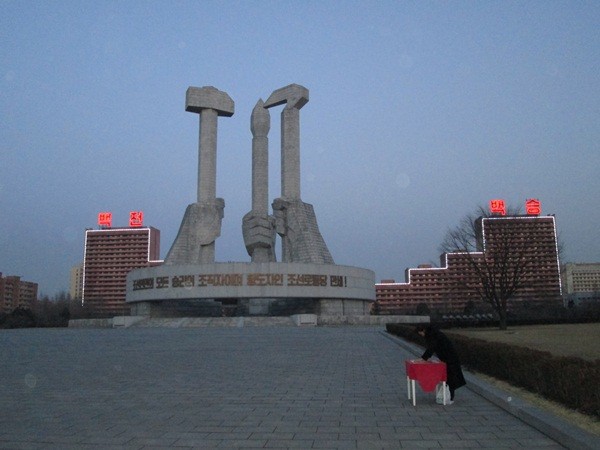
▲ One of North Korea’s attractions, the Party Founding Monument. (Photo provided by Zheng Shuqin)
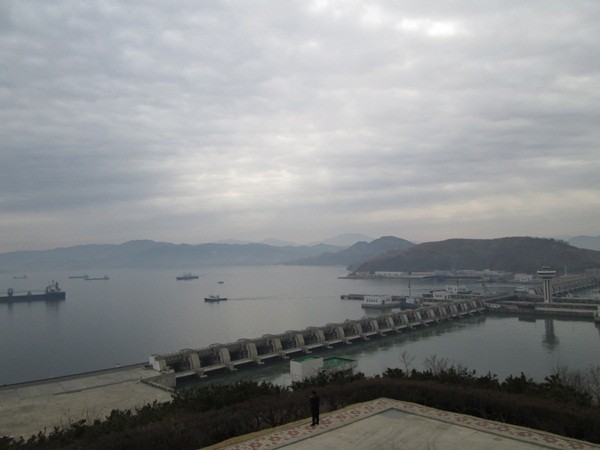
▲ The Nampo Water Conservancy Project, a source of pride for the North Korean authorities. (Photo provided by Zheng Shuqin)
North Koreans place great importance on foreign visitors. Each tour group is assigned two guides and one public security officer. Most guides are well-educated, and “during the trip, you don’t feel watched or oppressed at all. In fact, you get the sense that the locals are living at a relaxed and leisurely pace,” described Zheng Shuqin. Though she knows the itinerary avoids impoverished villages and areas, when passing through urban zones, the expressions of North Korean citizens seemed very natural — “not staged, as rumored.”
“Once you enter North Korea, communication tools like mobile phones will stop working because local carriers do not offer roaming services.” Although travelers cannot use their personal numbers, they can purchase a local SIM card at the airport. “The local number only allows you to receive or make international calls — you can’t call within North Korea,” explained Zheng Shuqin. The SIM cards used by travelers in North Korea cannot establish any contact with local residents.
The fixed five-day, four-night North Korea travel itinerary only includes stays in Pyongyang hotels. Travelers are not allowed to leave the group, bring long lenses, take photos of locals, or go shopping. The only locals travelers interact with, aside from tour guides, are staff at state-assigned shops and hotels at major tourist sites.

▲ The International Friendship Exhibition Hall in Mount Myohyang, which displays gifts presented to leaders Kim Il-sung, Kim Jong-il, and Kim Jong-un by foreign dignitaries. (Photo provided by Zheng Shuqin)
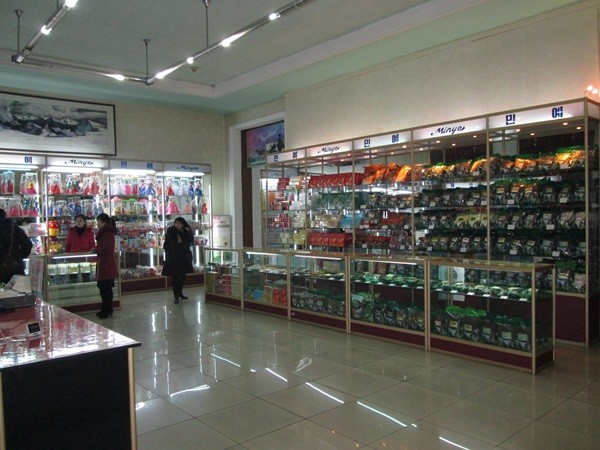
▲ Shopping stores at tourist sites. (Photo provided by Zheng Shuqin)
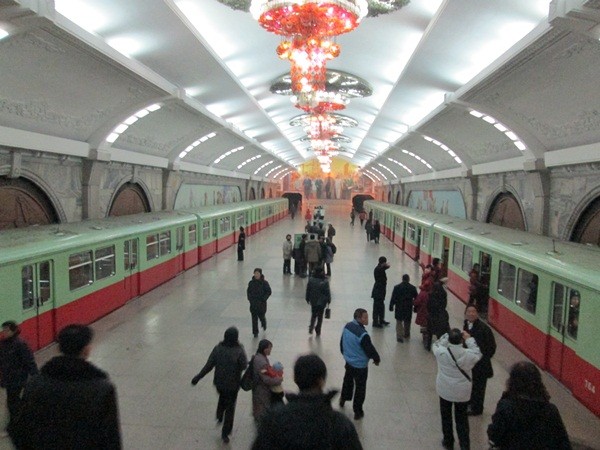
▲ Pyongyang Metro, which also serves as a civil defense shelter for North Koreans, reportedly extending seven to eight stories underground. (Photo provided by Zheng Shuqin)
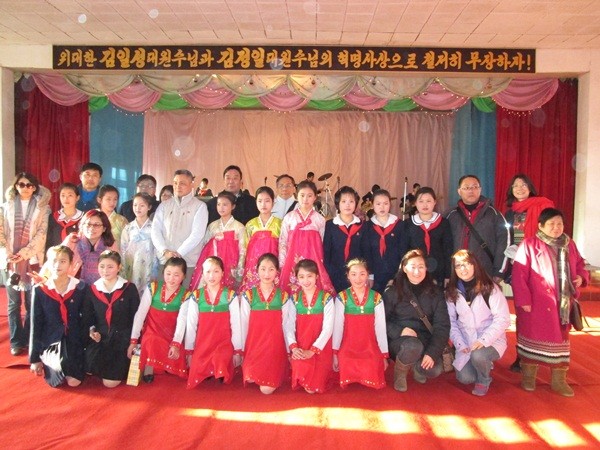
▲ The must-see “Children’s Palace” performances, all featuring student actors; pictured are middle school performers. (Photo provided by Zheng Shuqin)
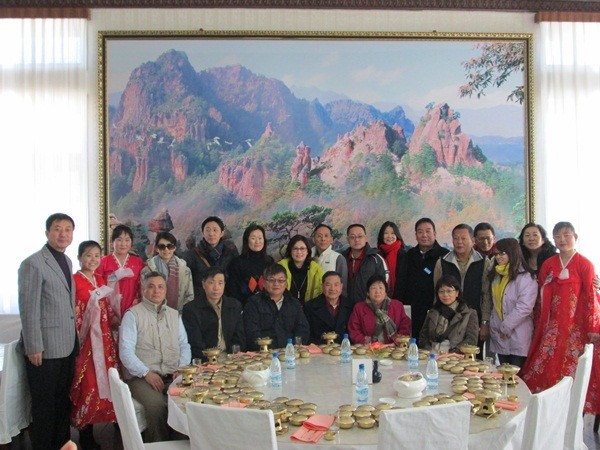
▲ The famous 18-dish bronze bowl meal, where travelers sample local cuisine served in multiple bronze bowls. (Photo provided by Zheng Shuqin)
As for North Korea’s tourist attractions, in winter, visitors can head to Mount Myohyang, home to the “International Friendship Exhibition Hall” showcasing gifts given to leaders Kim Il-sung, Kim Jong-il, and Kim Jong-un by diplomats from various countries. In summer, travelers can visit Mount Kumgang, which focuses on natural ecology. There are also sightseeing areas themed around the national library, monuments, and more. As for performances, travelers can enjoy the weekly free “Children’s Palace” shows, where students from elementary to high school present folk dances and songs. During August and September, there is also a spectacular ten-day performance featuring around 100,000 performers.
Additionally, the itinerary includes a ride on the Pyongyang Metro, which also functions as a civil defense shelter. To reach the underground platforms from street level, passengers must take escalators that descend roughly seven to eight stories. “When riding, travelers are grouped in a single empty car, while locals take other cars — so there’s zero interaction with residents.”
“Traveling in North Korea, you feel like everything is very ‘authentic’ — there are no knockoffs at all,” said Zheng Shuqin. For example, the local ginseng tasted rich at tourist sites, and every meal was delicious and nourishing. “According to guides, importing counterfeit goods is actually more expensive and troublesome than buying the real thing,” noted Xu Shuling, chairperson of China Strait Travel Agency. Currently, North Korea travel itineraries proceed as normal, and the country is very safe, “with no sense of tension whatsoever.”

▲ Taking photos with police officers is allowed, but pointing the camera directly at them will result in being asked to stop. (Photo provided by Zheng Shuqin)
However, travelers should be reminded that if planning to visit both North and South Korea, it’s essential to monitor and gather the latest local information and assess the situation before departure. Should any issues arise during the trip, assistance can be sought from the nearest Taiwanese overseas office. (Note: Contact the Taiwan Representative Office in South Korea at 010-90802761 or the Busan Office at 010-45377961 for help.)
Share
This article is published by HowToTrip. Sharing and reposting are welcome — please credit the source.
Article URL: https://www.howtotrip.net/views-28873
Related Articles
- Shaoxing's "Grandpa Gourd" hangs the gourds back up: "If there are too many people, we'll interact less — just take a quick look from afar"
- Chinese authorities announce "reciprocal adjustment" to Japan visa fees — single-entry visa jumps from 2,250 to 16,750 yen!
- The "health stones" carried by a traveler were found to have radiation levels exceeding safety limits by a thousand times, potentially endangering fellow passengers on the same flight. Customs issues warning!
- Shenzhen Airport Issues Late-Night Notice: Unidentified Aerial Object Detected, Causing Widespread Flight Delays!
- “They only said it cost money after I opened the box and washed it!” 200g of grapes sold for 60 yuan on a high-speed train—12306 responds!
- Can't buy an airline ticket? Denied exit? Blocked from boarding? A large number of Chinese tourists have mysteriously become "discredited individuals"
- Adverse weather and economic fluctuations impact Colombia's coffee market
- Beach bathing area responds to 2 yuan/30 seconds fee for freshwater foot rinsing: Clearly priced!
- Taking off with an improperly closed cabin door? Wing malfunction? Multiple flights made emergency returns mid-journey!
- Experience the gifts of nature! A countdown of the world’s ten most stunning coastlines