Benches Transformed into 3D Bookshelves—Publisher Creates a “Sushi Bookstore”
By Luo Xinya
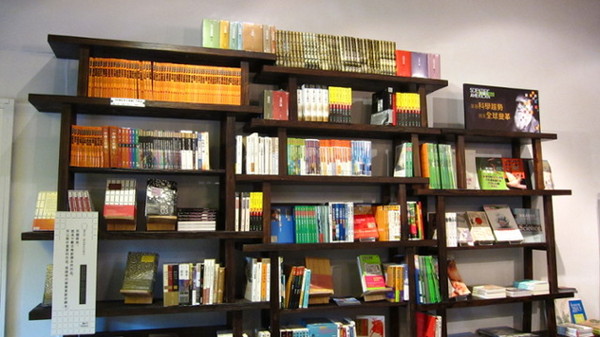
▲ Turns out benches aren’t just for sitting—they make great bookshelves too!(Photo provided by Dreamland Productions)
As children, we’d gather a few friends and a handful of benches—round, square, long, short—and move them around to form a big circle, chatting and playing together. Benches are friendly and versatile: they can be nap mats, workstations, desks, or even bookshelves!
The bookstore “Yuanliu Biejing” in Taipei’s Huashan 1914 Creative Park has put together benches of different lengths and shapes on the wall to create a large bookshelf. “We hope that everyone who walks in can easily pick up a book and sit down in a relaxed mood to get close to reading.”
Wang Peiran, the organizer of the bookstore, laughed and said, “These nostalgic benches connect me to memories of the past.” The shared qualities of benches and bookshelves also convey an idea: there shouldn’t be just one way to view things. Just like Yuanliu Biejing, a bookstore shouldn’t have just one look either.
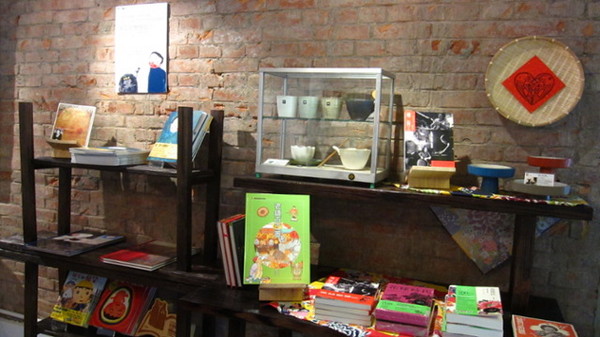 ▲ Besides using benches as shelves, they can also be used to display objects—very charming!(Photo provided by Dreamland Productions)
“Yuanliu Biejing” is a multifunctional space under Farflow Publishing, combining reading, dining, and lectures. It aims to become an experimental hub for cross-disciplinary experiences beyond books. “We encourage reading and also create a great space where people from different fields can spark ideas here,” says the team. Much like the various shapes and uses of benches, Biejing welcomes people from all backgrounds and disciplines to come read, chat, exchange thoughts, and jointly explore the diverse possibilities between people and spaces.
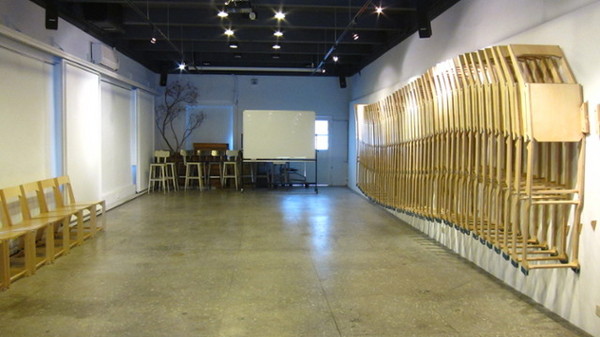
▲ The chairs in the lecture space are unique—they’re used for seating during events and hung on the wall as decoration when not in use. (Photo provided by Dreamland Productions)
“A bookstore isn’t just a place to buy books—it’s also a space for people to connect,” Wang Peiran believes. “Eating” is an important ritual for emotional connection among Chinese people, and many bookstores often pair with cafes or light meals. “We wanted to do something different. When you eat sushi, you have to sit at the counter, close to the chef, feeling the warmth of the food firsthand—that aligns perfectly with the philosophy we want to convey!”
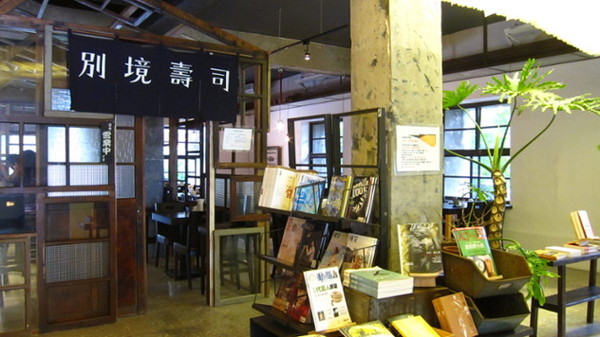
▲ When you’re tired of reading, step into Biejing Sushi and experience another way of connecting with others through food. (Photo provided by Dreamland Productions)
The interdisciplinary experimental spirit of “Yuanliu Biejing” can also be glimpsed in its spatial design. The “paper ceiling” that connects the in-store reading area, dining space, and lecture hall was created by architect Liu Guocang. It features long handcrafted paper lanterns symbolizing “long-lasting heritage,” guiding customers through the various spaces of the bookstore along this classic long lamp.
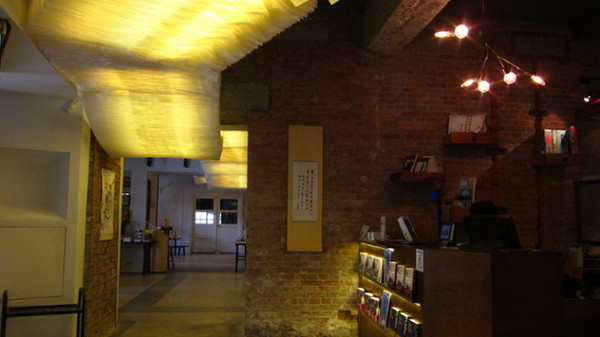
▲ Follow the paper ceiling and explore every unique space in “Yuanliu Biejing” to find your own treasure trove. (Photo provided by Dreamland Productions)
When talking about book selection criteria, Wang Peiran laughed and said, “Farflow Publishing is certainly our DNA, but we don’t limit ourselves to that.” Independent publications, Taiwanese cultural creativity, historical culture, and Taiwan-designed goods can all be found on the shelves. “We’re also continuously defining our identity, hoping to create tighter connections between books, events, and merchandise, making the bookstore more organic and richer!”
【Yuanliu Biejing】
Phone: (02) 2395-8839
Address: No. 1, Section 1, Bade Road, Zhongzheng District, Taipei City 100, Taiwan
Share
This article is published by HowToTrip. Sharing and reposting are welcome — please credit the source.
Article URL: https://www.howtotrip.net/views-28871
Related Articles
- Shaoxing's "Grandpa Gourd" hangs the gourds back up: "If there are too many people, we'll interact less — just take a quick look from afar"
- Chinese authorities announce "reciprocal adjustment" to Japan visa fees — single-entry visa jumps from 2,250 to 16,750 yen!
- The "health stones" carried by a traveler were found to have radiation levels exceeding safety limits by a thousand times, potentially endangering fellow passengers on the same flight. Customs issues warning!
- Shenzhen Airport Issues Late-Night Notice: Unidentified Aerial Object Detected, Causing Widespread Flight Delays!
- “They only said it cost money after I opened the box and washed it!” 200g of grapes sold for 60 yuan on a high-speed train—12306 responds!
- Can't buy an airline ticket? Denied exit? Blocked from boarding? A large number of Chinese tourists have mysteriously become "discredited individuals"
- Adverse weather and economic fluctuations impact Colombia's coffee market
- Beach bathing area responds to 2 yuan/30 seconds fee for freshwater foot rinsing: Clearly priced!
- Taking off with an improperly closed cabin door? Wing malfunction? Multiple flights made emergency returns mid-journey!
- Experience the gifts of nature! A countdown of the world’s ten most stunning coastlines