Is there also a dry-wet separation in beef? The exterior is slightly charred, the interior juicy.

▲Beef after aging is divided into dry-aged and wet-aged. "Dry-aged" has a crispy exterior and a juicy interior. (Photo / Provided by the hotel)
Travel Center / Taipei Report
"Dry-aged" steak is a must-try delicacy for many top gourmets. Chefs often showcase their culinary skills by getting creative with meat preparation. And beef, an indispensable part of Western cuisine, is even more commonly found in various classic dishes at high-end Western restaurants.
Top-grade American "dry-aged" steak undergoes a strictly controlled aging process in terms of temperature and humidity, giving the beef a more delicate pinkish-red color, richer aroma, finer texture, and juicier tenderness.
Chen Mengfeng, the chef of Grand Hyatt Taipei’sPrime Steak Restaurant, known for Western creative cuisine, selects four delicious choices: Choice grade ribeye, T-bone, sirloin, and short ribs. He uses charcoal grilling to bring out the precious flavors of the meat, skillfully controlling the heat to tightly seal in the essence of the juices. Paired with two freshly sautéed Franco-French style side dishes and a handmade special sauce, it highlights the luxurious taste of dry-aged steak.
Beef aging (Beef aging) is divided into dry-aged and wet-aged. The dry-aged process involves air-drying beef in a controlled environment with constant temperature and humidity, utilizing the natural enzymes in the beef for the aging process. A significant portion of the beef is discarded due to exposure to air. Thanks to the protective covering of the dried areas, the aroma of the meat becomes rich, and the texture more elastic, tender, and juicy, creating an irresistible exquisite flavor. Chen Mengfeng said: "To present the most perfect dry-aged steak, the cooking process prioritizes whether the searing can create a slightly charred exterior while maintaining a soft, juicy interior. After serving according to the guests' preferences, simply pair it with French sea salt for seasoning to enjoy its rich and luxurious flavor."
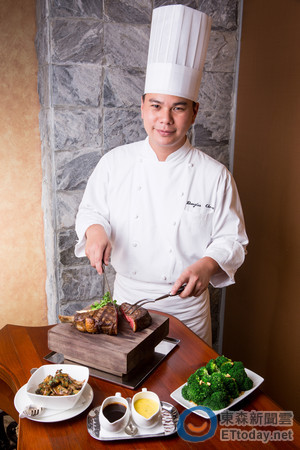
▲Chef Chen Mengfeng, who prioritizes searing a slightly charred exterior and maintaining a soft, juicy interior during the cooking process. (Photo / Provided by the hotel)
In this "dry-aged" steak menu, Chen Mengfeng has designed eight side dishes, including flavorful mashed potatoes, herb-infused meat juice sautéed wild mushrooms, pine nut and olive oil steamed broccoli, among others. Guests can choose any two to accompany their meal. For sauces, besides a simple touch of French sea salt, six chef-special sauces are also offered—such as the smooth horseradish cream sauce that pairs excellently with beef, and the Paris herb butter made with dozens of Mediterranean spices, anchovies, and premium unsalted butter—to add multi-layered flavors to the steak experience.
Plump Game Flavor First Choice ─ T-Bone Steak
The appeal of the T-bone steak lies in being able to enjoy the textures of different parts of the beef in one bite. One side is the tender sirloin after aging, and the other is the lean, fragrant, and tender beef tenderloin. The aged T-bone steak fully seals in the marbled fat flavors. The chef chars the exterior to a slight crispness and cooks it to a medium-rare to medium (3–5 doneness), revealing the juicy interior that absorbs the full essence of the meat, delivering a double delight.
Popular “Fresh” Taste ─ Bone-in Beef Short Ribs
After long-term dry aging, the bone-in beef short ribs have a delicate and smooth texture. The rich, tender meat also offers the varied texture of some fat marbling. The tender pink color and rich aroma upon slicing burst forth in the mouth, creating an irresistible and memorable flavor.
Each dish is priced between NT$2,350 and NT$4,950. Plump Game Flavor First Choice ─ T-Bone Steak (900gm / 2-person portion) is NT$4,950, and Popular “Fresh” Taste ─ Bone-in Beef Short Ribs (800gm / 2-person portion) is NT$3,950. (All prices are in New Taiwan Dollars, and a 10% service charge applies. For more details or reservations, please contact (02) 2720-1230 or visit www.grandhyatttaipei.com.tw)
Share
This article is published by HowToTrip. Sharing and reposting are welcome — please credit the source.
Article URL: https://www.howtotrip.net/views-28860
Related Articles
- Shaoxing's "Grandpa Gourd" hangs the gourds back up: "If there are too many people, we'll interact less — just take a quick look from afar"
- Chinese authorities announce "reciprocal adjustment" to Japan visa fees — single-entry visa jumps from 2,250 to 16,750 yen!
- The "health stones" carried by a traveler were found to have radiation levels exceeding safety limits by a thousand times, potentially endangering fellow passengers on the same flight. Customs issues warning!
- Shenzhen Airport Issues Late-Night Notice: Unidentified Aerial Object Detected, Causing Widespread Flight Delays!
- “They only said it cost money after I opened the box and washed it!” 200g of grapes sold for 60 yuan on a high-speed train—12306 responds!
- Can't buy an airline ticket? Denied exit? Blocked from boarding? A large number of Chinese tourists have mysteriously become "discredited individuals"
- Adverse weather and economic fluctuations impact Colombia's coffee market
- Beach bathing area responds to 2 yuan/30 seconds fee for freshwater foot rinsing: Clearly priced!
- Taking off with an improperly closed cabin door? Wing malfunction? Multiple flights made emergency returns mid-journey!
- Experience the gifts of nature! A countdown of the world’s ten most stunning coastlines