Stunning "blue tears" appear in Matsu – Witness the glowing sea within two weeks
Reporter You T-Ru / Comprehensive report
In Ang Lee’s "Life of Pi," there's a scene where Pi sits alone on a boat staring at the sea, with the water glowing an entire blue fluorescence – and now, this real-life phenomenon has appeared in Taiwan. As firefly season begins across Taiwan, the outlying island of Matsu has officially entered “blue tears” season. Starting the night before last (April 16), blue light has appeared along various shores in Matsu. A boat captain from Dongju took tourists to the seashore, gently swished his feet in the water, and thousands of tiny blue lights appeared, sticking to his feet. The group couldn’t help but exclaim, “The blue tears are truly breathtaking!”
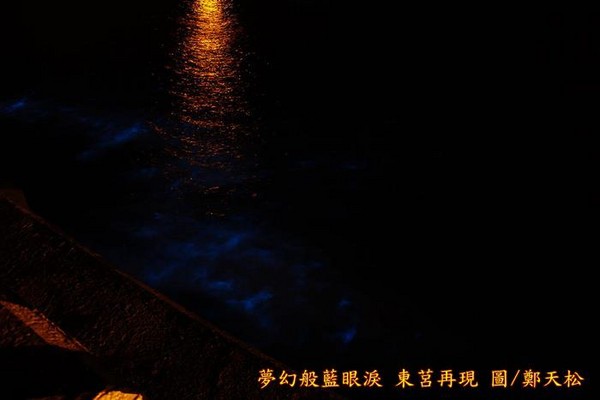
▲ The blue tears in Matsu began appearing the night before last. (Photo / from Matsu Love to Go Facebook)
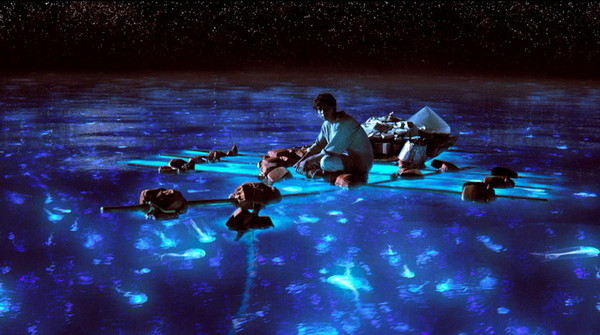
▲ PI sits alone on a boat staring at the sea, with the water glowing an entire blue fluorescence – and now, this real-life phenomenon has appeared in Taiwan.
The “blue tears” spectacle in Matsu occurs between April and May each year. “Blue tears” are actually a type of bioluminescent ostracod that emits a pale blue glow when disturbed by waves. Locals in Matsu used to call them “Dingxiang flowers,” believing that the appearance of large numbers of these creatures would attract schools of Dingxiang fish, which feed on them. Additionally, seeing “blue tears” depends not only on the season but also on the wind – southern winds that are strong enough to create waves capable of disturbing the ostracods are needed to make them visible.
“This wave of blue tears could last about two weeks, with the next three days being the most vivid,” said a boat captain from Dongju. Blue tears only appear during this season each year, and every time they do, not only are tourists amazed, but locals get very excited as well. “The view of the blue tears is really too beautiful – an entire fluorescent sea glowing right in front of you, as if stepping into another world.”
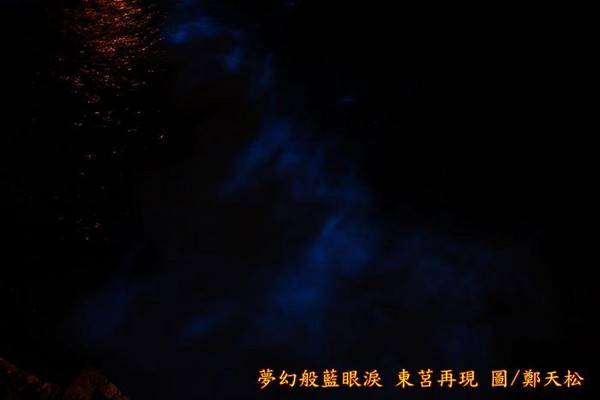
▲ % The blue tears are actually a type of organism that emits a faint blue glow. ????. The organisms emit this blue light when disturbed. (Photo / from Matsu Love to Go Facebook)
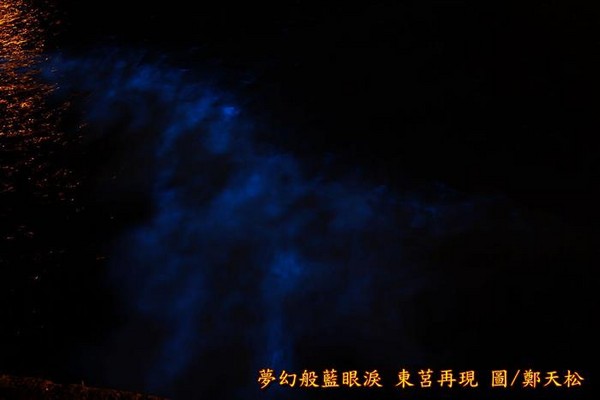
Besides the blue tears, some have also been able to step on “blue footprints” on Matsu’s beaches – this happens when the ostracods emit light after being stepped on and startled. Travelers who have the chance to visit Matsu might want to check out Fuzheng Beach and Meng’ao Harbor in Dongju, Qiaozai and Qinbi Beaches or Tanghou Dao Beach in Beigan, and Jingsha Beach in Nangan. However, it’s important to note that the appearance of blue tears is a natural phenomenon, so they might not be visible if the wind direction or wave conditions change that day. Visitors heading to the shore should definitely go with a local guide or accommodation operator for safety.
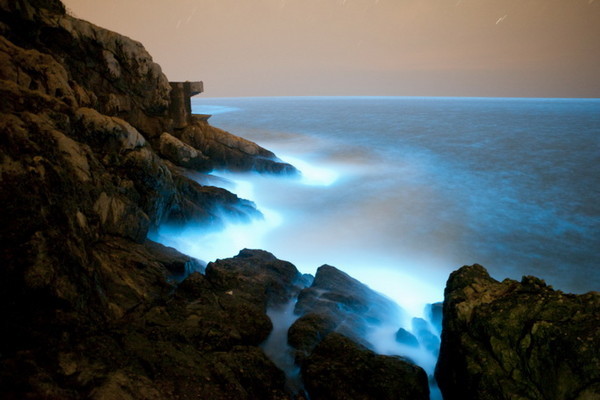
▲ Last year’s blue tears spectacle was truly spectacular. (Photo / provided by Gu Zhejia, Matsu National Scenic Area Administration)
Share
This article is published by HowToTrip. Sharing and reposting are welcome — please credit the source.
Article URL: https://www.howtotrip.net/views-28833
Related Articles
- Shaoxing's "Grandpa Gourd" hangs the gourds back up: "If there are too many people, we'll interact less — just take a quick look from afar"
- Chinese authorities announce "reciprocal adjustment" to Japan visa fees — single-entry visa jumps from 2,250 to 16,750 yen!
- The "health stones" carried by a traveler were found to have radiation levels exceeding safety limits by a thousand times, potentially endangering fellow passengers on the same flight. Customs issues warning!
- Shenzhen Airport Issues Late-Night Notice: Unidentified Aerial Object Detected, Causing Widespread Flight Delays!
- “They only said it cost money after I opened the box and washed it!” 200g of grapes sold for 60 yuan on a high-speed train—12306 responds!
- Can't buy an airline ticket? Denied exit? Blocked from boarding? A large number of Chinese tourists have mysteriously become "discredited individuals"
- Adverse weather and economic fluctuations impact Colombia's coffee market
- Beach bathing area responds to 2 yuan/30 seconds fee for freshwater foot rinsing: Clearly priced!
- Taking off with an improperly closed cabin door? Wing malfunction? Multiple flights made emergency returns mid-journey!
- Experience the gifts of nature! A countdown of the world’s ten most stunning coastlines