The red "Iron Man" Puyuma train sways all the way to Hualien
Reported and photographed by You T-Ru / Hualien, Interview coordination:Let’s go!
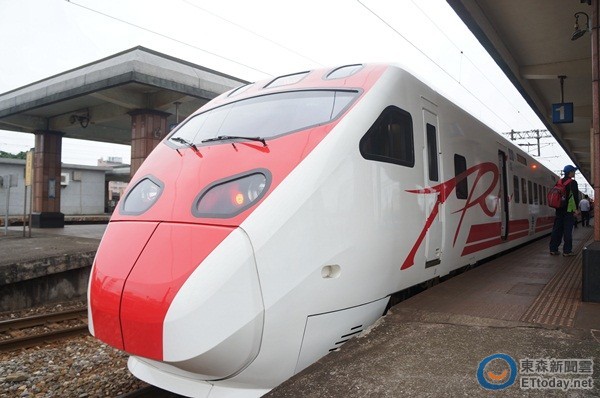
▲ The Puyuma train, nicknamed the "red iron man."
"The whistle blows, it's time to leave my hometown Puyuma, I gently wave my hand." The song "Hometown Puyuma," sung by Ji Xiaojun, carries a faint sense of wandering melancholy. The word "Puyuma" originates from the Puyuma language, originally referring to the dwelling place of the tribal chief of the Puyuma people, and also conveys a sense of unity and solidarity. The tilting train put into service by Taiwan Railways on February 6 of this year (2013) is named after it. Initially operating on the Yilan Line and the North-Link Line, it will be expanded to the West Coast Main Line and the Taitung Line. The reporter personally rode the Puyuma train to experience its comfort and speed, swaying all the way to Hualien.

▲%The interior is spacious and very comfortable./strong>
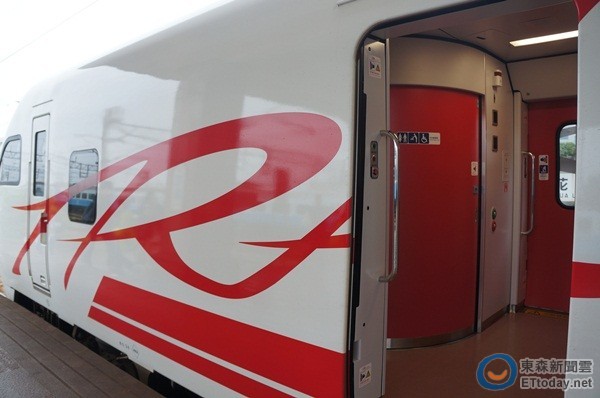
The TEMU2000 series EMU used by the Puyuma train is the second tilting train introduced by Taiwan Railways after the Taroko train. Its design allows the train to maintain high speeds on curves, shortening travel time on the winding eastern routes from Yilan to Hualien. The Puyuma has a color scheme dominated by red and white, and the ride is similar to that of the Taroko train. However, the carriages shake quite violently during the journey, which can easily cause dizziness. The trip from Taipei to Hualien takes about two hours, nearly an hour faster than the regular Tze-Chiang Limited Express.
The interior of the Puyuma train, nicknamed the "red iron man," maintains the red color scheme of its exterior, exuding a fresh and vibrant vibe. The train is also equipped with facilities such as vending machines, nursing rooms, and handicapped-accessible toilets, making it easy and convenient for passengers to use the onboard space. The luggage racks and seat tables are designed similarly to those on high-speed rail. Additionally, what’s even more impressive is that Braille signage is available throughout the Puyuma train, clearly guiding passengers with visual impairments to their current location and onboard facilities—very thoughtful.
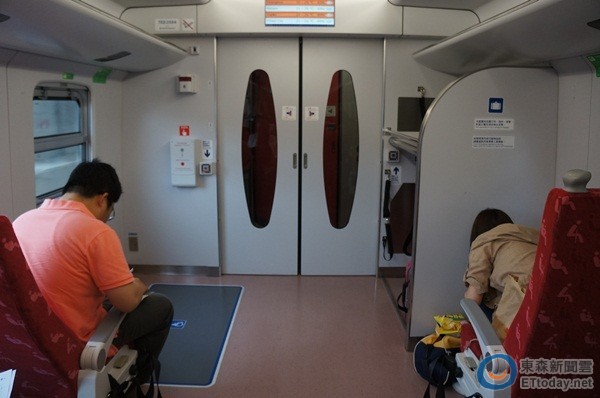
▲ Some carriages have luggage and wheelchair seating areas at the front.
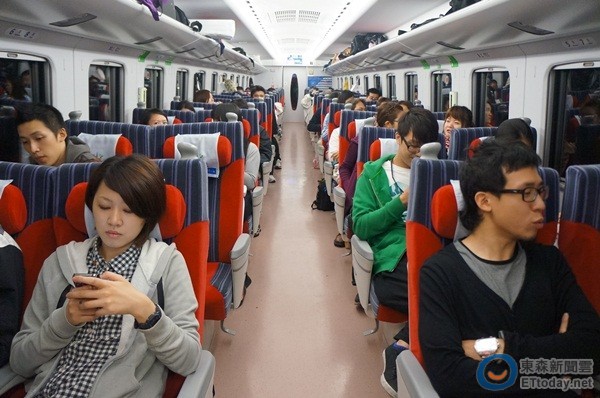
▲ The interior seats are also primarily red, and small pillows are provided for passenger heads, offering great comfort.
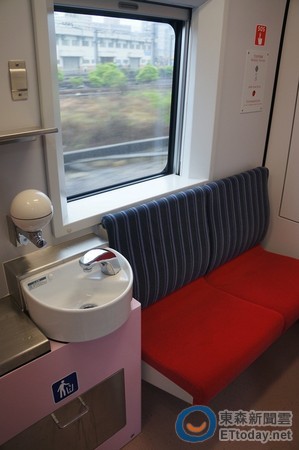
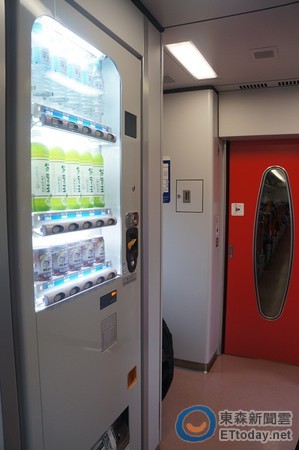
▲ Left: The onboard nursing room. Right: The vending machine.
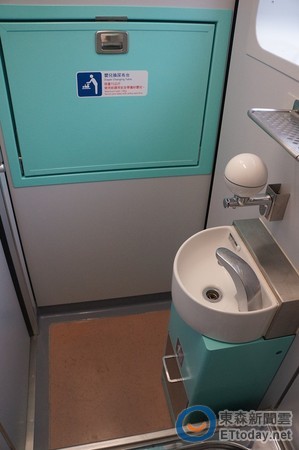
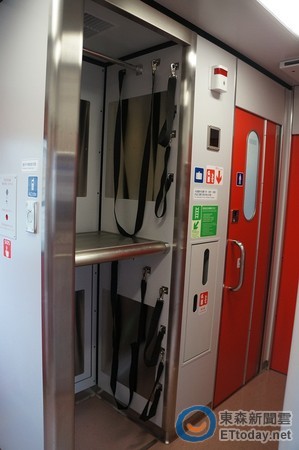
▲ Left: The toilet sink features a light blue color, giving off a fresh and lively feel. Right: There is also public luggage storage space outside the carriages.
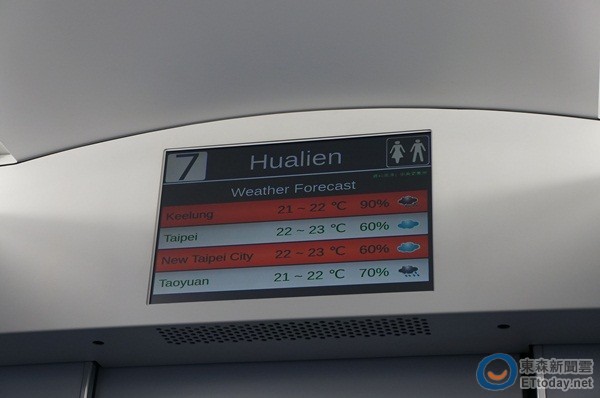
▲ The electronic display boards inside the carriages show temperatures and precipitation probabilities for various cities and counties.
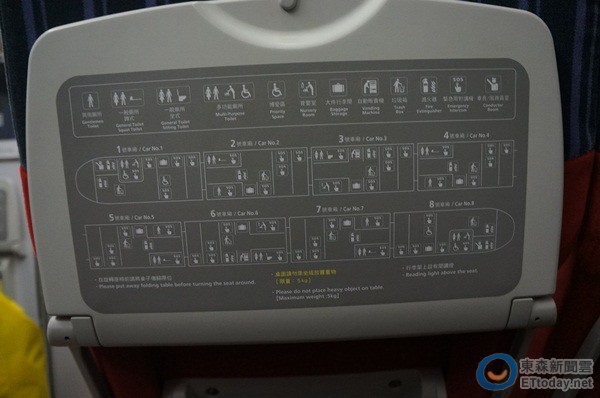
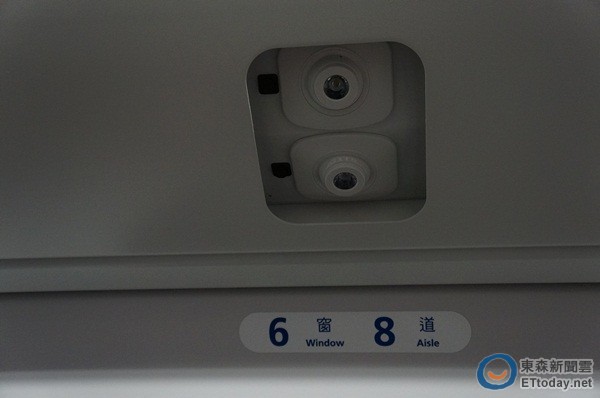
▲ Each seat is equipped with a route map of the carriage and a reading light.

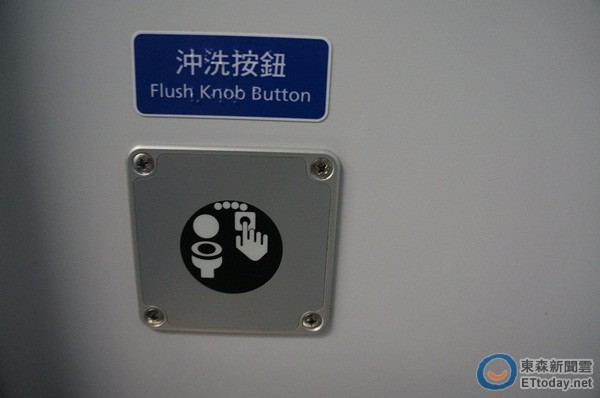
▲ Left: The train also comes with phone chargers. Right: The flushing button design is easier for seniors and children to understand.
Currently, the Tze-Chiang Limited Express and tilting trains running between Taipei and Hualien operate 42 daily round trips on weekdays and 56 on holidays. Although some passengers still report difficulty in securing Puyuma tickets, the service frequency between Taipei and Hualien will be increased in the future to one train every 34 minutes on weekdays and one every 28 minutes on holidays. It is hoped this will ease transportation pressure for travelers.
For those who have the chance to experience the Puyuma tilting train, as the train passes through tunnels and travels among rice fields and verdant mountains and rivers, you might also feel the wistful mood of the song "Hometown Puyuma": "In the tunnel of time, I ferry my sorrows, lonely and weary, I will wander back to my beloved hometown Puyuma, Puyuma, Puyuma, Puyuma, Puyuma."
Share
This article is published by HowToTrip. Sharing and reposting are welcome — please credit the source.
Article URL: https://www.howtotrip.net/views-28803
Related Articles
- Shaoxing's "Grandpa Gourd" hangs the gourds back up: "If there are too many people, we'll interact less — just take a quick look from afar"
- Chinese authorities announce "reciprocal adjustment" to Japan visa fees — single-entry visa jumps from 2,250 to 16,750 yen!
- The "health stones" carried by a traveler were found to have radiation levels exceeding safety limits by a thousand times, potentially endangering fellow passengers on the same flight. Customs issues warning!
- Shenzhen Airport Issues Late-Night Notice: Unidentified Aerial Object Detected, Causing Widespread Flight Delays!
- “They only said it cost money after I opened the box and washed it!” 200g of grapes sold for 60 yuan on a high-speed train—12306 responds!
- Can't buy an airline ticket? Denied exit? Blocked from boarding? A large number of Chinese tourists have mysteriously become "discredited individuals"
- Adverse weather and economic fluctuations impact Colombia's coffee market
- Beach bathing area responds to 2 yuan/30 seconds fee for freshwater foot rinsing: Clearly priced!
- Taking off with an improperly closed cabin door? Wing malfunction? Multiple flights made emergency returns mid-journey!
- Experience the gifts of nature! A countdown of the world’s ten most stunning coastlines