Firecracker Dragon Parade & Harvest Blessings: The Hsinchu Miaoli's Pinglong Festival with Rich Hakka Flavor
Tourism Center / Comprehensive Report
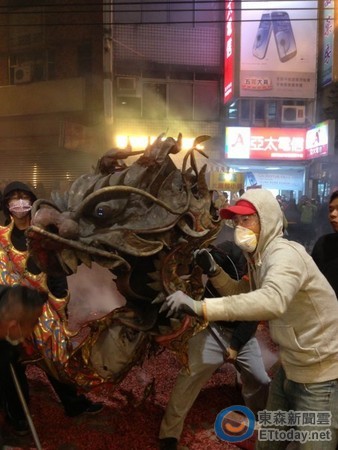 [Image description unclear — placeholder retained] (Photo / Visit Hakka Villages and Check In)
Every year during the Lantern Festival in Miaoli, there is an important folk event called the Pinglong (Firecracker Dragon), which is also one of the 12 major festivals celebrated in Taiwan’s Hakka communities. Local Hakka people are skilled at using harvested moso bamboo, spending about a month crafting a dragon, which is then “bombed” with firecrackers—this tradition is called the Pinglong Festival.
The Pinglong Festival has a long-standing tradition in the Miaoli area. According to Hakka history and folklore expert Chung Chuang-chi, the Pinglong Festival is a celebration for the Hakka people to welcome the New Year. It involves bombarding the dragon with firecrackers to bid farewell to the old and usher in the new, with the hope that the divine dragon will bring auspicious energy, ensuring peace, prosperity, and a bountiful harvest for the people.
Chung Chuang-chi pointed out that the Pinglong Festival dates back to the Qing Dynasty and was originally a form of physical exercise during the agricultural off-season. Its origins were brought over from mainland China, influenced by Guangxi’s dragon lanterns, Guangdong’s “dotting the dragon’s eye” ritual, and Sichuan’s fire dragons. Over time, it developed into a unique Hakka cultural tradition in Taiwan. In earlier times, areas such as Tainan, Zhongli, and Miaoli all practiced this event, but due to societal changes and the technical difficulty of the Pinglong performance, the tradition gradually faded—except in Miaoli, where it is preserved most completely and has gained fame. Moreover, while dragon dancing is a common folk activity across Taiwan, only the Hakka community in Miaoli has developed the distinctive Pinglong custom.
Master Zhang Zhihao, who weaves the dragon’s body, explained that the most challenging part of the process is splitting the bamboo. After splitting, shaping the bamboo takes quite some time. Only after the bamboo weaving is completed is the fabric applied. The entire dragon takes about a month to finish.
Zhang Zhihao explained in detail that the dragon’s body is made from sliced moso bamboo strips, chosen for their light weight and good flexibility, which make it easier to shape and less tiring to maneuver during performances. Older bamboo is preferred for its superior resilience. The dragon body is constructed as a hollow tube made of bamboo strips, then covered with paper or fabric. In more elaborate versions, small bulbs are placed inside each section, making each segment resemble a lantern. There is no fixed number of segments for the dragon body, but the total must always be an odd number, often 9, 11, or 15—considered lucky numbers—but it should not exceed 99 segments.
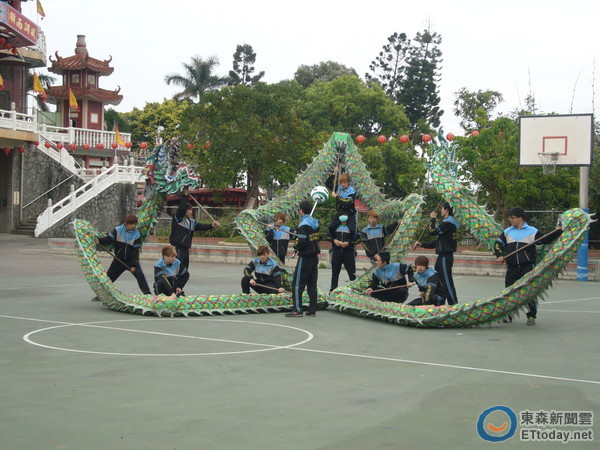
▲ Miaoli’s Pinglong Dragon being practiced in front of Yuqing Temple. (Photo / Visit Hakka Villages and Check In)
"Visit Hakka Villages and Check In"
The program focuses on documenting the 12 major festivals of Hakka villages and uses check-ins to record the fun experiences and Hakka characteristics of the journey. Through the lens, it explores the rich and diverse traditions and cultural charm of the Hakka people.Aired on China TV and CTi Entertainment Channel from May to July 2013, every Saturday from 18:00 to 19:00
Share
This article is published by HowToTrip. Sharing and reposting are welcome — please credit the source.
Article URL: https://www.howtotrip.net/views-28692
Related Articles
- Shaoxing's "Grandpa Gourd" hangs the gourds back up: "If there are too many people, we'll interact less — just take a quick look from afar"
- Chinese authorities announce "reciprocal adjustment" to Japan visa fees — single-entry visa jumps from 2,250 to 16,750 yen!
- The "health stones" carried by a traveler were found to have radiation levels exceeding safety limits by a thousand times, potentially endangering fellow passengers on the same flight. Customs issues warning!
- Shenzhen Airport Issues Late-Night Notice: Unidentified Aerial Object Detected, Causing Widespread Flight Delays!
- “They only said it cost money after I opened the box and washed it!” 200g of grapes sold for 60 yuan on a high-speed train—12306 responds!
- Can't buy an airline ticket? Denied exit? Blocked from boarding? A large number of Chinese tourists have mysteriously become "discredited individuals"
- Adverse weather and economic fluctuations impact Colombia's coffee market
- Beach bathing area responds to 2 yuan/30 seconds fee for freshwater foot rinsing: Clearly priced!
- Taking off with an improperly closed cabin door? Wing malfunction? Multiple flights made emergency returns mid-journey!
- Experience the gifts of nature! A countdown of the world’s ten most stunning coastlines