So adorable—Houtong Cat Village (Part 1), where there are no monkeys, only cats!
Reported by Tsai Meng-hsiu / Taipei
Houtong is a tranquil mountain town located in Ruifang, surrounded by rolling hills, with its settlement built along the Keelung River. The scenery is picturesque, but the area also has a history intertwined with the hardships of the "black gold" coal mining era. In its heyday, Houtong was a bustling mining district, home to over 900 households and more than 6,000 residents. As the mining industry gradually declined, people moved away, leaving only a small population behind. Now, with the arrival of its feline "distinguished guests," this once-forgotten mountain town has regained the spotlight.
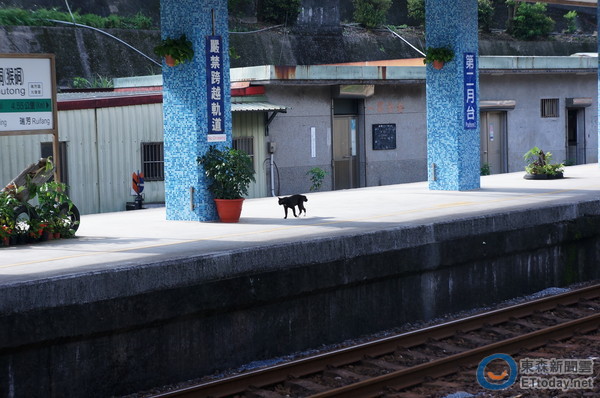
▲ The lonely figure of a cat mirrors the serene ambiance of this mountain town. (Photo by Tsai Meng-hsiu)
With the mining era behind us, Houtong is now better known for its "cats." These sudden VIPs have once again made headlines in this long-quiet town, keeping the legend of Houtong’s “coal” legacy alive. Cats here lounge lazily on rooftops, walls, and the ground—you’ll find these adorable creatures all over the cat village. Their friendly nature, along with strong online promotion, has made Houtong a top tourist spot.
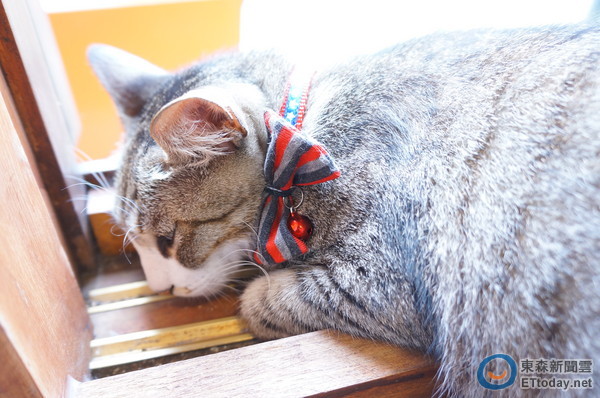
▲ A laid-back cat napping by the window in broad daylight. (Photo by Tsai Meng-hsiu)
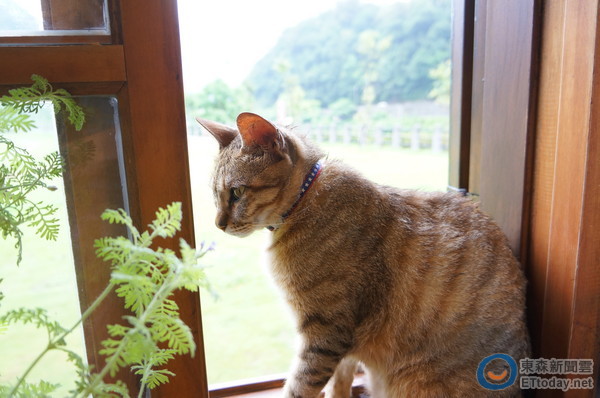
▲ A pensive cat, seemingly lost in thought by the window. (Photo by Tsai Meng-hsiu)
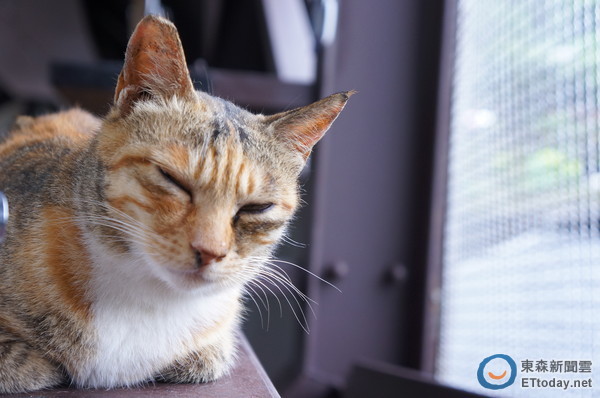
▲ Cats sometimes nap on the platforms of the Cat Bridge. To capture shots of them there, arrive early in the morning. By around 9 AM on weekends, crowds flood in, and the bridge is usually full of people—with very few cats. (Photo by Tsai Meng-hsiu)
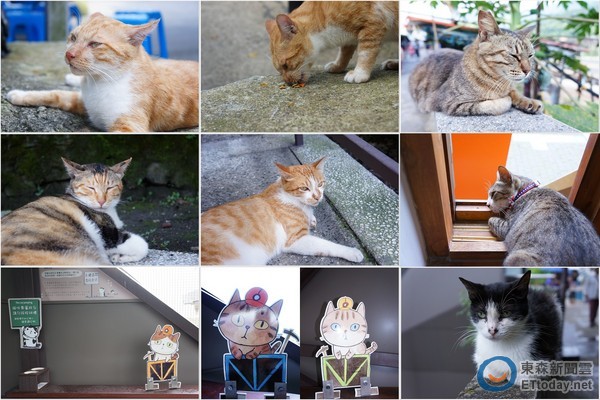
▲ Strike a pose for a big group photo with the cats. The two lower-left images show signs inside the Cat Bridge, designed in cute cat shapes that are hard to miss. (Photo by Tsai Meng-hsiu)
Arriving at Houtong Station, you’ll immediately see a triangular steel bridge—the newly opened "Cat Bridge" as of March 2013, the world’s first pedestrian-and-cat shared bridge. Stretching 60 meters, it resembles a cat looking back. The bridge spans the train platform, connecting the cat village at one end and the station at the other. Besides replacing an old bridge, it also helps keep cats safe from wandering onto the tracks.
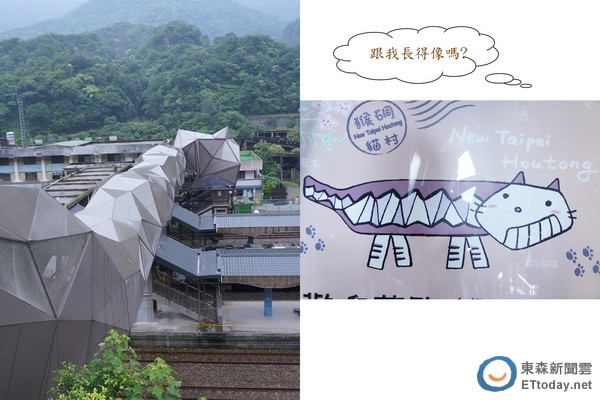
▲ The Cat Bridge is designed to resemble a cat looking over its shoulder. (Photo by Tsai Meng-hsiu)
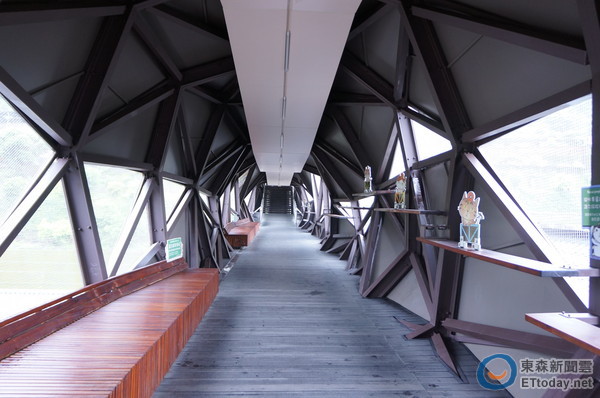
▲ An interior view of the Cat Bridge, clearly showing the special platforms built for cats, adorned with various cat-themed cardboard cutouts. On the left are wooden benches, often filled with tourists enjoying the cats on weekends. (Photo by Tsai Meng-hsiu)
Inside the bridge, cat-themed signs remind visitors of important guidelines. There are also dedicated perches for the cats to lounge and play, complete with food bowls to ensure they’re well-fed. It’s truly a cat-friendly bridge.
Remember the story of Tama, the cat stationmaster in Japan’s Wakayama Prefecture? Houtong has its own “Black Nose.” On the first floor of the station, a cute black-and-white cat portrait stands in the lobby—a tribute funded by local shop owners totaling NT$120,000 to honor the late feline stationmaster, Black Nose.(Click here for Black Nose’s story)
Before Black Nose, Houtong Station saw only 2,000–3,000 passengers a month. After his arrival, tourism boomed, with monthly ridership soaring to over 70,000. Local businesses near the station also thrived thanks to Black Nose’s “charisma,” making him a true “money-attracting cat.”
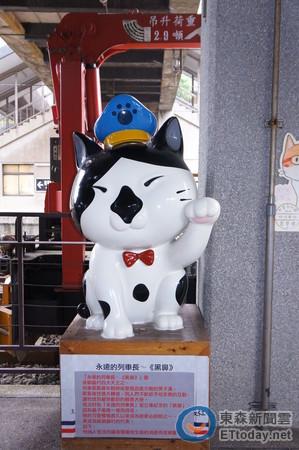

▲ Left: The portrait of Houtong’s cat stationmaster “Black Nose,” created through community fundraising. Right: Each sign along the streets of Houtong features different cat designs—absolutely adorable. (Photo by Tsai Meng-hsiu)
Houtong didn’t become a cat haven overnight. After the mine closed and people left, many formerly domesticated cats were abandoned here. Out of compassion, the village chief began regularly feeding them, which eventually attracted other strays. Over time, it evolved into what is now known as the “cat village.”
While visiting Houtong to “admire the cats,” don’t miss the local sights, including mining ruins, the Miners’ Memorial Hall, and a ride along Houtong’s bike path. The Chailiao Road bike trail runs alongside the Keelung River, offering stunning views of distant mountains and nearby streams. It’s set against the backdrop of old railway tracks, letting you watch trains up close. The Keelung River’s waters are clear, and since fishing isn’t prohibited, anglers often try their luck—some have even caught fish over 60 cm long.
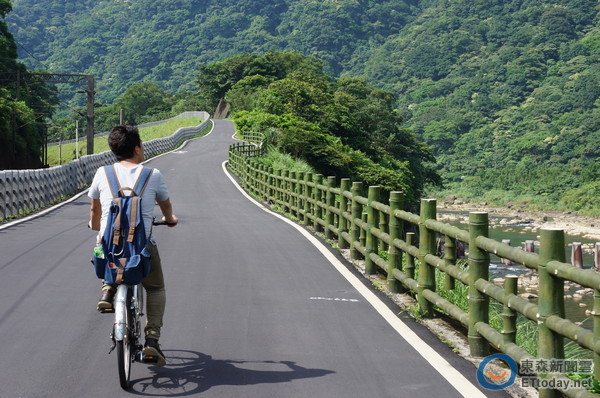
▲ The Chailiao Road bike path offers gorgeous scenery, perfect for cycling and exploring. Some spots aren’t marked on maps, so you’ll enjoy a quieter ride, ideal for soaking in the peace and beauty. (Photo by Tsai Meng-hsiu)
History buffs can take a stroll uphill to explore old single-story houses. Many date back to the Japanese colonial period and have sheltered generations. Some elderly miners still live here and can share tales of Houtong’s former glory and the hard lives of miners. Time moves on, and the ruins of Houtong’s past have faded—but in their place is a peaceful town where humans and cats coexist. Just sixty years have passed, yet the change is enough to make anyone reflect on the impermanence of things.
On the way back,you can take Bus 808, a cat-themed bus specially designed for Houtong by Keelung Bus. Its exterior features cat murals, while the interior—seat covers, handrails, and storage racks—are all shaped like cats. Even the background music played during the ride features cat sounds, creating a "meow"-tastic melody. When the bus lights are on, they resemble a cat’s eyes, strikingly similar to the Catbus from Studio Ghibli’s movie My Neighbor Totoro. Those wanting to experience it can board at the Houtong Station entrance on their return trip.。
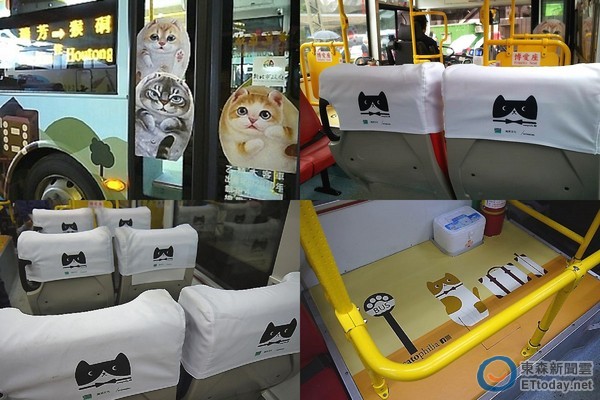
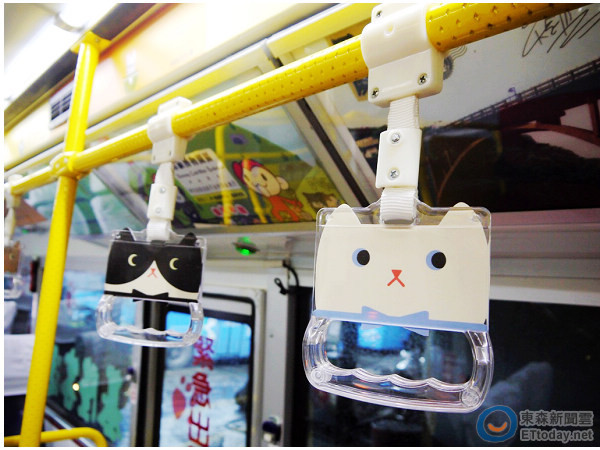
▲ The cat bus doesn’t just have a cute exterior—it’s also decked out with feline-themed interiors and plays cat-related music. (Photo source: New Taipei City Government Tourism Bureau)
Transportation Info:
By Train: a. Take an express or local train to Ruifang and purchase the “Pingxi Line One-Day Pass” for NT$40, which allows unlimited rides between Ruifang and all Pingxi stations for the day.b. Take a local train from Taipei Railway Station to Houtong Station.
By bus: Take the 808 Mao Bus from Ruifang Station to Houfang.※808 Bus Schedule
Houfang Station:
Share
This article is published by HowToTrip. Sharing and reposting are welcome — please credit the source.
Article URL: https://www.howtotrip.net/views-28314
Related Articles
- Shaoxing's "Grandpa Gourd" hangs the gourds back up: "If there are too many people, we'll interact less — just take a quick look from afar"
- Chinese authorities announce "reciprocal adjustment" to Japan visa fees — single-entry visa jumps from 2,250 to 16,750 yen!
- 旅客携带的“保健石”核辐射超标千倍,同机人员或遭殃!海关提醒!
- 深圳机场深夜通报!出现不明升空物,航班大面积延误!
- “拆盒洗了才说要钱!”高铁200克葡萄卖60元,12306回应!
- 买不了机票?出境被拒?登机被拦?一大波中国游客莫名成了“失信人”
- 不利天气和经济波动影响哥伦比亚咖啡市场
- 海边浴场回应冲脚淡水收费2元/30秒:明码标价!
- 舱门没关好就起飞?机翼出现问题?多个航班途中紧急折返!
- 感受大自然的馈赠!盘点世界十大唯美海岸线