Step into the "Land of Castles" – Take You to See Germany's Five Great Fortresses
The endings of fairy tales often feature princesses and princes living happily ever after in a castle... No wonder castles have long been seen as symbols of romance.
When it comes to fortress destinations,Germanyis the top choice.Germanyhas over 20,000 fortresses, the highest number in the world, and most of them have stood for centuries, retaining traditional medieval charm—thus earning the nickname the "Land of Castles." This time, we’ll introduce fiveGermanmust-visit castles, allowing you to experience this classic and dreamy grandeur from afar.
Sanssouci Palace (Schloss Sanssouci)

Photo by gogoflywo
The architectural scale of Sanssouci Palace is grand, with designs such as round arches, domes, and cupolas exuding strong 18th-century vibes. It was officially designated as a UNESCO World Heritage Site in 1990.
In ancient times, before air conditioning was invented, royalty often built summer palaces to escape the heat and retreat for rest. InGermany,the most representative royal summer retreat is Sanssouci Palace in Potsdam. Built in the 18th century, the name “sans souci” comes from the French words for “without (sans)” and “worries (souci),” meaning that King Frederick II hoped to use this palace to distance himself from military and state affairs and immerse himself in his personal interests, such as music and philosophy.
Charlottenburg Palace (Schloss Charlottenburg)

Photo by GNTB / Kiedrowski, Rainer
Charlottenburg Palace has now been converted into a Museum of Prehistory and Early History, open to visitors.
The capital ofGermany,Berlin,is home to numerous palaces and fortresses, serving as vivid witnesses to the rise and fall ofGermany’svarious dynasties throughout history. Among them, the largest palace complex inBerlinis Charlottenburg Palace, which vividly showcases the culture and lifestyle of the glorious “Prussian Dynasty.” Built in the late 17th century, the palace was commissioned by Sophie Charlotte, wife of Frederick I, Elector of Brandenburg, and designed by architect Arnold Nering. Its style is primarily inspired by Italian Baroque, and the most famous feature inside is the Amber Room, known as the “Eighth Wonder of the World,” with walls entirely covered in amber—an incredibly luxurious sight.
Hohenzollern Castle (Burg Hohenzollern)
 Photo by GNTB / Schwäbische Alb Tourismusverband
Hohenzollern Castle and Neuschwanstein Castle are known as the two great castles ofsouthernGermany, perched on a strategically located hilltop with a majestic presence.
Hohenzollern Castle was built in the 11th century and is the birthplace of the Hohenzollern family—the dominant dynasty that ruled the German Empire. Due to its strategic location, the fortress was regarded as a military stronghold by the French and Austrians for many years, leading to repeated involvement in warfare and eventual severe damage. It wasn’t until 1850–1867, when Prince William (Friedrich Wilhelm) decided to rebuild this ancestral castle, that the now imposing Hohenzollern Castle was completed. The rebuilt castle has a more rugged and masculine appearance, with massive statues of famous kings and emperors of the Hohenzollern family visible along its edges, displaying the might of Prussia.
Neuschwanstein Castle (New Swanstone Castle)
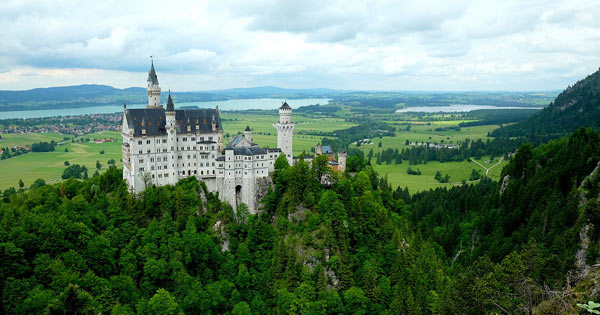 Photo by hc_wongjason
Perched atop a mountain peak nearly 1,000 meters high in the Alps, Neuschwanstein Castle is known as the "Fairytale Castle."
Located about 4 kilometers from the town of Füssen and near the Austrian border, Neuschwanstein Castle was built in the late 19th century. Its commissioner, King Ludwig II, was fascinated by legends and the fantastical world of fairy tales. As a result, he required the castle's design to incorporate features of Wartburg Castle and the Grail Castle (Gralsburg) from Wagner's opera "Parsifal," adding a romantic medieval touch. The castle boasts two magnificent halls with 15-meter-high ceilings and long arcades, all adorned with golden and blue trimmings, exuding extreme opulence. The entire fortress is imbued with Gothic architectural style, and even the finer details subtly reflect the influence of Wagner’s operas, making it truly enchanting.
Eltz Castle (Burg Eltz)

Photo by GNTB / Scherf, Dietmar
Eltz Castle may not feature lavish decorations, but its enduring charm lies in the fact that it has never been damaged by war, preserving its elegant medieval character.
Though less famous than Hohenzollern Castle and Neuschwanstein Castle, Eltz Castle benefits from its secluded location. It safely survived over 800 years of turmoil, including attacks by French forces in the 17th century and the two World Wars that followed, never falling or changing hands. This 11th-century fortress retains its original materials and design, making it an ideal destination for those wanting to appreciate traditionalGermanfortresses. The castle is now open to the public, allowing visitors to explore collections of weapons, hunting trophies (such as animal pelts and displays), and various kitchen utensils dating from the 14th to 17th centuries. Informational panels in English on the exhibition room walls provide easy insights into medieval life.
Beyond fortresses,Germanyalso boasts stunning natural scenery, and its Christmas markets are a local highlight. In the next article, we’ll take you to visit fiveGermantraditional Christmas markets.
Want to learn moreGermantravel information? Fever Travel has also handpicked 65Germanattractions.
http://www.dcfever.com/travel/world.php?id=2029
Share
This article is published by HowToTrip. Sharing and reposting are welcome — please credit the source.
Article URL: https://www.howtotrip.net/views-28172
Related Articles
- Shaoxing's "Grandpa Gourd" hangs the gourds back up: "If there are too many people, we'll interact less — just take a quick look from afar"
- Chinese authorities announce "reciprocal adjustment" to Japan visa fees — single-entry visa jumps from 2,250 to 16,750 yen!
- The "health stones" carried by a traveler were found to have radiation levels exceeding safety limits by a thousand times, potentially endangering fellow passengers on the same flight. Customs issues warning!
- Shenzhen Airport Issues Late-Night Notice: Unidentified Aerial Object Detected, Causing Widespread Flight Delays!
- “They only said it cost money after I opened the box and washed it!” 200g of grapes sold for 60 yuan on a high-speed train—12306 responds!
- Can't buy an airline ticket? Denied exit? Blocked from boarding? A large number of Chinese tourists have mysteriously become "discredited individuals"
- Adverse weather and economic fluctuations impact Colombia's coffee market
- Beach bathing area responds to 2 yuan/30 seconds fee for freshwater foot rinsing: Clearly priced!
- Taking off with an improperly closed cabin door? Wing malfunction? Multiple flights made emergency returns mid-journey!
- Experience the gifts of nature! A countdown of the world’s ten most stunning coastlines