Must-Know: The Five Cities of Northern Kyushu & A Beauty Pilgrimage for Women
Reported by You Tzu-ru / Special Feature
Located in the southwestern part of Japan, Kyushu is one of Japan’s four main islands and the country’s third largest, after Honshu and Hokkaido, and slightly larger than Shikoku. Though still unfamiliar to many Taiwanese, Northern Kyushu boasts famous beauty-enhancing hot springs such as Ibusuki Onsen, Unzen Onsen, and a 105-meter foot bath in Kobayashi, along with diverse and eye-catching cuisine and local specialties.
Ibusuki City

▲ Ibusuki Nipponbashi Public Bath. (Photo / Provided by Ryokuchi)
Ibusuki is a hot spring town about a one-and-a-half-hour drive from Fukuoka Airport. Its most famous specialty is Ibusuki Tea, which has won the national No. 1 award in Japan for four consecutive years. With its elegant aroma and smooth taste, it is highly beloved by the Japanese public. This year’s new tea was even given as a gift to the Pope in Rome. In Ibusuki City, you can not only try your hand at brewing Japanese green tea, but also participate in a tenugui dyeing experience. The beautiful tea fields are also a visual treat when visiting Ibusuki.
Ibusuki Onsen is known as one of Japan’s top three beauty-enhancing hot springs and is an ancient spring with a history of 1,300 years. The water is rich in sodium bicarbonate, which naturally exfoliates the skin, leaving it incredibly smooth after soaking. To allow more people to experience the high quality of Ibusuki’s hot springs, a public bath was built here in 2010. It was named after Philipp Franz von Siebold, a Dutch scholar who visited Ibusuki during his research in the Edo period. The exterior is designed with a strong European flair, while the interior is a traditional Japanese-style public bath. There’s also a nearby free foot bath that has received high praise from visitors.
Inside Ibusuki Onsen, there is Toyotamahime Shrine, which features a catfish messenger — a must-visit spot for beauty-conscious women. It is said that praying here ensures beautiful skin. In addition, beauty soaps made with Ibusuki hot spring water and yudofu (tofu hot pot) that’s as smooth as silken tofu are local delicacies worth trying.
Unzen City

▲ The unified streetscape of Unzen City. (Photo / Provided by Ryokuchi)
Unzen Onsen is located at the foot of Mount Heisei Shinzan, the highest peak in Nagasaki Prefecture. It is also home to Japan’s first established Unzen-Amakusa National Park. The city center is filled with 30 fumaroles constantly emitting sulfuric steam, giving the hot spring town an otherworldly atmosphere. Handmade ‘Yunosenbei’ (hot spring senbei crackers), created using the onsen water, are a local specialty, and visitors can watch artisans roast them by hand.
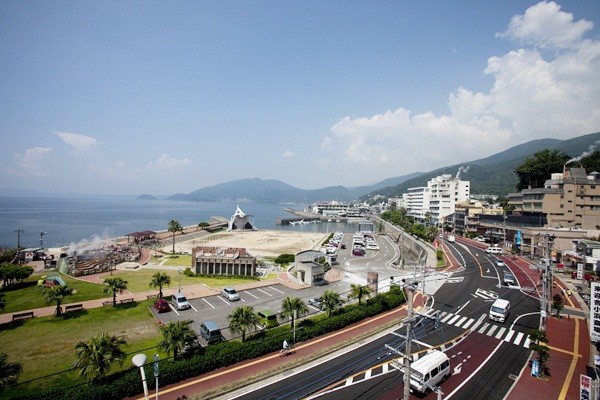
▲ Kobayashi Onsen. (Photo / Provided by Ryokuchi)
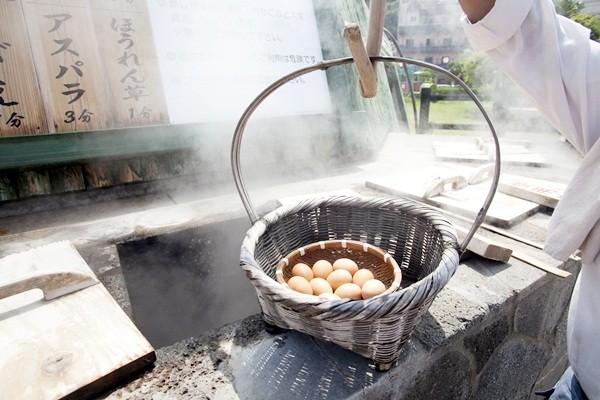
▲ Kobayashi Onsen – Boiling Hot Spring Eggs. (Photo / Provided by Ryokuchi)
Kobayashi Foot Bath in Unzen City is a famous hot spring resort since 1600, offering the most relaxing hot spring experience while enjoying ocean views and sunsets. In addition to featuring a 105-meter-long foot bath — claimed to be Japan’s longest — it also offers foot massages and pet-friendly foot baths. You can even use the 105°C high-temperature spring water to boil hot spring eggs and steam crabs. When in Kobayashi, don’t miss the famous B-grade cuisine “Kobayashi Champon.” Its broth is lighter than Nagasaki champon and is available at restaurants and sushi shops throughout the area — a favorite local dish.
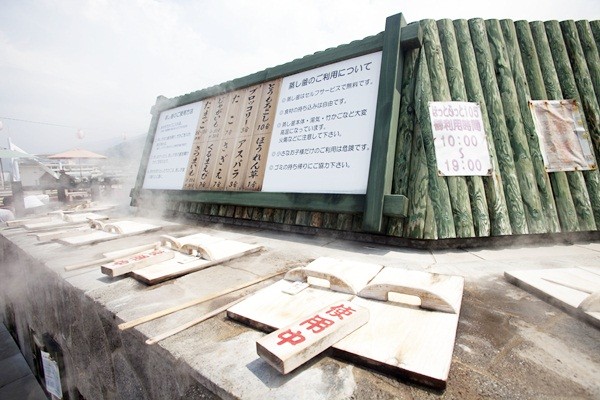
▲ Kobayashi Onsen – Steaming Pot. (Photo / Provided by Ryokuchi)
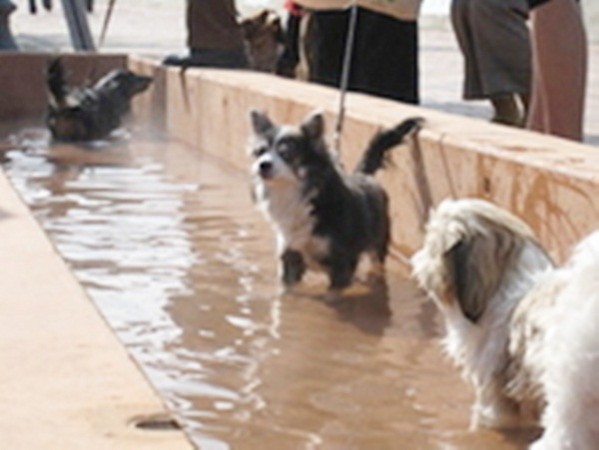
▲ Kobayashi Onsen – Pet Foot Bath. (Photo / Provided by Ryokuchi)
Taketa City
Located in Saga Prefecture, Taketa City is most famous for its hot spring gate, designed by architect Tatsuno Kingo, who also designed Tokyo Station. The entire gate is designed in the style of a dragon palace and was constructed without using a single nail. It is designated as an Important Cultural Property of Japan. The vermilion gate stands prominently at the entrance of Taketa Onsen Town. Earlier this year, four zodiac animal patterns were discovered during repainting work, complementing the eight zodiac signs found at Tokyo Station to form a complete set of 12, sparking conversation across Japan.
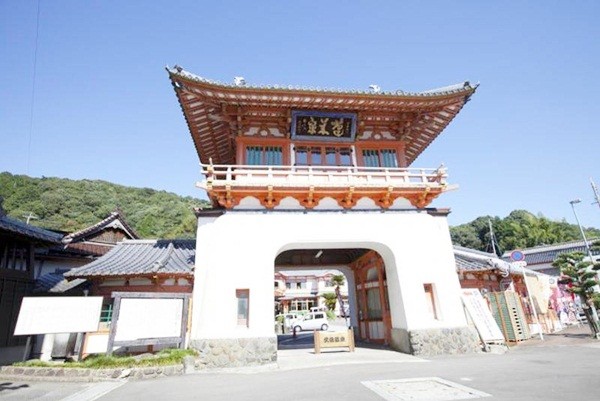
▲ Taketa Onsen Gate. (Photo / Provided by Ryokuchi)
Taketa City is also a 400-year-old pottery capital. About a 15-minute drive from the onsen town is the “Hiryu Kiln,” claimed to be the world’s largest cave kiln by volume. Made up of four large kilns, it can produce up to 120,000 teacups in a single firing. There is also a large workshop that accepts group reservations for hands-on experiences. Local specialties include the “Taketa Wakana Burger” made with “Taketa Buta” (local pork), healthy black rice dishes like black rice udon and black rice red bean bread, all grown with water from one of Japan’s top 100 water sources. Lemongrass tea is also a rising local favorite, and cosmetics made with lemongrass are popular souvenirs among tourists.
Hirado City
Hirado City is the birthplace of the East Asian hero Zheng Chenggong (Koxinga), whose mother was Japanese. He lived here until the age of seven. To recreate Zheng Chenggong’s life in Hirado, a memorial house was opened to the public on July 14 this year, featuring five exhibition zones displaying artifacts related to him. To welcome more Taiwanese visitors, the museum offers free admission.
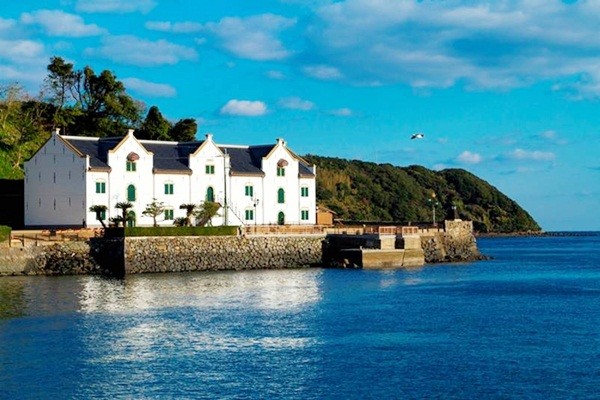
▲ Hirado Dutch Trading Post. (Photo / Provided by Ryokuchi)
Fishing experiences, which have recently gained positive feedback from Taiwanese TV shows, are a unique and representative activity in Hirado City. Visitors can board real fishing boats with local fishermen to take part in fixed-net fishing and enjoy freshly caught seafood cooked on the spot — the freshest and tastiest possible. In addition, the Dutch Trading Post, restored two years ago, was originally Japan’s first Western-style stone building, built in the 17th century. At that time, Hirado was Japan’s only trading port with the Dutch, predating Nagasaki’s Dejima. The post displays various documents and artifacts related to the Dutch during that era.

▲ Hirado City – Zheng Chenggong Museum. (Photo / Provided by Ryokuchi)
Fukuoka City
With a population of over 1.5 million, Fukuoka City is Japan’s sixth-largest metropolis. It has been selected by U.S. Newsweek as one of the “World’s Top 10 Trendy Cities” and by British Monocle as one of the “World’s 12 Most Livable Cities.” It is also one of the few cities in Japan that is ideal for both tourism and business meetings. The city center is just a 10-minute subway ride from Fukuoka Airport. With major department stores and electronics retailers readily available, now is the perfect time to shop for high-quality Japanese cosmetics while the yen is weak.
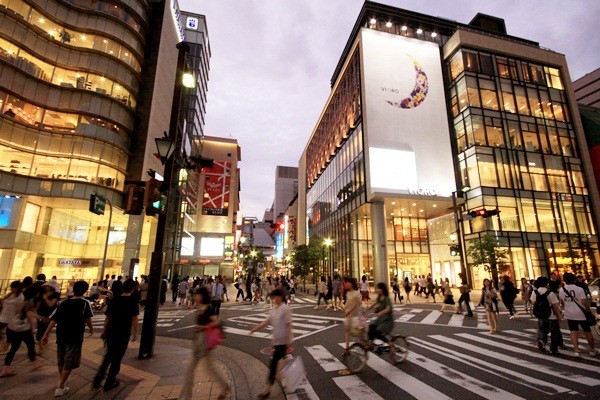
▲ Tenjin Street in downtown Fukuoka. (Photo / Provided by Ryokuchi)
Fukuoka, the food capital, is nationally renowned for its “tonkotsu ramen.” Here, you must try the rich, collagen-packed tonkotsu broth paired with ultra-thin noodles for a delightful texture. Another favorite among women is gyutan nabe (beef intestine hot pot), which is nutritious and low in calories. The city’s nightlife is highlighted by its yatai (street food stalls), with rows of two-meter-wide food booths stretching along the bustling streets. With around 150 stalls, the area is filled with the warm charm of Fukuoka and is a beloved nighttime destination for both locals and tourists.
Recently, experiential tourism and locally themed travel itineraries have been gaining popularity in Fukuoka, including representative experiences such as visiting the memorial museum of Taiwanese-born baseball legend Sadaharu Oh and taking stadium tours at the home grounds of the SoftBank Hawks. Ichiran Ramen, which drew long queues in Taipei, offers a kid-friendly ramen-making experience in Fukuoka City, where participants learn to make delicious ramen starting from the flour. Other activities include robot-making at "Robosquare," painting on Hakata dolls, and strolling around the Hakata city area in traditional kimono.
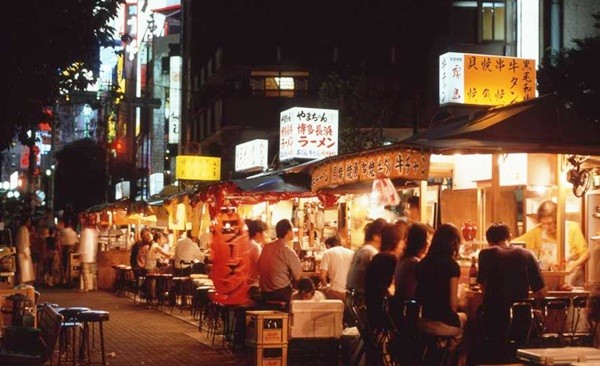
▲Fukuoka Yatai Street. (Photo / Provided by Travel Qi)
【Kyushu, Japan】
Population: 13.23 million
Area: 35,640 square kilometers Exchange rate: Approximately 0.3 New Taiwan Dollars per Japanese Yen
Climate: The latitude of Kyushu ranges between 30°N and 35°N; the island experiences distinct four seasons
Language: Japanese
【Kyushu Tour Packages】
Lion Travel – Kyushu Dazaifu Fugu BBQ & Hot Spring 4-Day Tour starting from NT$20,888, Shinkansen Round-Kyushu (Kumamoto Crab Hot Spring) 5-Day Tour starting from NT$28,900; Klook Travel – Huis Ten Bosch, Hundred Select Onsen in Yufuin, Canal City Hakata 5-Day Tour starting from NT$23,599, Huis Ten Bosch, 99 Pearl Islands, Aso Ropeway, Saga Exploration 5-Day Tour starting from NT$26,300; Canaan Travel – Nagasaki Million-Dollar Night View, Ninety-Nine Islands Cruise, Huis Ten Bosch, Aso Ropeway, Yufuin, Kinrin Lake Hot Springs & Gourmet 5-Day Tour starting from NT$29,900, Kyushu Dual Onsen, Stroll in Yufuin, Nostalgic Mojiko Port, Aso Shrine, Onsen Gourmet 5-Day Tour starting from NT$24,900
▲Geographical location of Northern Kyushu, Japan. (Image / from Google Maps)
▲Japanese tourism video. (Video / from YouTube)
Share
This article is published by HowToTrip. Sharing and reposting are welcome — please credit the source.
Article URL: https://www.howtotrip.net/views-27254
Related Articles
- Shaoxing's "Grandpa Gourd" hangs the gourds back up: "If there are too many people, we'll interact less — just take a quick look from afar"
- Chinese authorities announce "reciprocal adjustment" to Japan visa fees — single-entry visa jumps from 2,250 to 16,750 yen!
- 旅客携带的“保健石”核辐射超标千倍,同机人员或遭殃!海关提醒!
- 深圳机场深夜通报!出现不明升空物,航班大面积延误!
- “拆盒洗了才说要钱!”高铁200克葡萄卖60元,12306回应!
- 买不了机票?出境被拒?登机被拦?一大波中国游客莫名成了“失信人”
- 不利天气和经济波动影响哥伦比亚咖啡市场
- 海边浴场回应冲脚淡水收费2元/30秒:明码标价!
- 舱门没关好就起飞?机翼出现问题?多个航班途中紧急折返!
- 感受大自然的馈赠!盘点世界十大唯美海岸线