Watch a movie in Taroko Gorge & trace the legacy of the Chiangs
Reported by reporter Tsai Meng-hsiu / Hualien
“After fresh rain in empty mountains, autumn’s chill pervades at dusk. The bright moon shines between the pines; clear spring water flows over the stones.” These are lines from Wang Wei’s landscape poem “Autumn Evening in the Mountains,” describing the first half of the scene. Taking advantage of the crisp early autumn weather, come to Taroko to experience the mood Wang Wei captured—only now the setting shifts to a canyon landscape, adding a bit more awe-inspiring grandeur, yet still full of poetic charm.
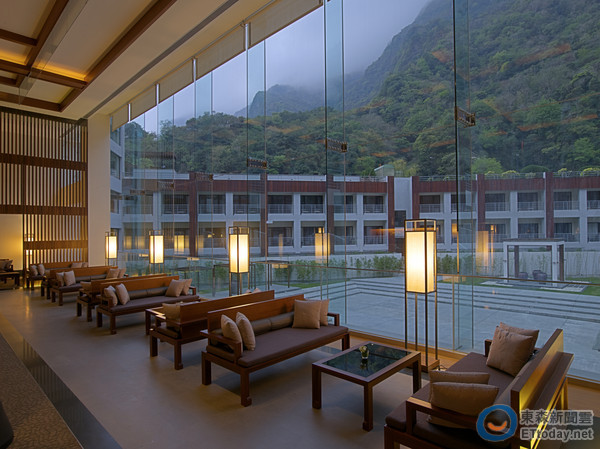
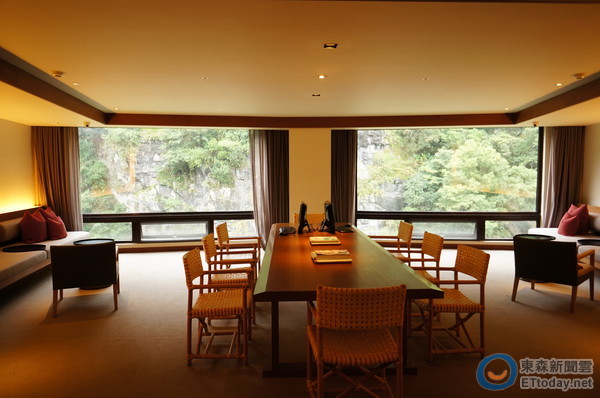
▲ This was once a guesthouse used to host foreign dignitaries during the Chiangs’ era. Even after renovation, the hotel maintains a “simple and understated” style, characterized mainly by a minimalist Zen ambiance. (Photo / Reported by Tsai Meng-hsiu)
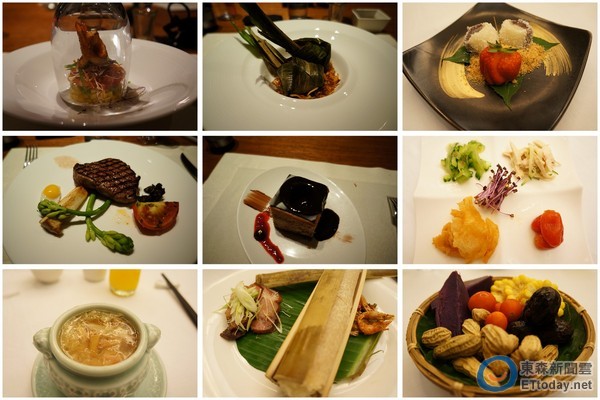
▲ The hotel offers a rich variety of dishes, among which the series “Hui Lan Famous Dishes” emphasizes light flavors, yet remains delicious and satisfying. It is especially popular with Japanese tourists—even former KMT chairman Chen Yunlin dined here during his visit to Taiwan. (Photo / Reported by Tsai Meng-hsiu)
As the scorching summer sun quietly fades, the cool climate becomes the perfect time for travel. Take advantage of this golden period to visit Taiwan’s premier natural wonder—Taroko Gorge—and unwind. You may have been here before, but watching a movie in the gorge or sitting by the pool reflecting while facing the towering mountains and valleys is truly an unprecedented experience.
Five-star hotel operators in Taroko have created a deeply Zen environment, offering visitors a brand-new experience. This was once a meeting hall used to entertain foreign guests during the Chiangs’ era, and its exceptional surroundings and scenery provided ideal conditions for the business.
The hotel pool is nestled within a setting surrounded by mountains, and directly in front lies the steep cliffs of Taroko. During the day, you can often spot Formosan serows and goats around the pool area, and even macaques might unexpectedly drop by as honored guests, frequently peering at diners from outside the restaurant—a sign of the area’s rich biodiversity.
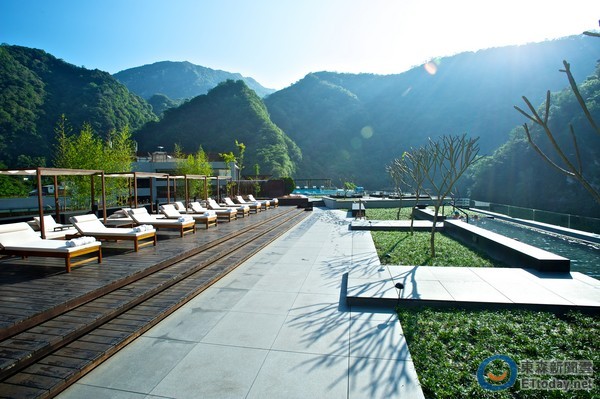
▲ The outdoor splash zone is surrounded by mountains, and looking ahead reveals the Taroko Gorge. Swimming in such natural beauty is truly one of life’s great pleasures. (Photo / Reported by Tsai Meng-hsiu)
The entire hotel is designed with a Zen aesthetic, even featuring a special “daydreaming pool” in the pool area, where guests can sit in the water and contemplate the cliffs and valleys. At night, when moonlight spills across the valley and all is quiet, the only sounds around the daydreaming pool are the chirping of insects, birdsong, and the gentle flow of water. The peak above the valley is accompanied by Xiangde Temple, and this poetic scene attracts many foreigners eager to experience this unique Eastern ambiance.
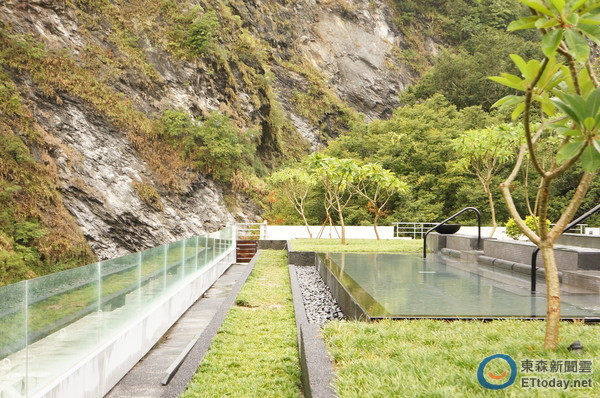
▲ The hotel’s specially designed daydreaming pool allows guests to face the towering mountains and valleys, reflecting alone and enjoying tranquility. (Photo / Reported by Tsai Meng-hsiu)
However, not all guests may share this contemplative mood, so the hotel has come up with the idea of “watching a movie in the gorge”—setting up an open-air cinema in the pool area, screening popular shows. Guests can relax on lounge chairs by the pool and enjoy the film, and many couples enjoy this romantic setting for some quality time together. This canyon cinema experience is truly unique.
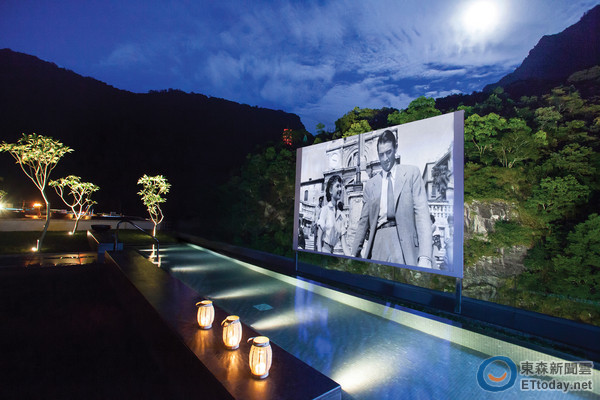
▲ The hotel has set up an open-air cinema in the gorge, where guests can watch movies while sitting in the pool. As night falls, the surrounding artistic lighting creates a wonderfully romantic atmosphere. (Photo / Provided by the operator)
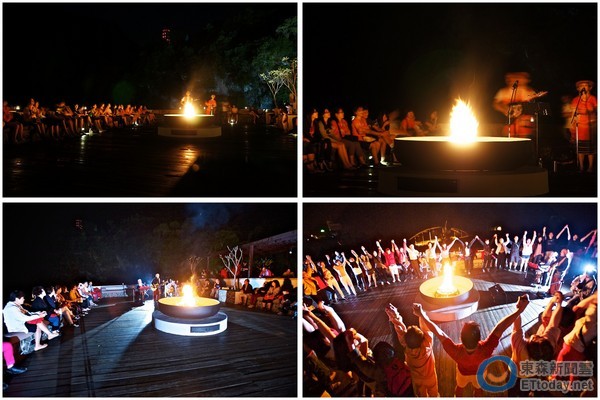
Beyond water activities, don’t miss the campfire party that takes place every evening after dark. The staff lights a bonfire outdoors to illuminate the venue and invites indigenous singers to perform divine melodies. Familiar folk songs by Wang Meng-lin, Chen Shu-hua... and others stir up many nostalgic memories. In these moments, regardless of nationality or race, everyone breaks down language barriers, gathering from all over the world to connect through song.
After a day of activity, nothing beats a good rest. The hotel rooms are decorated in a Zen style, offering guests the most comfortable space to unwind. The mountain-surrounded environment is filled with phytoncides, and opening the window reveals the breathtaking sight of the canyon’s rushing waters. The room's low-key decor lacks luxury, staying true to the style of the Chiangs’ era.
Open the box on the desk, and you’ll find stacks of stationery for guests to write letters. Nearby, a wooden puzzle game set also exudes a strong retro vibe, perfect for passing the time. The hotel encourages guests not to use email or get lost in the online world—the rooms contain neither high-end audio systems nor video game consoles. The goal here is for guests to fully rest, soak in the bath, and enjoy the serenity of the mountains.
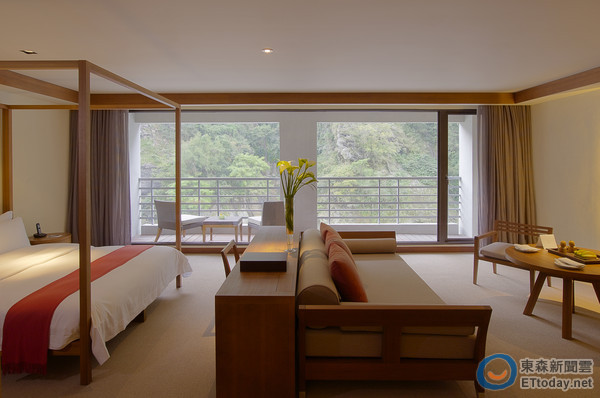
▲ From the large floor-to-ceiling windows in the guest rooms, the view opens up to the Taroko Gorge—a magnificent sight. Open the window and you can hear the powerful roar of the flowing water. (Photo / Provided by the operator)
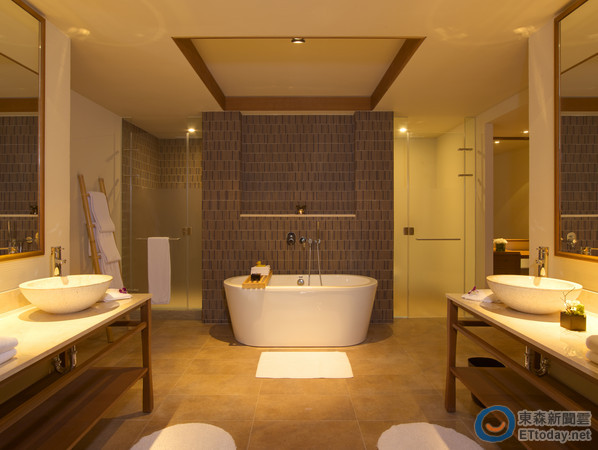
The simple room setup includes just a mini fridge and a TV, with no excessive 3C (electronic) devices. Despite renovations, the hotel maintains its original intent of being “simple and understated,” with traces of the Chiangs’ era visible throughout. For those wanting to learn more about the past, the guest lounge houses several books about the Chiangs—though, due to political sensitivities, these are discreetly placed on the edges of the shelves.
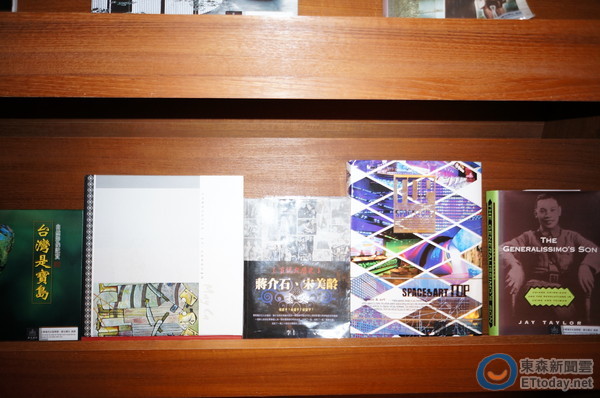
▲ Traces of the Chiangs remain here even today. The bookshelf in the hotel’s living room also holds volumes about the Chiangs, but due to political sensitivity, they are tucked away on the sides of the shelves. (Photo / Reported by Tsai Meng-hsiu)
Deputy Director Zhao Jia-qi of the hotel also frankly stated that the goal is to offer guests a back-to-basics experience, hence the continued “simple and understated” style. Many foreign tourists, in the quiet of the night, pick up the letter paper from the wooden box to jot down their thoughts or take them home as mementos—items of special meaning. If guests come to this mountain retreat but seek nightlife, night markets, and entertainment, then this is not the place for them.
Looking around, the hotel hosts many European and American tourists—some come to cycle and stay overnight, while others are drawn by its reputation. These are people who know how to enjoy life, appreciating the tranquility found here, rather than spending their holidays with champagne and nightlife. Next time you want to escape the hustle and bustle and experience life in seclusion in the mountains, consider staying overnight in Taroko. Take time to visit Xiangde Temple, explore the scenic beauty of Baiyang Trail, or simply relax in the hotel’s daydreaming pool for a meaningful deep-immersion journey.
Share
This article is published by HowToTrip. Sharing and reposting are welcome — please credit the source.
Article URL: https://www.howtotrip.net/views-26767
Related Articles
- Shaoxing's "Grandpa Gourd" hangs the gourds back up: "If there are too many people, we'll interact less — just take a quick look from afar"
- Chinese authorities announce "reciprocal adjustment" to Japan visa fees — single-entry visa jumps from 2,250 to 16,750 yen!
- The "health stones" carried by a traveler were found to have radiation levels exceeding safety limits by a thousand times, potentially endangering fellow passengers on the same flight. Customs issues warning!
- Shenzhen Airport Issues Late-Night Notice: Unidentified Aerial Object Detected, Causing Widespread Flight Delays!
- “They only said it cost money after I opened the box and washed it!” 200g of grapes sold for 60 yuan on a high-speed train—12306 responds!
- Can't buy an airline ticket? Denied exit? Blocked from boarding? A large number of Chinese tourists have mysteriously become "discredited individuals"
- Adverse weather and economic fluctuations impact Colombia's coffee market
- Beach bathing area responds to 2 yuan/30 seconds fee for freshwater foot rinsing: Clearly priced!
- Taking off with an improperly closed cabin door? Wing malfunction? Multiple flights made emergency returns mid-journey!
- Experience the gifts of nature! A countdown of the world’s ten most stunning coastlines