The Romantic Pomegranate City – A Honeymoon Journey to Side, Turkey
Reported by Hong Lingju / Special Feature
Side, located 75 kilometers southeast of Antalya, Turkey, is a port city along the Mediterranean coast and a renowned paradise-like tourist destination. With its white sandy beaches, ancient Roman ruins, resort centers, and Mediterranean cuisine, it draws thousands of visitors each year. Legend has it that this was the site of the passionate encounter between the Egyptian queen Cleopatra and Mark Antony, and this romance has made it a top honeymoon destination for many newlyweds.
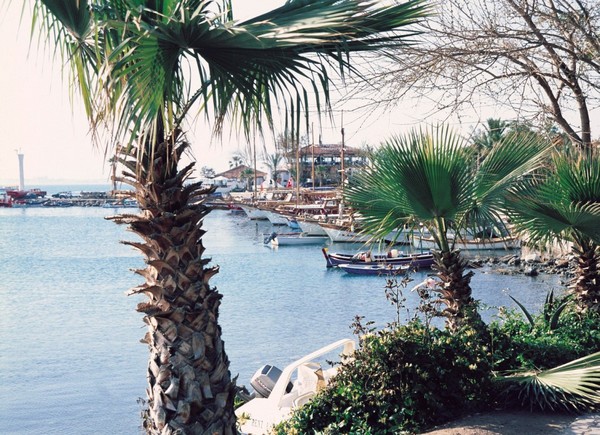
▲ Side’s Limani (Limanı) is one of the most beautiful cruising areas in Turkey and a sheltered bay surrounded by pine trees. (Photo / Courtesy of the TURSAB website)
In the Turkish language, “Side” means “pomegranate,” a fruit symbolizing abundance and prosperity. In the 2nd century BC, due to the prevalence of piracy and trade, Side gradually developed into an important trading port. Most of the ancient ruins still preserved today were built between 25 BC and the 3rd century AD. Today, Side has transformed into a beautiful resort town. Though it may no longer boast the bustling prosperity of its past, it exudes a serene and laid-back charm.
The popularity of tourism in Side can be seen along its coastline, with a variety of accommodations including star-rated hotels, boutique inns, and youth hostels widely available. Finding a place to stay and relax is not difficult, and some hotels even have their own private beaches, offering guests a Mediterranean-style sunny vacation atmosphere. Notably, Side’s beaches are quite famous, with the area boasting nine internationally certified “Blue Flag” beaches, symbolizing high-quality seawater and beach environments.
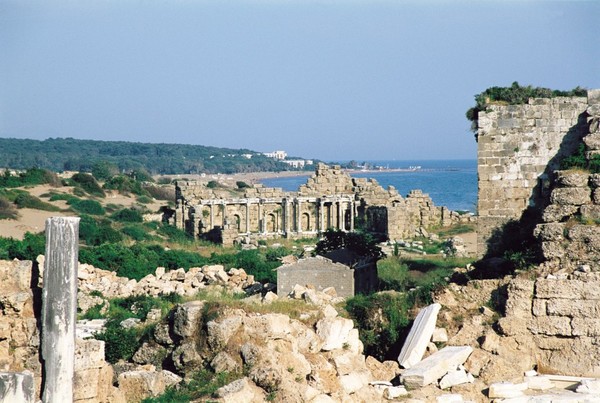
▲ Situated by the harbor, the ancient architectural ruins of Side stand against the deep blue sea. (Photo / Courtesy of the TURSAB website)
Another highlight of Side is the discovery of ruins such as the Temple of Apollo and the Temple of Athena by the harbor, along with fountains, large tombs, and ancient buildings. Especially striking are the stone pillars of the Temple of Apollo set against the backdrop of sea and sky—an incredibly beautiful sight that captivates visitors time and again, making it one of the main draws for tourists. As for Turkey’s well-preserved historical sites, Side also features an ancient theater dating back to the 2nd century AD. Its grand scale and well-maintained structure offer a glimpse into the leisure and entertainment venues of the ancients, leaving visitors in awe.
The Most Romantic Historical Ruins – Framed by Sea and Sky
One of the most famous landmarks of the seaside ancient city of Side is the ruins of the Temple of Apollo and the Temple of Athena, both built in the 2nd century AD. Designed in the Corinthian style and peristyle layout, each temple features 11 columns on either side and 6 columns at the front and back. The two temples stand closely together, making them one of the most romantic and enchanting historical sites in Turkey.
Nowadays, visitors to the site can only see the remnants of the Temple of Athena and five standing columns from the Temple of Apollo, leaving much to the imagination about the grandeur and glory of the temples from a thousand years ago. Nevertheless, the ruins of the Temple of Apollo’s columns appear in nearly all Turkish travel guides and are among the most photographed tourist spots. Particularly, the five columns set against the blue sky and sea background are arguably the most iconic view of Side.
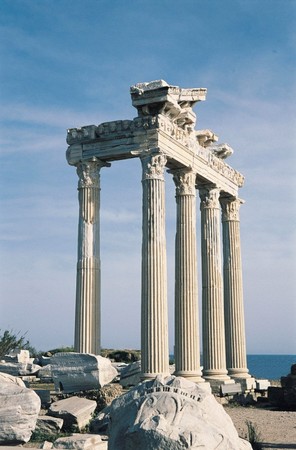
▲ The ruins of the Temple of Apollo’s columns are among the must-see attractions for many visitors. (Photo / Courtesy of the TURSAB website)
National-Level Ancient Theater – Imagining a Crowd of Thousands
Turkey, rich in ancient relics, preserves numerous theater ruins, such as the famous ones in Hierapolis and Aspendos, reflecting its profound influence from ancient Greek and Roman cultures. Even in Side, there is a theater—the largest, best-preserved, and built in the mid-2nd century AD.
Unlike typical theater ruins built into hillsides, the Side Theater is supported by stone pillars. It is large enough to accommodate 13,000 to 15,000 spectators, though the seating is divided into two sections. Performers would play music or act in a semi-circular orchestra pit. In the post-Roman period, the theater was often used for gladiator fights and beast hunts. During the Byzantine era in the 5th to 6th centuries, it was repurposed as an open-air church.
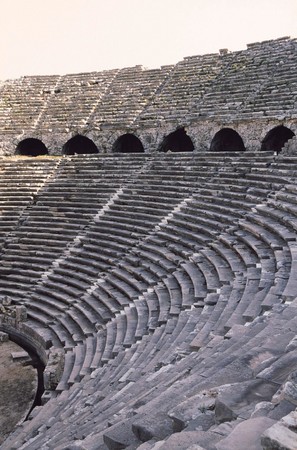
▲ The ancient theater of Side, which could hold up to 15,000 spectators, may no longer host grand performances, but it sparks the imagination about its former splendor. (Photo / Courtesy of the TURSAB website)
Related Travel Agency Tours
EasyCard Travel «Explore Turkey on Your Own – Light Trip to Istanbul (8 Days)»
Lion Travel «Saffron Turkey ~ Troy, Pamukkale Hot Springs, Rock Cities, Antalya (11 Days)»
Phoenix Travel «Turkey Saffron City Round-Trip Highlights (11 Days)»
Turkey Travel Information
● Population: 78 million
● Climate: Mediterranean climate zone, wet winters and dry summers, temperate climate.
● Flights: Can take Turkish Airlines (www.turkishairlines.com), via Hong Kong or Bangkok to Istanbul. Turkish Airlines Taiwan branch phone: (02)2756-0849.
● Visa: On-arrival visa available at the airport, cost 15–20 USD (approx. 453–603 TWD); e-visa applications also availablewww.evisa.gov.tr
● Time Difference: GMT+3 (4–10 months: -5 hours, winter: -6 hours)
● Currency: 1 Turkish Lira ≈ 16 TWD; Euros are also widely accepted
Share
This article is published by HowToTrip. Sharing and reposting are welcome — please credit the source.
Article URL: https://www.howtotrip.net/views-26742
Related Articles
- Shaoxing's "Grandpa Gourd" hangs the gourds back up: "If there are too many people, we'll interact less — just take a quick look from afar"
- Chinese authorities announce "reciprocal adjustment" to Japan visa fees — single-entry visa jumps from 2,250 to 16,750 yen!
- The "health stones" carried by a traveler were found to have radiation levels exceeding safety limits by a thousand times, potentially endangering fellow passengers on the same flight. Customs issues warning!
- Shenzhen Airport Issues Late-Night Notice: Unidentified Aerial Object Detected, Causing Widespread Flight Delays!
- “They only said it cost money after I opened the box and washed it!” 200g of grapes sold for 60 yuan on a high-speed train—12306 responds!
- Can't buy an airline ticket? Denied exit? Blocked from boarding? A large number of Chinese tourists have mysteriously become "discredited individuals"
- Adverse weather and economic fluctuations impact Colombia's coffee market
- Beach bathing area responds to 2 yuan/30 seconds fee for freshwater foot rinsing: Clearly priced!
- Taking off with an improperly closed cabin door? Wing malfunction? Multiple flights made emergency returns mid-journey!
- Experience the gifts of nature! A countdown of the world’s ten most stunning coastlines