Can hot air balloons reach space? U.S. space company unveils 'near-space' trips
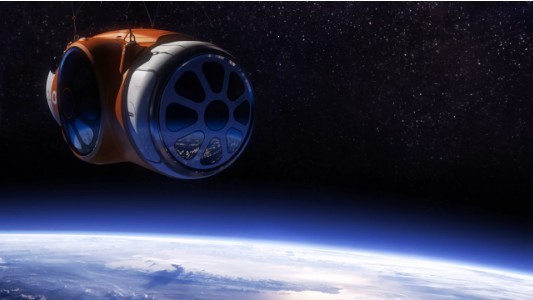
▲ Enjoying Earth’s curvature via hot air balloon isn’t just talk—this U.S. plan is set to launch by the end of 2016!(Image/Screen capture from World View Enterprises’ near-space trip simulation video)
Travel Center / Compiled report
Exploring the mysteries of the solar system is no longer just for astronauts. Even though space tourism comes with a hefty price tag, many wealthy individuals are still eager to spend large sums to secure a spot for a rocket-powered space adventure. Recently, a U.S. space tourism company introduced a 'near-space' travel experience, which doesn’t rely on rockets but uses hot air balloons to take you high above Earth to admire its beautiful curvature.
The concept of 'near-space' travel is being developed by World View Enterprises, headquartered in Arizona, U.S.World View EnerprisesOn the 22nd, they announced plans to use a hot air balloon to lift passengers up to 300,000 feet (approximately 91 kilometers) above sea level. However, for this plan to move forward, it must first obtain approval from the Federal Aviation Administration (FAA), the U.S. body overseeing civil aviation. The cost isn't cheap either—a roughly four-hour near-space journey is priced at $75,000 (around NT$2.2 million).
Jane Poynter, CEO of World View Enterprises, said the highlight of this trip is the view of Earth’s landscape from high altitude and the sight of Earth’s curvature. The capsule can accommodate eight passengers, and unlike a rocket, there is no zero-gravity environment inside, so guests can walk around freely. The hot air balloon will take about 90 minutes to ascend at a rate of 300 meters per minute, then cruise for two hours before descending over 40 minutes. This plan is also expected to be completed by the end of 2016. (News source: Central News Agency)
% Tech a target="_blank" href="http://www.space.com/23291-space-tourism-balloon-flights.html">World View EnterprisesProvides a simulation video of the hot air balloon near-space travel experience.
Share
This article is published by HowToTrip. Sharing and reposting are welcome — please credit the source.
Article URL: https://www.howtotrip.net/views-26274
Related Articles
- Shaoxing's "Grandpa Gourd" hangs the gourds back up: "If there are too many people, we'll interact less — just take a quick look from afar"
- Chinese authorities announce "reciprocal adjustment" to Japan visa fees — single-entry visa jumps from 2,250 to 16,750 yen!
- The "health stones" carried by a traveler were found to have radiation levels exceeding safety limits by a thousand times, potentially endangering fellow passengers on the same flight. Customs issues warning!
- Shenzhen Airport Issues Late-Night Notice: Unidentified Aerial Object Detected, Causing Widespread Flight Delays!
- “They only said it cost money after I opened the box and washed it!” 200g of grapes sold for 60 yuan on a high-speed train—12306 responds!
- Can't buy an airline ticket? Denied exit? Blocked from boarding? A large number of Chinese tourists have mysteriously become "discredited individuals"
- Adverse weather and economic fluctuations impact Colombia's coffee market
- Beach bathing area responds to 2 yuan/30 seconds fee for freshwater foot rinsing: Clearly priced!
- Taking off with an improperly closed cabin door? Wing malfunction? Multiple flights made emergency returns mid-journey!
- Experience the gifts of nature! A countdown of the world’s ten most stunning coastlines