Fashionqueen / A Palace-Inspired Concept Hotel – Relive the Time of Noble Privilege
Text and Photos / Fashionqueen Magazine
EDITOR: CHLOE CHAN
PHOTO: SHANGRILA, GHC
Staying overnight in a royal palace is likely a dream for many. Numerous hotels adopt a palace-inspired design concept, ranging from romantic Baroque architecture and British classicism to Chinese imperial palaces as themes. Some even transform former palaces or mansions into hotel accommodations, gradually sparking a craze for royal experiences that attract enthusiasts from all over.
Palace of Prince Roland Bonaparte Transformed into Shangri-La Paris
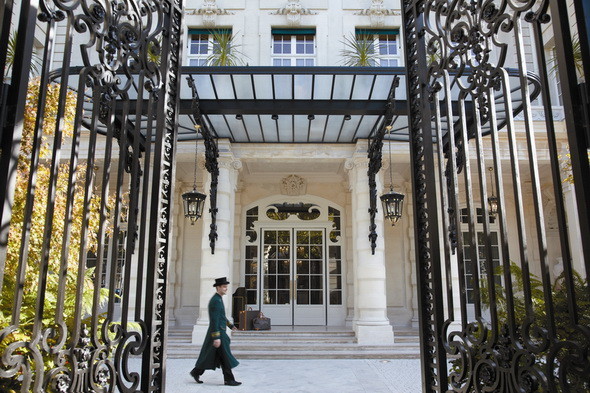
Located in the 16th arrondissement of Paris, Shangri-La Paris blends the historical essence of the building with the Asian cultural heritage of the hotel group.
This historic mansion, built in 1896, offers guests the opportunity to experience the prestige of staying in the residence of Prince Roland Bonaparte, the great-nephew of Napoleon Bonaparte.
Listed as a French heritage site, Shangri-La Paris retains its deep historical roots even after renovation. The group spent four years restoring Prince Roland’s palace to its former glory — coincidentally, the original construction of the building also took four years (1892–1896).
Being just a stone’s throw away from the famous Place du Trocadéro, it has become the ideal hotel for travelers seeking a blend of Parisian history and modern multiculturalism.
The Shangri-La Hotel Group has successfully revived the splendor of Prince Roland Bonaparte’s palace.
An Epitome of Traditional French Elegance
 %In the heart of the city lies a uniquely elegant courtyard garden inspired by traditional French style, creating a distinctive urban atmosphere.
The hotel was meticulously designed by internationally renowned interior designer Pierre-Yves Rochon, who has also worked on Paris’s Four Seasons Hotel George V and Monte Carlo’s Hotel Hermitage. He seamlessly blends European royal ambiance with Asian aesthetics, bringing the 19th-century classical charm to life.
Ming-style vases stand on either side of the hotel entrance, while the first-floor lobby exudes the romantic flair of Louis XIV, forming a microcosm of traditional French elegance.
Murals, gilded decorations, and crystal elements maintain the residence’s comfort, luxury, and refined atmosphere. Each room is exquisitely crafted, while also incorporating modern comforts.
In addition to five duplex suites, there is the Imperial Suite, converted from Prince Roland’s private bedroom, and the Panoramic Suite, which features 14-meter-wide windows and a 100-square-meter terrace. Forty percent of the rooms are standard, while sixty percent are suites, most offering views of the Eiffel Tower and the Seine River, ensuring prime locations.
Additionally, an elevator has been installed along the oak staircase leading to the upper floors. Guests can enjoy views of the Eiffel Tower from their rooms or while soaking in the bathtub.
A Diverse Array of Gourmet Experiences
Beyond royal treatment and service, the hotel excels in its culinary offerings. Executive Chef Philippe Labbé curates a variety of refined dishes. The La Bauhinia Restaurant and Lounge, located at the heart of the hotel, features a glass dome inspired by the Eiffel Tower, allowing guests to dine elegantly beneath its ornate canopy.
For those craving Chinese cuisine, Paris’s first authentic Cantonese restaurant, Shang Palace, offers a design inspired by the Ming and Qing dynasties. It boasts a lavish lobby and three private rooms named Tang, Ming, and Qing, serving delicacies such as roast goose and Peking duck. For true French fine dining, the Michelin two-star restaurant L’Abeille is also a must-visit.
Don’t miss Le Bar for a cocktail like the enchanting “Pink Lady.” The grand banquet halls also attract countless couples to celebrate their romantic milestones, with Chef Labbé curating the menu to deliver an unforgettable gourmet experience.
Hotel Alfonso XIII – Reviving the Height of Art Deco
One of the most treasured landmark buildings in Seville, the ancient capital of southern Spain, is none other than Hotel Alfonso XIII.
Commissioned by King Alfonso XIII of Spain, the hotel opened in 1929 during the height of the Art Deco era and quickly became a pilgrimage destination for travelers.
Seville is the cultural heart of Andalusia. Once under Moorish rule for 500 years, it is the birthplace of bullfighting and flamenco. To solidify its status as one of Europe’s premier luxury hotels, The Gallery design team from HBA London revamped the property, merging authentic history with the Andalusian culture centered around Seville. They preserved its traditional charm and regal elegance while infusing modern elements and sophistication.
The Gallery Team Creates an Extraordinary Atmosphere
Following its renovation, the hotel showcases exquisite paintings and artworks from its private collection, recreating the grandeur of the king’s visits. Precious antiques complement luxurious, modern amenities — such as a TV cabinet with hand-gilded leather and a four-poster bed in the master suite adorned with exquisitely embroidered silk.
To create an extraordinary ambiance, the lobby features smooth marble flooring, marble staircases, and a crown-patterned ceiling adorned with bas-relief decorations. Elegant chandeliers hang below the checkered ceiling, while the soaring arched corridors are decorated with magnificent murals.
To preserve the original walls, The Gallery team precisely measured the location of every outlet in the lobby. Beyond the lobby lies a captivating courtyard space — half serves as a relaxation area, while the other half is an all-day open-air restaurant. The intricately mosaic-covered colonnade bathes in natural light filtered through the arches, emanating a bright and enchanting atmosphere.
Unique cultural design
As for the guest rooms, The Gallery team presents them in three distinctly different styles, each incorporating one of Seville’s most important cultural elements: Moorish, Andalusian, and Castilian.
The “Moorish Room” features intricate classical decorative lines, paired with stylish modern furniture and exquisitely shaped ornaments.
The “Andalusian Room” draws inspiration from flamenco dance, with softly curved ceiling moldings that evoke the swaying of a dancer’s skirt, complemented by an opulent leather headboard adorned with intricate textile patterns.
The “Castilian Room” radiates a masculine strength reminiscent of a matador brandishing an elaborately embroidered cape in the arena.
Additionally, the Reales Alcázares Suite offers breathtaking views of the nearby royal palace gardens, with charcoal-colored walls lending a touch of mystery to the living room, while charming Chinese-style motifs playfully contrast with the lush greenery outside.
A stylish and elegant dining environment
 The screens in %niio Italian Restaurant are adorned with elaborate and exotic patterns, exuding a strong classical artistic vibe.
For a relaxed Moorish ambiance, guests can dine at the newly opened “Taifas Restaurant & Bar,” and also enjoy the exotic atmosphere by the central garden pool. Located independently from the main hotel building, the design team transformed what was originally a purely functional space into a fashionable venue.
The restaurant features a bar counter made of Italian Carrara marble, behind which stand antique solid wood and brass wine cabinets, their doors decorated with ornate plaster grids.
Backlit Moorish carved screens create an intimate dining atmosphere, while low seating and embroidered cushions flexibly define indoor and outdoor dining areas. The ceiling is adorned with hand-painted ceramic tiles and vibrant lighting fixtures crafted by local blacksmiths, bringing lively energy to the pristine white space.
Evoking the classical charm of Seville
In addition, the “American Bar,” reinterpreted in an Art Deco style, combines lacquered walls with silky gray-green fabric, accented by gleaming golden decorations, a brightly blue-painted oversized mirror frame, and a bar counter made of polished copper and sandalwood.
In contrast, the Moorish-style “Alfonso Bar” exudes a rich classical charm of Seville. The bar, dominated by traditional dark tones, is covered with aged oak planks secured with iron nails, and features a large portrait of King Alfonso XIII on the wall, as if silently observing everything happening in the bar.
Given that Seville’s local laws prohibit music in public spaces after midnight, the designers converted the originally service-oriented basement into a meeting room, allowing parties to continue into the early hours.
Four Seasons Hotel Beijing – Contemporary Tang Dynasty Classic Elegance
Located in China’s historic yet modern capital, the Four Seasons Hotel Beijing draws inspiration from the prosperous Tang Dynasty, the most flourishing period of Chinese civilization, while fully showcasing Beijing’s rich cultural heritage and strong modern vibe.
The Mio Italian Restaurant and the Chinese restaurant, Cai Yi Xuan, both designed with a regal classical layout, transport guests to a bygone era of opulence and luxury.
The Chinese restaurant Cai Yi Xuan, situated in a relatively secluded art garden, features a gleaming floor paired with high-gloss black zebra wood flooring, perfectly presenting an oriental charm and offering an extraordinarily luxurious visual experience. The Mio Italian Restaurant, with its elaborate exotic screen patterns, Middle Eastern-style seating, layered and resplendent crystal chandeliers, and use of royal-brand tableware such as Christofle, Bernardaud, and Riedel, exudes an air of aristocratic luxury everywhere.
Waldorf Astoria Shanghai on the Bund – A Return to the Victorian Era
A century ago, the former Shanghai Club Building, constructed in the late Victorian era, was the most prestigious social venue in Shanghai. However, after being meticulously redesigned by internationally renowned interior design firm Hirsch Bedner Associates (HBA), it reopened as the luxurious Waldorf Astoria Shanghai on the Bund, making No. 2 on the Bund once again a landmark symbolizing fashion, elegance, and refined taste, offering an exquisite residence of ultimate luxury.
To uphold the three core values of classic legend, timeless permanence, and cultural heritage, the property includes 266 guest rooms, a bowling alley, four restaurants, an oyster bar, a hair salon, and two bars, notably the 35-meter-long Long Bar, once the longest in the world.
Through meticulous archival restoration
The Shanghai Club was once a renowned social hotspot, leaving behind a wealth of photographic archives that provided the most comprehensive references and guidance for the restoration project.
From the neoclassical interior decor and classic British furniture and lighting to Chinese classical embellishments and handicrafts, through careful and extensive documentation, the original Sicilian marble columns and imported stained glass from Birmingham, England, were meticulously restored.
Victorian-era crystal chandeliers and time-worn antique floors have also been preserved, adding a profound sense of historical weight to the space. To incorporate a modern touch, HBA introduced contemporary artworks and fabric decorations, perfectly blending classical and modern art.
Classic design elevated to new heights
It is said that the standing positions of guests at the Long Bar once directly reflected their social status at the time. The design team restored the bar’s former glory through archival research, using details such as dark wooden paneling, white marble counters, and sharply lined dark furniture to allow guests to once again experience the aristocratic elegance of the past.
Among the most exquisitely crafted decorations is the banquet hall, which retains its original warm solid wood wainscoting, yellowish-gray plaster walls, delicate ceilings and wall ornaments, as well as the soft glow of antique crystal chandeliers, showcasing the luxury and refinement of a bygone era.
Additionally, the design team specially created a suite design favored by royal nobility in 1911, elevating the original classic European design to new heights. The interior is adorned with magnificent crystal chandeliers, dark mahogany furniture popular in the Victorian era, and imitation Chinese antique ornaments, all showcasing extraordinary luxury and grandeur.
Photo Gallery:
(Photo 5) The former Shanghai Club Building, constructed in the late Victorian era, was once the most prestigious and exclusive social venue in Shanghai.
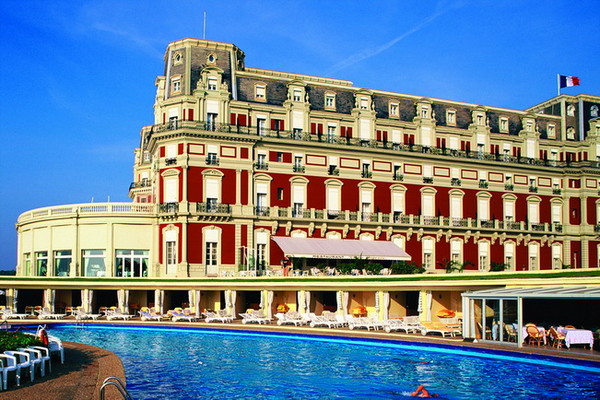
▲Hotel du Palais embodies rich history from France and Europe.
Hotel du Palais — Napoleon III’s Dream Palace
Located at the northern end of Grande Plage beach, Hotel du Palais was originally the dream palace of Napoleon III and his Spanish-born wife, Empress Eugénie.
In 1853, Napoleon married his wife, and the following year they visited Biarritz. They fell in love with a pristine piece of land overlooking the sea and decided to build a palace there.
This hotel carries rich historical significance from France and Europe, and its rooms and suites are named after the celebrities and nobility who once stayed there.
It has hosted numerous renowned figures from literature and the arts, including Charlie Chaplin, Ernest Hemingway, Victor Hugo, King Alfonso XIII, King Edward VII, and Empress Elisabeth, making it an ideal holiday destination for royalty and nobility.
Share
This article is published by HowToTrip. Sharing and reposting are welcome — please credit the source.
Article URL: https://www.howtotrip.net/views-26233
Related Articles
- Shaoxing's "Grandpa Gourd" hangs the gourds back up: "If there are too many people, we'll interact less — just take a quick look from afar"
- Chinese authorities announce "reciprocal adjustment" to Japan visa fees — single-entry visa jumps from 2,250 to 16,750 yen!
- The "health stones" carried by a traveler were found to have radiation levels exceeding safety limits by a thousand times, potentially endangering fellow passengers on the same flight. Customs issues warning!
- Shenzhen Airport Issues Late-Night Notice: Unidentified Aerial Object Detected, Causing Widespread Flight Delays!
- “They only said it cost money after I opened the box and washed it!” 200g of grapes sold for 60 yuan on a high-speed train—12306 responds!
- Can't buy an airline ticket? Denied exit? Blocked from boarding? A large number of Chinese tourists have mysteriously become "discredited individuals"
- Adverse weather and economic fluctuations impact Colombia's coffee market
- Beach bathing area responds to 2 yuan/30 seconds fee for freshwater foot rinsing: Clearly priced!
- Taking off with an improperly closed cabin door? Wing malfunction? Multiple flights made emergency returns mid-journey!
- Experience the gifts of nature! A countdown of the world’s ten most stunning coastlines