A Day as a Local: The Anpanman Museum in Sendai, Japan
By Zhang Weizhong
Everyone has the urge to travel. When once foreign places gradually become familiar, what you need for Japan is a spiritual reboot. This time, step away from Tokyo—gently shift from the big city to smaller towns and rural areas. Journey to Sendai, Aomori, Miyazaki, Hiroshima, Saga, Ise, and more. Immerse yourself in the true essence of Japanese culture and discover the simple joys of life.
So we chose to feel the post-earthquake vitality of Sendai’s morning market, to taste the authentic flavors of Miyagi’s wines; to sip soulful milk in Koizumi and savor local ingredients the people of Akita are reluctant to share; to visit the birthplace of Hokkaido coffee, a hot spring café in the snow; to witness Ise Grand Shrine’s cultural preservation and explore Kyushu’s “Little Kyoto” and Kumamoto Castle, one of Japan’s three great castles; to pay homage at Izumo Taisha and receive the purest energy of love.
Then head to Kagoshima to enjoy the dreamy seascape aboard the “Tamatebako” ship, and don’t miss a pilgrimage to Nishi-Daisen Station, Japan’s southernmost point. Stay overnight in a yurt-like dome hotel, then the next day step onto the Aso Plateau to experience true closeness with nature. Cycle along Japan’s top-ranked bike path in Yabakei, Oita, and marvel at the crimson autumn leaves.
Along the way, also visit the hometowns of Yoshitomo Nara, Japan’s ama divers, the cat stationmaster, Dazai Osamu, and Taira no Tokuko. To live as a local for a day, don’t miss Aomori’s Summer Festival, Kagoshima’s natural sand steam bath, a cycling tour through Karuizawa’s green fields, squid fishing in Hakodate, and an Okinawan bus tour...
Sendai / Anpanman Museum / Symbol of Hope
Visits to Sendai Morning Market and grilled beef tongue may seem more appealing to adults. But what’s there for kids in Sendai? The “Anpanman Museum” right in the city center will definitely have children so thrilled that they’ll be eager to cooperate with whatever you say next.
After the earthquake, the museum specially reduced the entrance fee from 1,500 yen to 1,000 yen (the special offer end date is undecided; see the official website for details), hoping to attract more visitors of all ages. The museum is mainly divided into two areas: a shopping center on the first floor and the main museum exhibition on the second.
 Various Anpanman displays and interactive exhibits not only delight children but also bring out the childlike wonder in adults. Theater performances feature Anpanman and other cartoon characters, teaching kids to sing and dance along.These “superstars” in the eyes of children—like Anpanman and Germsman—also make surprise appearances in the museum from time to time.
Personally, I prefer Germsman over Anpanman. Don’t the two of them look like they’re about to form a band and debut together?
The first floor has a wide array of souvenir shops and a kids’ hair salon. Once you sit on those adorable cartoon-themed chairs, even the most resistant child will wish their hair grew long every day.
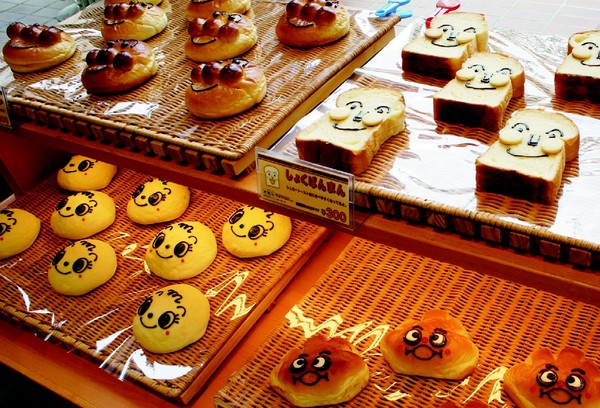
My favorite spots in the museum are the food street and Jam’s Grandpa Bread Workshop. The food street features Anpanman-shaped treats like steamed buns, rice balls, drinks, and even Anpanman udon.
But the best is definitely the Jam’s Grandpa Bread Workshop. The freshly baked bread, shaped with cartoon character faces from Anpanman, is so deliciously fragrant that it’s hard to choose among the many flavors—so cute you almost don’t want to eat them.
One of the limited-edition flavors at the Jam’s Grandpa Bread Workshop in the Anpanman Museum is edamame bread. You can also spend an extra 900 yen for a lunch set box to take home all the varieties you’ve tried.
The theme of Anpanman conveys love, friendship, and hope.In this joyful place, although we know the reconstruction journey for the coastal regions of Tohoku beyond Sendai is still a long one, holding tightly to love, friendship, and hope means that at least for now, the people of Tohoku are not alone. Because Taiwan is walking alongside them.Excerpted from “Japan: A Day’s Journey” / Published by Original Point Publishing
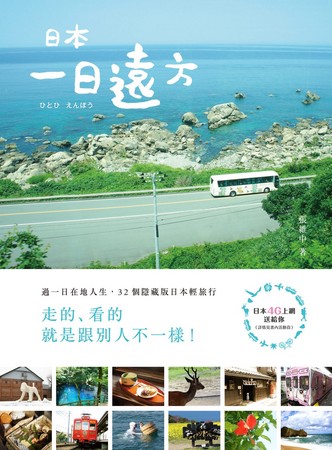 Author: Zhang Weizhong
Published his first book, “Heart on the Shore,” during university. After moving to Tokyo in 2008, he began writing travel essays, publishing “Half-Day Tokyo” and “Tokyo, Wait for Me.” “Japan: A Day’s Journey” is his first travelogue focused on destinations outside Tokyo.
Other major works include the short story collection “501 Red-Label Boys”; novels “The Invisible” and “The Sandwich Club”; essays “Dreaming of You,” “Tokyo On Hand Dictionary,” and “Not Too Strong”; and youth literature “Savage Game,” among others, totaling approximately 24 publications to date. He currently writes columns for various magazines and websites, covering a range of topics on Japanese and Taiwanese culture.
Share
This article is published by HowToTrip. Sharing and reposting are welcome — please credit the source.
Article URL: https://www.howtotrip.net/views-26099
Related Articles
- Shaoxing's "Grandpa Gourd" hangs the gourds back up: "If there are too many people, we'll interact less — just take a quick look from afar"
- Chinese authorities announce "reciprocal adjustment" to Japan visa fees — single-entry visa jumps from 2,250 to 16,750 yen!
- The "health stones" carried by a traveler were found to have radiation levels exceeding safety limits by a thousand times, potentially endangering fellow passengers on the same flight. Customs issues warning!
- Shenzhen Airport Issues Late-Night Notice: Unidentified Aerial Object Detected, Causing Widespread Flight Delays!
- “They only said it cost money after I opened the box and washed it!” 200g of grapes sold for 60 yuan on a high-speed train—12306 responds!
- Can't buy an airline ticket? Denied exit? Blocked from boarding? A large number of Chinese tourists have mysteriously become "discredited individuals"
- Adverse weather and economic fluctuations impact Colombia's coffee market
- Beach bathing area responds to 2 yuan/30 seconds fee for freshwater foot rinsing: Clearly priced!
- Taking off with an improperly closed cabin door? Wing malfunction? Multiple flights made emergency returns mid-journey!
- Experience the gifts of nature! A countdown of the world’s ten most stunning coastlines