The Japanese love Jiufen, and they also enjoy exploring winding paths to admire its unique teahouses and street scenes.
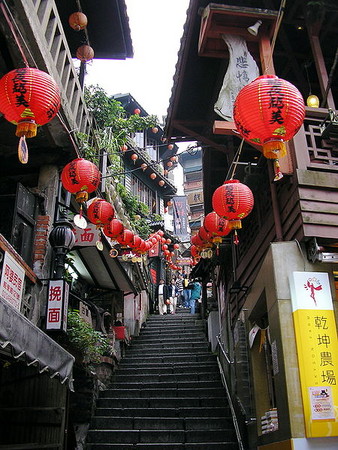
▲ The Japanese love Jiufen, and one of their favorite attractions is the stairway-lined Shuqi Road. (Photo / from Wikimedia Commons, the same below)
Tourism Center / Comprehensive Report
Although it’s a beautiful misunderstanding that some scenes in the renowned Studio Ghibli film *Spirited Away* were inspired by Jiufen, the town’s distinctive landscape, old street charm, and teahouses with a Japanese architectural flair continue to attract many Japanese visitors. Among these, Shuqi Road, lined with numerous scenic teahouses, is a must-visit spot for Japanese tourists coming to Taiwan.
Once a thriving gold mining town, Jiufen transformed into a key tourist destination in northern Taiwan after the decline of gold mining. In 1989, the globally acclaimed film *A City of Sadness* by director Hou Hsiao-hsien, shot here, brought Jiufen into the spotlight. Shuqi Road is one of the main streets of Jiufen’s old town, featuring a unique “丰”-shaped layout that runs through the entire road. At the entrance, bright red lanterns stretch upwards along over 300 stone steps, with quaint teahouses and shops lining both sides of the stairs—still giving visitors the illusion of stepping into the mysterious world of *Spirited Away*.
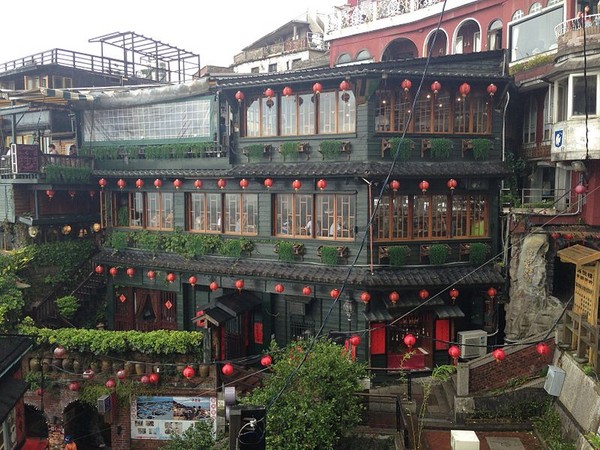
▲ The classic, Japanese-style “A-Mei Teahouse,” with its architecture strikingly similar to that of the witch Yubaba’s building in *Spirited Away*, was once rumored to have been the model for the film. Though this was just a beautiful misunderstanding, it helped propel A-Mei Teahouse to fame.
Among the teahouses on Shuqi Road, none is more popular with Japanese visitors than A-Mei Teahouse. Not only does it offer breathtaking views of the harbor, but its architecture also bears a resemblance to the traditional Japanese buildings seen in *Spirited Away*. Many Japanese visitors have commented that stepping into A-Mei Teahouse feels like hearing a warm “欢迎回家” (welcome home). Inside, the classic, nostalgic decor feels like stepping into a time tunnel—with large Japanese Noh theater masks, furniture reminiscent of the Japanese colonial era, and spacious, open interiors allowing travelers weary of city life to enjoy a rare moment of relaxation.
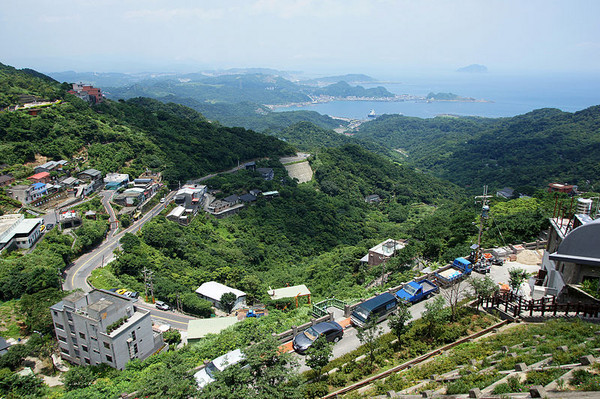
% From the teahouse, you can also enjoy a sweeping view of the harbor.
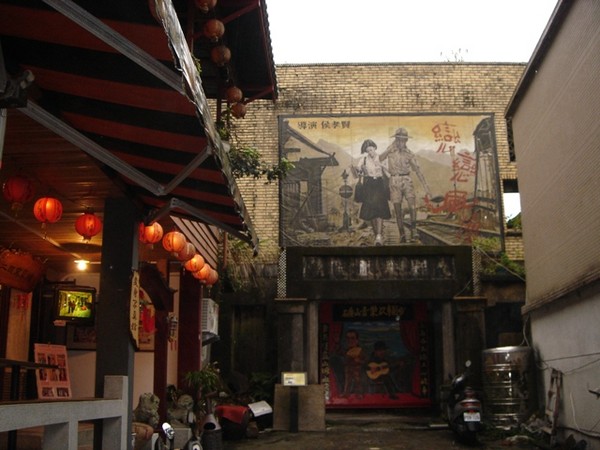
At the intersection of Shuqi Road and another lane called Qianbian Road stands Jiufen’s most iconic structure—and Taiwan’s first movie theater—the Shengping Theater. Built during the Japanese colonial period, it was once the largest theater in Taiwan. From opera and Japanese films to puppet shows and movies, Shengping Theater enjoyed a golden heyday. After the 1970s, it gradually declined and closed in 1986. However, this theater, rich in historical and cultural significance, has not been forgotten—it later served as a filming location for many movies, and in 2010, it was designated as a memorial structure by New Taipei City Government. It has now become a must-visit attraction for tourists in Jiufen.
% It remains a witness to the area’s past glory and has now become a beloved cultural site for visitors.
Share
This article is published by HowToTrip. Sharing and reposting are welcome — please credit the source.
Article URL: https://www.howtotrip.net/views-25917
Related Articles
- Shaoxing's "Grandpa Gourd" hangs the gourds back up: "If there are too many people, we'll interact less — just take a quick look from afar"
- Chinese authorities announce "reciprocal adjustment" to Japan visa fees — single-entry visa jumps from 2,250 to 16,750 yen!
- The "health stones" carried by a traveler were found to have radiation levels exceeding safety limits by a thousand times, potentially endangering fellow passengers on the same flight. Customs issues warning!
- Shenzhen Airport Issues Late-Night Notice: Unidentified Aerial Object Detected, Causing Widespread Flight Delays!
- “They only said it cost money after I opened the box and washed it!” 200g of grapes sold for 60 yuan on a high-speed train—12306 responds!
- Can't buy an airline ticket? Denied exit? Blocked from boarding? A large number of Chinese tourists have mysteriously become "discredited individuals"
- Adverse weather and economic fluctuations impact Colombia's coffee market
- Beach bathing area responds to 2 yuan/30 seconds fee for freshwater foot rinsing: Clearly priced!
- Taking off with an improperly closed cabin door? Wing malfunction? Multiple flights made emergency returns mid-journey!
- Experience the gifts of nature! A countdown of the world’s ten most stunning coastlines