Breathtaking Sea of Clouds over the Grand Canyon – A Sight to Behold Once in a Decade
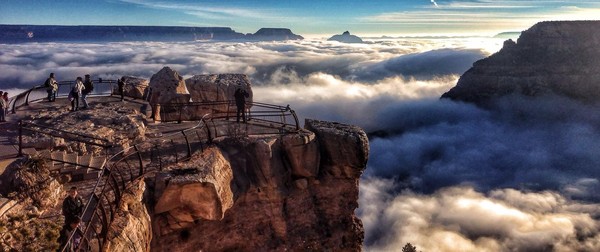
▲ The rare sight of an endless sea of clouds over the Grand Canyon had visitors rushing to capture this memorable moment. (Photo / fromthe Grand Canyon National Park Facebook fan page, taken by administrator Erin Whittaker)
By Hully
The Grand Canyon National Park in the United States recently witnessed a spectacular "full sea of clouds" phenomenon, presenting a magnificent view that only occurs once in a decade, thrilling hikers and nature enthusiasts.
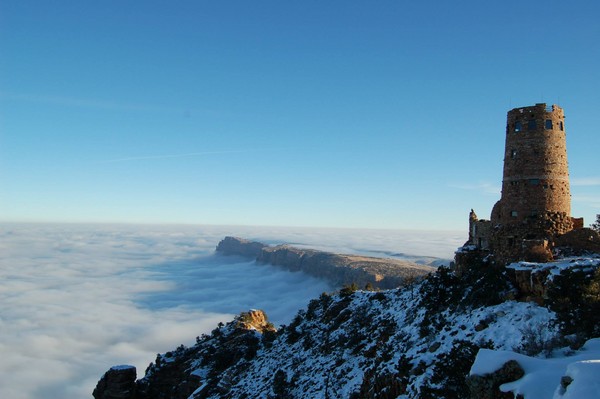
▲ The temperature inversion phenomenon creates the majestic sea of clouds over the Grand Canyon. (Photo / fromthe Grand Canyon National Park Facebook fan page)
According to the park, the sea of clouds at the Grand Canyon is caused by a "temperature inversion" — a condition where, due to significant day-night temperature differences, the air higher up is warmer, effectively “capping” the cooler air near the ground and preventing fog from rising and dispersing. This inversion occurs about one to two times per year, but usually only in localized areas. A sea of clouds on such a massive scale only happens once in a decade. Some visitors who were initially disappointed at not seeing the Colorado River were thrilled to learn from park rangers and happily exclaimed how lucky they were.
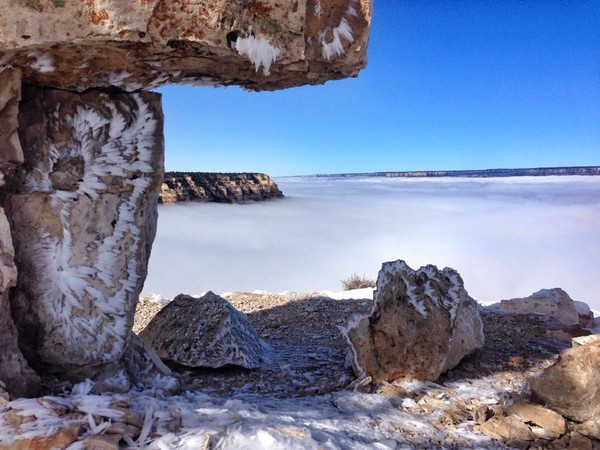
▲ The sea of clouds typically forms on cloudy days, yet the Grand Canyon’s “full sea of clouds” lingered under bright sunshine for a long time, delighting visitors over and over again. (Photo / fromthe Grand Canyon National Park Facebook fan page, taken by administrator Erin Whittaker)
Share
This article is published by HowToTrip. Sharing and reposting are welcome — please credit the source.
Article URL: https://www.howtotrip.net/views-25789
Related Articles
- Shaoxing's "Grandpa Gourd" hangs the gourds back up: "If there are too many people, we'll interact less — just take a quick look from afar"
- Chinese authorities announce "reciprocal adjustment" to Japan visa fees — single-entry visa jumps from 2,250 to 16,750 yen!
- The "health stones" carried by a traveler were found to have radiation levels exceeding safety limits by a thousand times, potentially endangering fellow passengers on the same flight. Customs issues warning!
- Shenzhen Airport Issues Late-Night Notice: Unidentified Aerial Object Detected, Causing Widespread Flight Delays!
- “They only said it cost money after I opened the box and washed it!” 200g of grapes sold for 60 yuan on a high-speed train—12306 responds!
- Can't buy an airline ticket? Denied exit? Blocked from boarding? A large number of Chinese tourists have mysteriously become "discredited individuals"
- Adverse weather and economic fluctuations impact Colombia's coffee market
- Beach bathing area responds to 2 yuan/30 seconds fee for freshwater foot rinsing: Clearly priced!
- Taking off with an improperly closed cabin door? Wing malfunction? Multiple flights made emergency returns mid-journey!
- Experience the gifts of nature! A countdown of the world’s ten most stunning coastlines