Not for the faint of heart — the world’s largest ossuary church built from 40,000 skeletons
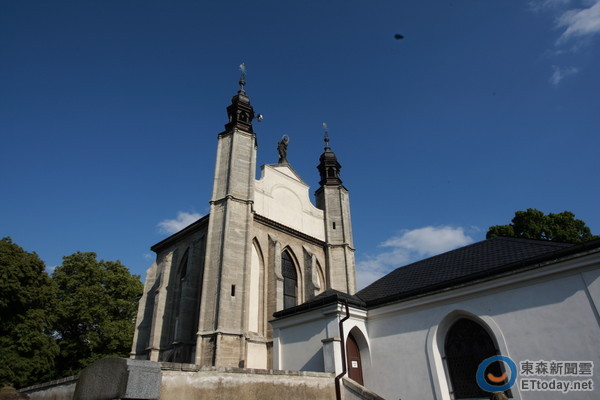
▲ The unassuming exterior of the Bone Church.
Text and photos by 水草 (Shuicao)
Many visitors to the Czech Republic make Prague’s famous Old Town Square their top priority. But just a short 70-kilometer train ride southeast of Prague will take you to the town of Kutná Hora.
This town is home to two well-known churches: one is the grand, Gothic-style St. Barbara’s Cathedral, a UNESCO World Heritage Site, and the other is a small, plain-looking church.But step inside this modest chapel, and you’ll encounter a truly breathtaking sight.It’s the “Bone Church” (Kostnice Ossuary), adorned with the bones of 40,000 people.
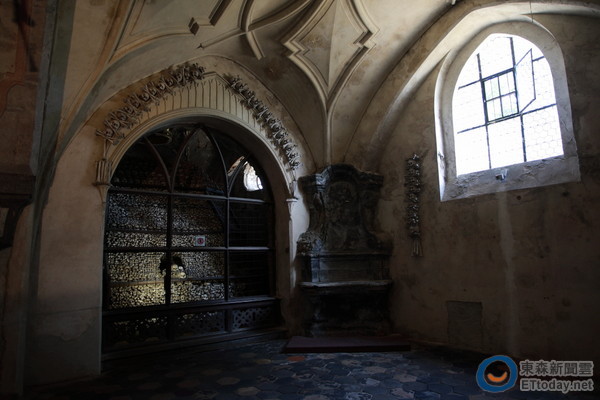
▲ Inside the Bone Church, there are four massive bone cairns stacked to the brim.
Currently,there are only four ossuary churches in the world, and the one in Kutná Hora is the largest.According to the church’s introduction, in 1278, the abbott of a local monastery brought back a handful of soil from Jerusalem and sprinkled it in the cemetery around the church. This act made the burial ground famous, attracting wealthy individuals and nobility from across Central Europe who all wanted to be buried there, leading to the gradual expansion of the cemetery.
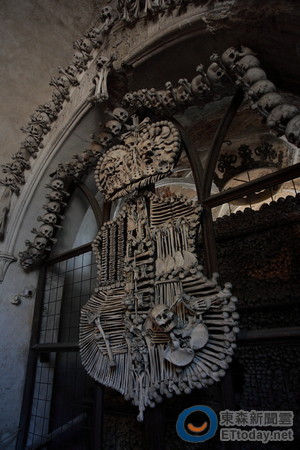
%恼饷嬉匀斯瞧创斩?傻钠赐迹?涫凳羌吐剂擞胪炼?淙俗髡降睦?贰</strong>
Later, after the outbreaks of the Black Death and wars in the 14th century, countless skeletons were buried in the cemetery and gradually piled up around the church. A hermit eventually began moving the bones from outside the church into the interior and arranging them in a simple fashion.
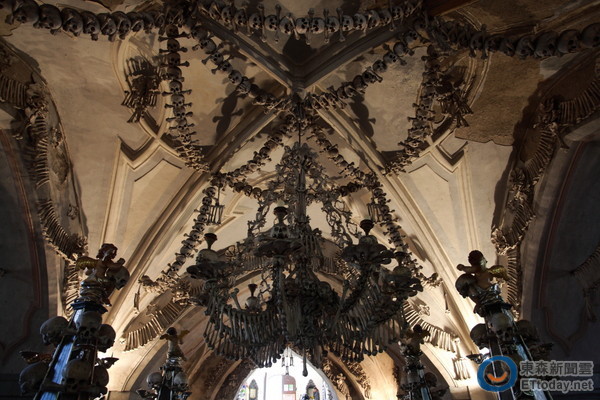
The church was later destroyed by fire, but in 1703, architect Jan Blažej Santini-Aichel rebuilt it and elevated the art of bone decoration. He used the bones to create various ornaments such as spires, crowns, and chandeliers, resulting in the Bone Church we see today.
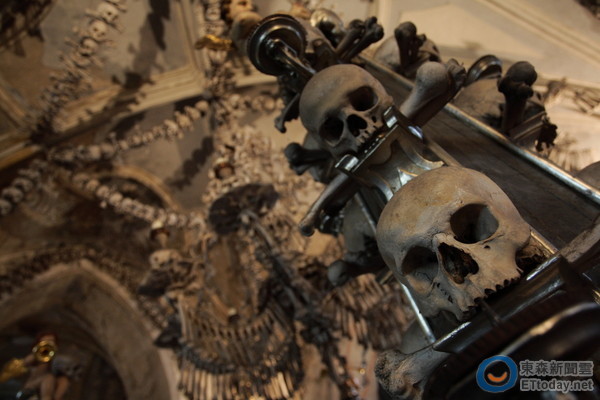
The interior of the Bone Church is actually quite compact — it takes only about two minutes to walk through if you’re just taking a quick look. But if you take your time, you’ll notice many clever design touches. In addition to the four massive bone cairns, there are bone chandeliers, bone candlesticks, large-scale historical bone art pieces, and religious icons. Brave visitors can take the time to contemplate the different meanings of “death” and “life.”
▲ From candlesticks to ceilings, the entire church is decorated with human bones.
While some visitors may find the Bone Church a bit too “mature” for comfort — and Taiwanese tourists, with their cultural emphasis on ancestral reverence, might feel slightly uneasy — the creator’s philosophy was that “before God, all people are equal, and in death, we are all just bones.” Approaching the bone art from an artistic perspective can offer a very different experience.
Share
This article is published by HowToTrip. Sharing and reposting are welcome — please credit the source.
Article URL: https://www.howtotrip.net/views-25381
Related Articles
- Shaoxing's "Grandpa Gourd" hangs the gourds back up: "If there are too many people, we'll interact less — just take a quick look from afar"
- Chinese authorities announce "reciprocal adjustment" to Japan visa fees — single-entry visa jumps from 2,250 to 16,750 yen!
- The "health stones" carried by a traveler were found to have radiation levels exceeding safety limits by a thousand times, potentially endangering fellow passengers on the same flight. Customs issues warning!
- Shenzhen Airport Issues Late-Night Notice: Unidentified Aerial Object Detected, Causing Widespread Flight Delays!
- “They only said it cost money after I opened the box and washed it!” 200g of grapes sold for 60 yuan on a high-speed train—12306 responds!
- Can't buy an airline ticket? Denied exit? Blocked from boarding? A large number of Chinese tourists have mysteriously become "discredited individuals"
- Adverse weather and economic fluctuations impact Colombia's coffee market
- Beach bathing area responds to 2 yuan/30 seconds fee for freshwater foot rinsing: Clearly priced!
- Taking off with an improperly closed cabin door? Wing malfunction? Multiple flights made emergency returns mid-journey!
- Experience the gifts of nature! A countdown of the world’s ten most stunning coastlines