Shangri-La Reduced to Rubble; Only National-Level "Zhongxin Zhen Tang" Saved
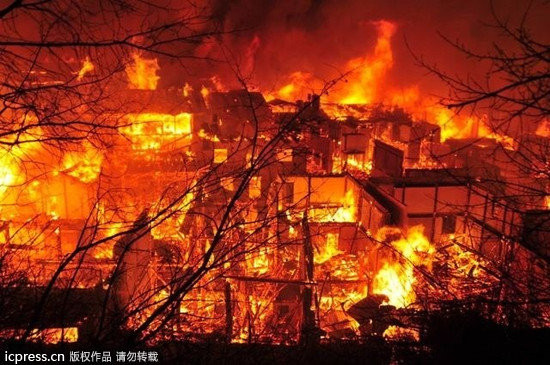

▲ Dukezong Ancient Town in Shangri-La, Yunnan, with a history of 1,300 years, suffered a severe fire, with over half of the urban area razed. (Photo / EastIC)
Travel Center / Comprehensive Report
Ruthless flames! In the early hours of the 11th, a fire broke out in Dukezong Ancient Town, a famous tourist attraction in Shangri-La, Yunnan, China. The blaze raged for over 10 hours and was not brought under control until nearly 11 a.m. on the 12th. It is understood that more than half of the buildings in the ancient town’s core area, including the well-known Square Street, were destroyed — around 250 houses in total, many of which were Tibetan historical relics.Fortunately, the nationally protected building "Zhongxin Zhen Tang" escaped the disaster.
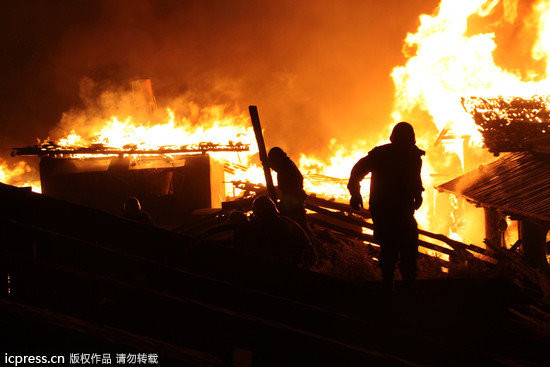
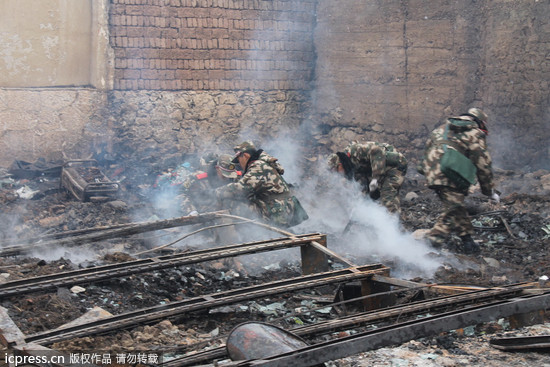
▲ Dukezong Ancient Town in Shangri-La suffered a severe fire, with numerous buildings destroyed. (Photo / EastIC)
According to Xinhua News Agency, the fire in Dukezong Ancient Town was extremely severe. "The ancient town is now full of rubble, with almost nothing left in the core area. Smoke is still rising everywhere, and even the glass scattered on the ground has melted." The provincially key protected building "Abu Old House," as well as two other state- and prefecture-level protected structures — two traditional houses and the Zhuji Shop in the Jinlong Street area — were completely burned down, with losses exceeding 100 million yuan.
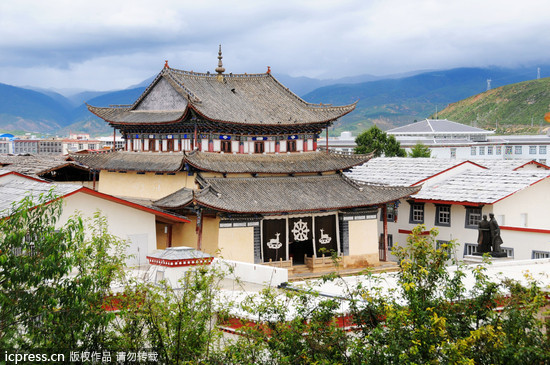
On the morning of the 12th, snow began to fall over Shangri-La County, covering the ancient town in white while the air still carried the smell of charred remains. Rescue workers and residents began clearing the debris and searching the burnt buildings for any remaining cultural relics. The silver lining is that the only national-level cultural relic protection unit in the ancient town, "Zhongxin Zhen Tang," remained almost undamaged thanks to the full efforts of firefighters.
%荚颇舷愀窭锢?揽俗诠懦腔鹪智叭?玻ㄉ希?还懦侵形ㄒ坏墓?壹侗;そㄖ?爸行恼蚬?谩碧庸?唤伲ㄗ笙拢?还懦悄诮智?鹪智扒榫埃ㄓ蚁拢?(图/东方IC)

It is reported that the fire affected three communities within the ancient town: Cangfang, Jinlong, and Beimen, involving approximately 335 households. Over 2,600 residents have been temporarily relocated to the Diqing Prefecture Red Army Long March Museum. As winter is the low season for tourism and most visitors are independent travelers, there have been no reports of tourist injuries so far.
"Dukezong" means "Moonlight City" in Tibetan. The ancient town was built during the Tang Dynasty and is entirely constructed from wood, boasting a history of 1,300 years. It preserves the largest Tibetan residential complex in China and is also a key stop along the ancient Tea Horse Road as well as a necessary passage on the Sichuan-Tibet Highway.The Tea Horse Road refers to the ancient trade routes connecting central China with the southwestern and northwestern frontiers, where tea and horses were the primary goods exchanged. Flourishing during the Tang and Song dynasties and reaching its peak in the Ming and Qing dynasties, it served as a corridor for economic and cultural exchange among ethnic groups in southwest China.
★ Copyright Statement: The images are copyrighted and provided exclusively to ETtoday Eastday News Cloud by EastIC. No website, newspaper, or TV station may reproduce any part or all of them without permission from EastIC.
Share
This article is published by HowToTrip. Sharing and reposting are welcome — please credit the source.
Article URL: https://www.howtotrip.net/views-25323
Related Articles
- Shaoxing's "Grandpa Gourd" hangs the gourds back up: "If there are too many people, we'll interact less — just take a quick look from afar"
- Chinese authorities announce "reciprocal adjustment" to Japan visa fees — single-entry visa jumps from 2,250 to 16,750 yen!
- The "health stones" carried by a traveler were found to have radiation levels exceeding safety limits by a thousand times, potentially endangering fellow passengers on the same flight. Customs issues warning!
- Shenzhen Airport Issues Late-Night Notice: Unidentified Aerial Object Detected, Causing Widespread Flight Delays!
- “They only said it cost money after I opened the box and washed it!” 200g of grapes sold for 60 yuan on a high-speed train—12306 responds!
- Can't buy an airline ticket? Denied exit? Blocked from boarding? A large number of Chinese tourists have mysteriously become "discredited individuals"
- Adverse weather and economic fluctuations impact Colombia's coffee market
- Beach bathing area responds to 2 yuan/30 seconds fee for freshwater foot rinsing: Clearly priced!
- Taking off with an improperly closed cabin door? Wing malfunction? Multiple flights made emergency returns mid-journey!
- Experience the gifts of nature! A countdown of the world’s ten most stunning coastlines