Seeking health? Career success? Taipei's top 5 walking pilgrimage routes have you covered
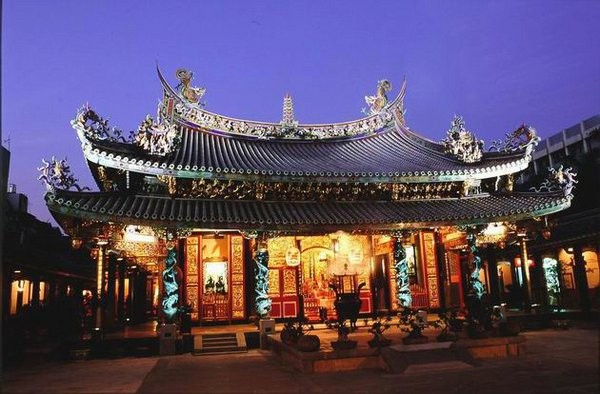
▲Where to go for prayer and blessings during the Lunar New Year? The Department of Civil Affairs recommends five religious walking pilgrimage routes in Taipei!The photo shows Taipei’s Dadaocheng Bao’an Temple. (Photo/Courtesy ofTaipei Dadaocheng Bao’an Temple’s official Facebook page)
Travel Center/Comprehensive Report
New Year’s here!During the Lunar New Year period, many people take time out to visit temples to pray for blessings, hoping for peace and smooth sailing in the coming year. In response to this traditional custom, the Taipei City Government’s Department of Civil Affairs has planned five walking pilgrimage routes. These not only offer prayers for safety but also provide a cultural and religious journey through historical landmarks.
1. The Health-Filled Journey:
Taipei is rich in temples, historic sites, and historical architecture. In the 2013 “Taiwan Religious Top 100” list, 11 religious sites in Taipei were selected. Located in Datong District, “Dadaocheng Bao’an Temple” is a renowned temple in Taiwan primarily dedicated to “Baosheng Emperor” (the God of Medicine), enjoying immense faith and bustling incense offerings.
In recent years, Dadaocheng Bao’an Temple has been committed to preserving its cultural and historical assets. In 2003, it was awarded the “UNESCO 2003 Asia-Pacific Awards for Cultural Heritage Conservation.” Both its temple architecture and decorative artworks are exquisite masterpieces. On New Year’s Eve (1/30) at 11 PM, the temple will hold a “Blessing Bell-Ringing Ceremony,” where 108 bell chimes are believed to bring good fortune. Additionally, they will draw the “National Fortune Fortune Stick,” offering insights for various industries.
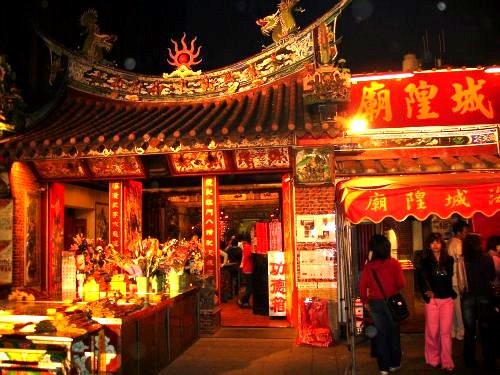
▲Xiahai City God Temple is most famous for wealth prayers and matchmaking with the Moon God!(Photo/Courtesy of Wikipedia)
2. The Happiness-Filled Journey
Located on Dihua Street, “Taipei Xiahai City God Temple” not only attracts numerous local worshippers but also sees a continuous stream of international visitors from Hong Kong, Macau, Japan, and Korea. Aside from enshrining the “City God,” what draws tourists the most is the “Moon God matchmaking area.” Every year, over 6,000 couples return to give thanks with wedding cakes.
While praying, you can also stroll along Dihua Street—the oldest and most historically significant street in Taipei. Many buildings here retain “Taisho-era” Baroque-style façades. This area serves as Taiwan’s wholesale hub for tea, Chinese medicine, dried goods, and fabrics. The annual Lunar New Year Market held here is famous nationwide.
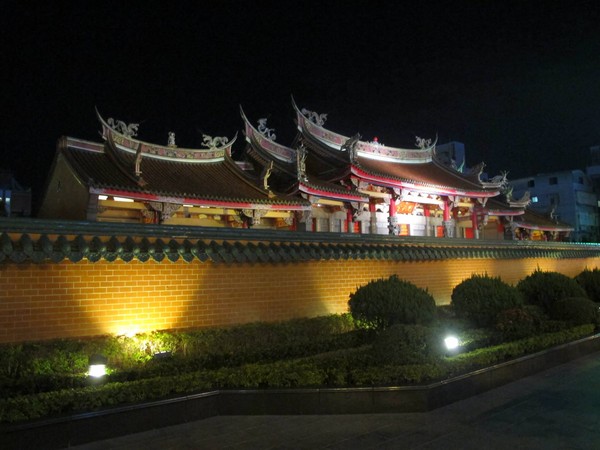
▲Xingtian Temple welcomes over ten thousand worshippers daily, making it the most visited temple in Northern Taiwan. (Photo/Courtesy ofReligious Soil Fanpage)
3. The Career-Filled Journey
As the center of Guan Yu worship in Taiwan, “Taipei Xingtian Temple” is the most frequented temple in Northern Taiwan, with up to ten thousand visitors per day. The temple features Southern Fujian-style swallowtail roof ridges and is considered a masterpiece among post-WWII reconstructed temples. The blue-clad temple volunteers embody selfless dedication and humble service, representing the temple’s most valuable intangible asset and a perfect interpretation of “humanistic beauty.”
Every year at midnight on Lunar New Year’s Day, the “Primordial Heavenly Worthy’s Birthday Ceremony” is held. The “Heavenly Gate” is opened to invite deities, and during the approximately 30-minute ceremony, worshippers pause their prayers. The event is solemn and grand, attracting numerous devout followers every year.
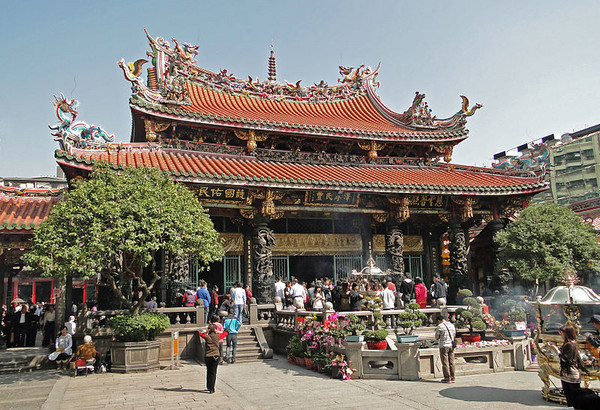
▲Longshan Temple not only has many worshippers but is also a famous tourist attraction in Northern Taiwan. (Photo/Courtesy of Wikipedia)
4. The Safety-Filled Journey
Also a highly visited temple in Northern Taiwan, “Bangka Longshan Temple” primarily worships “Guanyin Bodhisattva.” It is a designated city monument in Taipei and a must-visit religious site for international tourists. The temple’s roof ridges and eaves are adorned with auspicious creatures such as dragons, phoenixes, and qilins, decorated with cut-and-paste ceramics and Jiaozi pottery, displaying dazzling colors that represent the pinnacle of Taiwan’s cut-and-paste artistry.
Every year when Longshan Temple opens for lighting “Blessing Lamps,” it attracts large crowds. For those who can’t get a lamp, don’t worry—the temple lights up a “Main Blessing Lamp” and “Peace Lantern” in front of the temple square from New Year’s Eve. After being purified with consecrated water by monks, worshippers walk through the lanterns (“drill the lamp feet”) to gain blessings and wisdom. Just a short walk away lies the “Bopiliao Historic Block,” where you can explore the pioneer history of early settlers and relive the former glory of “One prefecture, two ports, three Bangkas.”
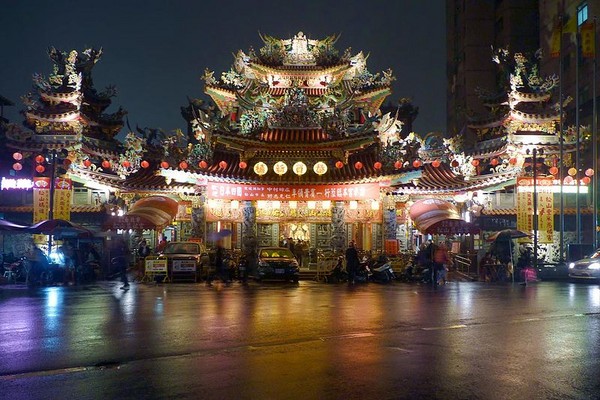
▲Songshan Ciyun Temple, near Raohe Night Market, is famous for its enshrinement of the “Black-Faced Mazu” and enjoys thriving incense offerings. (Photo/Courtesy of Wikipedia)
5. The Fortune-Filled Journey
Located at the foot of Fushoushan in Xinyi District, “Songshan Cihui Temple” offers sweeping views of verdant mountains. The temple mainly worships “Queen Mother of the West (Yaoci Golden Mother),” and its main hall houses a massive statue of her, kind-eyed and dignified. This year, from the first to the tenth day of the Lunar New Year, Songshan Cihui Temple invites the Henan Acrobatic Art Troupe to host a 10-day “Cross-Strait Cultural and Folk Art Tourism Festival,” which is quite a spectacle. It’s a great choice for family outings combining prayer, blessings, nature walks, and light exercise.
After descending from Songshan Cihui Temple, visitors can continue to “Songshan Ciyun Temple” near Raohe Night Market. With a history of 260 years, Ciyun Temple primarily worships the “Black-Faced Mazu.” Its main hall is solemn and majestic, and the stone lions at the entrance feature the rare tradition of the male lion with an open mouth and the female with a closed mouth—a unique treasure in Taiwan. After visiting Mazu, head next door to the famous Raohe Night Market to enjoy a variety of Taiwanese street foods, or explore the Wufenpu shopping district for new clothes and a festive start to the year!
Share
This article is published by HowToTrip. Sharing and reposting are welcome — please credit the source.
Article URL: https://www.howtotrip.net/views-24625
Related Articles
- Shaoxing's "Grandpa Gourd" hangs the gourds back up: "If there are too many people, we'll interact less — just take a quick look from afar"
- Chinese authorities announce "reciprocal adjustment" to Japan visa fees — single-entry visa jumps from 2,250 to 16,750 yen!
- The "health stones" carried by a traveler were found to have radiation levels exceeding safety limits by a thousand times, potentially endangering fellow passengers on the same flight. Customs issues warning!
- Shenzhen Airport Issues Late-Night Notice: Unidentified Aerial Object Detected, Causing Widespread Flight Delays!
- “They only said it cost money after I opened the box and washed it!” 200g of grapes sold for 60 yuan on a high-speed train—12306 responds!
- Can't buy an airline ticket? Denied exit? Blocked from boarding? A large number of Chinese tourists have mysteriously become "discredited individuals"
- Adverse weather and economic fluctuations impact Colombia's coffee market
- Beach bathing area responds to 2 yuan/30 seconds fee for freshwater foot rinsing: Clearly priced!
- Taking off with an improperly closed cabin door? Wing malfunction? Multiple flights made emergency returns mid-journey!
- Experience the gifts of nature! A countdown of the world’s ten most stunning coastlines