Must-visit temples for good fortune in the New Year: Taiwan’s Top 10 Wealth God Temples
Travel Center / Comprehensive Report
Recently, a website company held a voting campaign titled “The Wealth God Is Here – Taiwan’s Top 10 Wealth God Temples,” inviting netizens to vote for their favorite wealth god temples. Folklore experts served as undercover visitors alongside author Chang Tianjie to jointly evaluate and select Taiwan’s Top 10 Wealth God Temples. Cloud friends can also visit these temples during the Spring Festival holiday to pray for good luck and prosperity.
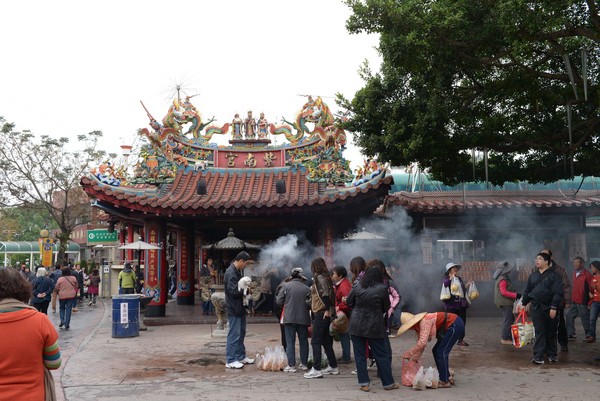
▲ Taiwan’s Top 10 Wealth God Temples – Zhushan’s Zinan Temple in Nantou takes the top spot. (Photo / Provided by yam.com, the same applies below)
1st Place: Zhushan Zinan Temple
Located in Zhushan, Nantou, Zinan Temple primarily enshrines the God of Land (Tudi Gong) and the Goddess of Earth (Tudi Po). It is renowned for its efficacious blessings related to wealth and is an unmissable temple for those seeking financial fortune. The lottery shop opposite Zinan Temple once sold a Taiwan Lotto jackpot worth NT$115 million on New Year’s Day 2013. Aside from “fortune money,” Zinan Temple is also famous for its “Golden Hen,” a highly popular attraction. Visitors can rub the hen inside the main hall, as different parts of the hen are believed to bring various types of good luck. The worn bronze paint on the hen indicates just how popular it is—many worshippers have rubbed it all over, hoping not to miss any bit of good fortune.
2nd Place: Checheng Fu’an Temple
Situated in Kenting, Pingtung, Checheng Fu’an Temple is steeped in history, with countless Tudi Gong branches spread far and wide. Every year, a grand “Reunion Festival” is held for these deities. The Mid-Autumn Festival marks the day the God of Land ascends to heaven, and according to tradition, a “warm-up birthday celebration” is held first. Branch temples’ Tudi Gong deities return to the main temple in Checheng, accompanied by loud drums and gongs, creating a grand and lively atmosphere. Additionally, the temple’s NT$6 million incense burner is nicknamed the “God’s Money Counter” because the airflow draws the joss paper right into the burner.
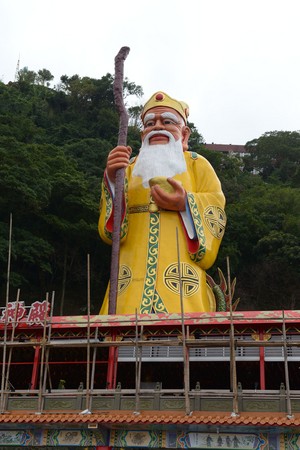 3rd Place: Zhonghe Honglutu
Taiwan is so convenient that not only does it have 24-hour convenience stores, but prayer spots for wealth are also always open. Honglutu in Zhonghe District, New Taipei City, features a main hall that’s open 24 hours a day. Nestled at the foot of Nanshihjiao Mountain with a flat and expansive summit, visitors can climb the steps to overlook the Taipei Basin. The stunning night view attracts many worshippers who come to pray in the evening, making the temple bustling with visitors. Honglutu uniquely uses a giant and brightly colored statue of Tudi Gong as its landmark—the largest of its kind in Taiwan. Visitors should take a closer look at this impressive figure.
%The striking size of the deity’s statue is the most remarkable feature in the area.
4th Place (Online Popularity Award): Taichung Wude Guangtian Temple
The main deity of Wude Guangtian Temple is the Five Directions Wealth Gods. During the Wealth God’s birthday (the 15th day of the third lunar month), the temple is packed with devotees who come to pray for “fortune money” and “luck-replenishing cash.” Additionally, the temple offers a unique item called the “Golden Fortune Egg”! Peeling the shell of the egg symbolizes shedding bad luck, representing a symbolic rebirth like a cicada molting. Eating the egg whole is believed to bring peace and great wealth.
5th Place: Kaohsiung Guan Di Temple
Located in Lingya District, Kaohsiung, Guan Di Temple not only enshrines “God of Martial Wealth” Guan Yu but also the Five Directions Wealth Gods along with the Three Auspicious Deities — “Prosperity,” “Status,” and “Longevity,” totaling eighteen deities in all. These gods are believed to help worshippers achieve career advancement, wealth, and longevity. The most distinctive feature of the temple is the two “foreign door gods” standing outside. This originated when a former temple chairman, after experiencing disrespect abroad, decided to place two statues of “European soldiers” guarding the entrance as punishment. Over time, these two “foreign guards” have become another highlight of the temple.
6th Place: Beitou Guandu Temple
With over 300 years of history, Beitou Guandu Temple in Taipei is a unique treasure trove for those seeking wealth. The famed “Wealth God Cave” lies just behind the main hall, stretching tens of meters in length. Each Wealth God statue is made of gold-plated material, shining brilliantly—a must-visit spot for office workers and stock investors. In the past, some devotees even broke display cases trying to stuff their business cards to the Wealth God, but the temple advises that sincerity is what truly matters, not such drastic actions.
7th Place: Nanhua Wufu Temple
Nanhua Wufu Temple in Taoyuan is a Taiwan Grade III historical site. Its main deity is Xuan Tan Yuan Shuai, commonly known as the “Martial Wealth God” Zhao Gongming, who is also recognized as China’s first Wealth God. In addition to being the oldest preserved artifact in the temple, the statue of Xuan Tan Yuan Shuai is also a highlight. The ancient incense burner from the Daoguang era is another treasured relic, featuring carvings of coin motifs symbolizing wealth accumulation.
8th Place: Jinshan Five Directions Wealth God Temple
“North Jinshan, South Zhushan (Zinan Temple)” refers to two of Taiwan’s most renowned spiritual temples. The “Three Treasures” offered by New Taipei City’s Jinshan Five Directions Wealth God Temple include: the first being “fortune money” withdrawn from the world’s first “Wealth God Bank” to grow your wealth; the second is the “Treasure Bag,” which can be obtained by casting a sacred lot; and the third is “Literary and Martial Wealth Energy.” Depending on one’s profession, worshippers can pray to either the Literary or Martial Wealth God and then place a business card in the treasure bowl to receive the Wealth God’s blessing, filling them with abundant fortune.
9th Place: Songshan Xi Hai Cheng Huang Temple
Taipei’s Songshan Xi Hai Cheng Huang Temple is considered the most efficacious wealth god temple among stock investors. In addition to the main deity Cheng Huang Ye (City God), the temple also enshrines the Five Directions Wealth Gods, who are believed to be highly responsive to prayers. There was once an anecdote about a stock investor who accidentally pulled out a strand of the Wealth God’s beard, which helped him get out of a stock market slump. Since then, many followers have tried to pluck the beard, causing significant damage to the statue. To meet devotees’ needs, the temple now arranges for someone to dress as the Wealth God during the annual birthday celebration on the 15th day of the third lunar month, allowing visitors to touch the beard for good luck.
10th Place (Largest Wealth God Statue Award): Caotun Dunhe Temple
Located in Nantou, Caotun Dunhe Temple withstood the 921 Earthquake and continues to protect the local community. The most striking feature is the massive 162-foot-tall bronze statue of the Martial Wealth God located on the seventh-floor rooftop of the temple. It’s the world’s tallest statue of Zhao Tianjun, the Martial Wealth God, and can be seen from afar as a prominent landmark. On the 15th day of the third lunar month, the birthday of Zhao Tianjun, the temple holds grand celebrations and offers worshippers “Golden Fortune Cakes” to share blessings of wealth and prosperity.
Additionally, the judging panel selected six special awards:
Real Estate Agents’ Favorite Award: Luzhou Yonglian Temple
Established during the Qing Dynasty’s Tongzhi era in New Taipei City, Yonglian Temple primarily worships Guanyin Bodhisattva. The location is considered a “lotus energy spot,” hence the name “Yonglian” (Surging Lotus). The temple is highly reputed and attracts wealthy worshippers from elsewhere. One devotee who prayed here daily not only paid off his mortgage but also bought another house. Since then, Yonglian Temple has become a renowned must-visit wealth temple in the real estate industry.
Wealthy People’s Gathering Award: Zhongshan Jingfu Temple
Chingfu Temple is located in Zhongshan District, Taipei City. Many foreign tourists visiting Taiwan stay in hotels in this area, which attracts visitors to stop and admire the temple. Unlike typical Earth God statues that hold a cane, the Earth God at Chingfu Temple is depicted holding a gold ingot and a ruyi (scepter), symbolizing wealth and blessings. As a result, many affluent families reside nearby, hoping to benefit from the auspicious energy. Due to its reputation for granting financial blessings, the temple is also a popular place for those in the finance, construction, and insurance industries to pray for success and smooth business operations.
Special Wealth-Seeking Artifact Award: Nankunshen Daitian Temple
Located in Tainan, Nankunshen Daitian Temple is not only designated as a National Second-Class Historic Site but was also selected as a three-star attraction in the Michelin Green Guide, surpassing Alishan and Sun Moon Lake to become one of southern Taiwan’s must-visit destinations. The temple also has a unique secret weapon for seeking wealth — behind the main hall lies the only stone-carved wealth wall in Taiwan, known as the “Wall of Prosperity.” It’s said to be as effective as having a money-printing machine. The wall is embedded with numerous gold ingots, and worshippers can gently touch them while praying for wealth. As the saying goes, “The more you rub, the more you get.” All you need to do is touch the wall and sincerely ask for the amount of money you desire. It’s incredibly efficacious.
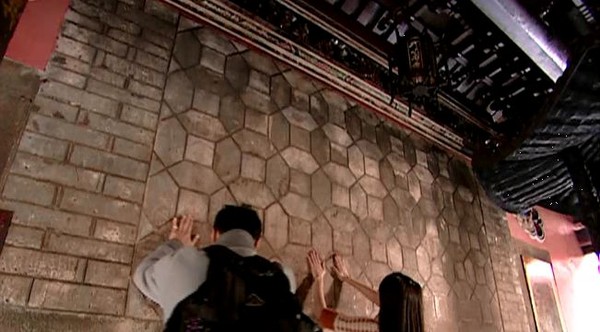
▲At Nankunshen Daitian Temple, the “Nine-Five Supreme Gold Wall” is said to bring fortune — simply run your hand along the stone wall while voicing the amount of money you wish for, and continue touching along the wall. It’s believed to be highly effective.
Share
This article is published by HowToTrip. Sharing and reposting are welcome — please credit the source.
Article URL: https://www.howtotrip.net/views-24614
Related Articles
- Shaoxing's "Grandpa Gourd" hangs the gourds back up: "If there are too many people, we'll interact less — just take a quick look from afar"
- Chinese authorities announce "reciprocal adjustment" to Japan visa fees — single-entry visa jumps from 2,250 to 16,750 yen!
- The "health stones" carried by a traveler were found to have radiation levels exceeding safety limits by a thousand times, potentially endangering fellow passengers on the same flight. Customs issues warning!
- Shenzhen Airport Issues Late-Night Notice: Unidentified Aerial Object Detected, Causing Widespread Flight Delays!
- “They only said it cost money after I opened the box and washed it!” 200g of grapes sold for 60 yuan on a high-speed train—12306 responds!
- Can't buy an airline ticket? Denied exit? Blocked from boarding? A large number of Chinese tourists have mysteriously become "discredited individuals"
- Adverse weather and economic fluctuations impact Colombia's coffee market
- Beach bathing area responds to 2 yuan/30 seconds fee for freshwater foot rinsing: Clearly priced!
- Taking off with an improperly closed cabin door? Wing malfunction? Multiple flights made emergency returns mid-journey!
- Experience the gifts of nature! A countdown of the world’s ten most stunning coastlines