Book Excerpt / Refreshing and Nutritious: Enjoy a Hundred Elegant Tofu Dishes All Year Round
By Xiao Wan Ning, excerpted from *One Hundred Exquisite Tofu Dishes*
Tired of the rich meats from holiday feasts? Try some light and nutritious tofu instead. Don’t assume tofu has no flavor or that there are limited ways to cook it. With the right ingredients and cooking methods, tofu can be enjoyed elegantly, luxuriously, and without guilt. The delicate, snow-like delicacy of the Edo period—tofu—has seen its culinary techniques passed down for 300 years. Rich and varied tofu dishes are even divided into six grades. Originally a high-end cuisine for nobles and monks, it gradually became a nutritious food for common people.
The earliest recorded mention of tofu in Japanese historical texts appears in the offering log of Kasuga Shrine in Nara from the second year of the Juei era (1183), where tofu was referred to as “Tōfu.” Tofu originated in China around the 9th to 10th centuries. From the term “Tōfu,” it’s not hard to guess how it came to Japan—likely through Japanese monks and students who traveled to China on the Tang envoys’ ships and brought back tofu-making methods and related products (since fresh tofu doesn’t keep well and spoils easily, what was brought back were mostly dried tofu and yuba). In addition, tofu didn’t only come to Japan from China. During Toyotomi Hideyoshi’s campaign in Korea (Momoyama to Keichō era, late 16th century), among the Korean captives brought back to Japan by Chōsokabe Motochika of Tosa Province, there were skilled tofu makers, which introduced tofu production techniques to Japan.
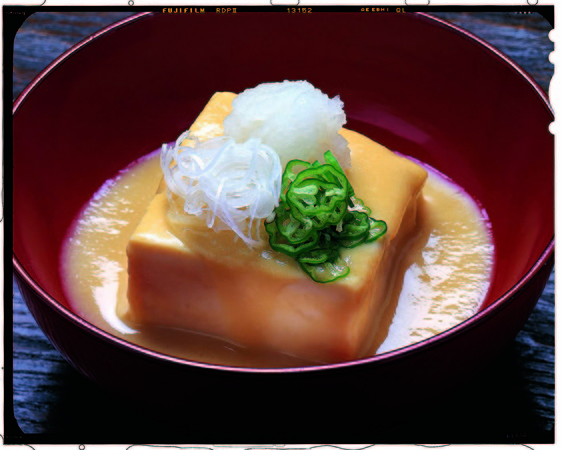
▲ The flavor of tofu simmered in white miso is entirely different from that of miso soup—it has a gentle, sweet taste. (Photo / excerpted from *One Hundred Exquisite Tofu Dishes*)
Nimono Tofu (Simmered Tofu)
[Ingredients]
Kouya (cotton) tofu
White miso, sake
Garnish (chopped green onions, grated daikon radish, diced spicy green chili)
[Method]
1 Press out excess water from the tofu using a light weight.
2 Dilute the white miso with sake to roughly the consistency of miso soup.
3 Place the tofu in the mixture from step 2 and simmer over medium heat until the alcohol evaporates. Since miso burns easily, be sure to stir the pot constantly. The original text suggests soaking the tofu in white miso for two hours before cooking, but cooking it directly results in a more mellow aroma.
4 Transfer the tofu and miso into a bowl, then top with the garnish.
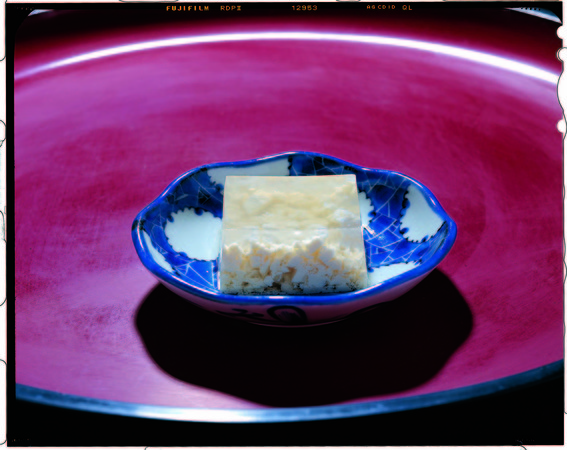
▲ Tofu drizzled with kuromitsu (black honey) makes for an especially smooth and sweet dessert. (Photo / excerpted from *One Hundred Exquisite Tofu Dishes*)
Hassun Tofu (Delicate Tofu)
[Ingredients]
Silk-strained (jukushi) tofu
Agar (kanten)
[Method]
1 Boil the agar in a pot until dissolved.
2 Cut the tofu into your preferred shapes or crumble it freely.
3 Place the tofu in a square steam mold, slowly pour in the agar, let it cool, then refrigerate. Serve with black honey or sanbaizu (note).(Note)Taste. The original book recommends simmering the tofu in boiled agar water, but this method can make the agar absorb the astringent flavor of the tofu, so it's best avoided.
(Note) A mixed seasoning made from equal parts vinegar, soy sauce, and miso..
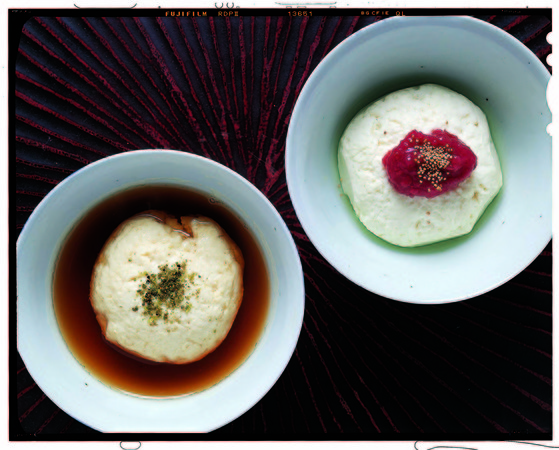
▲ By carefully removing the tofu skin and boiling it in hot water or seasoned soy sauce, excess oil is thoroughly removed. (Photo / excerpted from *One Hundred Exquisite Tofu Dishes*)
Saddle and Horse Tofu
【Ingredients】
Cotton tofu
Frying oil
Plum sauce
Poppy seeds or peppercorns
Blended soy sauce (soy sauce and sake)
Ground sansho pepper
【Method】
1 Cut the tofu horizontally in half, deep-fry it in oil, peel off the skin after frying, and shape it into circles.
2 Boil the tofu from step 1 in hot water, top with plum sauce, and sprinkle with poppy seeds or peppercorns. Alternatively, boil the tofu from step 1 in blended soy sauce, then sprinkle with ground sansho pepper.
Share
This article is published by HowToTrip. Sharing and reposting are welcome — please credit the source.
Article URL: https://www.howtotrip.net/views-24561
Related Articles
- Shaoxing's "Grandpa Gourd" hangs the gourds back up: "If there are too many people, we'll interact less — just take a quick look from afar"
- Chinese authorities announce "reciprocal adjustment" to Japan visa fees — single-entry visa jumps from 2,250 to 16,750 yen!
- The "health stones" carried by a traveler were found to have radiation levels exceeding safety limits by a thousand times, potentially endangering fellow passengers on the same flight. Customs issues warning!
- Shenzhen Airport Issues Late-Night Notice: Unidentified Aerial Object Detected, Causing Widespread Flight Delays!
- “They only said it cost money after I opened the box and washed it!” 200g of grapes sold for 60 yuan on a high-speed train—12306 responds!
- Can't buy an airline ticket? Denied exit? Blocked from boarding? A large number of Chinese tourists have mysteriously become "discredited individuals"
- Adverse weather and economic fluctuations impact Colombia's coffee market
- Beach bathing area responds to 2 yuan/30 seconds fee for freshwater foot rinsing: Clearly priced!
- Taking off with an improperly closed cabin door? Wing malfunction? Multiple flights made emergency returns mid-journey!
- Experience the gifts of nature! A countdown of the world’s ten most stunning coastlines