Hase-dera Temple, where the Lovely Enmei Jizo is Super Cute
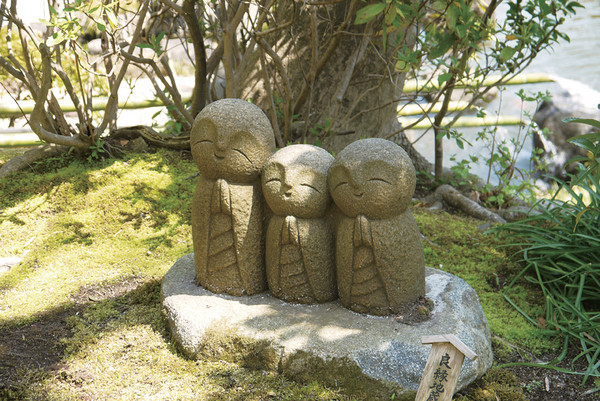
▲ The Lovely Enmei Jizo is Super Cute.
Written by Wu Yanling
Hase-dera Temple in Kamakura is as renowned as its counterpart in Nara. The national treasure wooden Eleven-faced Kannon
statue enshrined here is practically its twin — both were carved in 721 AD by the priest Tokudo. However, the Eleven-faced Kannon statue is now gold in color, having been completely covered in gold leaf by Ashikaga Takauji during the Muromachi period.
But when one thinks of Hase-dera, it’s not the world-famous Eleven-faced Kannon that comes to mind — rather, it’s the temple’s approachable charm. Hase-dera radiates beauty effortlessly. From the very first glance at its gate, you’ll see a 45-degree-angle old pine tree paired with a red lantern, exuding a serene, otherworldly vibe. Step inside, and the Myochi Pond and the Hōjōjiri Pond are surrounded by lush greenery — you’d almost think you’d stumbled into a Japanese garden rather than an ancient temple.
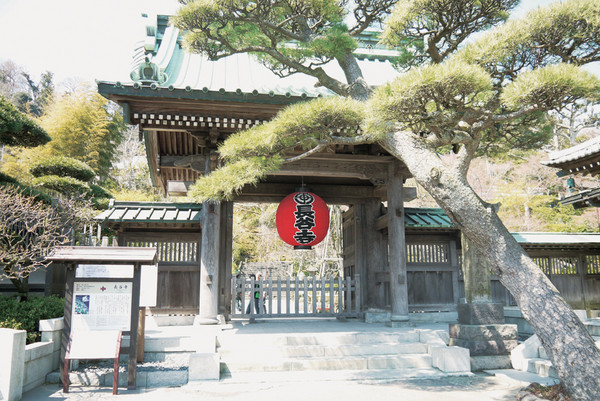
▲ Hase-dera is both tranquil and adorable.
Then there’s the temple’s Jizo Bodhisattva, which is simply adorable. In the Kṣitigarbha Sūtra, Shakyamuni Buddha says: “Kṣitigarbha employs countless skillful means to teach and save sentient beings.” Generally, Kṣitigarbha is imagined as “unshakably patient as the earth, and deeply meditative as a hidden treasure.” But Hase-dera breaks that mold — its three chubby, round-faced “Enmei Jizo” (Good Luck Jizo) in the garden are super cute. And why not go for a Q-version for good fortune?
The temple’s down-to-earth feel is also evident at the “Kenjo Terrace.” This spacious platform is intentionally furnished with tables, chairs, and vending machines, inviting visitors to spread out their bento boxes or rice balls, have a picnic, and gaze out at the beautiful scenery of the Miura Peninsula — truly thoughtful.
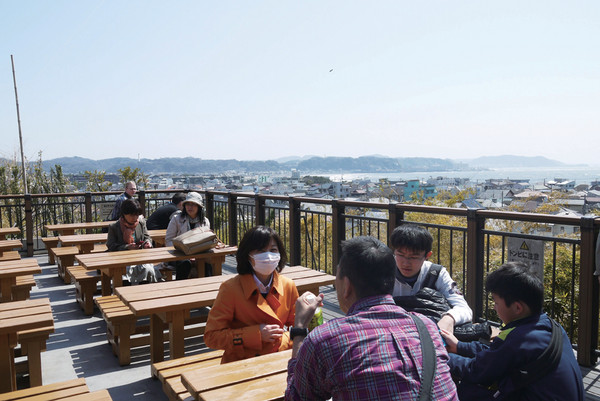
▲ The approachability of Hase-dera can be seen at the “Kenjo Terrace.”
Another interesting spot at Hase-dera is the “Benten Cave.” This dark cave enshrines Benzaiten and the Sixteen Youths. The Sixteen Youths govern various aspects of daily life — I found the “Meshigui Douji” (Rice Chest Youth), who oversees food, and the “Shuzen Douji” (Sake Spring Youth), the god of alcohol, and worshipped them earnestly, praying that every day to come would be filled with delicious meals.
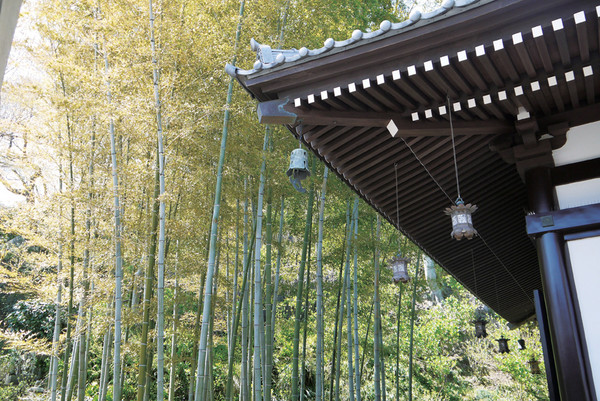
▲ The bamboo grove next to Daikoku Hall is quiet and elegant.
【Hase-dera Temple】
Access:Take the Enoden train and get off at “Hase,” then walk 5 minutes along Hase-dori
Hours:March – September: 8:00–17:00; October – February: 8:00–16:30
Admission:300 yen
The above text and images are excerpted from the book published by Business Weekly Publishing / Chunghwa Culture,《Love Japan!: 10 Must-Visit Micro-Luxury Routes in a Lifetime》,For more information: http://bwp25007008.pixnet.net/blog/post/40597027.
Book Title:《Love Japan!: 10 Must-Visit Micro-Luxury Routes in a Lifetime》
Author: Wu Yanling
Price: 350 NTD
Share
This article is published by HowToTrip. Sharing and reposting are welcome — please credit the source.
Article URL: https://www.howtotrip.net/views-24407
Related Articles
- Shaoxing's "Grandpa Gourd" hangs the gourds back up: "If there are too many people, we'll interact less — just take a quick look from afar"
- Chinese authorities announce "reciprocal adjustment" to Japan visa fees — single-entry visa jumps from 2,250 to 16,750 yen!
- The "health stones" carried by a traveler were found to have radiation levels exceeding safety limits by a thousand times, potentially endangering fellow passengers on the same flight. Customs issues warning!
- Shenzhen Airport Issues Late-Night Notice: Unidentified Aerial Object Detected, Causing Widespread Flight Delays!
- “They only said it cost money after I opened the box and washed it!” 200g of grapes sold for 60 yuan on a high-speed train—12306 responds!
- Can't buy an airline ticket? Denied exit? Blocked from boarding? A large number of Chinese tourists have mysteriously become "discredited individuals"
- Adverse weather and economic fluctuations impact Colombia's coffee market
- Beach bathing area responds to 2 yuan/30 seconds fee for freshwater foot rinsing: Clearly priced!
- Taking off with an improperly closed cabin door? Wing malfunction? Multiple flights made emergency returns mid-journey!
- Experience the gifts of nature! A countdown of the world’s ten most stunning coastlines