Thailand’s Annual “Elephant Day”: Today They Party and Feast Without Work
Reported by Reporter You... / Compiled Report
When traveling to Thailand, many people make it a point to experience elephant-related activities. For elephants that usually work almost non-stop all year round, today (the 13th) is their one “day off.”Every year on March 13th is Thailand’s “National Elephant Day”, when all elephants in the country get a one-day holiday and are treated to delicious fruits and vegetables.
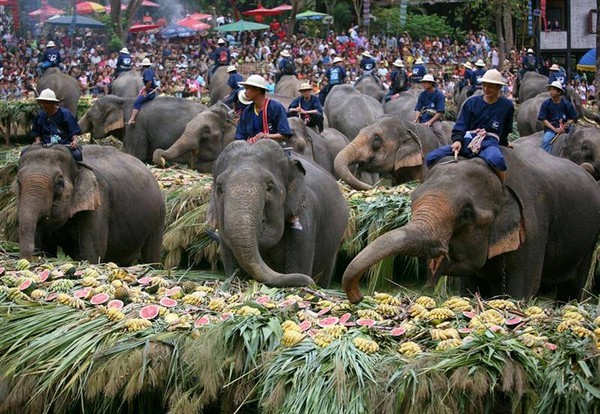
▲Real footage of elephants enjoying their feast. (Photo / from World Elephant Day Facebook page)
According to statistics, there are fewer than 5,000 elephants left in Thailand. To raise public awareness and understanding of elephant conservation, the Thai government established an annual “National Elephant Day.” On this day, not only do the elephants get a break from work and can rest and play together, but they also enjoy a feast of fruits and vegetables prepared for them. The sight of groups of elephants gathering in the square to enjoy their food together is truly spectacular.
To celebrate Elephant Day in 2014, Nan Province in northern Thailand held a five-day celebration starting March 9th. This year’s celebrations continue to uphold the spirit of Elephant Day, promoting the importance of elephants to Thailand while reminding the public that elephants are vital to the country’s wildlife and that their living conditions and environment deserve attention.
Share
This article is published by HowToTrip. Sharing and reposting are welcome — please credit the source.
Article URL: https://www.howtotrip.net/views-24087
Related Articles
- Shaoxing's "Grandpa Gourd" hangs the gourds back up: "If there are too many people, we'll interact less — just take a quick look from afar"
- Chinese authorities announce "reciprocal adjustment" to Japan visa fees — single-entry visa jumps from 2,250 to 16,750 yen!
- The "health stones" carried by a traveler were found to have radiation levels exceeding safety limits by a thousand times, potentially endangering fellow passengers on the same flight. Customs issues warning!
- Shenzhen Airport Issues Late-Night Notice: Unidentified Aerial Object Detected, Causing Widespread Flight Delays!
- “They only said it cost money after I opened the box and washed it!” 200g of grapes sold for 60 yuan on a high-speed train—12306 responds!
- Can't buy an airline ticket? Denied exit? Blocked from boarding? A large number of Chinese tourists have mysteriously become "discredited individuals"
- Adverse weather and economic fluctuations impact Colombia's coffee market
- Beach bathing area responds to 2 yuan/30 seconds fee for freshwater foot rinsing: Clearly priced!
- Taking off with an improperly closed cabin door? Wing malfunction? Multiple flights made emergency returns mid-journey!
- Experience the gifts of nature! A countdown of the world’s ten most stunning coastlines