Japan’s Three Great Thatched Cottage Villages: Fukushima’s Ouchi-juku Preserves Edo-Era Village Charm
Photos & Text /YouShang at a 45-degree Angle
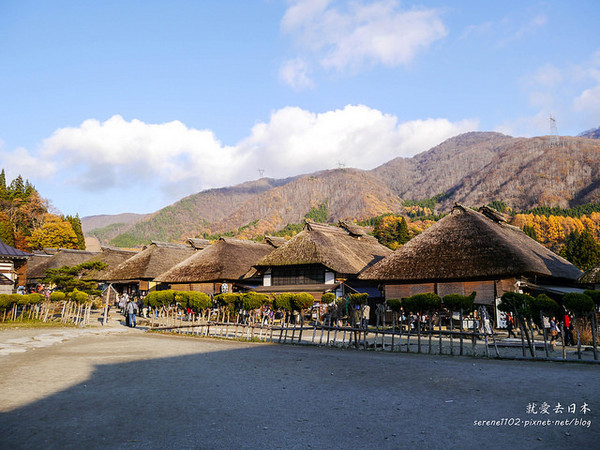
Japan’s three great thatched cottage villages are Fukushima Prefecture’s Ouchi-juku, Kyoto Prefecture’s Miyama, and Gifu Prefecture’s Shirakawa-go’s Gassho Village. Taiwanese travelers most often visit Shirakawa-go, but this time, the destination of YouShang’s northeastern trip was the equally renowned Ouchi-juku.
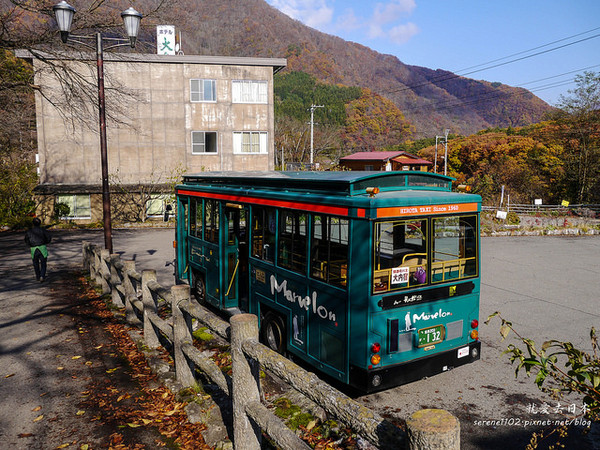
Exiting Yuno Onsen Station to the left, you’ll immediately see the “Saruyuu” sightseeing bus heading to Ouchi-juku. The bus schedule follows the train arrivals, so you won’t have to wait long.
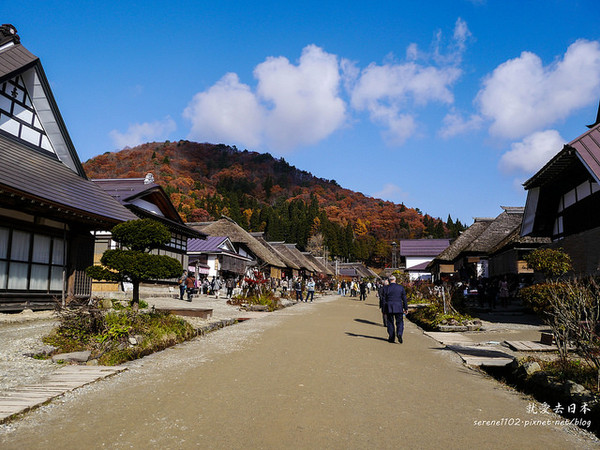
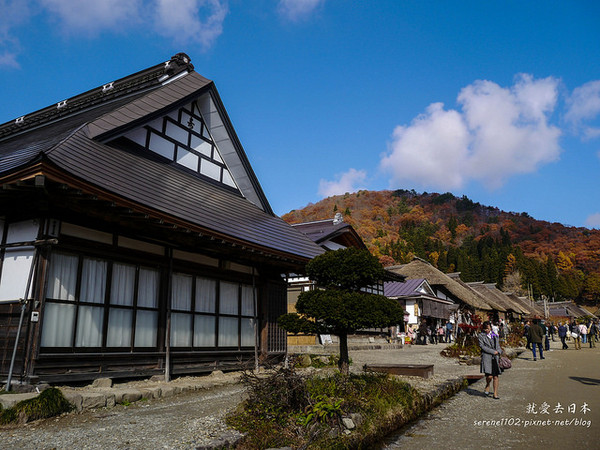
Today was an extremely lucky Saturday with fantastically clear weather. Looking at the thatched cottages bathed in sunlight, it truly felt like arriving at an old Japanese post town. There were plenty of visitors, but almost all were Japanese—rarely did we encounter tourists from other countries.
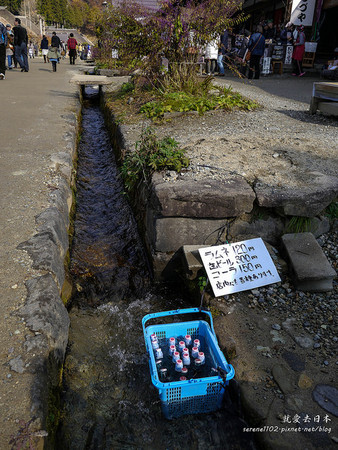
The drink basket that almost everyone takes a photo of. With the cool northeastern weather and Ouchi-juku’s higher elevation, no refrigerators are needed—the drinks in the water channel are naturally chilled.
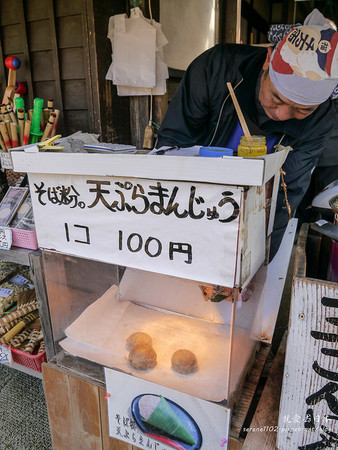
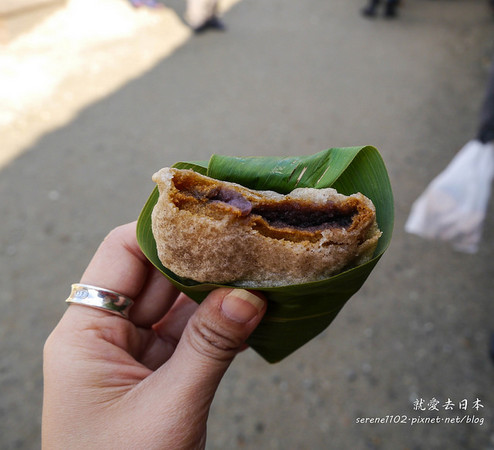
There were all kinds of snacks along the way to tempt visitors’ taste buds. These were deep-fried tempura manjuu coated in soba flour, filled with red bean paste—pretty sweet and oily. They were quite large, only ¥100 each, which is pretty cheap, but in terms of flavor... just okay.
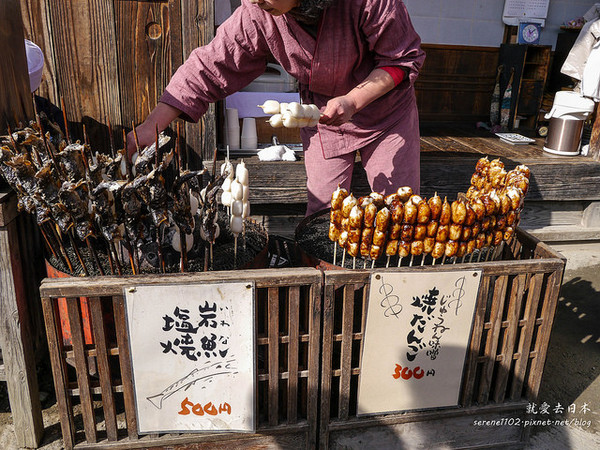
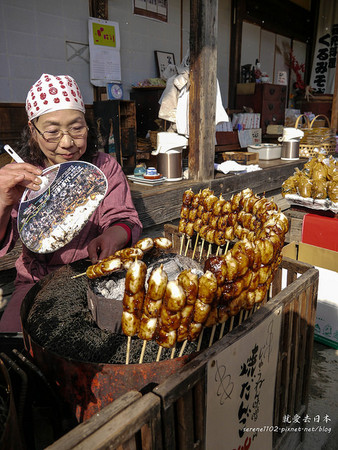
There were so many grilled dango and grilled fish stalls everywhere, with the aroma of charcoal grilling constantly tempting you to open your wallet.
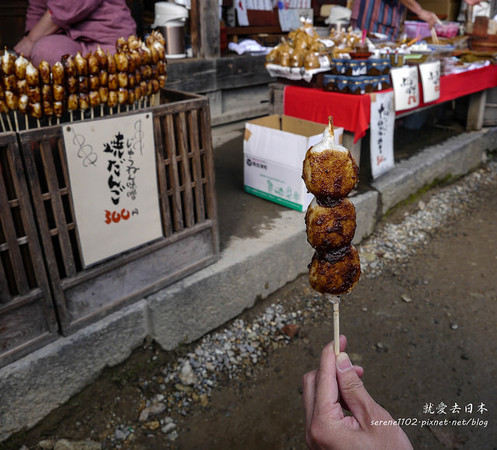
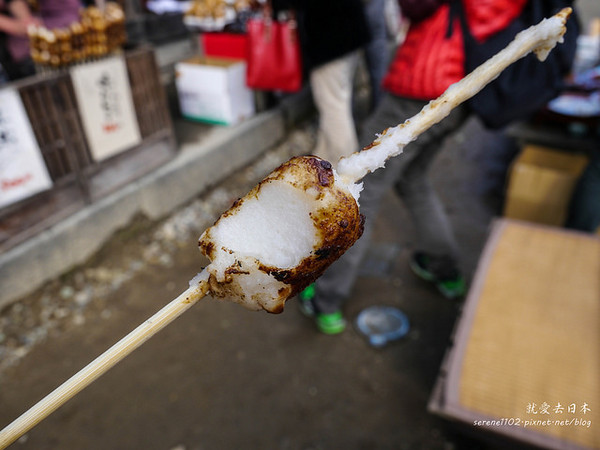
YouShang ordered a skewer of grilled dango. The rice-based dango, compared to Taiwan’s ma|dun ci dao?? di, had a different texture, wasn’t anything special, and didn’t have any particular strong flavor—it went for a pure rice-aroma route. The outside was coated with a sweet-and-salty soy sauce and miso mix. YouShang liked the sauce flavor, and it’s probably something both salty and sweet lovers would enjoy.
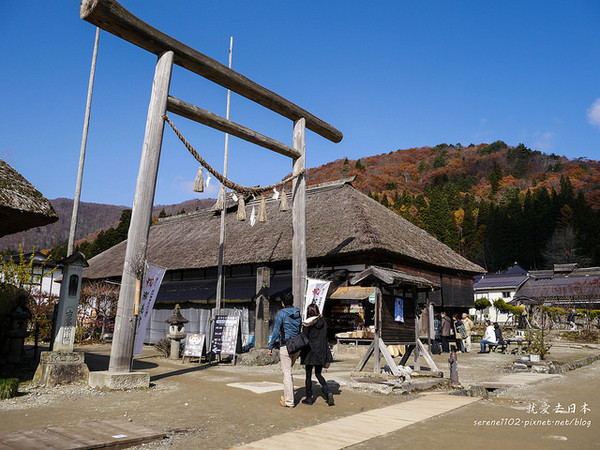
Walking forward from this torii gate, you can reach Ouchi-juku’s spiritual center: Takaokami Shrine. The annual shrine festival is an important ceremony that all Ouchi-juku residents take part in together.
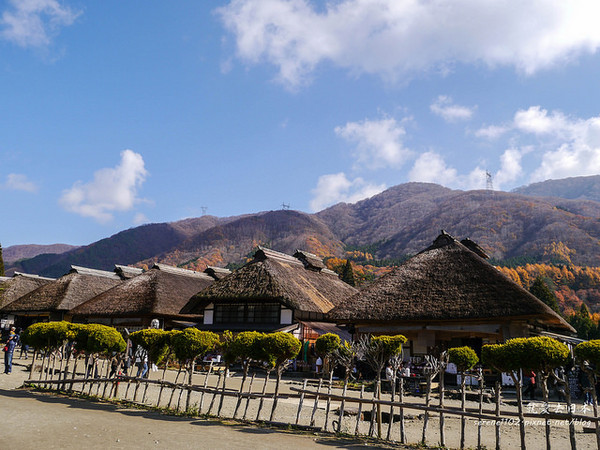
Gazing at the view behind the mountains, you can imagine how beautiful it must be when the maple leaves are in full bloom.
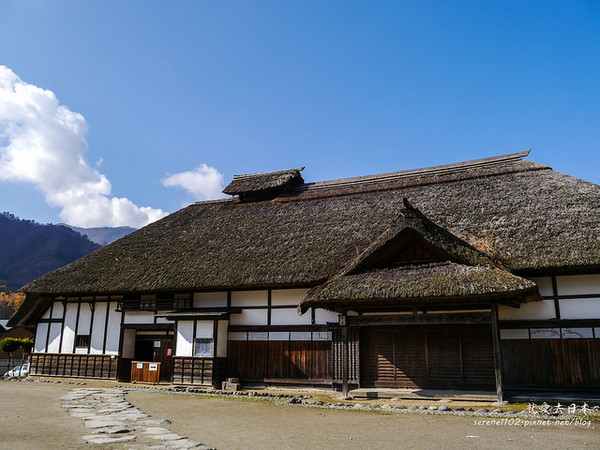
The only thatched cottage open to the public allows visitors to see the interior architectural style of these homes, as well as the tools that residents once used for daily life.
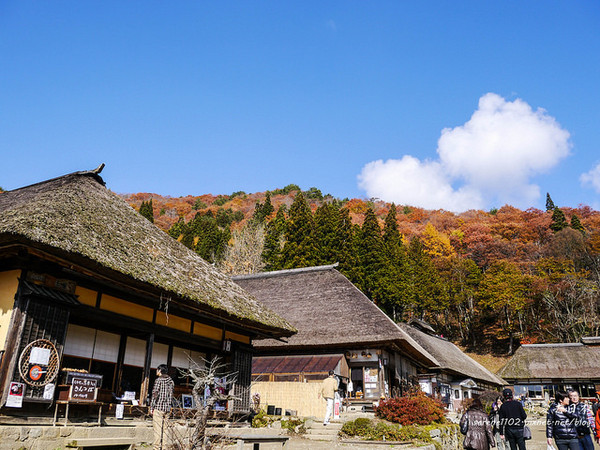
In ancient times, Ouchi-juku was a vital route from Aizu Castle to Shimotsuke Province (now Nikko), with even records from Toyotomi Hideyoshi’s era noting its importance as a key post station.
Originally, residents were divided on whether to preserve these traditional buildings. But in Showa 42 (1967), Professor Aizawa from Musashino Art University (then still a student) persuaded the town mayor, and an application was made to designate the area as an Important Traditional Buildings Preservation District—thus preserving it until today.
Now, with 1.2 million tourists visiting annually, the village has completely transformed from an agriculture-based livelihood to a tourism industry. Establishments such as soba noodle shops and souvenir stores have opened. Residents also established a covenant: “No selling, no renting, no destruction,” and they collectively preserve the traditional thatched roof construction techniques. (Source: Ouchi-juku)
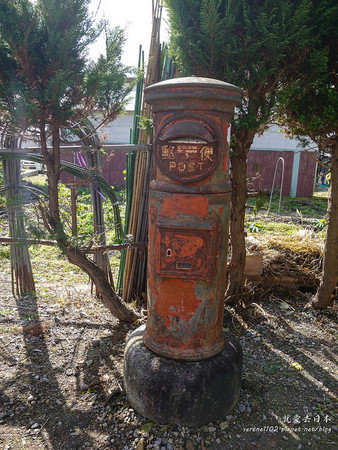
This abandoned mailbox somehow caught YouShang’s attention, perhaps due to its nostalgic, solitary old-world charm.
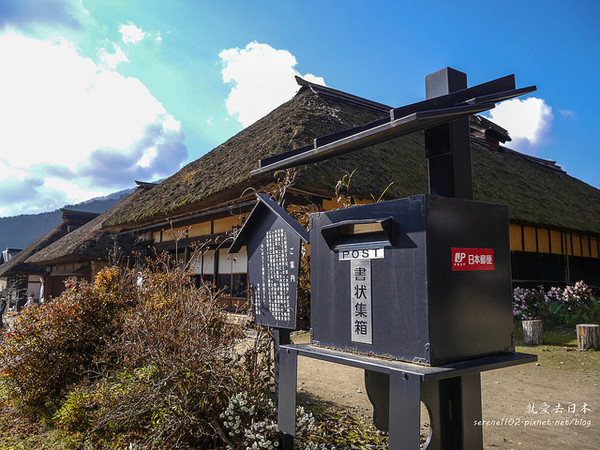
This still-in-use mailbox is also different from the norm—its black, rigid exterior gives off a samurai-like vibe.
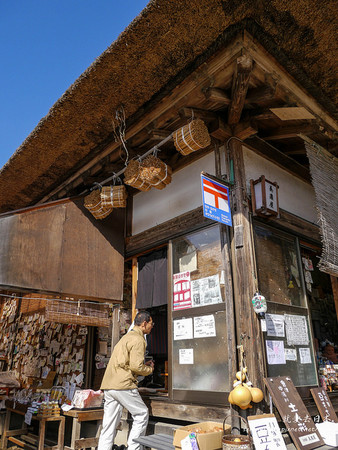
Bundles of grass branches hang under the thatched roofs—these are the components that will later be used to make thatched roofing.
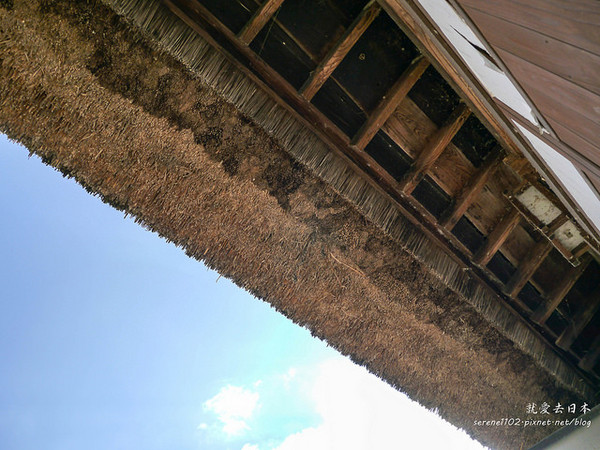
Another angle of the thatched roof. It really looks very solid—no wonder it can keep out rain and snow.
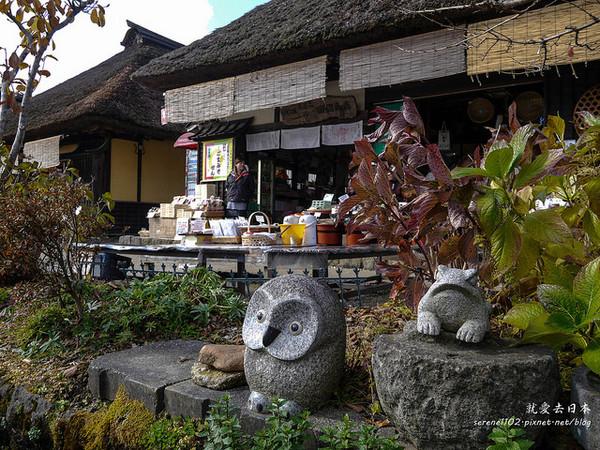
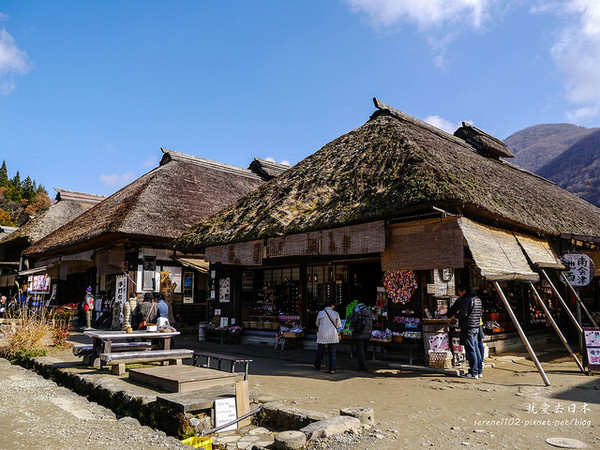
Almost everyone who comes makes a point to browse the souvenirs and various crafts and pickled foods.
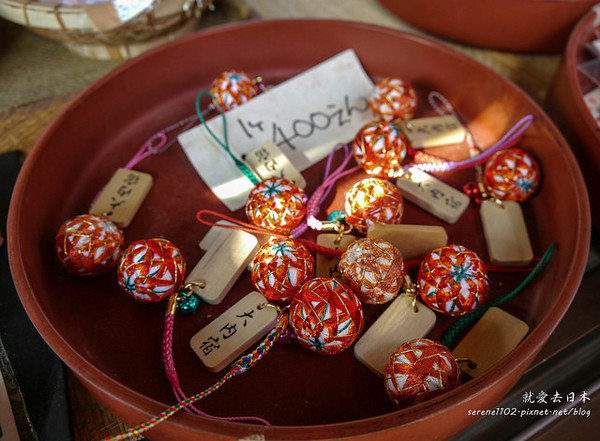
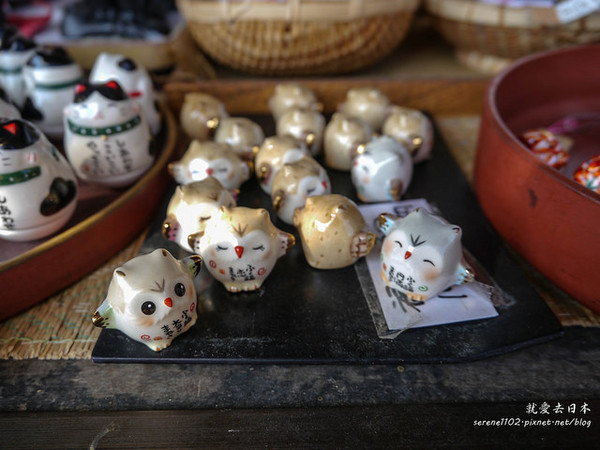
However, based on YouShang’s past experience, the souvenirs sold in Ouchi-juku seem a bit lacking in uniqueness, so there was almost nothing bought...
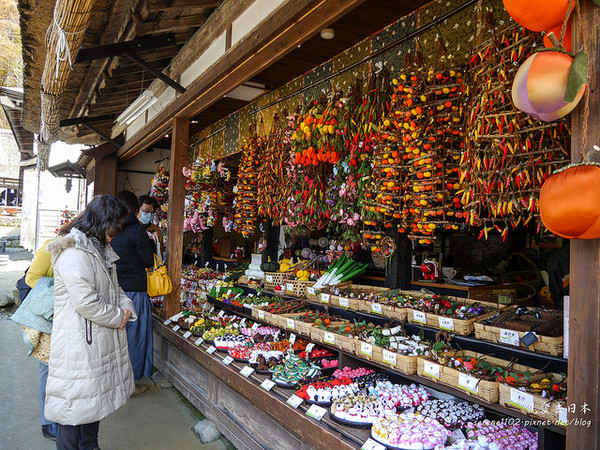
This shop, which is entirely made up of fabric-based crafts, is considered one of the more unique ones.
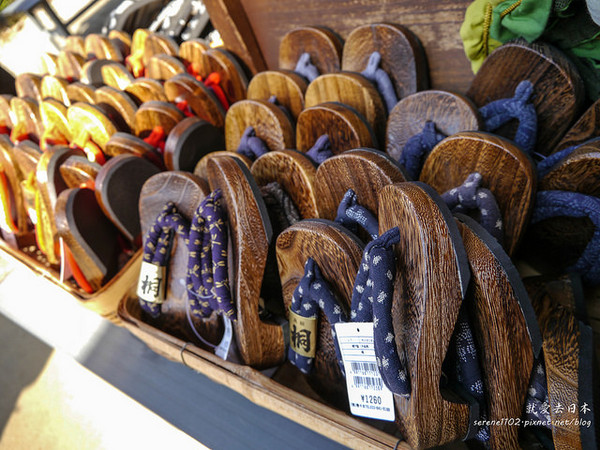
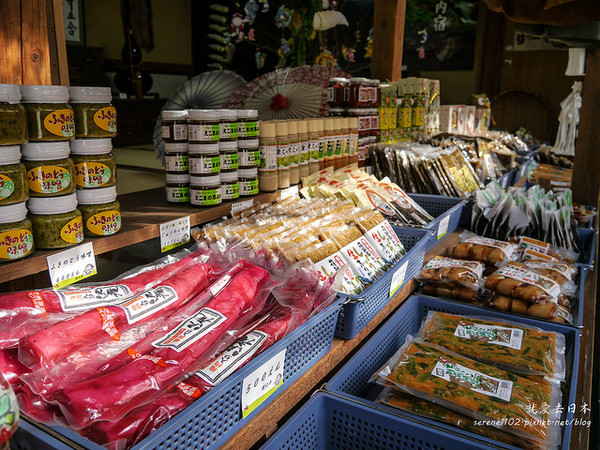
Pickled vegetables are an absolute must—shops are also very generous with offering samples.
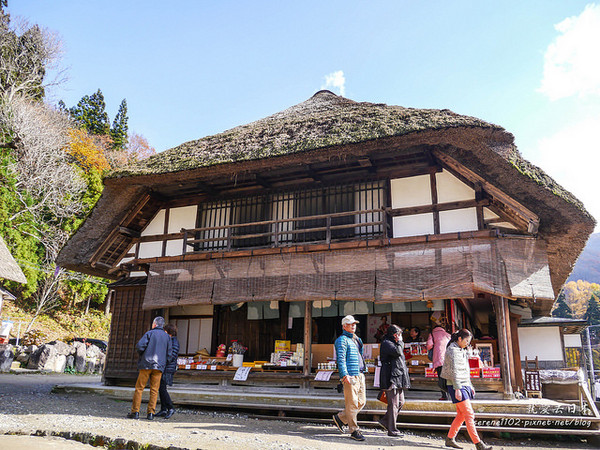
There are also thatched cottages in this shape. Ouchi-juku currently still has three places offering lodging. YouShang asked the Platinum secretary to call Japan for inquiries, but almost none accept single guests, rooms are very limited, and online reservations aren’t available.
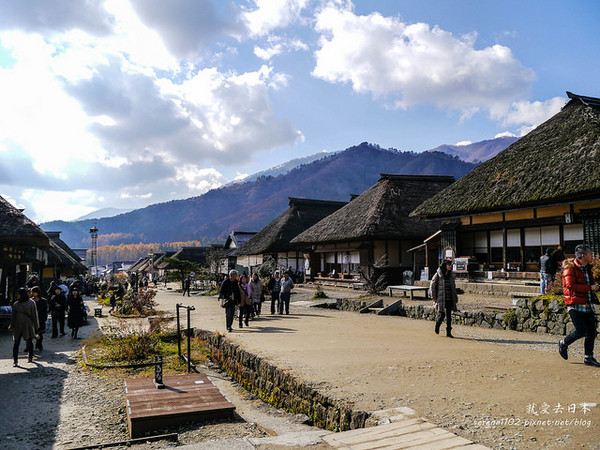
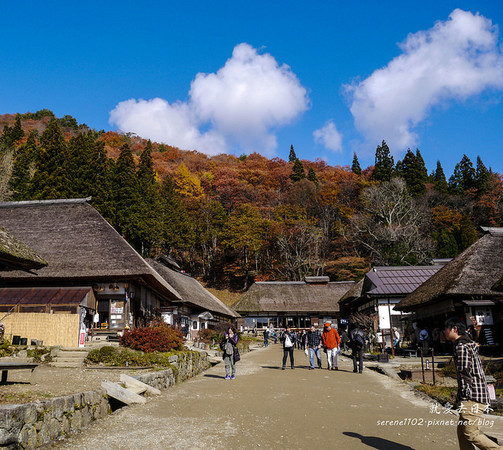
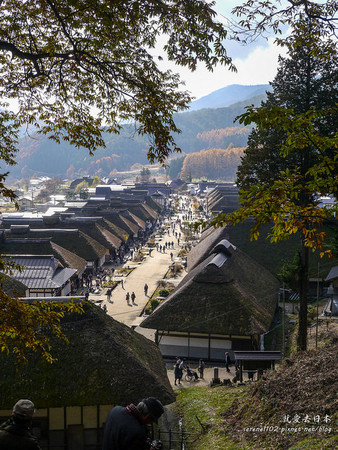
Walking to the end, the small hill offers a view overlooking the entire Ouchi-juku area.
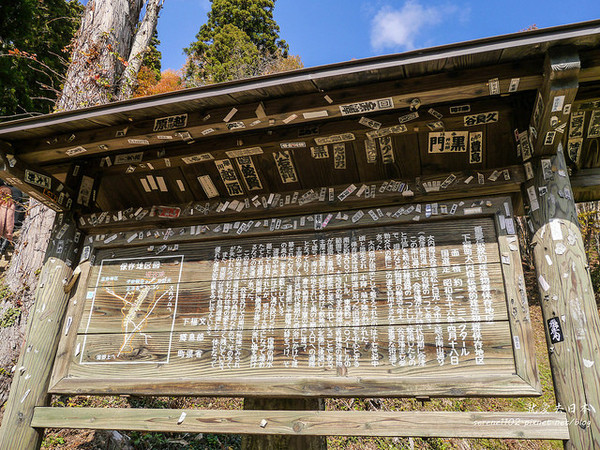
This wooden sign explains the story of Ouchi-juku.
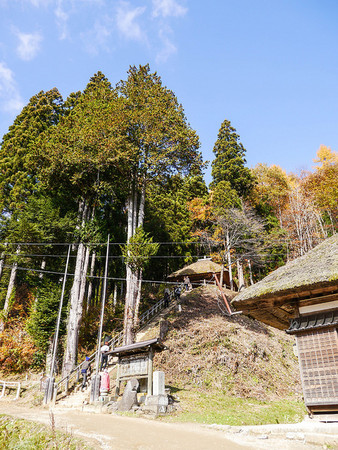
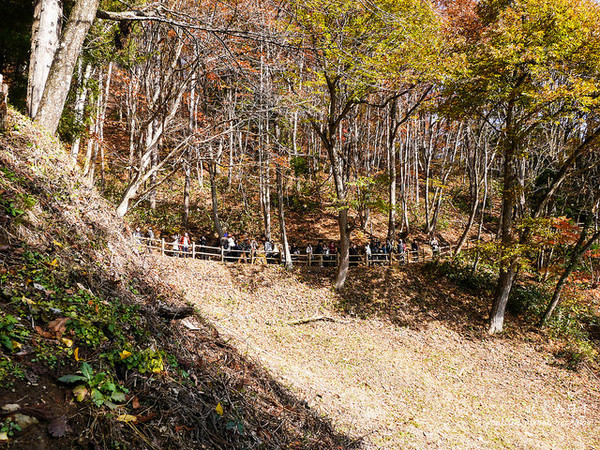
Before even climbing the hill, you can already see many tourists furiously snapping photos.
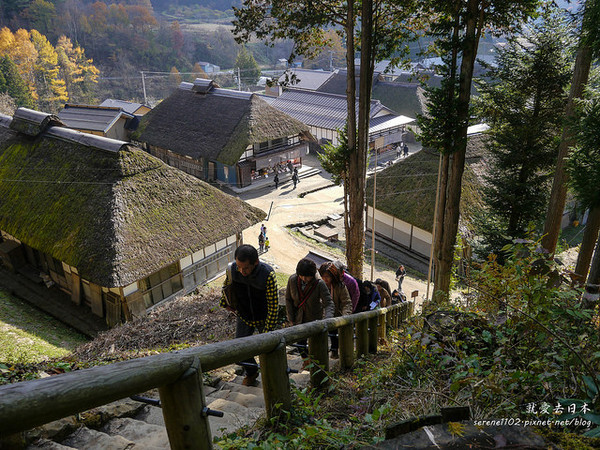
Although this path is short, it’s fairly steep and narrow. We encountered several elderly people panting as they climbed up—so it’s best to be careful when ascending.
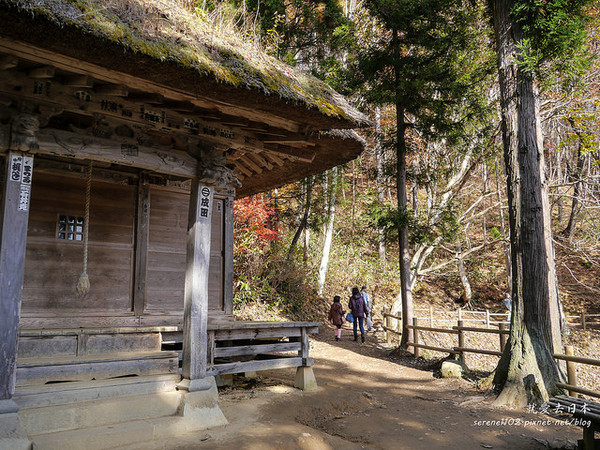
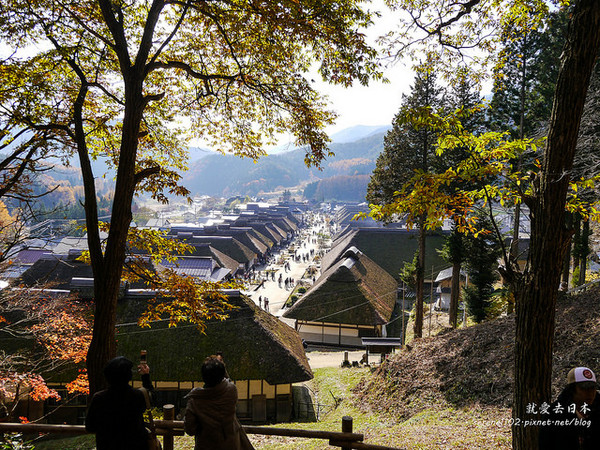
This is the must-see angle when you visit Ōuchijuku.
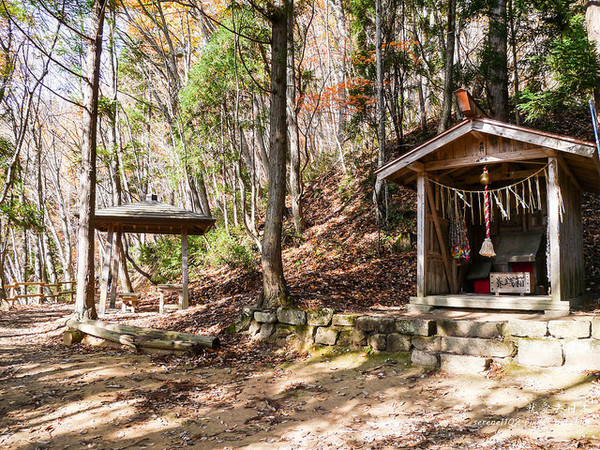
If you continue along this mountain path, there are no more houses—just a small shrine guarding the hill that the residents of Ōuchijuku look at every day.
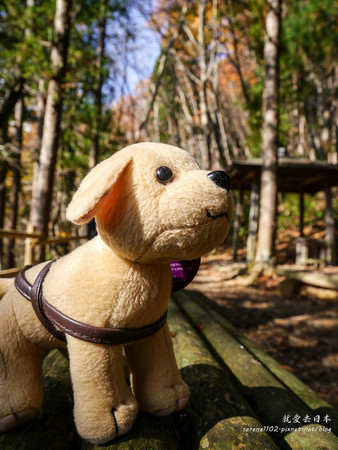
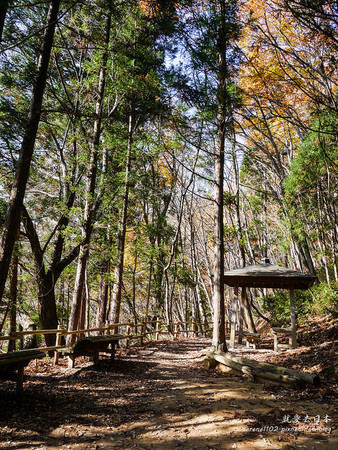
Though there’s nothing particularly spectacular about the view, perhaps because the sunlight was so bright, the dappled light filtering through the trees made YouShang linger here lost in thought for quite a while.
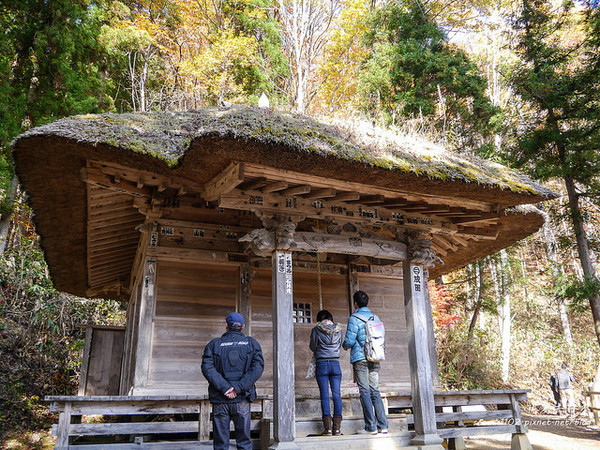
Even this nameless shrine is covered in signs from businesses praying for commercial prosperity.
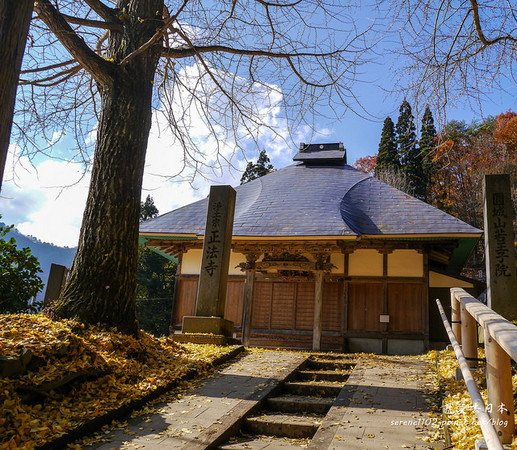
There’s also a Shōbōji Temple on the small hill, and the large ginkgo tree in front of it has just shed its leaves, covering the ground in brilliant yellow.
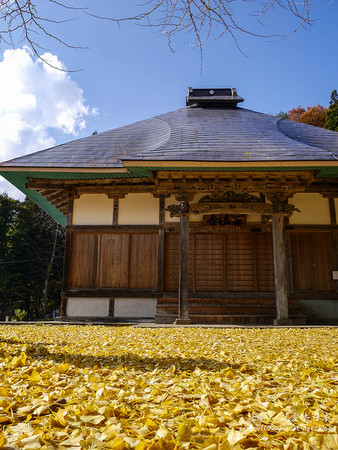
The ginkgo leaves are beautiful on the ground, but they give off a rather strange smell... YouShang held his nose and took photos for three whole minutes!!

Our adorable little guide dog looks absolutely adorable on the ginkgo leaves too!!
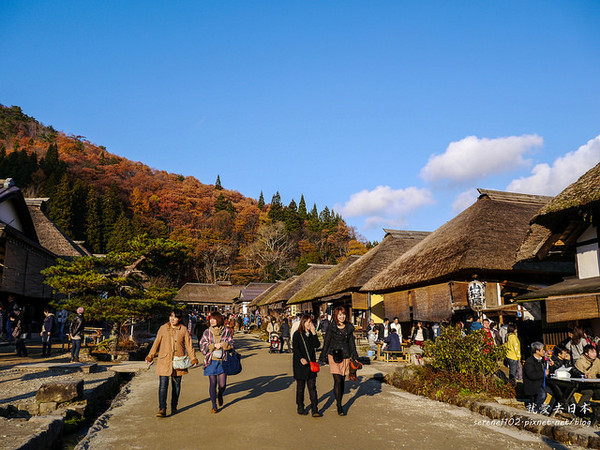
But by a little after three in the afternoon, the sunlight was starting to fade. Because Ōuchijuku is surrounded by hills, the sun sets especially early, and the temperature drops very quickly as well.
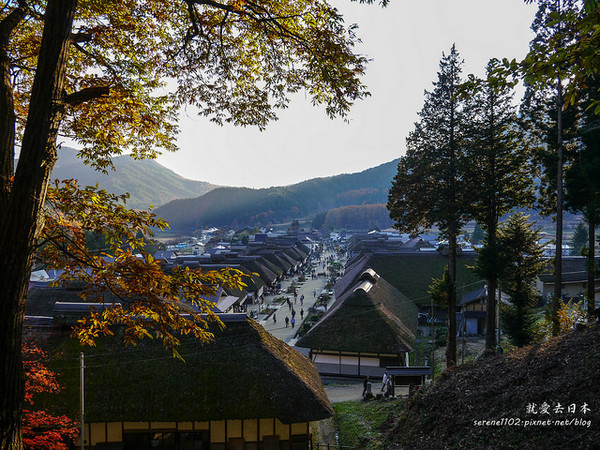
Before the sunlight disappeared completely, we hurried up the hill again for one last glance. Who knows what year or month it will be when we come back next time?
【Ōuchijuku】
Address:43, Dainochiyama-hon, Shimogo, Minamiaizu District, Fukushima
Admission:Free
How to get there:Take a bus bound for “Saruyūgō” from Yumoto Onsen Station on the JR line and get off after about 15 minutes.
YouShang’s 45-degree-angle Japanese-style food travel diary
Just love going to Japan
http://serene1102.pixnet.net/blog
Share
This article is published by HowToTrip. Sharing and reposting are welcome — please credit the source.
Article URL: https://www.howtotrip.net/views-23975
Related Articles
- Shaoxing's "Grandpa Gourd" hangs the gourds back up: "If there are too many people, we'll interact less — just take a quick look from afar"
- Chinese authorities announce "reciprocal adjustment" to Japan visa fees — single-entry visa jumps from 2,250 to 16,750 yen!
- The "health stones" carried by a traveler were found to have radiation levels exceeding safety limits by a thousand times, potentially endangering fellow passengers on the same flight. Customs issues warning!
- Shenzhen Airport Issues Late-Night Notice: Unidentified Aerial Object Detected, Causing Widespread Flight Delays!
- “They only said it cost money after I opened the box and washed it!” 200g of grapes sold for 60 yuan on a high-speed train—12306 responds!
- Can't buy an airline ticket? Denied exit? Blocked from boarding? A large number of Chinese tourists have mysteriously become "discredited individuals"
- Adverse weather and economic fluctuations impact Colombia's coffee market
- Beach bathing area responds to 2 yuan/30 seconds fee for freshwater foot rinsing: Clearly priced!
- Taking off with an improperly closed cabin door? Wing malfunction? Multiple flights made emergency returns mid-journey!
- Experience the gifts of nature! A countdown of the world’s ten most stunning coastlines